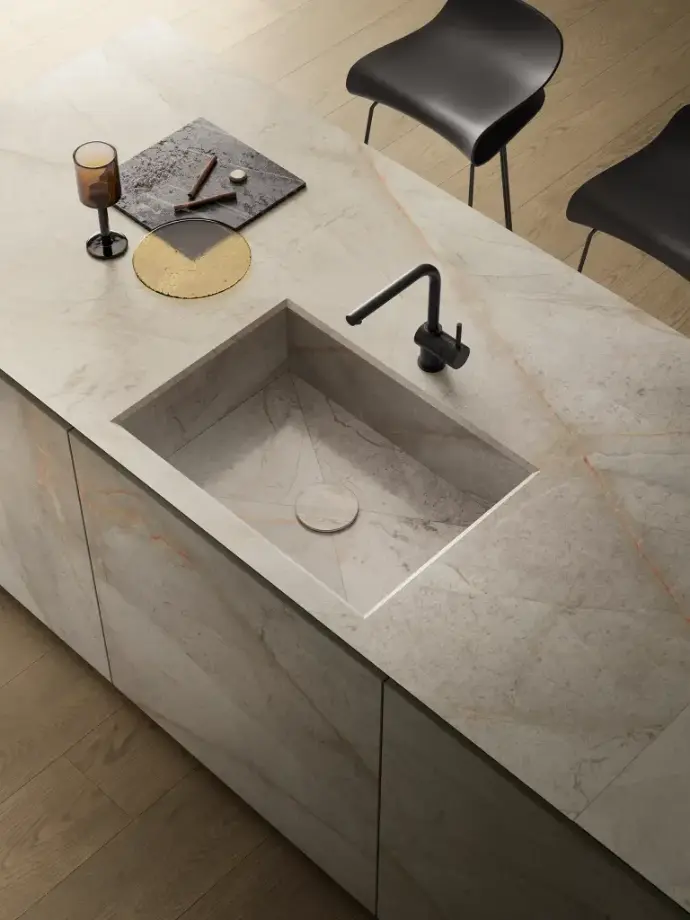
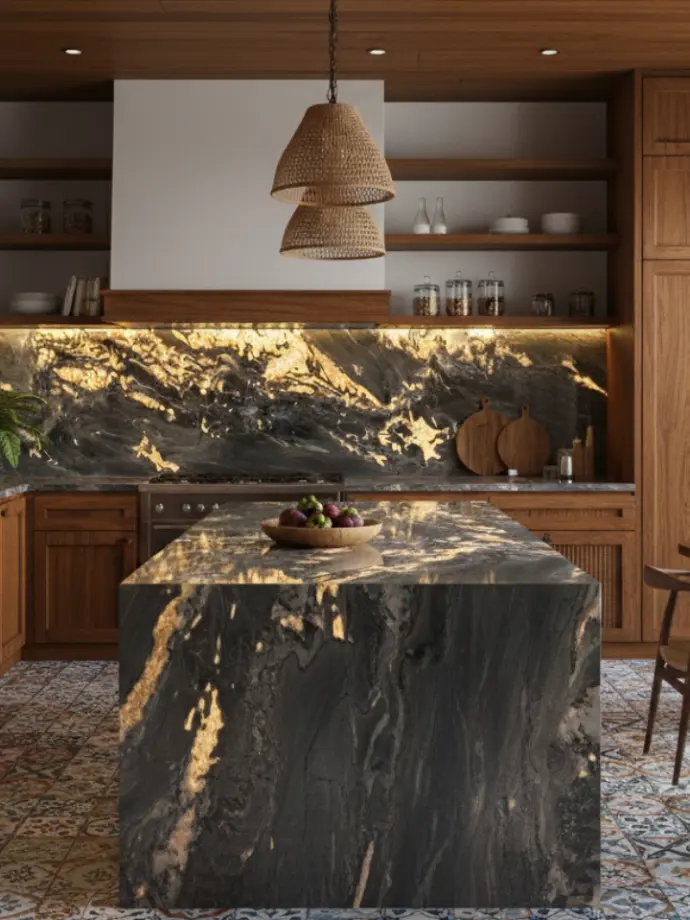
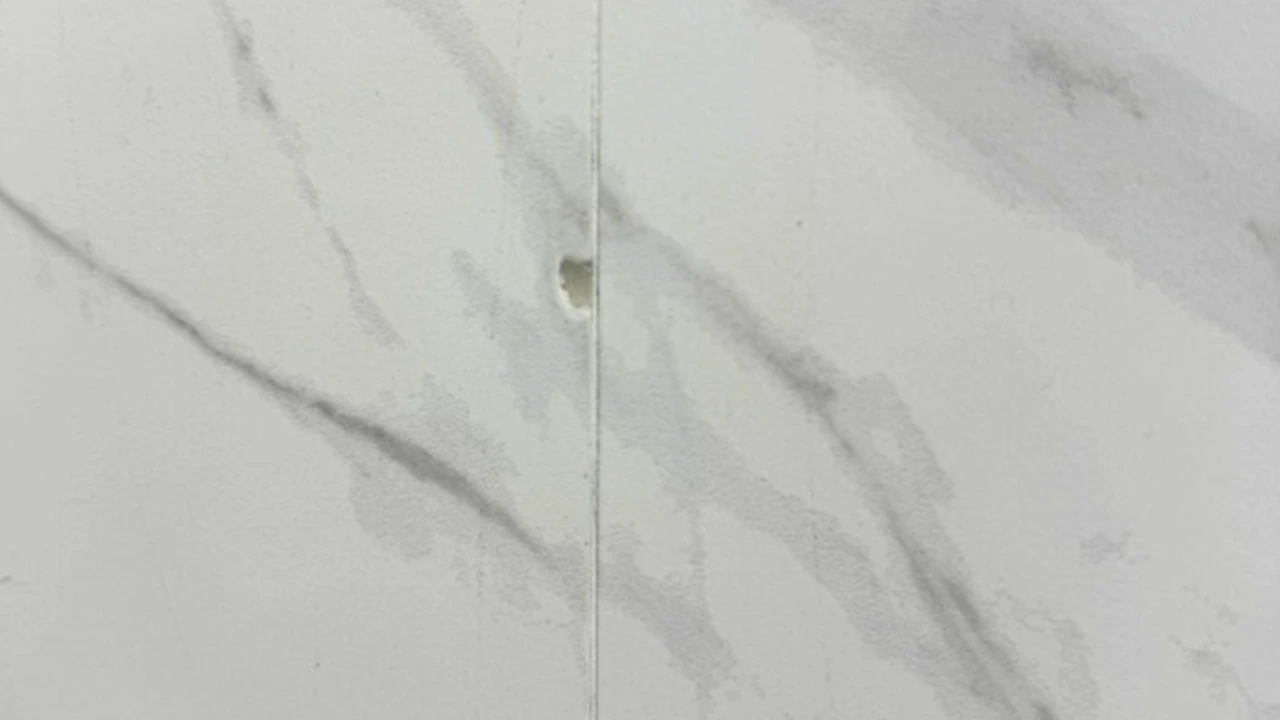
The showroom porcelain slab looked flawless. Marble veins dancing across a pristine white surface. Zero maintenance, they said. Scratch-proof, they promised. Six months later, there I was, staring at a hairline crack running across my kitchen island—a crack that appeared after setting down a heavy stockpot just a touch too firmly.
This isn't a one-off story. Across Malaysia, from Klang Valley condos to Penang landed homes, homeowners are discovering that porcelain countertops come with hidden challenges that salespeople rarely mention upfront.
Don't get me wrong—porcelain slabs are genuinely impressive. They resist UV rays, handle heat better than most materials, and come in stunning designs that mimic natural stone beautifully. But every material has its trade-offs.
Here are the 7 hidden disadvantages of porcelain countertops that you need to know before making your decision.
1. Extreme Fragility at Edges and Corners
Here's something most showroom demonstrations won't reveal: porcelain slabs are remarkably brittle, especially at the edges and corners.
Why This Happens
Porcelain is created through extreme heat and pressure, producing a dense, hard material. But this same hardness makes it prone to chipping—particularly along cut edges where the material structure is exposed. Unlike quartz stone, which contains resin that provides some flexibility and impact absorption, porcelain has no binding agent to cushion sudden impacts.
Storage and Handling Challenges
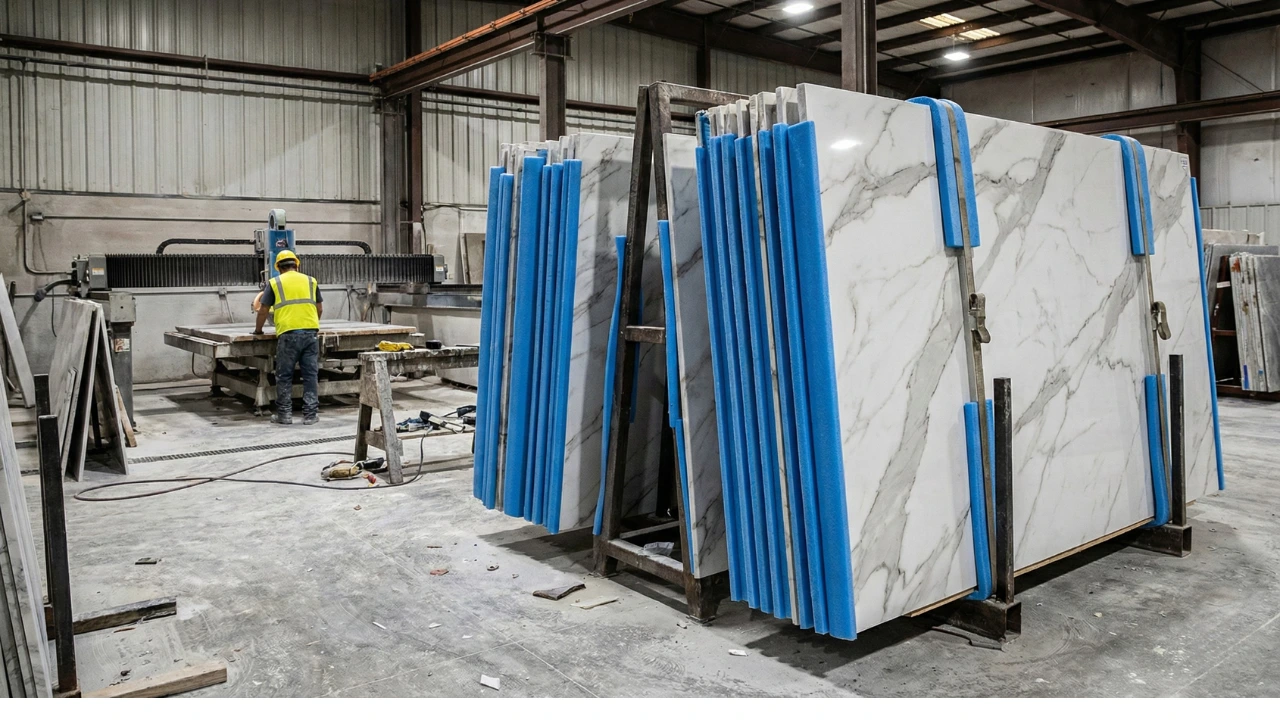
Here's something that catches many homeowners by surprise: porcelain slabs are so brittle that they cannot even be placed directly on the floor during delivery or storage. The edges will chip the moment they make contact with the ground—even concrete floors.
Professional fabricators must store porcelain slabs on padded A-frame racks or specialised storage systems with soft contact points. If your renovation involves storing the slab before installation (perhaps whilst waiting for cabinet completion), you'll need proper storage arrangements—you can't simply lean it against a wall like you might with granite or quartz.
This extreme fragility during handling often means:
- Higher delivery costs (specialist handling required)
- Risk of damage before installation even begins
- Potential delays if slabs arrive damaged and need replacement
- Additional storage requirements at the fabrication workshop
Real-World Consequences in Malaysian Kitchens
In typical Malaysian cooking, heavy woks, cast iron pans, and stainless steel pots are daily essentials. Drop a heavy pot on a porcelain countertop edge, and you're likely looking at a chip that's impossible to repair seamlessly. I've seen countertops with multiple edge chips within the first six months of installation—especially near the cooktop where heavy cookware is constantly moved around.
The corners are even more vulnerable. If you have young children who play in the kitchen, or if you're someone who occasionally bumps things around whilst cooking, those exposed corners become perpetual worry points.
Surface Impact Vulnerability: The Overhead Cabinet Risk
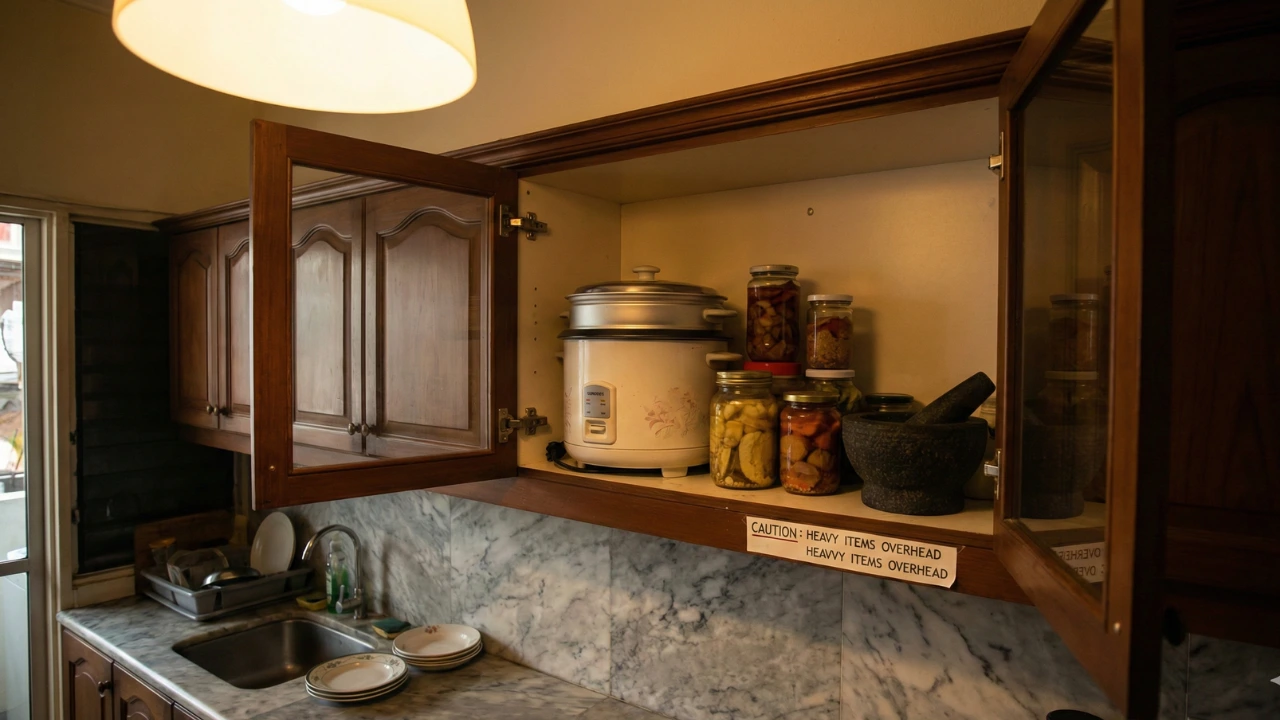
Here's another brittleness concern that catches homeowners off guard: porcelain slabs can crack from heavy items falling onto the surface from overhead cabinets.
Unlike quartz stone, which has resin content that absorbs some impact energy, porcelain is completely rigid and brittle throughout. When a heavy rice cooker, glass storage jar, heavy mortar and pestle, or cast iron pot falls from a tall cabinet (1.5–2 metres height) and strikes the porcelain surface, the impact can cause:
- Surface cracks radiating from the impact point
- Star-pattern fractures that compromise the entire slab
- Subsurface damage that may not be immediately visible but weakens the material
This is particularly concerning in Malaysian kitchens where:
- Heavy kitchen appliances (rice cookers, blenders, food processors) are stored in overhead cabinets
- Glass jars of preserved foods, spices, and condiments line the upper shelves
- Traditional cooking equipment (heavy mortar and pestle, stone grinding sets) may be stored above counter height
- Children or helpers may accidentally knock items whilst reaching for other objects
Quartz stone, whilst not immune to cracking from severe impacts, has significantly better impact resistance due to its resin content providing some flexibility and energy absorption. Porcelain has no such cushioning effect—it's hard and brittle all the way through.
What Suppliers Don't Tell You
Many suppliers demonstrate porcelain's hardness by showing you how scratch-resistant it is. What they won't demonstrate is dropping something on the edge—because they know what will happen.
2. Limited Edge Profile Options
If you're drawn to elegant, detailed edge profiles on your countertop, porcelain will disappoint you.
Why Porcelain Limits Your Design Options
Porcelain's brittleness makes it nearly impossible to create intricate edge profiles safely. Whilst quartz stone can be fabricated with ogee edges, waterfall edges with detailed profiles, or dupont edges, porcelain is typically limited to:
- Square edges (most common)
- Slightly bevelled edges
- Minimal round-over edges
Any attempt at more decorative edges dramatically increases the risk of chipping during fabrication or installation—and most fabricators simply won't attempt it.
The Pencil Edge Solution: Why 3mm Chamfer Matters
For porcelain slabs, the optimal edge treatment is a pencil edge with 3mm chamfer on both top and bottom. This specific measurement isn't arbitrary—it's the result of years of trial and error and consultation with European technical specialists.
Here's what many Malaysian homeowners don't realise: if you visit a showroom and see porcelain countertops with only 1mm chamfer edges, you're likely looking at installations completed before 2021. That was the industry standard until experienced fabricators realised it wasn't sufficient.
The Real-World Evidence:
Before 2022, many fabricators (including experienced ones) polished porcelain edges with just 1mm chamfer. The result? 2-4 clients per year reported chipping problems on their edges—and those were just the complaints that were formally reported. How many homeowners experienced minor chips but didn't bother contacting their fabricator? The actual problem rate was likely much higher.
Since switching to 3mm chamfer pencil edges in 2022, the chipping complaint rate has dropped to zero. Not reduced—completely eliminated.
Why Don't All Fabricators Use 3mm Chamfer?
Here's the uncomfortable truth: polishing a 3mm chamfer takes more time, uses more polishing pads (which are expensive), and requires more material removal than a quick 1mm chamfer. From a fabricator's perspective, 1mm chamfer is faster and more profitable.
Could experienced fabricators polish just 1mm? Absolutely. It would save time and materials. But if the goal is long-term client satisfaction rather than short-term profit maximisation, the 3mm chamfer is non-negotiable. The bigger chamfer provides adequate edge protection whilst still maintaining the sharp, modern look that porcelain is known for.
After extensive testing and discussion with Spain-based porcelain technicians (Spain being a global leader in porcelain slab technology), 3mm proved to be the sweet spot—large enough to prevent chipping, small enough to maintain aesthetic appeal.
What This Means for Your Purchase Decision
When evaluating porcelain quotes, ask your fabricator:
- What chamfer size do they use on porcelain edges?
- When did they switch to larger chamfer (if they have)?
- What's their chipping complaint rate since the change?
If they're still using 1mm chamfer, or if they claim chamfer size doesn't matter, that's a red flag indicating they haven't learned from industry experience over the past few years.
Design Impact
Whilst the 3mm chamfer pencil edge solves the chipping problem and looks clean and modern, it's still a fundamentally simple edge treatment. For many Malaysian homeowners planning a traditional or transitional kitchen design, even a well-executed pencil edge can look too stark or contemporary.
If your kitchen cabinets feature decorative moulding or classical details, the contrast with ultra-minimal porcelain edges may feel visually disconnected. Quartz stone, by comparison, can accommodate:
- Ogee edges that complement traditional cabinetry
- Bullnose edges for a softer, family-friendly look
- Bevelled edges with multiple angles for visual interest
- Dupont edges for contemporary elegance
The pencil edge works beautifully in modern, minimalist kitchens—but it's essentially your only reliable option with porcelain.
3. Installation Complexity and Higher Labour Costs
Porcelain slabs require specialist installation expertise that significantly exceeds what's needed for quartz stone, and this translates to higher costs and potential installation challenges in Malaysia.
Specialised Skills Required
Installing porcelain isn't a job for your typical stone fabricator. The material's brittleness means it can crack during cutting, handling, or installation if not managed with precision equipment and techniques. Fabricators need diamond blade saws specifically designed for ultra-hard materials, specialised adhesives, and extensive experience handling large-format slabs.
Even before installation begins, porcelain demands specialist care. The slabs are so brittle they cannot be placed directly on the floor—not even for a moment. They must be stored on padded A-frame racks with soft contact points. Touch the edge to a concrete floor, and it will chip instantly. This means your fabricator needs proper storage infrastructure, not just cutting skills.
The Malaysian Installation Challenge
Whilst Kuala Lumpur, Penang, and Johor Bahru have experienced porcelain installers, availability drops significantly in smaller cities. If you're in Ipoh, Kuantan, or Malacca, you might find that qualified installers need to travel from major cities, adding substantial hidden costs to your project.
Installation costs for porcelain typically run RM40 per square foot compared to RM35 per square foot for quartz stone. But that's just the baseline rate. For a standard 50-square-foot kitchen countertop, here's what you're actually looking at:
Base Installation Costs:
- Installation labour: RM40/sqft × 50 sqft = RM2,000
Additional Charges Often Not Disclosed Upfront:
- Templating (measurement) visit: RM300-500 (separate trip before installation)
- Travel costs: RM200-800 depending on distance from fabricator's base
- Accommodation: RM150-300 if installation requires overnight stay (common for complex layouts or distant locations)
- Return trip for adjustments: RM200-500 if any issues arise post-installation
Total potential installation cost: RM2,850-RM4,100 for a 50-square-foot countertop
Compare this to quartz installation, where:
- Base installation is lower (RM35/sqft = RM1,750)
- Templating is often included or costs less (RM200-300)
- Travel costs are similar, but more installers are available locally
- Accommodation is rarely needed (faster installation, more local expertise)
- Total typical cost: RM2,150-RM2,850
That's a difference of RM700-RM1,250 in installation alone—money that could upgrade your kitchen sink, tap, or lighting.
Why Improper Installation Is Costly
If your installer lacks porcelain-specific experience, you risk:
- Cracks during template fitting or final installation
- Improper adhesive application leading to future delamination
- Uneven support causing stress points that crack over time
- Visible lippage (uneven seam alignment) that's nearly impossible to correct
And here's the critical issue: many fabricators won't warranty porcelain work because they know how easily problems can occur during installation.
4. Nearly Impossible to Repair Damage Invisibly
When porcelain chips or cracks, you have extremely limited repair options—and none of them will make the damage truly invisible.
Why Porcelain Resists Repair
Porcelain's uniform composition throughout the entire thickness means any damage exposes the same material all the way through. This sounds like an advantage (and it is for deep scratches), but it becomes a disadvantage for chips and cracks because there's no way to blend a repair compound with the porcelain body.
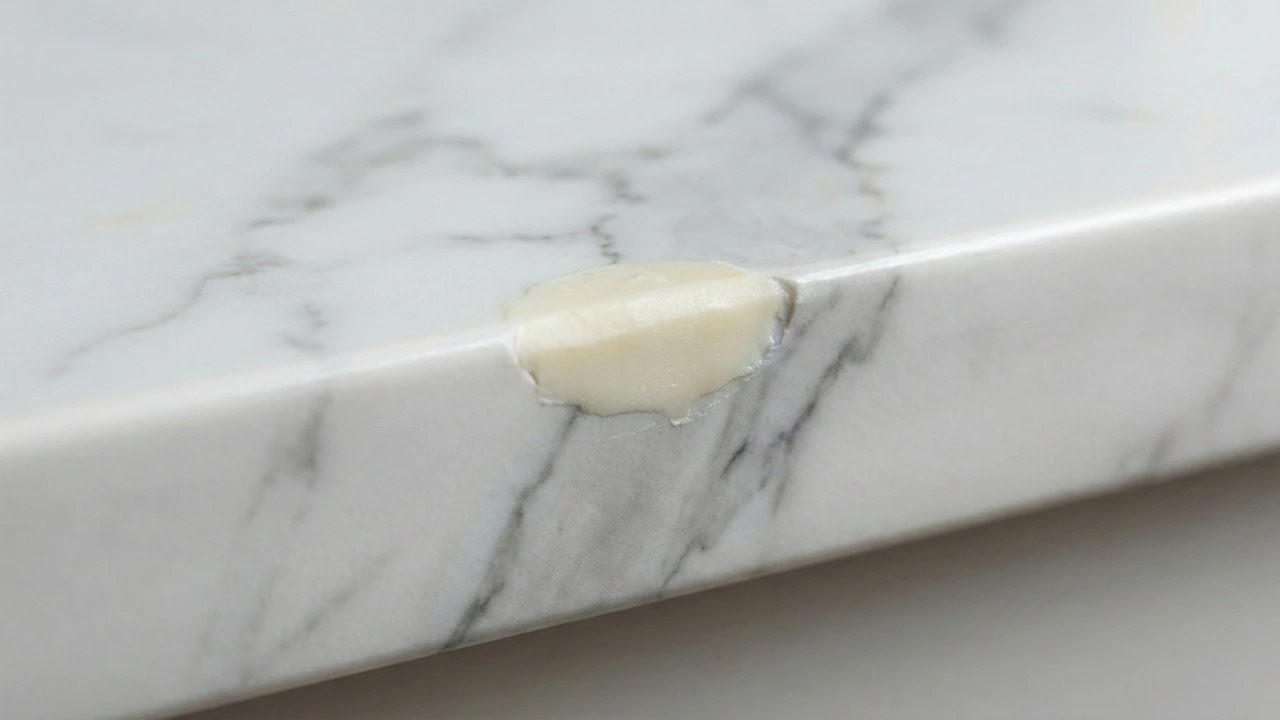
For edge chips:
- Epoxy fills: Visible colour mismatch, especially on veined patterns
- Professional porcelain repair compounds: Better colour matching, but texture differences remain apparent
- Replacement of entire section: Expensive, may not match perfectly if your colour has been discontinued
For surface cracks (from impact damage):
- Resin injection: Can stabilise cracks but lines remain visible
- Professional restoration: Expensive and rarely achieves invisible results on veined or patterned porcelain
- Slab replacement: Often the only truly satisfactory solution, but costs RM6,000-9,000+ for material alone
Unlike quartz, where small chips can often be repaired reasonably well with colour-matched resin (since quartz already contains resin), and minor surface damage can be polished out, porcelain repairs always remain visible upon close inspection.
The Long-Term Appearance Issue
Over 5-10 years, accumulated chips and repair marks can make your countertop look worn and damaged—even though the primary surface remains perfect.
The Prevention Burden
This means you need to be perpetually careful around porcelain edges and surfaces:
- Always use cutting boards (even though porcelain is scratch-resistant)
- Never slide heavy pots or pans across the surface
- Exercise extreme caution near edges and corners
- Consider edge guards in high-traffic areas
- Be extremely careful when retrieving items from overhead cabinets—a dropped rice cooker or heavy jar can crack the surface
- Store your heaviest kitchen items in base cabinets rather than overhead cabinets positioned above the porcelain countertop
- Consider protective mats or trivets in areas directly below frequently accessed overhead storage
For busy Malaysian families with active kitchens, this level of constant care can feel restrictive and stressful. You're essentially living with a perpetual awareness that one accidental drop from above could result in an expensive crack repair or even full slab replacement.
5. The Veins Are Only Skin Deep
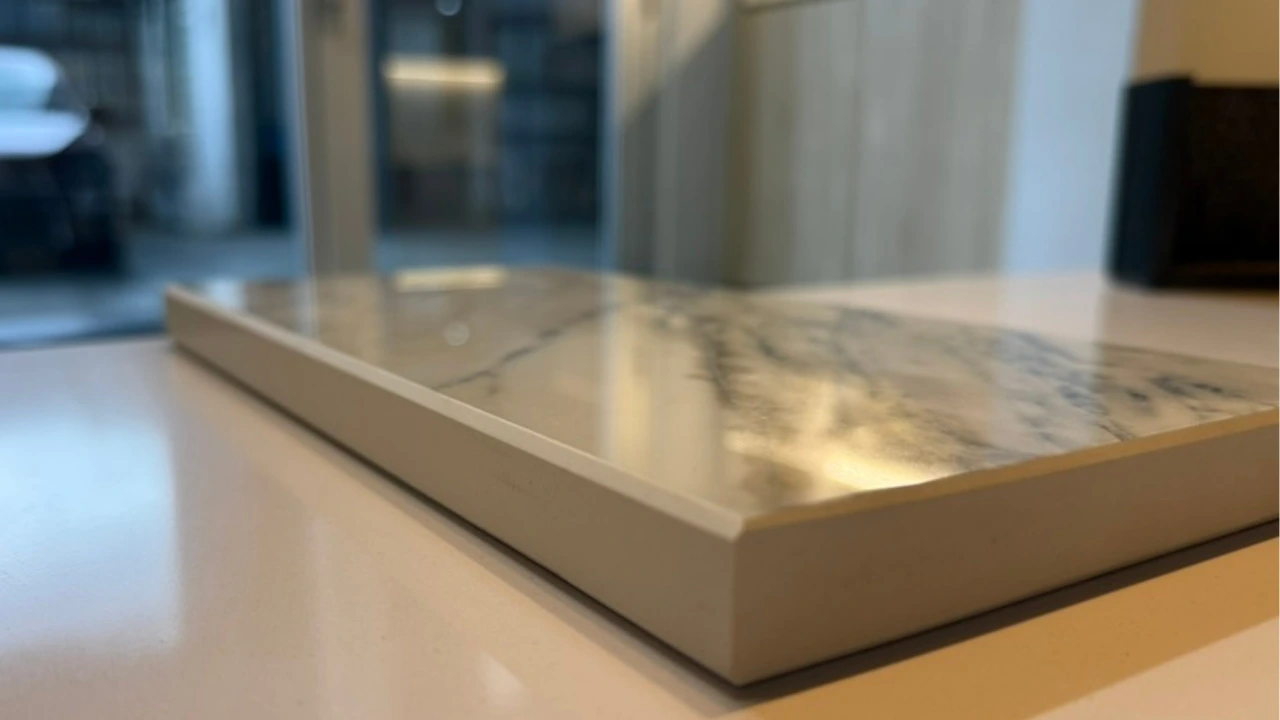
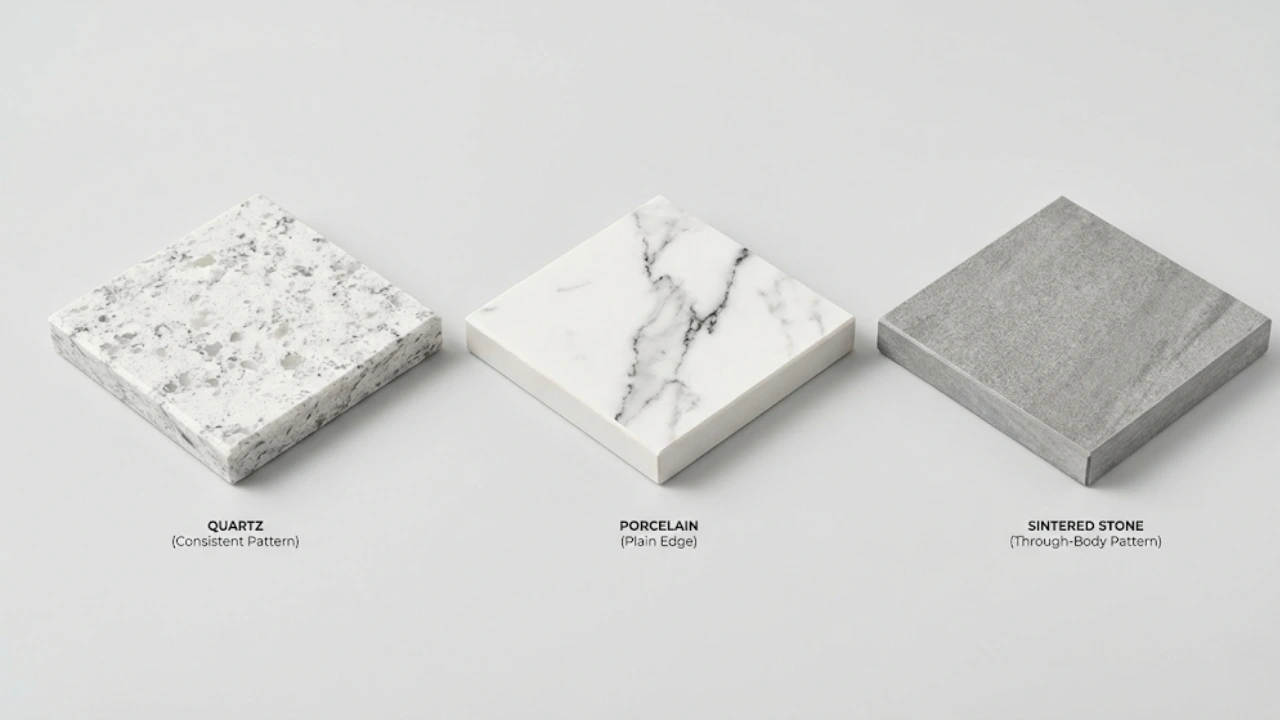
Here's something that surprises many homeowners when they see their porcelain countertop up close: those beautiful marble veins only exist on the surface—typically just 1mm deep.
How Porcelain Patterns Are Created
Porcelain manufacturers create those stunning marble, granite, onyx, quartzite, and travertine looks through high-definition digital scanning and printing. They scan the highest-tier natural stones to capture every vein and colour variation, then print these patterns onto the porcelain surface.
The technology is genuinely impressive—from a distance, quality porcelain slabs can look remarkably like the real thing.
The Problem: A Colourless Body
But here's what the showroom won't highlight: the body of the porcelain slab beneath that printed surface has no colour matching and no veins.
You might see a dark marble-look surface with plain white or off-white body. Most porcelain slabs on the Malaysian market have a body colour that's close to the surface tone, but completely lacks any veining pattern.
Why This Matters for Your Countertop
The flat edge problem:
If you choose a simple flat (square) edge profile—which is common with porcelain due to its brittleness—look closely at the edge. You'll notice there are no veins continuing from the surface down through the edge. The edge appears as a solid, uniform colour that doesn't match the patterned surface.
This creates a visual disconnect that becomes more noticeable:
- On kitchen islands where edges are visible from multiple angles
- Under bright lighting where the contrast becomes apparent
- On darker or more dramatically veined patterns where the plain edge stands out
Mitred edges help—but reveal a different problem:
Some fabricators address this by using mitred edges, where a thin strip of the printed surface is folded over to cover the edge. This gives the appearance of veining continuing through the thickness. However, even with mitred edges, porcelain reveals a visual flaw: after polishing the 3mm chamfer on the corner edge, you'll notice a two-tone effect where the body colour beneath shows through alongside the printed surface. This creates a visible colour mismatch that becomes especially apparent under direct lighting. Additionally, mitred edges add fabrication complexity, cost, and create additional vulnerable points for chipping.
The Quartz and Natural Stone Difference
With quartz stone, the colour and pattern extend throughout the entire thickness of the slab—what you see on the surface is what you see on the edge. Natural stones like granite and marble have their veining running all the way through, so edges naturally match the surface.
Porcelain's surface-only pattern is a fundamental limitation of the material that no amount of skilled fabrication can fully overcome.
So, Should You Avoid Porcelain Countertops?
Not necessarily. Porcelain slabs genuinely excel in specific situations:
- Outdoor kitchens – UV resistance makes them ideal for Malaysian weather
- Wall cladding and backsplashes – Less impact risk, maximum visual impact
- Homeowners who prioritise stain resistance – Porcelain's near-zero porosity handles turmeric, curry, and sambal beautifully
But for primary kitchen countertops where durability, repairability, and design flexibility matter, materials like quartz stone or sintered stone may serve Malaysian homeowners better.
Making Your Decision
Every kitchen countertop material involves trade-offs. The key is understanding those trade-offs before you commit.
Ask yourself:
- How do I actually use my kitchen? (Heavy cooking vs. light use)
- Am I comfortable with visible seams?
- Is repairability important to me?
- Does my fabricator have proven porcelain experience?
If you're still weighing your options, visiting a showroom where you can see and touch different materials side-by-side often clarifies things better than any brochure.
Ready to explore your countertop options? Contact Sinno Stone to discuss which material truly fits your Malaysian kitchen-whether that's porcelain, quartz, or sintered stone. We'll give you the honest answers, including the disadvantages, so you can decide with confidence.