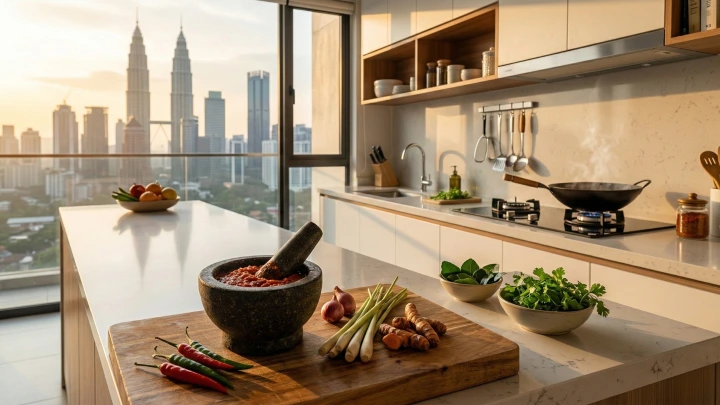
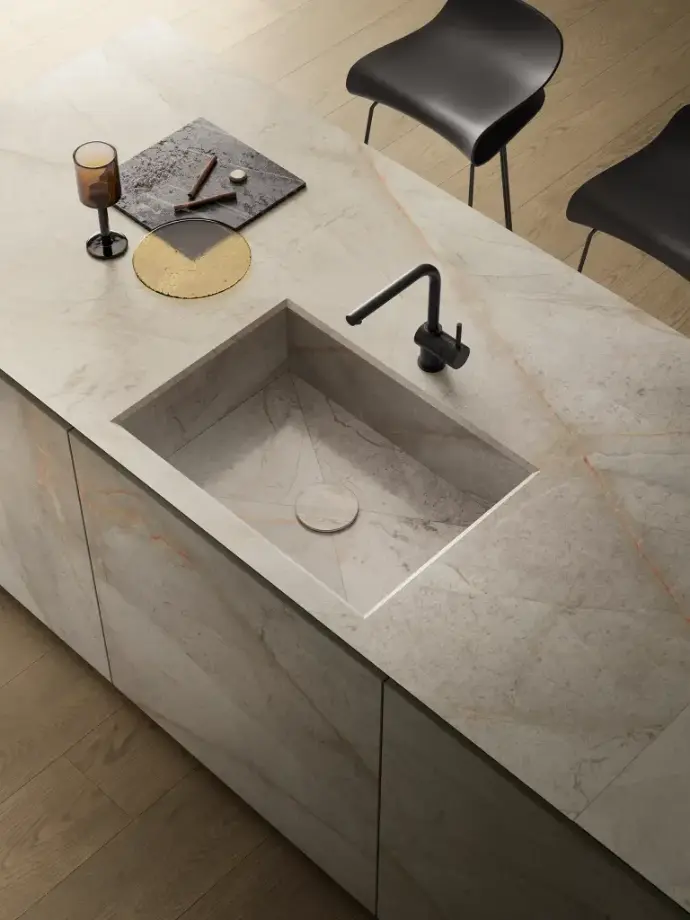
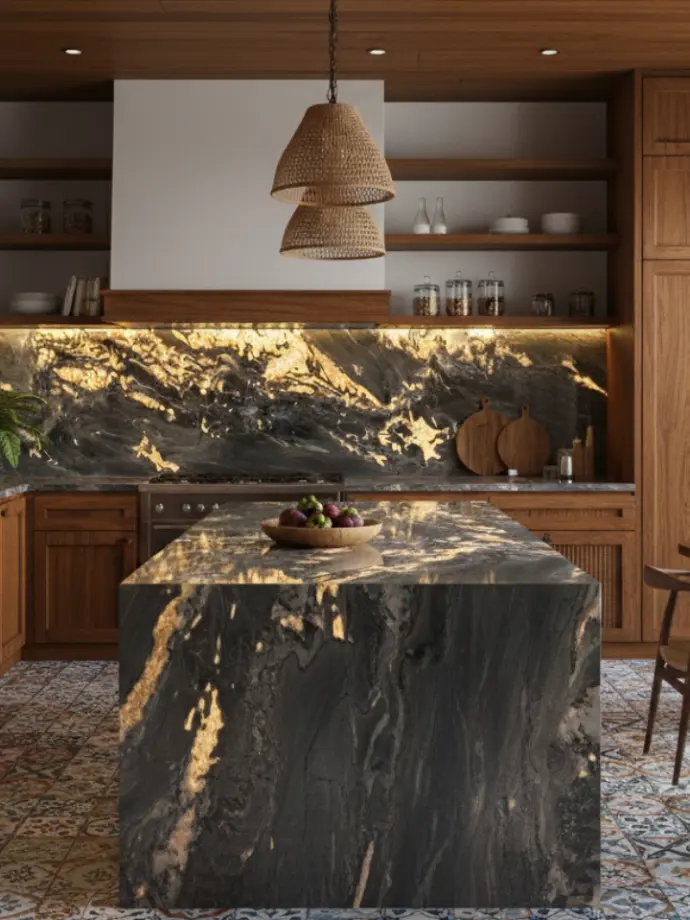
There's a rhythm to Malaysian cooking that no food processor can replicate. The satisfying thud of a stone mortar pounding lemongrass into fragrant submission. The slow crushing of shallots, garlic, and dried chillies into a sambal paste that fills the kitchen with aroma. For generations, the batu lesung has been the heartbeat of Malaysian kitchens — from your grandmother's wooden kitchen to your mother's tiled countertop.
But now you've invested in a beautiful quartz or sintered stone countertop. And as you reach for the mortar and pestle to prepare tonight's rendang, a thought stops you mid-swing: will pounding on this surface damage my new countertop?
It's a question we hear regularly from Malaysian homeowners, and the answer isn't as straightforward as you might hope. Let's break it down honestly.
Why This Question Matters More Than You Think
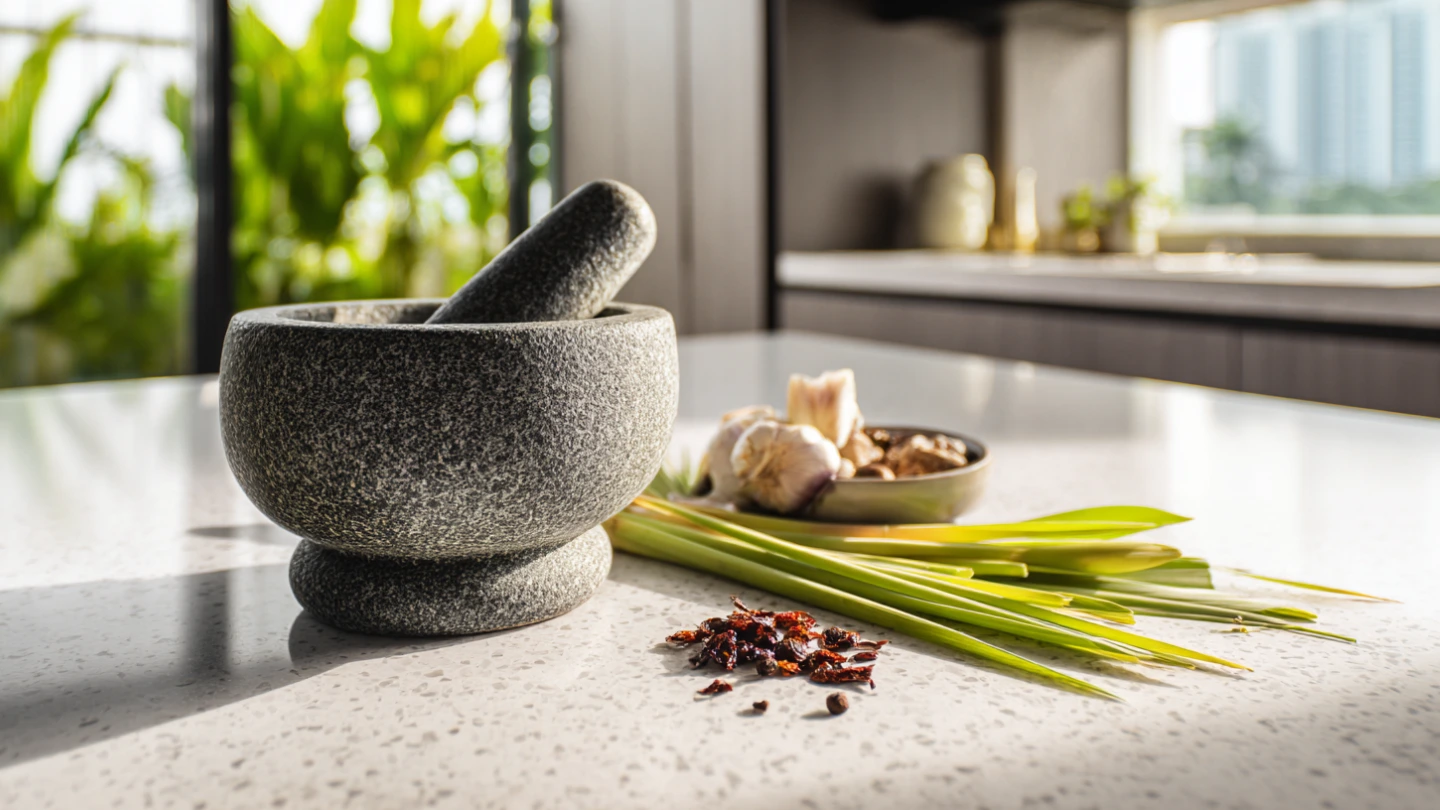
Using a stone mortar and pestle isn't a gentle activity. When you pound lemongrass, galangal, or dried spices, you're generating significant force — repeated downward impacts concentrated on a small area. A traditional granite batu lesung can weigh anywhere from 3kg to 8kg, and each strike delivers that weight plus your arm's force directly through the mortar's base onto whatever surface sits beneath it.
This is fundamentally different from other kitchen activities. Chopping with a knife distributes force along a blade. Setting down a hot pan involves static weight. But pounding is percussive — it sends shockwaves through the mortar into the countertop surface with every stroke.
Understanding this distinction is crucial because both quartz stone and sintered stone are engineered to handle scratches, stains, and heat — but repeated impact is an entirely separate challenge.
Quartz Stone: What Happens When You Pound on It
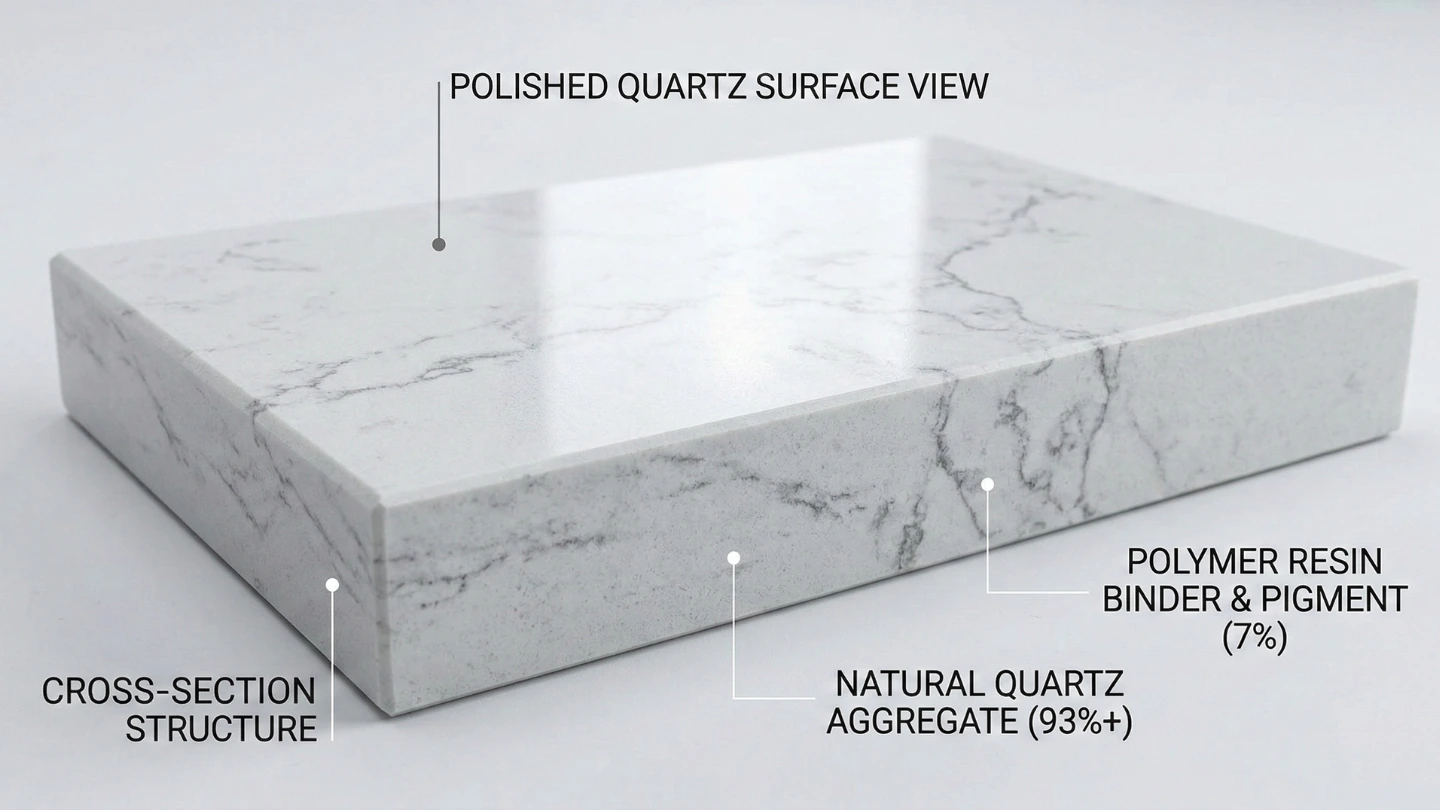
Let's start with quartz, the most popular countertop material in Malaysian kitchens. Quartz countertops are engineered from approximately 90–95% natural quartz crystals bound together with polymer resins. This composition gives quartz a Mohs hardness rating of around 7 — harder than a steel knife blade.
The Good News About Quartz
The resin content in quartz actually works in your favour here. Unlike purely mineral-based materials, the polymer resin acts as a shock absorber. When force is applied, quartz has a degree of flex that helps it absorb impact energy rather than transmitting it rigidly through the slab. This is the same property that makes quartz more resistant to cracking from dropped pots and pans compared to natural stone.
For occasional, moderate pounding — say, lightly bruising lemongrass stalks or crushing a few cloves of garlic — quartz can generally handle the activity without visible damage. The surface is unlikely to crack or chip from light mortar work.
The Risk You Need to Know
However, heavy and sustained pounding is a different story. Vigorous sambal-making sessions where you're hammering dried chillies and shallots repeatedly can create localised stress on the quartz surface. Over time, this repeated impact can cause several problems.
First, the surface may develop micro-fractures invisible to the naked eye. These tiny cracks compromise the non-porous seal that makes quartz so resistant to stains. Once moisture and cooking oils seep into micro-fractures, you may notice discolouration that no amount of cleaning can remove.
Second, the area directly beneath the mortar can develop a dull, matte patch where the polished surface has been gradually worn down by friction and impact. This is especially noticeable on darker quartz colours.
Third, if you're using a particularly heavy batu lesung and pounding with serious force — the kind needed for a proper sambal belacan — there's a genuine risk of creating a visible chip or crack, particularly if the mortar shifts or lands unevenly during pounding.
The Verdict on Quartz
Can you pound lemongrass on quartz? Technically, light pounding won't cause immediate catastrophic damage thanks to the resin's shock-absorbing properties. But it's not something we'd recommend as a regular habit. The cumulative effect of repeated impact will shorten your countertop's pristine lifespan and may void your warranty, as most quartz manufacturers explicitly exclude impact damage from their coverage.
Sintered Stone: Built Tougher, But Not Invincible
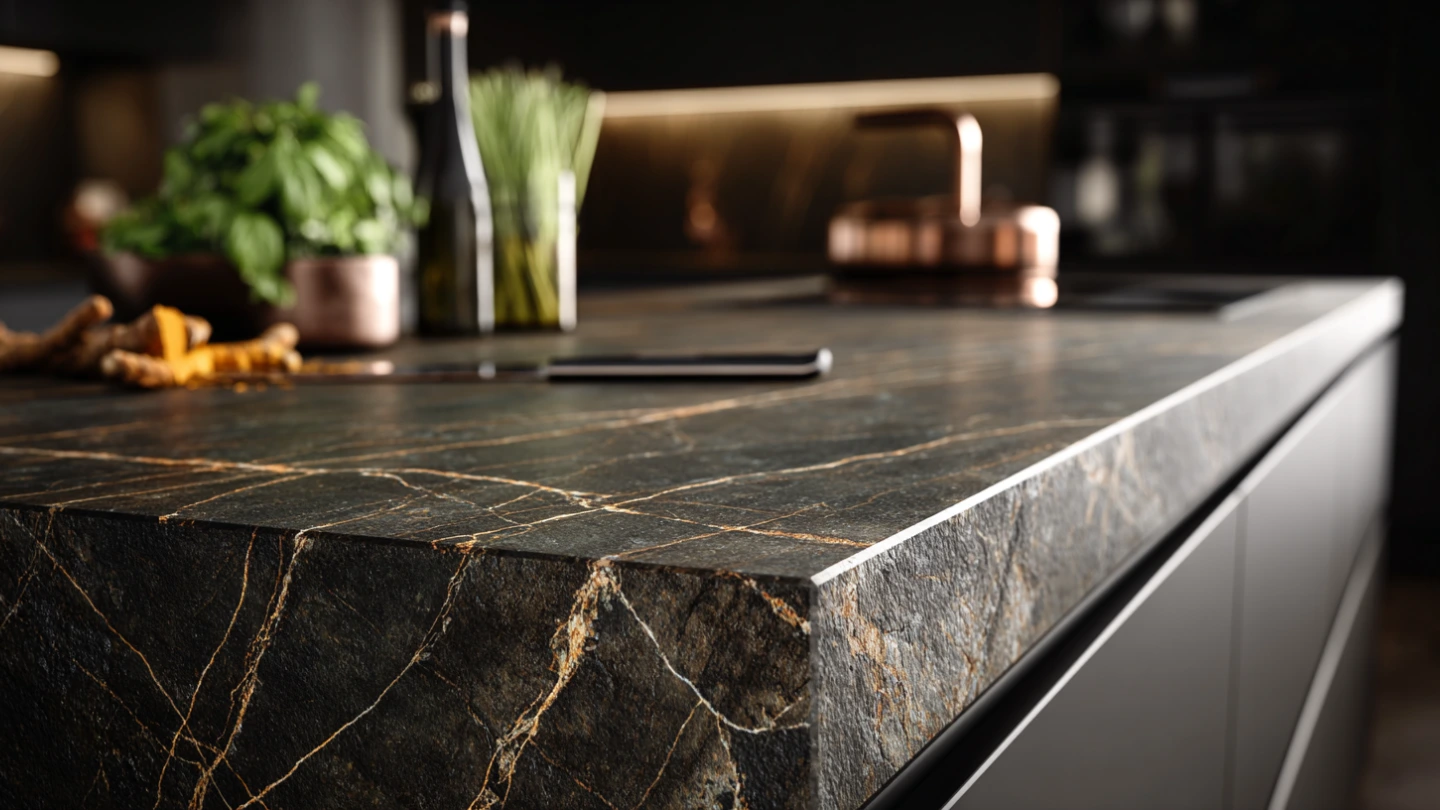
Sintered stone — most commonly Dekton in the Malaysian market — is manufactured by subjecting natural minerals to extreme heat (over 1,200°C) and pressure without any resin binders. The result is an incredibly dense, hard material that rates 7–8 on the Mohs hardness scale.
The Advantage of No Resin
Sintered stone's composition gives it superior scratch resistance compared to quartz. The surface is exceptionally hard, and it won't develop the micro-fractures that plague quartz under repeated impact in the same way. Dragging a heavy stone mortar across sintered stone is far less likely to leave scuff marks or dulled patches.
The science behind sintered stone means it's essentially ultra-compressed mineral — closer in nature to the granite batu lesung itself. Two hard mineral surfaces meeting each other creates less surface damage than a mineral mortar meeting a resin-bound surface.
The Critical Weakness: Brittleness
Here's where sintered stone's disadvantage becomes directly relevant. The same hardness that makes sintered stone scratch-proof also makes it more brittle than quartz. This is one of the well-documented disadvantages of sintered stone that homeowners should understand.
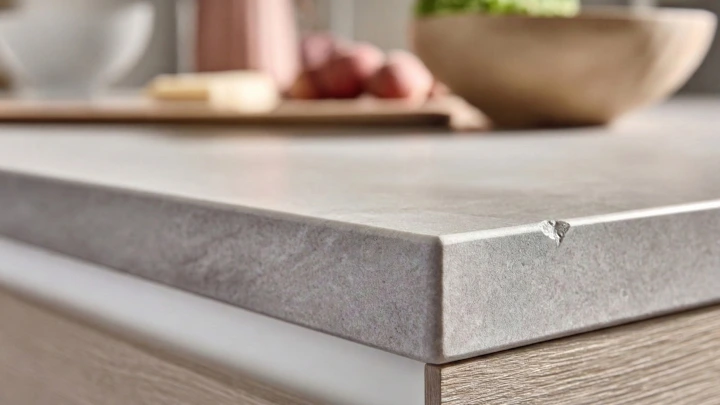
Without resin to absorb and distribute impact energy, sintered stone transmits force more rigidly through its structure. A sharp, concentrated impact — exactly the kind generated by vigorous mortar pounding — can cause the surface to chip or even crack.
This risk is particularly acute near edges, around sink cutouts, and along seam joints where the slab's structural integrity is already somewhat compromised. If you position your mortar near the edge of a sintered stone countertop and deliver a heavy blow, you're creating a genuine risk of chipping.
The repair situation makes this worse. Unlike quartz, where minor chips can be filled with colour-matched resin that bonds with the material, sintered stone repairs are extremely difficult. The printed surface pattern sits only about 1mm deep, so polishing out damage removes the design layer and exposes the white body colour beneath. Significant damage typically requires full slab replacement — an expensive proposition.
The Verdict on Sintered Stone
Can you pound lemongrass on sintered stone? The surface itself is more impact-resistant than quartz for light activities, but the brittleness factor means heavy pounding carries a higher risk of catastrophic damage (chipping or cracking) compared to quartz's more gradual degradation. It's a more dramatic failure mode — less likely to show gradual wear, but more likely to suffer a sudden, irreparable chip.
The Head-to-Head: Which Surface Handles Mortar Pounding Better?
Neither material is designed for percussive kitchen activities, but if you absolutely must choose between the two for occasional mortar use, here's how they compare:
Quartz is more forgiving of occasional light pounding. The resin provides shock absorption, and minor surface damage tends to be cosmetic rather than structural. Think of it as a surface that degrades gradually under impact.
Sintered stone is harder on the surface level but fails more dramatically. When it does sustain damage from impact, the result is typically a visible chip rather than subtle wear. However, for very light pounding — gently bruising lemongrass, crushing a few garlic cloves — sintered stone's hardness means the surface itself remains unscathed.
For reference, this mirrors how both materials behave in other impact scenarios. Quartz's resin content makes it the better choice for households where heavy items might be dropped occasionally, whilst sintered stone excels in heat and scratch resistance.
The Smart Solution: Protect Your Countertop and Keep Pounding
The best approach isn't choosing between your countertop and your cooking traditions — it's finding ways to enjoy both without compromise.
Use a Thick Wooden Chopping Board
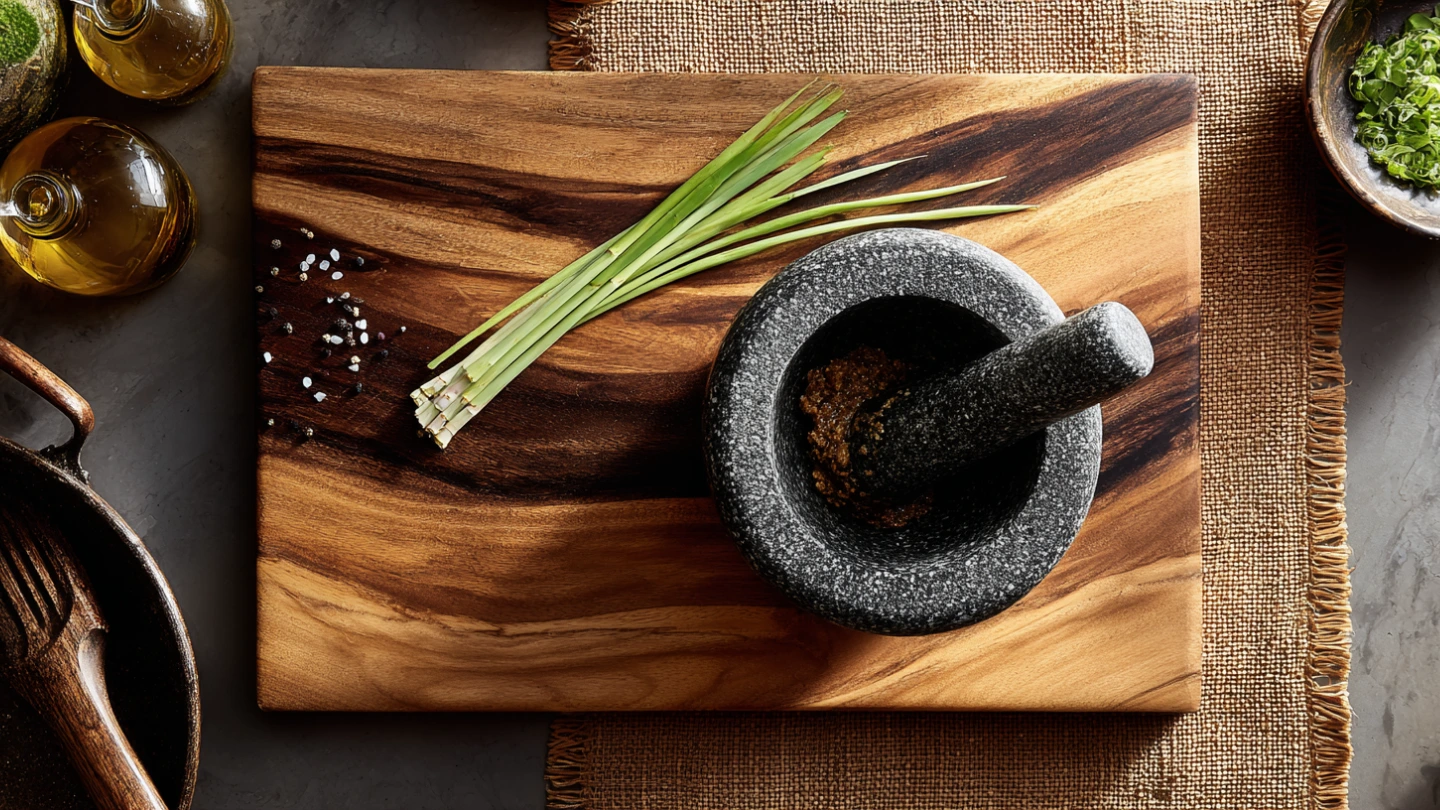
This is the simplest and most effective solution. Place a thick hardwood chopping board (at least 25mm thick) under your batu lesung before you start pounding. The wood absorbs the impact energy before it reaches your countertop, protecting the surface completely. Rubber wood or acacia boards work well and are readily available at shops like MR.DIY, IKEA Malaysia, or pasar malam stalls across the country.
The board should be larger than the base of your mortar to ensure no impact transmits directly to the stone surface if the mortar shifts during pounding.
Invest in a Rubber Mat
A thick rubber kitchen mat (at least 10mm) placed under the mortar provides excellent shock absorption. You can find food-grade silicone or rubber mats at kitchen supply shops throughout Malaysia. The rubber grips both the countertop and the mortar base, preventing slipping whilst absorbing impact.
Create a Dedicated Pounding Station
Many Malaysian kitchens have separate wet and dry kitchen areas. If you have the space, designate a specific spot — ideally on a lower surface like a kitchen trolley or a standalone wooden table — as your dedicated pounding station. This keeps the heavy-impact activity entirely away from your premium countertop.
Some homeowners take this a step further by placing a thick granite tile or offcut on their pounding station, creating a purpose-built surface that can take unlimited punishment without concern.
Consider the Mortar Material
Not all mortars are created equal in terms of impact risk. A heavy granite batu lesung delivers more force than a lighter ceramic mortar. If you primarily use your mortar for lemongrass and herbs (rather than heavy-duty sambal pounding), a smaller, lighter mortar reduces the impact force on any surface beneath it.
What About Other Traditional Malaysian Kitchen Activities?
Pounding isn't the only traditional activity that raises questions about modern countertops. Here's a quick guide to other common scenarios:
Rolling Dough (Roti Canai, Kuih)
Both quartz and sintered stone handle dough rolling well. The smooth, non-porous surface actually makes an excellent work surface for pastry and dough. No impact risk, and flour wipes away easily from both materials. Just ensure your rolling pin isn't knocking against the surface edge aggressively.
Tenderising Meat with a Mallet
Similar risk profile to mortar pounding. Use a cutting board underneath to absorb the impact. Direct mallet strikes on either quartz or sintered stone can cause damage over time.
Using a Cleaver for Bone Chopping
This is high-risk for both materials. The concentrated force of a cleaver striking through bone can chip both quartz and sintered stone. Always use a thick chopping board — never chop bones directly on any stone countertop.
Caring for Your Countertop After Impact Activities
If you do use a mortar on your countertop (with a protective board, of course), here are some maintenance tips specific to the aftermath:
For quartz, check the area under the board periodically for any signs of surface dulling or micro-cracks. If you notice the surface looking slightly different from the surrounding area, it's a sign to reinforce your protection method. For general cleaning guidance, including dealing with stubborn Malaysian cooking stains, our countertop cleaning guide covers everything you need.
For sintered stone, inspect edges and corners near your pounding area for any chips. Early detection of small chips allows for targeted repair before the damage spreads or worsens.
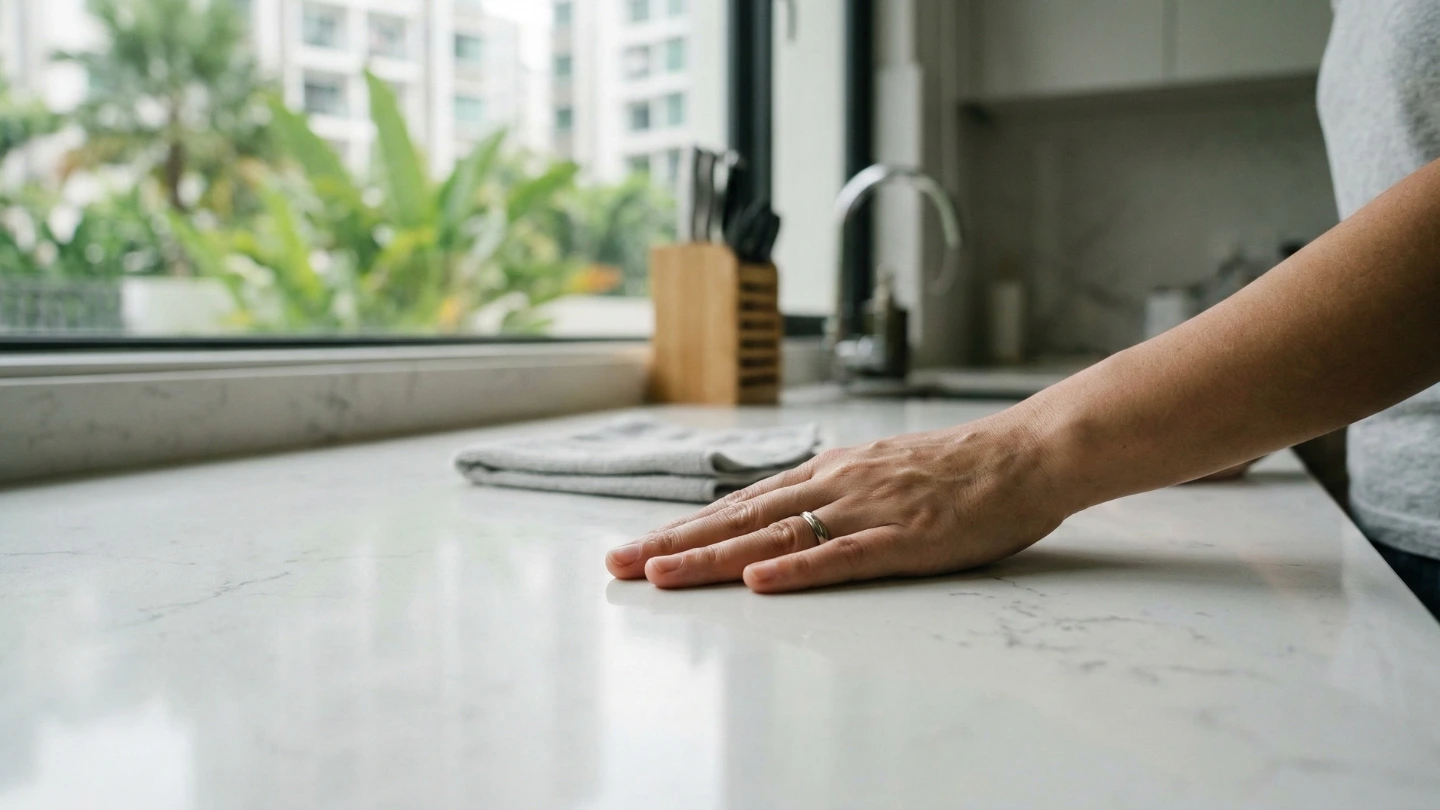
The Bigger Picture: Matching Your Material to Your Lifestyle
This question about mortar pounding is really part of a larger consideration: how well does your countertop material match your actual cooking lifestyle?
Malaysian cooking is uniquely demanding. Between hot wok cooking, turmeric-heavy spice preparation, heavy stone mortar use, and the constant humidity of our tropical climate, our kitchens test countertops in ways that European-designed surfaces weren't originally intended for.
If you're still in the process of choosing between materials, understanding these real-world use cases helps you make a more informed decision. The complete guide to kitchen countertop materials in Malaysia compares all your options with Malaysian cooking demands in mind.
For most Malaysian homeowners, both quartz and sintered stone remain excellent choices — provided you adapt a few simple habits (like using chopping boards and trivets) to protect your investment. The materials are engineered to handle the vast majority of kitchen activities brilliantly. It's only the truly percussive tasks, like mortar pounding, where a little extra caution goes a long way.
Conclusion
Can you pound lemongrass on your quartz or sintered stone countertop? The short answer is: you shouldn't do it directly on either surface without protection.
Quartz is more forgiving of light, occasional impact thanks to its resin content, but will show gradual wear under repeated pounding. Sintered stone is harder on the surface but more brittle, meaning it's less likely to show gradual damage but more likely to chip or crack under heavy impact.
The practical solution is beautifully simple: place a thick wooden chopping board or rubber mat under your mortar, and pound to your heart's content. Your sambal belacan, your laksa paste, your rendang rempah — none of them need to come at the cost of your countertop.
Malaysian cooking traditions and modern countertop materials can coexist perfectly. It just takes the same common sense you already apply when using trivets for hot woks — a small habit that protects a significant investment.
Your batu lesung has earned its place in the kitchen. Your countertop has earned its protection. With a simple board between them, both will serve you well for decades to come.