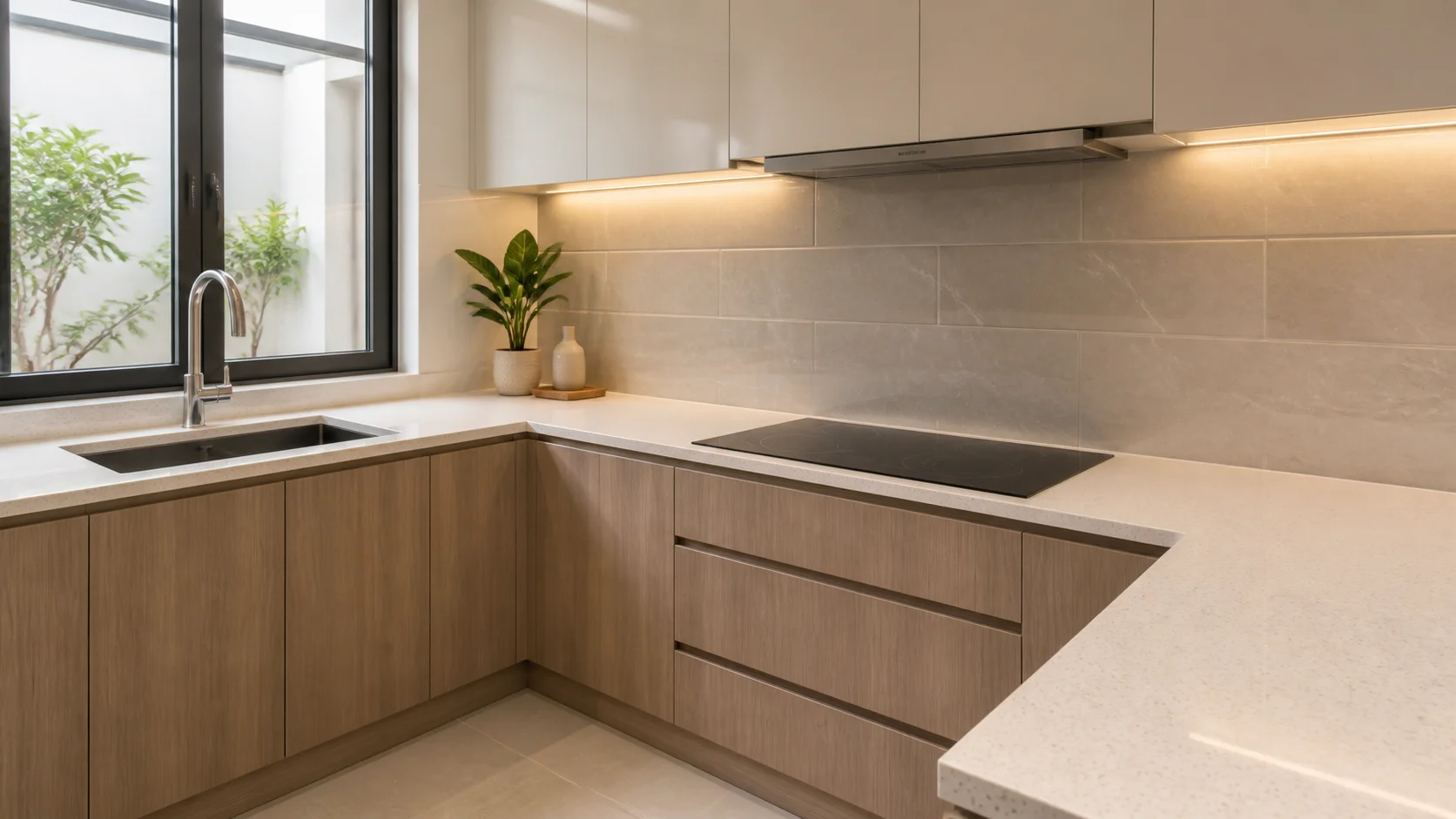
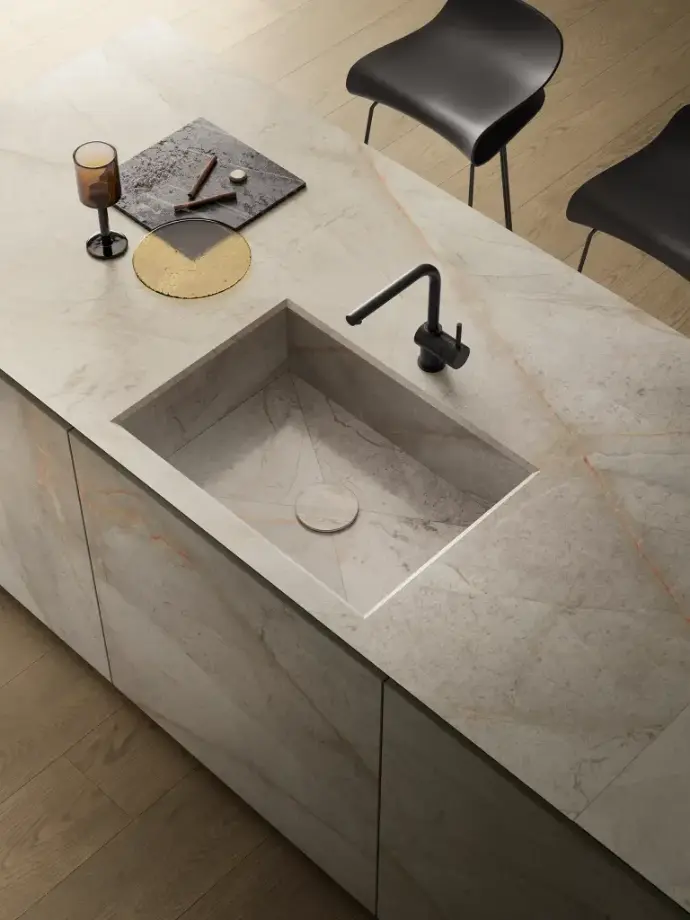
The honest, technical answer on installing new stone over your old tiled kitchen countertop.
Technically, yes — but only if your existing tiled top is flat, sound, and fully bonded, and only after weighing what you're actually saving against what you're risking. For most Malaysian kitchens, dismantling the old surface first is still the safer, cheaper option in the long run, even though it feels like the more expensive one upfront.
Key Takeaways
- Installing over old tiles is possible only when the surface underneath is dead flat, hollow-free, and structurally sound — a professional inspection, not a guess, should confirm this
- Stacking a new slab on old tiles raises your counter height, which can throw off backsplash alignment, cabinet clearance, and hob or sink positioning
- Hollow or uneven tiles underneath create voids that put point-load stress on the new stone — a real cracking risk, especially for sintered stone
- Your new slab needs its own properly templated sink and hob cutout — the old tiled top's cutout rarely lines up
- Sinno quotes old surface removal alongside the new countertop as standard practice, because problems found after installation cost more than proper removal upfront
Why Do Homeowners Ask About Skipping Dismantling?
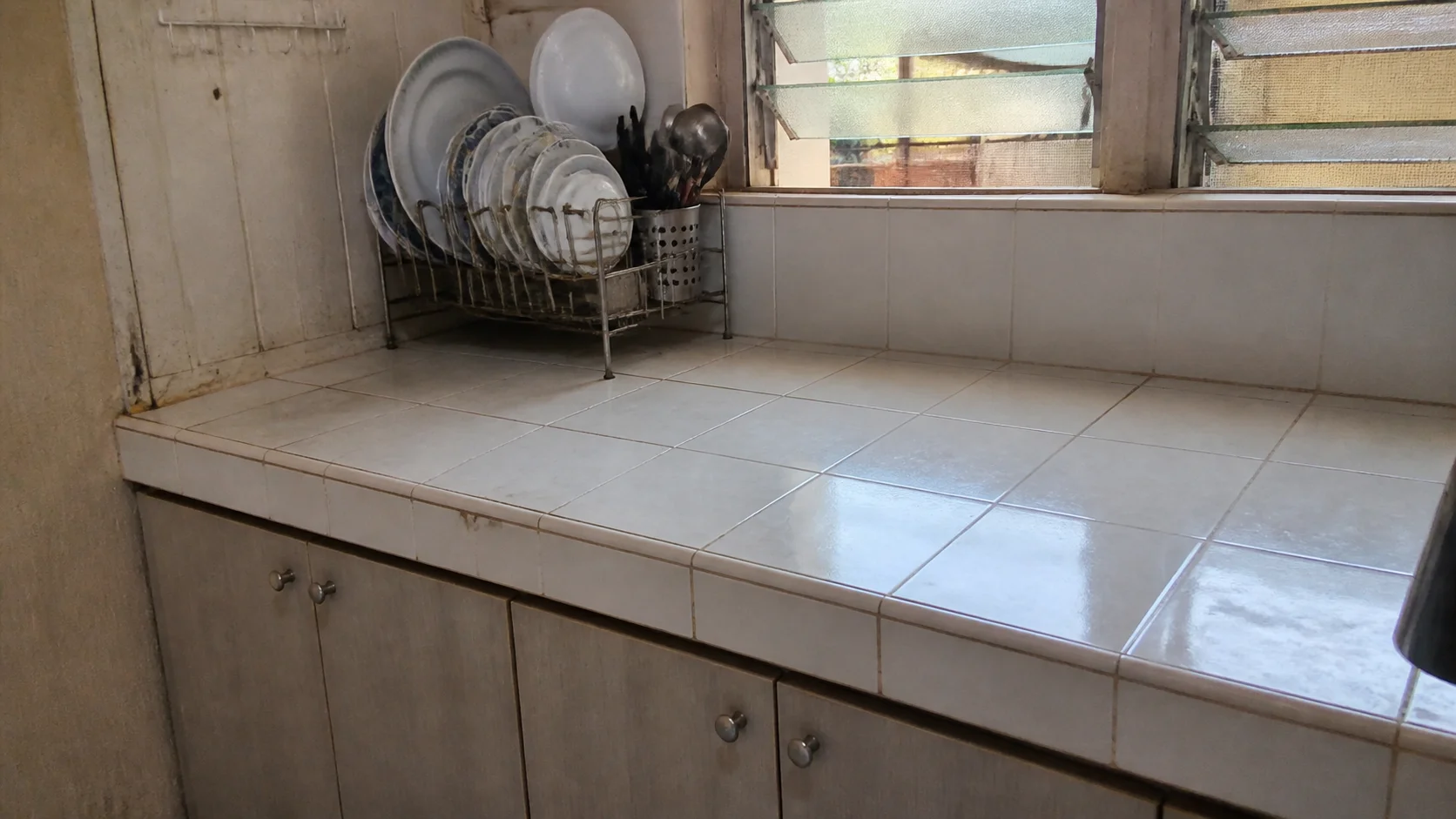
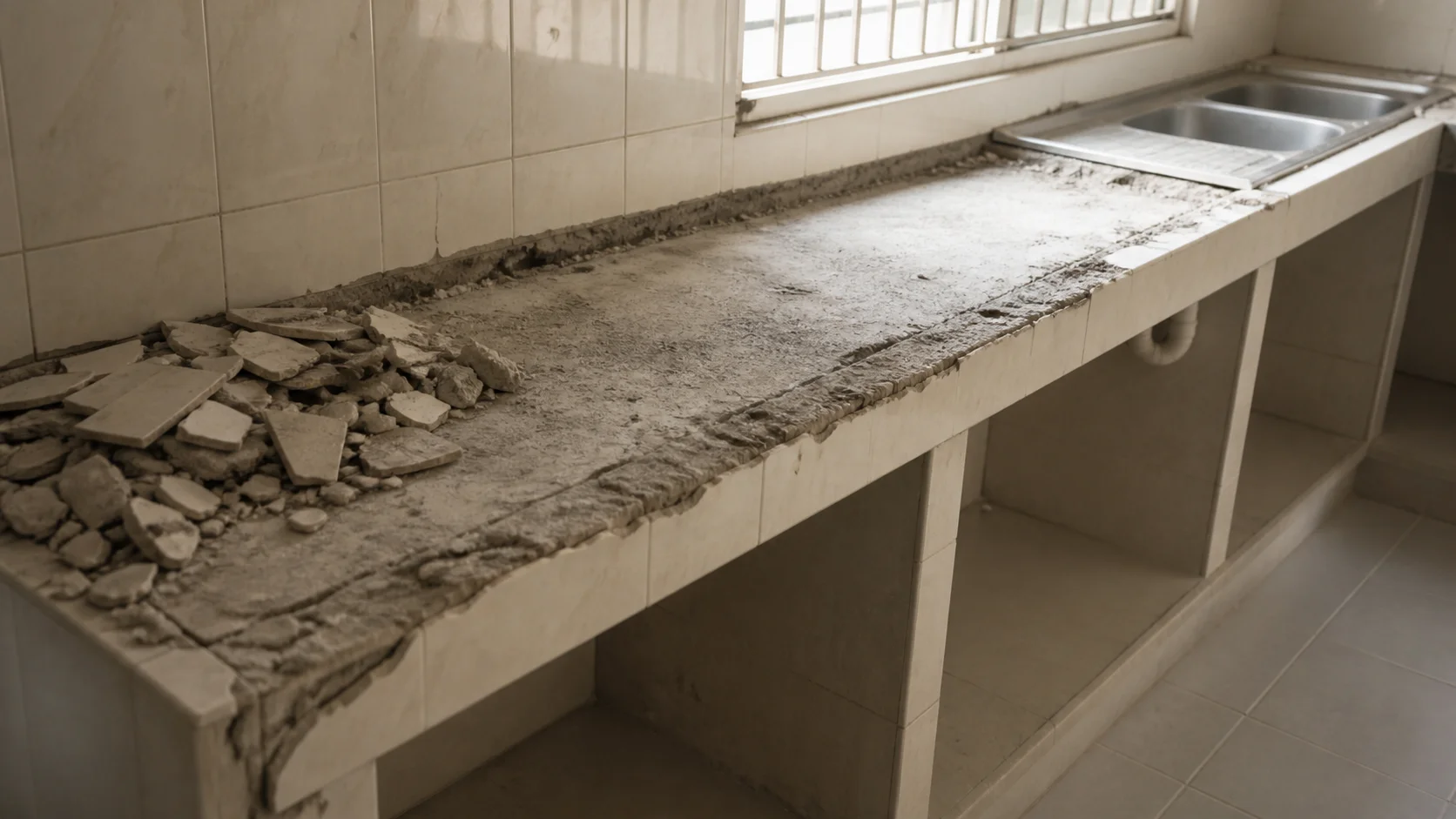
Removing an old tiled countertop means hacking out tiles, disposing of debris, and living with a dust-covered kitchen for a day or two before the new stone even arrives. It's understandable that homeowners look at that process and wonder if there's a shortcut.
The maths seems to add up on the surface: skip the hack-out, skip the labour, skip a day of mess. How to read a countertop quotation properly already flags old countertop removal as one of the costs homeowners most often forget to budget for — so it makes sense that some would rather avoid it altogether than pay for it.
The problem is that a countertop isn't a decorative layer sitting loosely on top of your cabinets. It's a rigid slab that depends entirely on what's underneath it for support. That's where the "just install on top" idea runs into trouble.
What Has to Be True for an Overlay to Actually Work?
Three conditions have to be met before installing over existing tiles is even worth considering, and all three need to be verified by someone physically inspecting your kitchen — not assumed from a photo or a WhatsApp description.
The Existing Tiles Must Be Fully Bonded, With No Hollow Spots
A fabricator will tap-test the old tiled surface before quoting anything. A hollow sound means the tile has debonded from the screed beneath it — a gap that will leave the new stone unsupported at that exact point. Quartz has resin binders that give it a small amount of flex to tolerate minor imperfections. Sintered stone doesn't have that cushion: it's scratch-resistant but genuinely brittle under point impact, so a void underneath is a much bigger liability. The disadvantages of sintered stone go into this brittleness in more depth.
The Surface Must Be Genuinely Flat
Old tiled countertops accumulate lippage over the years — small height differences between adjacent tiles, usually just a millimetre or two, invisible until you run a spirit level across the surface. A new slab bridging those high and low points takes on stress it was never engineered to carry, and that stress shows up later as a hairline crack, often nowhere near where you'd expect.
The Height Increase Has to Be Acceptable
This is the condition homeowners underestimate most.
What Actually Changes When You Stack a New Slab on Old Tiles?
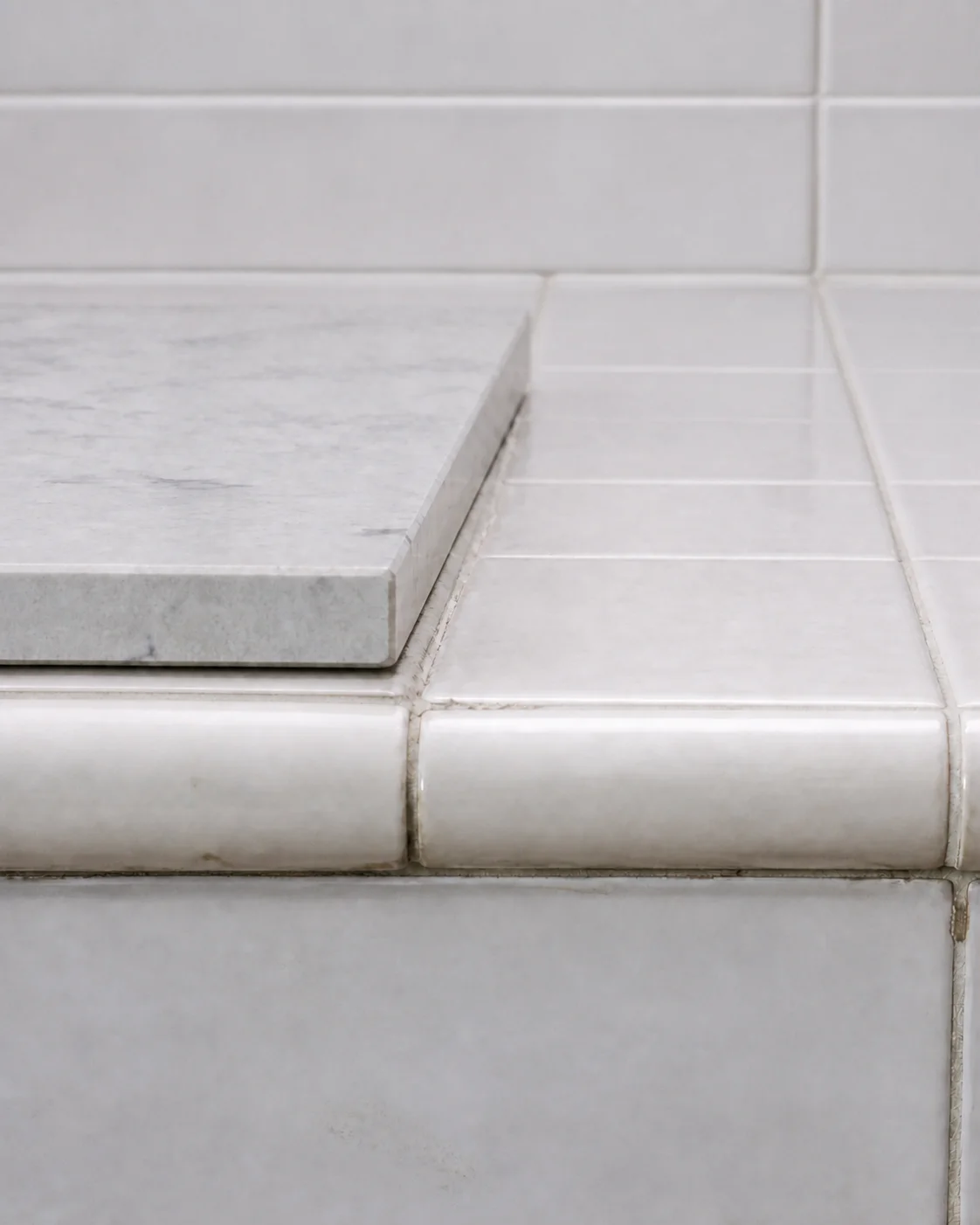
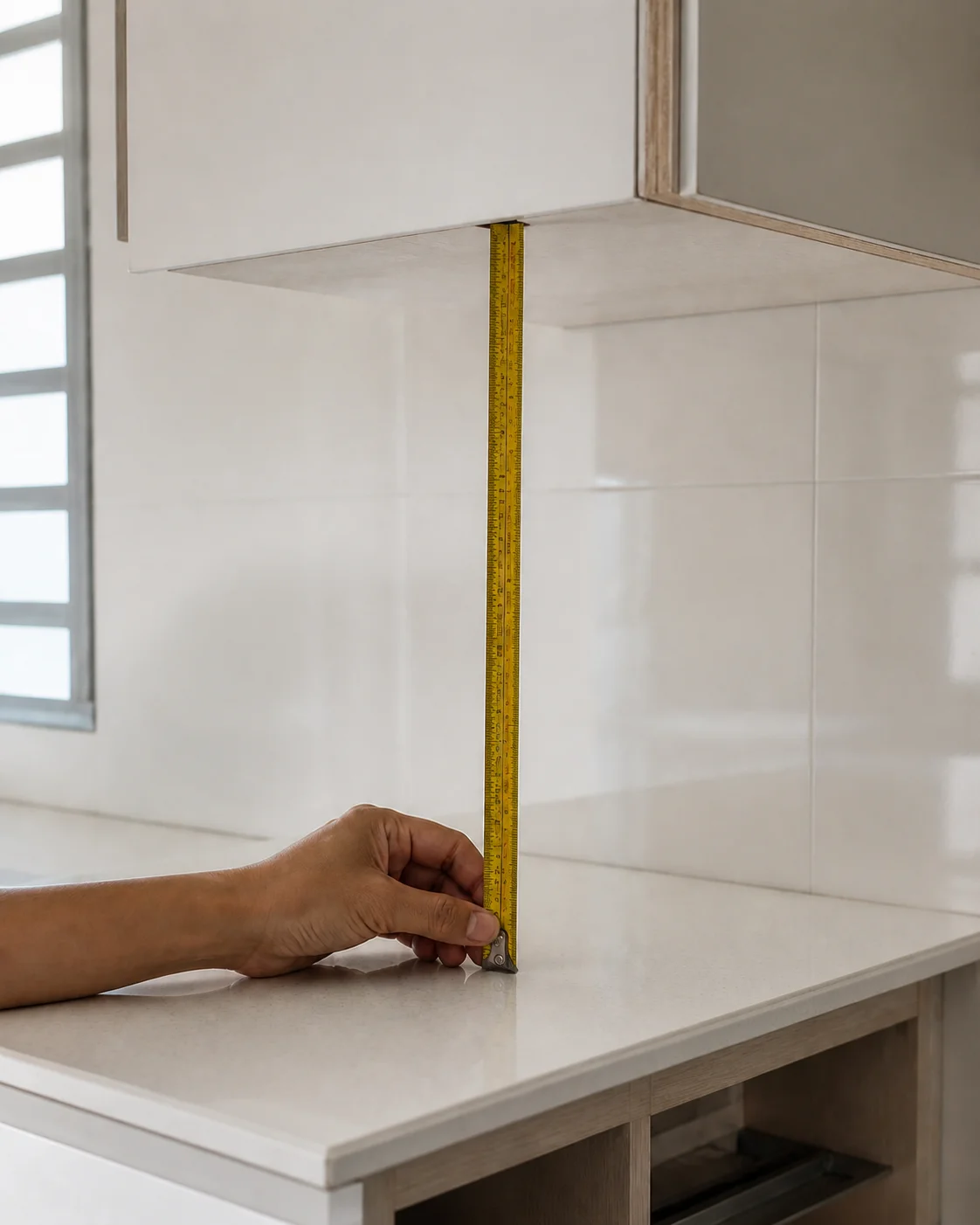
Slab thickness varies by material and series — a classic quartz series typically runs around 15mm, sintered stone is often closer to 12mm, and quartz is also available at 20mm — so there's no single number that applies to every job. But whatever the slab thickness is, the actual height increase on your counter is never just that figure — it depends on how the slab gets bonded to the old tiles. Take a 15mm quartz slab as an example: a full cement adhesive bed adds another 5–10mm on top of the stone, pushing the total rise to roughly 20–25mm. The more economical method, using Maxbond adhesive instead, adds only 2–3mm, bringing the total closer to 17–18mm. Either way, this isn't just a number on paper — it raises everything that's positioned relative to the counter.
- Backsplash alignment — if your backsplash tiles were set to meet the old counter height, a raised surface leaves a visible gap or forces re-tiling anyway, which erases most of the savings from skipping dismantling in the first place
- Upper cabinet clearance — the gap between your countertop and wall cabinets shrinks, which can make the workspace feel cramped and, near a gas hob, may bring an extractor hood closer than it should be
- Hob and sink height — an inset hob or undermount sink installed against the old surface height may now sit awkwardly proud or need reinstalling, and tap reach changes enough to matter at the sink
- Drawer and door clearance below — cabinet fronts and drawer runners built for the old counter height can start catching against the new overhang
None of these are dealbreakers on their own. But stacked together, they often mean a "simple" overlay job ends up needing backsplash work, hob reinstallation, and cabinet adjustments anyway — at which point removing the old tiles would have been the more straightforward path.
Does the Old Cutout Work for the New Slab?
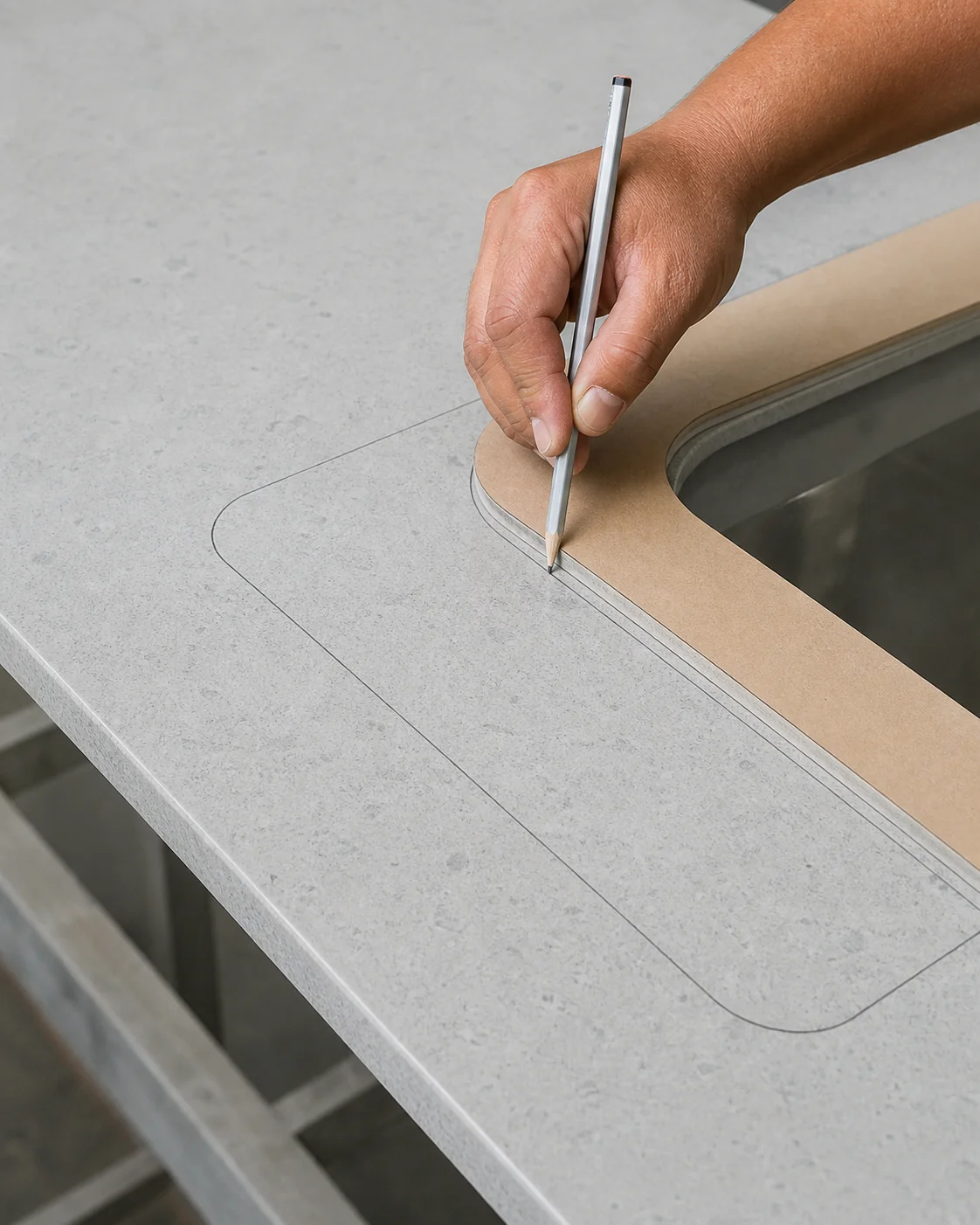
Almost never exactly. A tiled countertop's sink and hob openings were cut tile-by-tile, following the grout lines of that specific layout. A new quartz or sintered stone slab is templated and cut as one continuous piece, with its own engineering requirements — cutouts need at least 50mm of clearance from any edge to avoid crack risk. And most homeowners renovating the countertop want a new sink too, which is where the old opening becomes a real problem, not just a technicality.
If Your New Sink Is Bigger Than the Old One
The old tiled opening still has to be hacked out and enlarged to fit it. This is the exact tile-hacking work the overlay was meant to avoid — it just happens at a smaller, more awkward scale mid-installation instead of being done properly upfront.
If You Reuse the Old Sink
This is the one path that genuinely avoids enlarging the opening. But it trades one problem for another: a brand new, uniform stone surface framing a sink that already shows years of scratches or discolouration looks off. You save on the cutout, but the sink becomes the one detail that gives away that this wasn't a full renovation — which defeats a lot of the point of installing a new countertop at all.
If Your New Sink Is Smaller Than the Old Opening
This is the riskiest of the three. An undermount sink needs continuous support along its rim from the underside of the slab — a smaller sink dropped into an oversized old opening simply doesn't have that backing underneath it. A top-mount sink is a little safer since it sits on top rather than hanging from below, but it's still only supported by the stone edge around an oversized hole, not a cutout sized properly to it — far less margin for error than a hole cut to fit in the first place.
None of these three paths are genuinely simpler than re-templating the sink and hob position properly for the new slab. If you're weighing whether a general tiler could handle this kind of precision cutting instead of a proper stone fabricator, this guide on buying quartz and asking your tiler to install it is worth reading first.
So Why Does Sinno Recommend Removing the Old Surface as Standard?
Because the conditions above rarely all line up cleanly in a kitchen that's been in daily use for 10, 15, or 20 years — and the cost of being wrong about even one of them is a cracked slab discovered weeks after installation, not a quick fix.
Old surface removal is quoted alongside the new fitting as one scheduled job, not a separate contractor visit tacked on afterwards. That's a deliberate choice: it means the fabricator inspecting your kitchen for the new stone is the same team clearing the old one, with full visibility of what condition the substrate is actually in before a single piece of quartz or sintered stone is cut.
If your renovation timeline is already tight, how long countertop installation takes in Malaysia breaks down where old surface removal typically sits in that schedule — it's usually far less disruptive to plan for upfront than most homeowners expect.
Does This Apply Equally to Quartz and Sintered Stone?
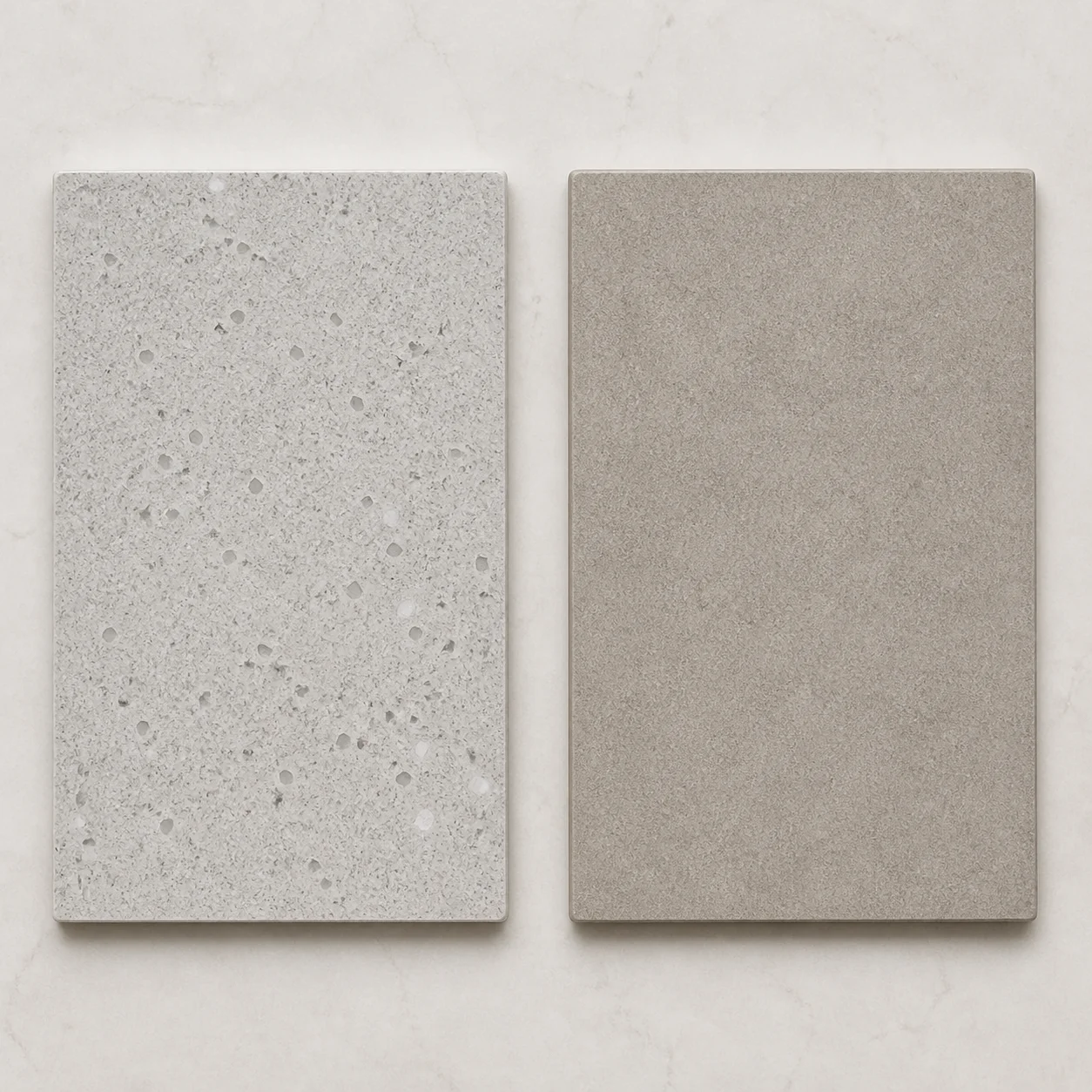
Not quite — sintered stone carries more risk in an overlay scenario. Its resin-free composition makes it harder and more scratch-resistant than quartz, but also less forgiving of an uneven or hollow substrate underneath. Quartz's resin content gives it a small margin of flex that can tolerate very minor surface imperfections that sintered stone cannot.
That said, "more forgiving" isn't the same as "safe to skip inspection." Both materials still need a flat, sound base to perform the way they're supposed to. If you're still deciding between the two materials generally, this honest comparison of sintered stone versus quartz covers where each one genuinely has the edge.
FAQ
Is it cheaper to install a countertop over old tiles instead of removing them first? It often looks cheaper on the initial quote, but once you account for the backsplash rework, cabinet adjustments, or crack repairs that can follow, most homeowners end up paying more than a straightforward removal-and-install job would have cost.
How do I know if my existing tiled countertop is flat enough for an overlay? You don't check this yourself with a bare eye — ask your fabricator to tap-test the tiles for hollow spots and run a spirit level across the surface during their site visit, before any quote is finalised.
Will installing over old tiles affect my existing sink and hob? Yes, in most cases. The added height and the new slab's own cutout requirements usually mean the sink or hob needs to be reinstalled or adjusted, not simply reused in place.
Can I do this with sintered stone, or only quartz? Both are technically possible under the right conditions, but sintered stone is less tolerant of an imperfect substrate than quartz, so the inspection standard needs to be stricter.
What does Sinno recommend for most kitchens? Removing the old tiled surface before installing the new countertop, quoted and scheduled as one job — it gives the fabricator full visibility of the substrate before cutting a single slab.
Conclusion
An overlay isn't a myth — it's a real option, but a narrow one, and it only holds up when someone has actually inspected your existing tiles for flatness and bonding rather than assumed they'll be fine. For most Malaysian kitchens that have seen a decade or more of daily use, removing the old surface first remains the more reliable route, and it's why Sinno builds it into the installation quote rather than treating it as an afterthought. Before you decide either way, get a fabricator to physically look at your kitchen — that one site visit will tell you more than any general rule can.