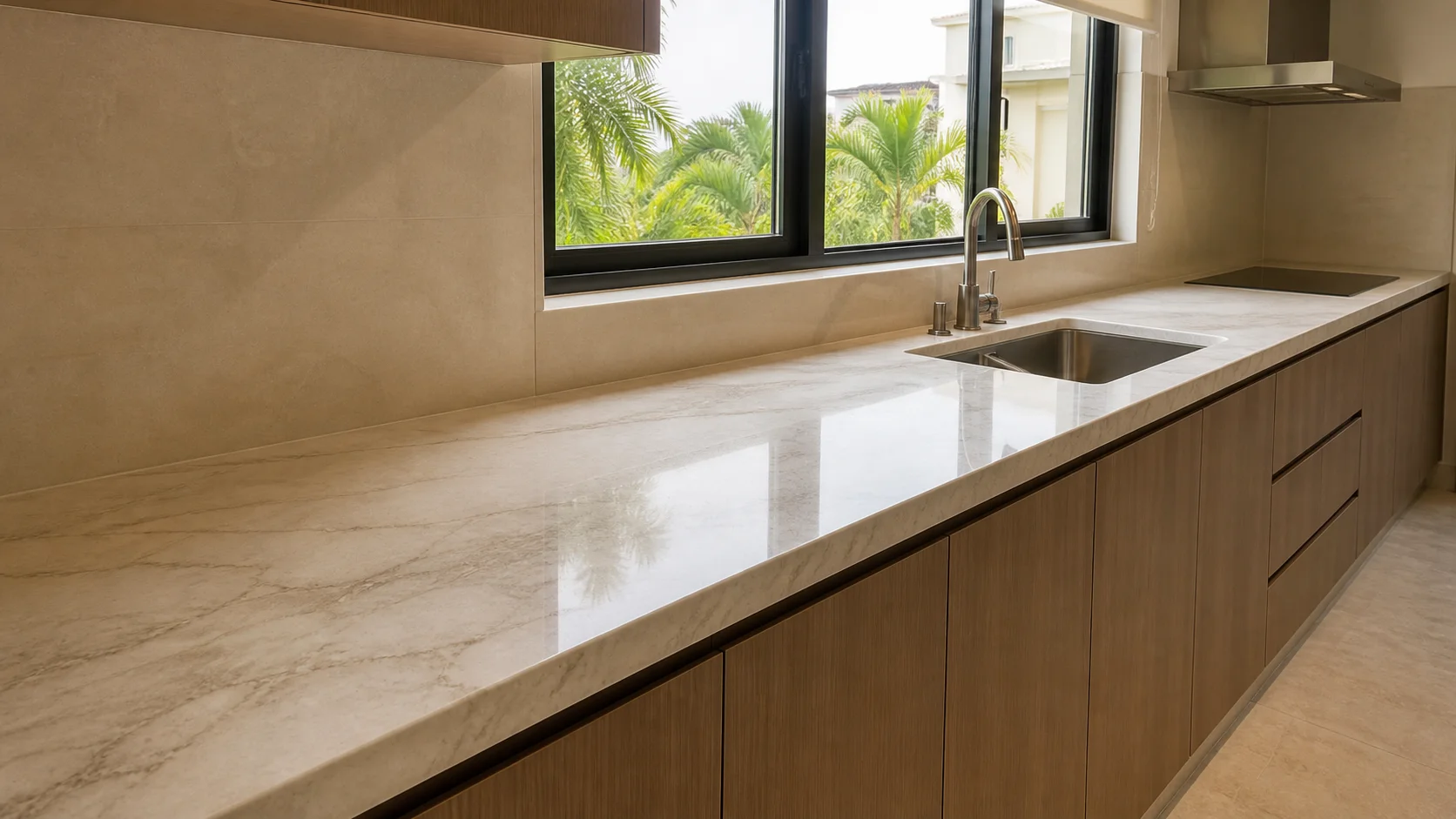
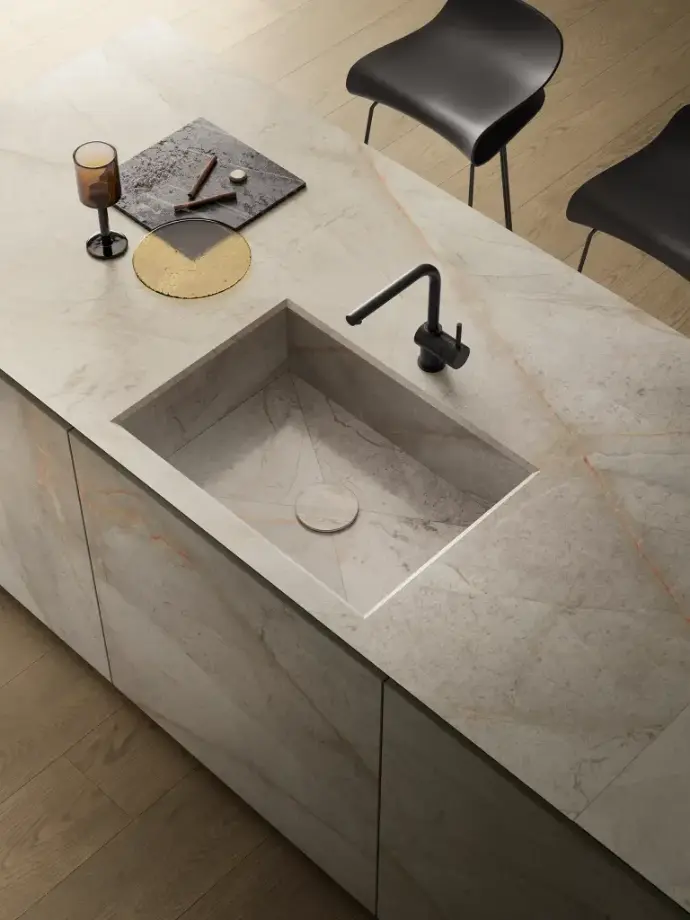
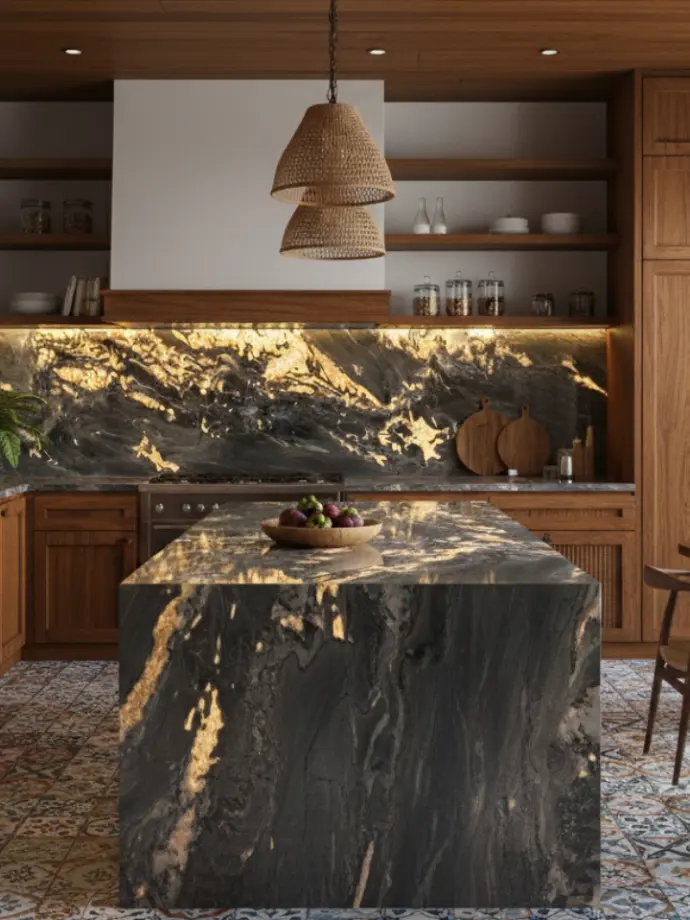
A small sample chip hides the batch shifts and veining differences you'll only see on the full slab.
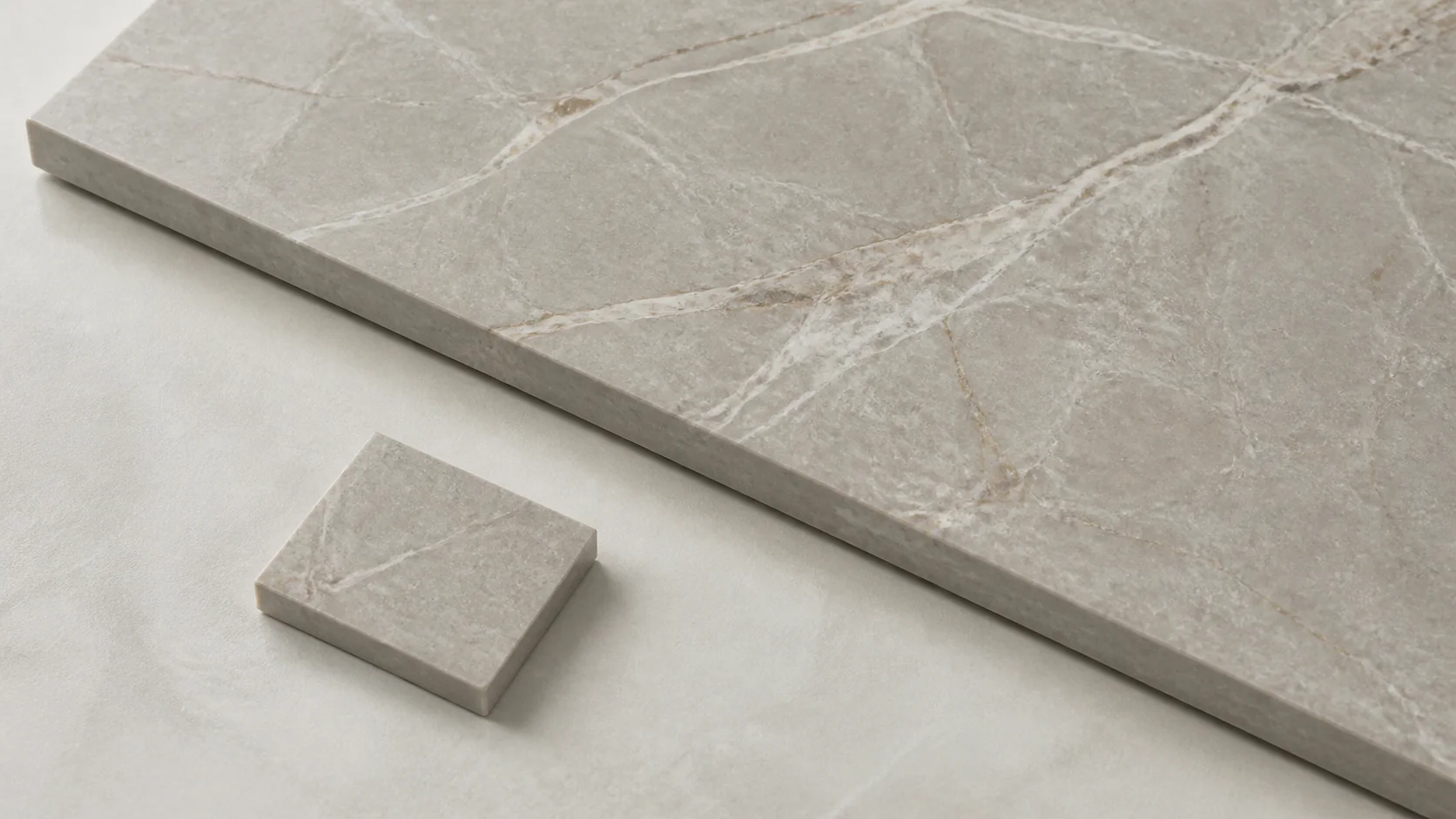
A countertop sample chip only shows you a few square inches of one slab, cut under one set of lights. It can't show you the veining spread, the batch-to-batch colour shift, or how that stone will actually look once it's sitting under your kitchen's own lighting. Homeowners who sign off on a countertop from a sample chip alone are the ones most likely to call their fabricator after installation asking why the colour looks "different from what I picked."
Key Takeaways
- A sample chip is cut from one spot on one slab — it can't show pattern repetition or veining spread across a full countertop
- Quartz and sintered stone are made in batches, so colour and pattern can shift slightly even under the same product name
- Natural stone slabs like marble and granite are one-of-a-kind — the chip you touched in the showroom isn't the slab you'll receive; compressed marble, being manufactured, varies by batch instead
- Lighting changes everything: a chip under showroom halogen looks different under your kitchen's LED strip or afternoon sun
- Always ask to see, or reserve, the actual slab before you confirm your quote
Why Doesn't a Small Sample Chip Show the Full Picture?
A sample chip is usually 10cm to 15cm across, cut from a single point on a single slab that can measure up to 3.2 metres long. Stone pattern — whether it's the veining in marble or the fleck distribution in quartz — doesn't repeat evenly across that length. What looks like a soft, even grey in your hand might turn into a bold, sweeping vein once it's stretched across your full kitchen run.
This matters most for materials sold on their "natural look." A chip showing three small grey flecks tells you nothing about whether those flecks cluster in one corner of the finished countertop or spread out evenly. You're judging the whole slab by a fragment of it, and stone doesn't scale down that predictably.
How Much Can Colour Vary Between Quartz Batches?
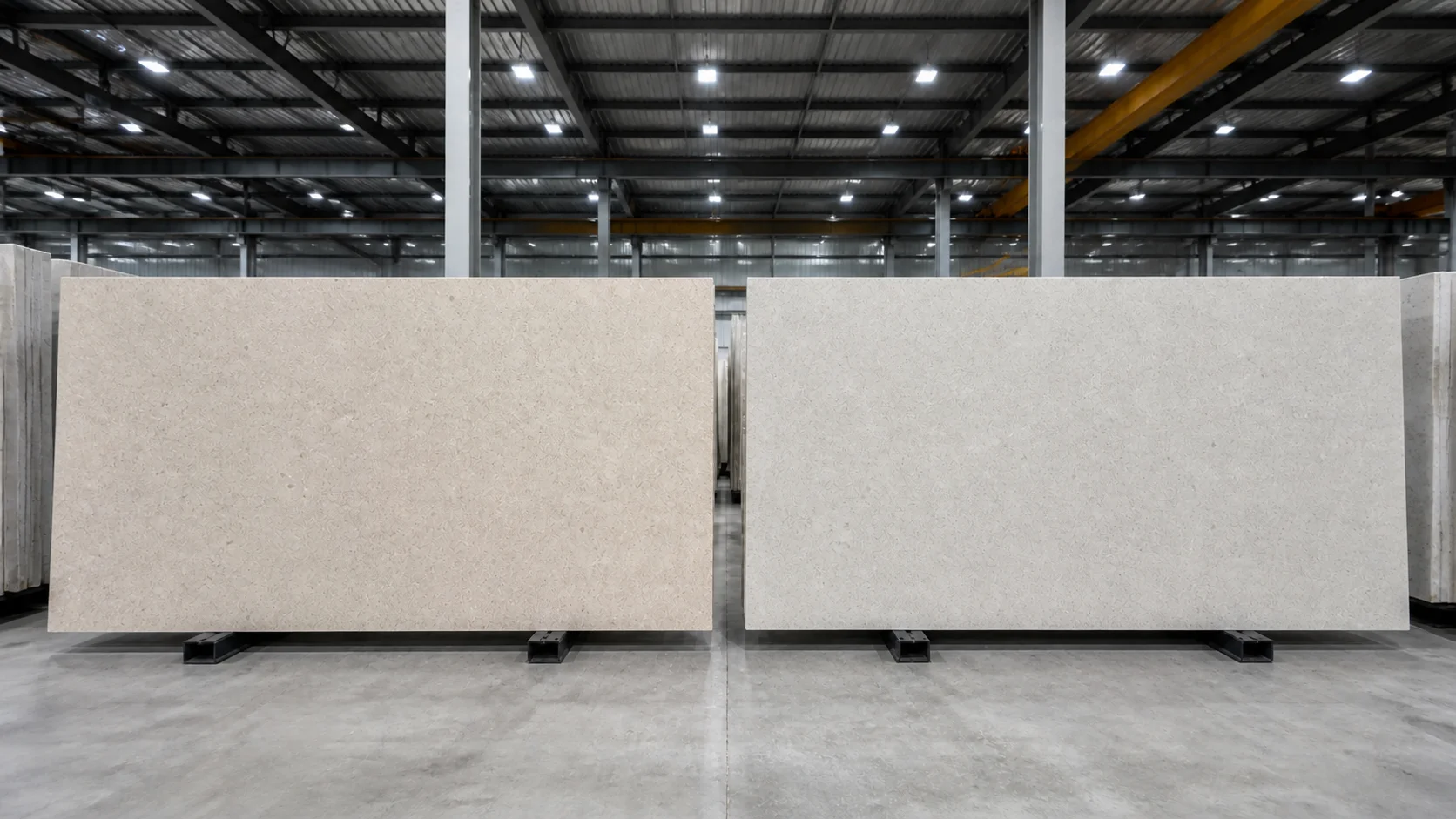
Quartz and sintered stone colours can shift slightly between production batches, even when the product name and collection stay the same. Manufacturers blend pigments and quartz aggregate in large batches, or "lots," and while brands aim for consistency, a slab from this year's lot can sit a shade warmer or cooler than one from last year's — the kind of difference you'd only notice side by side.
This is why asking your fabricator for the batch or lot number matters, especially if your project spans more than one countertop run (kitchen island plus wet kitchen, for instance). A sample chip from the showroom display won't tell you which batch your actual slab is coming from.
If your renovation involves matching countertops across rooms, it's worth reading why choosing different colours for each countertop is more expensive — the same batch-consistency issue is part of why mixing colours adds cost.
Why Is Natural Stone Even More Unpredictable Than a Sample Suggests?
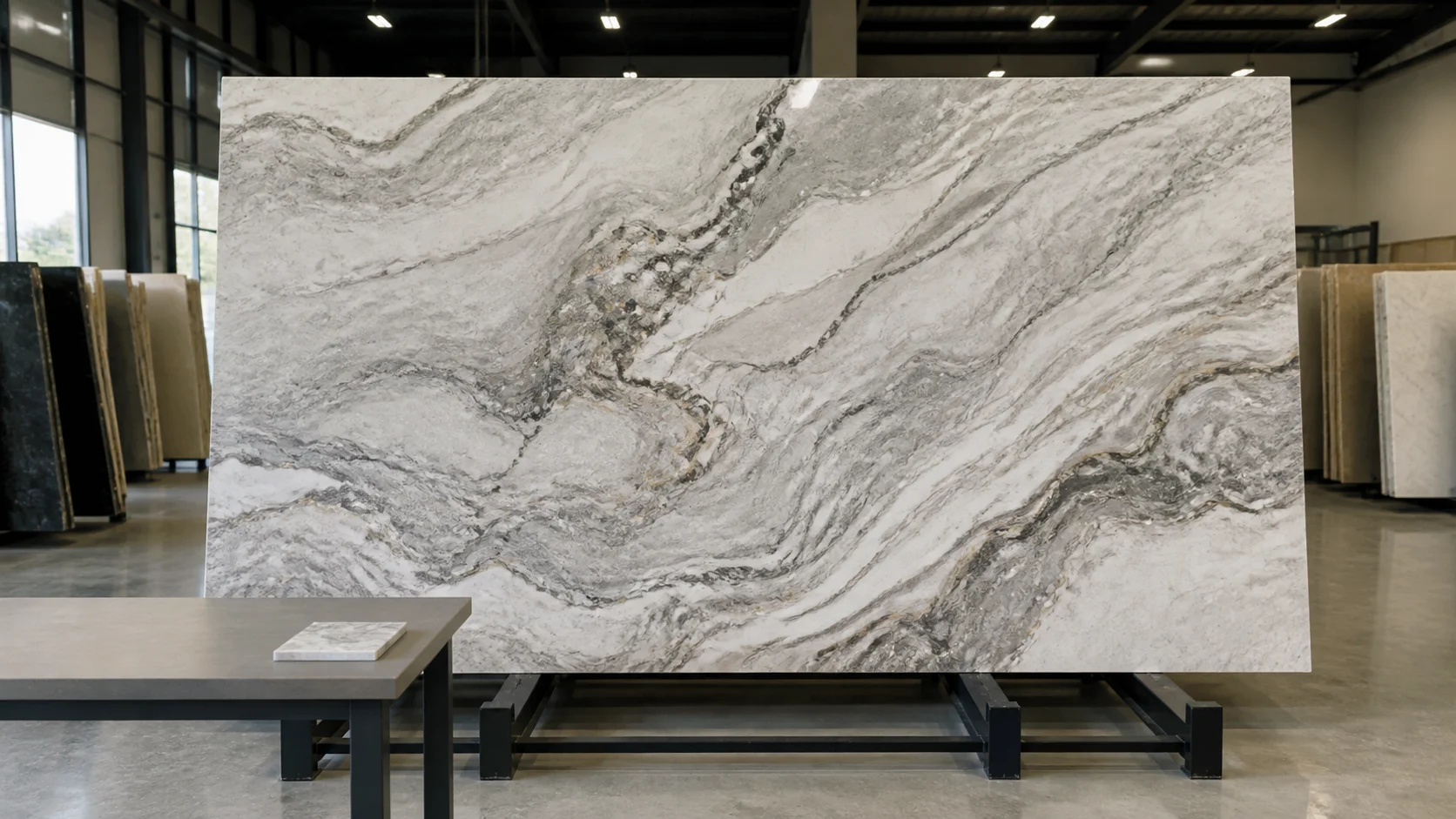
Natural stone — granite and marble — is quarried, not manufactured, so no two slabs are identical. A sample chip shows you one small section of veining from one slab, but the specific slab reserved for your kitchen could have entirely different vein direction, density, or colour tone, even if it's labelled the same stone name.
This is the exact reason showrooms that sell natural stone should let you choose your actual slab, not just a catalogue name. Our guide on Calacatta vs Carrara white marble covers how differently two slabs of the "same" marble can read once the veining is laid out across a full countertop.
Compressed marble sits closer to quartz on this front. It's manufactured by binding crushed marble aggregate with resin under pressure, so it behaves more like an engineered material than a quarried one — pattern and colour are still set by production batch, not by the randomness of a quarry. If you're weighing it as an option, our guide on compressed marble countertops is worth reading before you commit to a sample chip alone.
Does Lighting Really Change How a Countertop Looks?
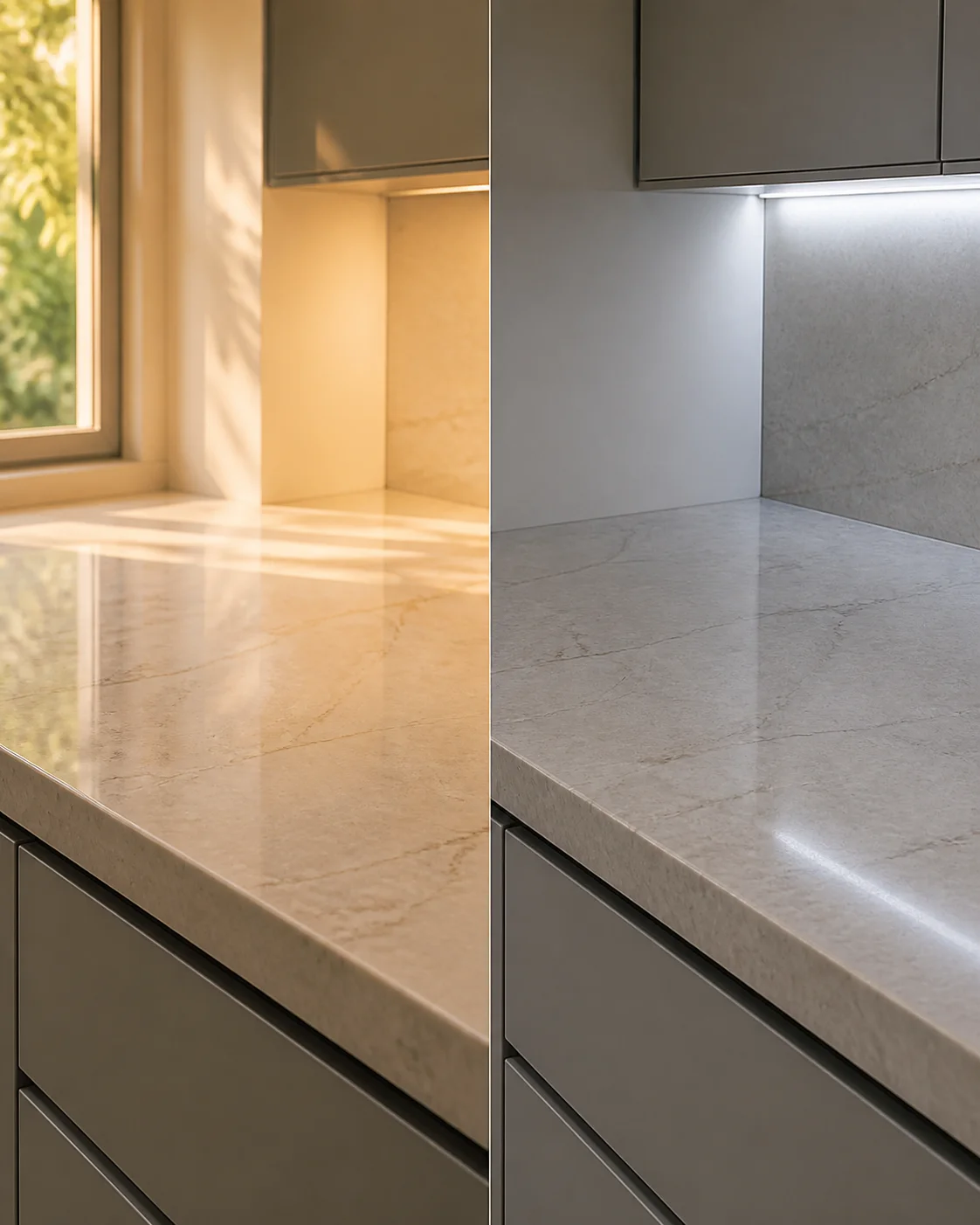
Yes — the same stone can look noticeably different depending on the light it's under. Showrooms often use warm halogen spotlights designed to make stone look richer and more dramatic than it will under your kitchen's daylight or cool-white LED strip lighting. A sample chip that looked warm and golden under showroom lighting can read flat and grey once it's under your kitchen's fluorescent tube at 8pm.
Malaysian kitchens add another layer to this: a wet kitchen near a window catches strong tropical daylight, while an enclosed dry kitchen usually relies entirely on artificial lighting. The same slab can look like two different colours between those two spaces. Finish matters here too — a polished surface reflects and bounces light, while a honed or matte finish absorbs it, which changes how dramatic that veining or fleck pattern appears. Our polished vs honed vs leather vs gloss finish guide breaks down how each finish behaves under different light.
Sample Chip vs Full Slab: What's the Real Difference?
| What You're Judging | Sample Chip | Full Slab |
|---|---|---|
| Size | 10–15cm chip | Up to 3.2m long |
| Veining/pattern spread | One fixed point | Varies across the entire surface |
| Batch/lot accuracy | Showroom display batch | Your actual reserved batch |
| Lighting shown under | Usually showroom halogen | Your kitchen's real lighting |
| Ability to reject before fabrication | None | Yes, if viewed before confirming |
What Should You Do Instead of Relying on a Sample Chip?
Ask to see, or reserve, the full slab that will actually go into your kitchen before you sign off on the quote. A fabricator working with proper inventory should be able to show you photos or a video of the specific slab, not just the collection catalogue. If you're choosing natural stone, ask to view it in person at the fabrication yard — reputable suppliers expect this request and won't rush you past it.
It also helps to bring a photo of your own kitchen space, taken in the lighting you actually cook under, so you can compare it against the slab rather than relying on memory once you're home. And if you're still deciding how to source your countertop in the first place, our guide on the three ways to source a countertop in Malaysia explains why going through a proper fabricator, rather than a carpenter bundle or an unverified supplier, gives you this level of slab visibility to begin with.
Before you commit to any supplier, it's worth working through the questions you should ask before buying a countertop in Malaysia — slab viewing should be one of the first things on that list.
If you're an interior designer selecting the stone on your client's behalf, bring your homeowner along to the warehouse to see the actual slab before it's confirmed. A colour or veining choice that looked right on a sample chip — or even in your own rendering — can turn into a dispute after installation if the homeowner never signed off on the real slab. Ten minutes at the warehouse is a lot cheaper than an argument once the countertop is already fitted.
Should You See the Slab Before or After Confirming Your Quote?
Before. Once your quote is confirmed and templating begins, the fabricator typically cuts from whichever slab is allocated to your job — reversing that decision later usually means paying for a second slab and a second fabrication run. Ask your fabricator directly whether slab viewing happens before or after payment, and treat "we'll show you once it's confirmed" as a signal to slow down.
Understanding what happens after you approve a slab also helps set expectations. Our guide on how your countertop is fabricated in Malaysia walks through the process from slab selection to the finished installed piece.
FAQ
Can I ask to see the exact slab before I confirm my purchase? Yes, and you should — any fabricator working with proper stock can show you photos, video, or an in-person view of the specific slab allocated to your job before you sign off on the quote.
Do all countertop brands vary between production batches? Most engineered stone brands have some batch-to-batch variation, since pigment and aggregate blending happens in large production runs rather than a single continuous process, though reputable brands keep this variation minor.
Is natural stone more inconsistent than quartz or sintered stone? Yes — natural stone like marble and granite is quarried, so every slab has unique veining and colour, while quartz and sintered stone are engineered for more predictable (though not identical) consistency.
What if I've already ordered a countertop based on a sample chip only? Contact your fabricator before fabrication begins and ask to view the actual slab reserved for your job — if it looks significantly different from the sample, most suppliers can swap it for another slab from the same collection at this stage, though options narrow considerably once cutting starts.
Conclusion
A sample chip is a starting point for narrowing down colour and material, not a substitute for seeing your actual slab. Veining spread, batch colour shifts, and lighting all change once that stone is full-sized and sitting in your kitchen rather than in your palm at a showroom counter. Before you confirm any countertop quote, ask to see the real slab under conditions close to your own kitchen — it's a five-minute request that can save you from a mismatch you're stuck living with for the next 15 years.