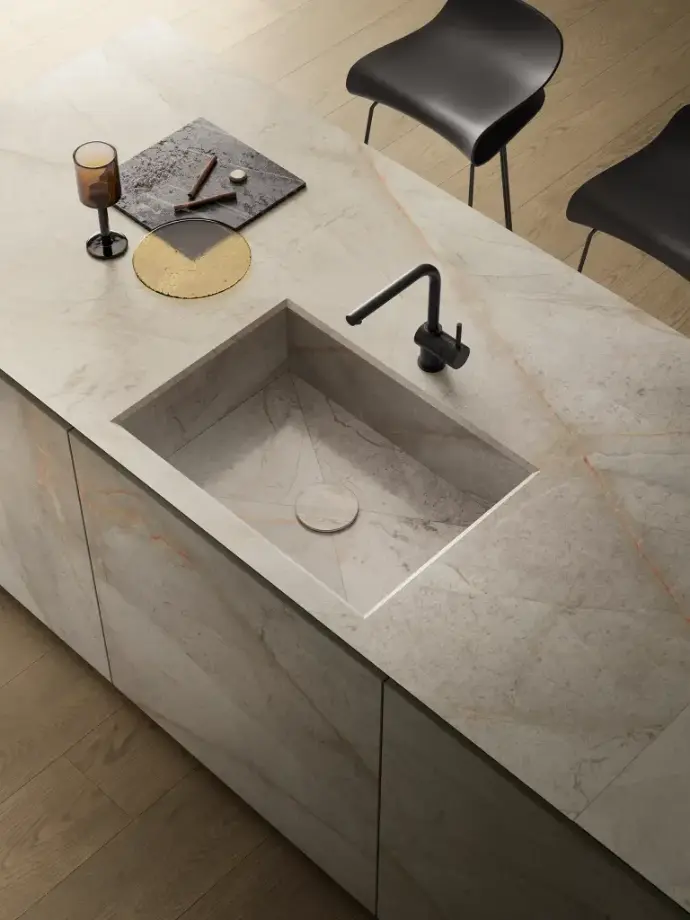
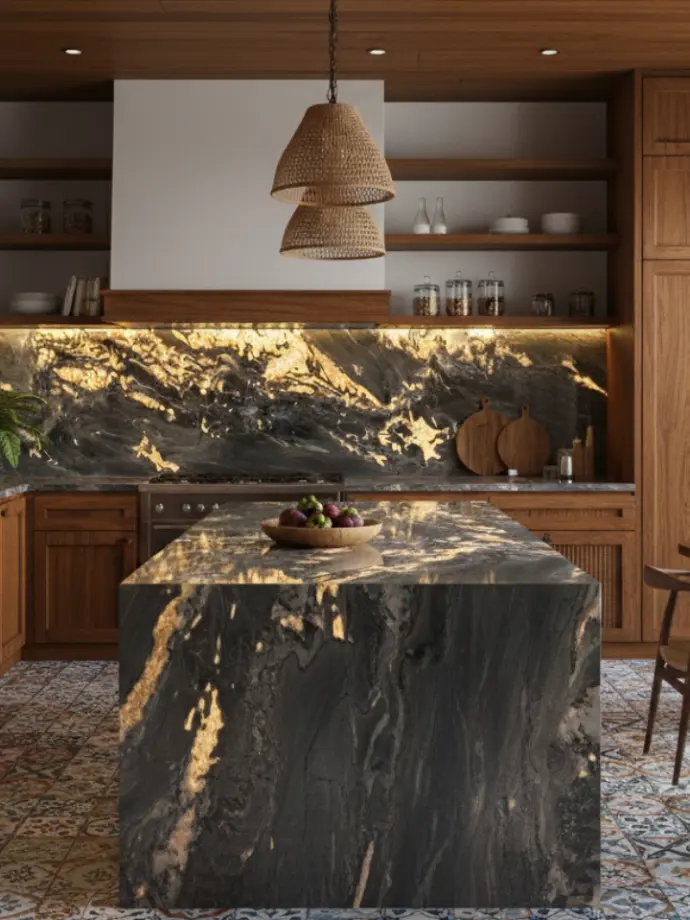
When you’re selecting a quartz countertop for your Malaysian kitchen, the colour and pattern often steal the spotlight. But there’s another critical decision that dramatically affects both the look and performance of your countertop: the finish.
Most homeowners in Malaysia are familiar with the classic polished finish—that glossy, mirror-like surface you see in showrooms. However, honed (matte) and leather (textured) finishes are gaining popularity amongst design-conscious Malaysians who want something different.
But which finish is actually best for your kitchen? The answer isn’t as straightforward as you might think, and it depends heavily on your cooking habits, cleaning routine, and aesthetic preferences.
In this comprehensive guide, we’ll break down the differences between honed, leather, and polished quartz finishes, examine their performance in Malaysian kitchens, and help you make the right choice for your home.
Understanding Quartz Countertop Finishes
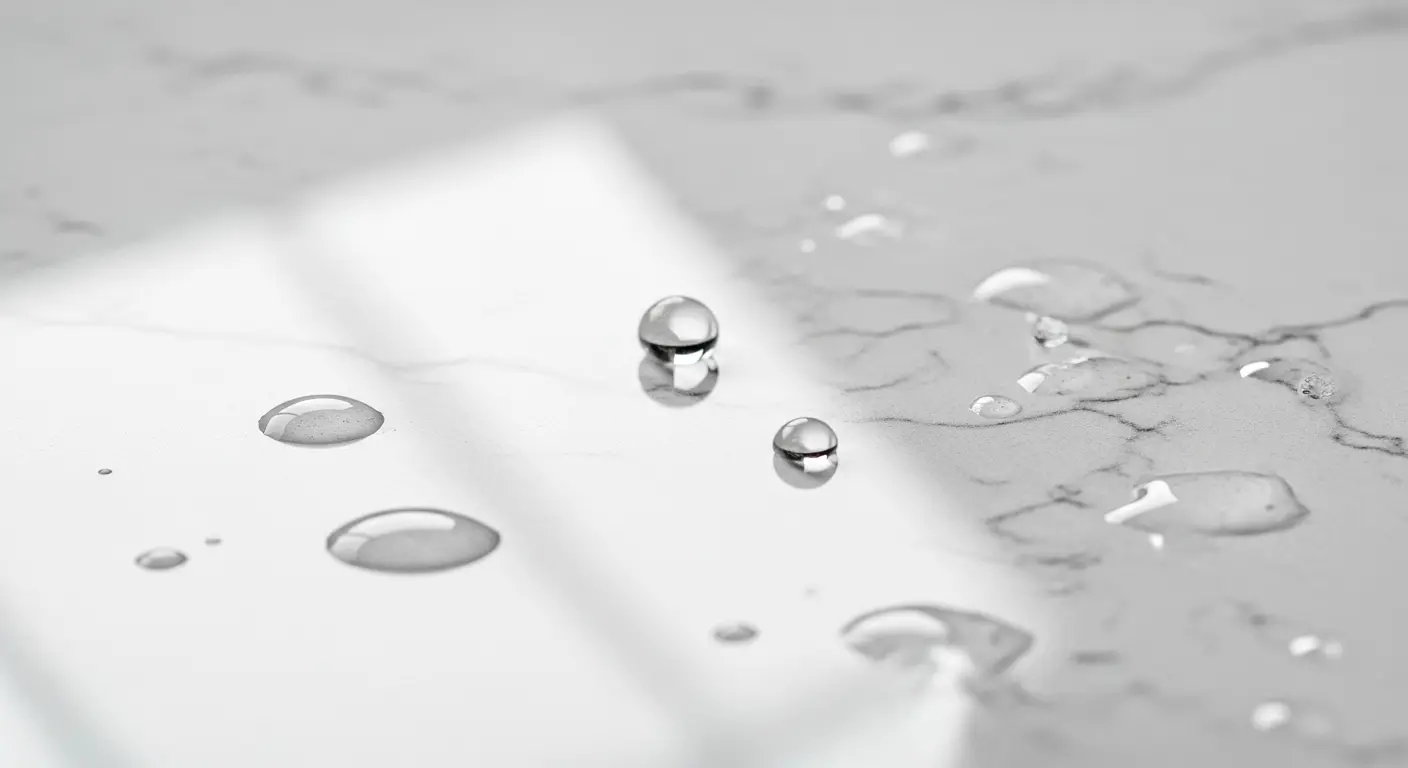
Before we compare the finishes, let’s clarify what each one actually is.
What Is Polished Quartz?
Polished quartz has a glossy, reflective surface that’s achieved by grinding the stone with progressively finer abrasives and then buffing it to a high shine. This is the most common finish you’ll find in Malaysian showrooms and homes.
Visual Characteristics:
- High gloss, mirror-like reflection
- Vibrant, saturated colours
- Enhanced pattern visibility
- Smooth to the touch
What Is Honed Quartz?
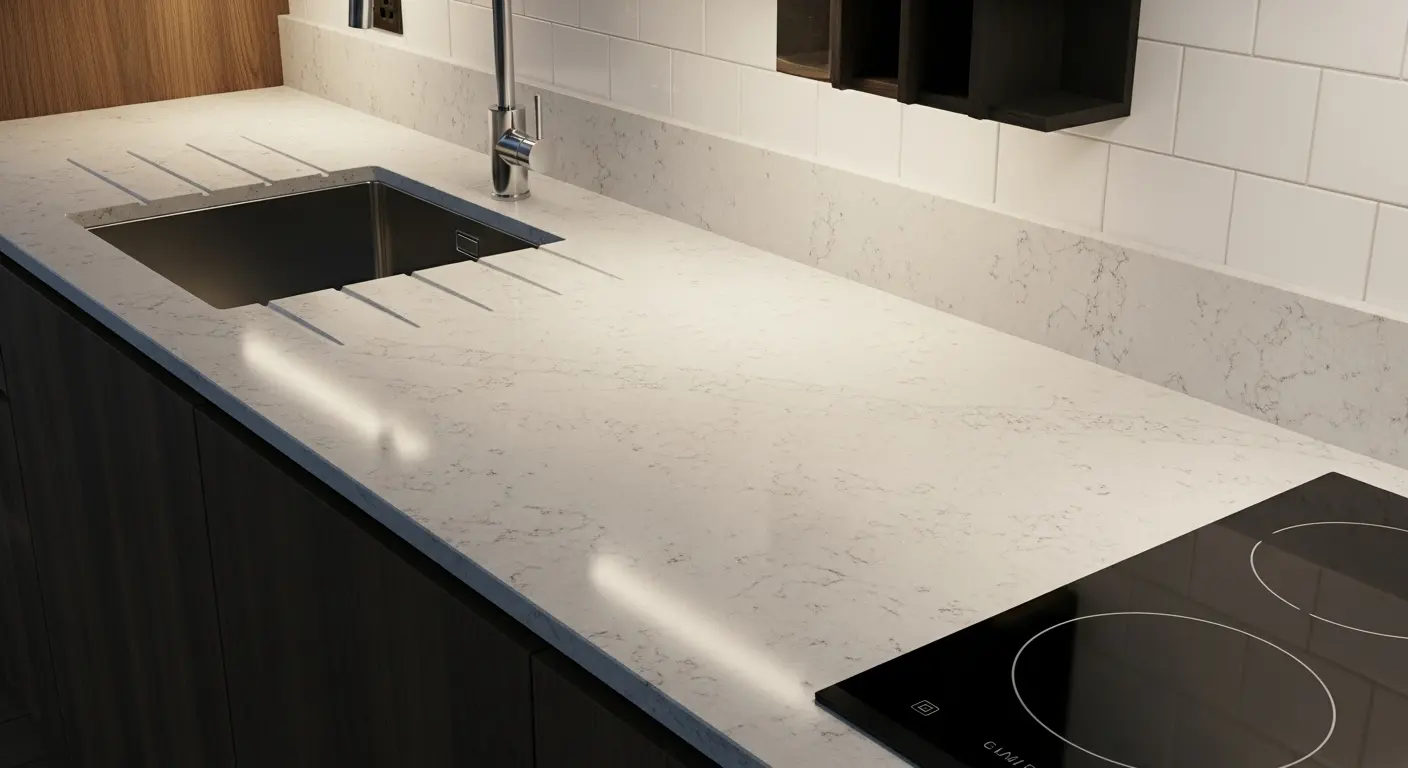
Honed quartz has a matte, non-reflective surface. The manufacturing process stops before the final polishing stage, leaving a smooth but non-glossy finish.
Visual Characteristics:
- Matte, soft appearance
- Muted, sophisticated colours
- Subtle pattern presentation
- Smooth but not shiny surface
What Is Leather (Textured) Quartz?
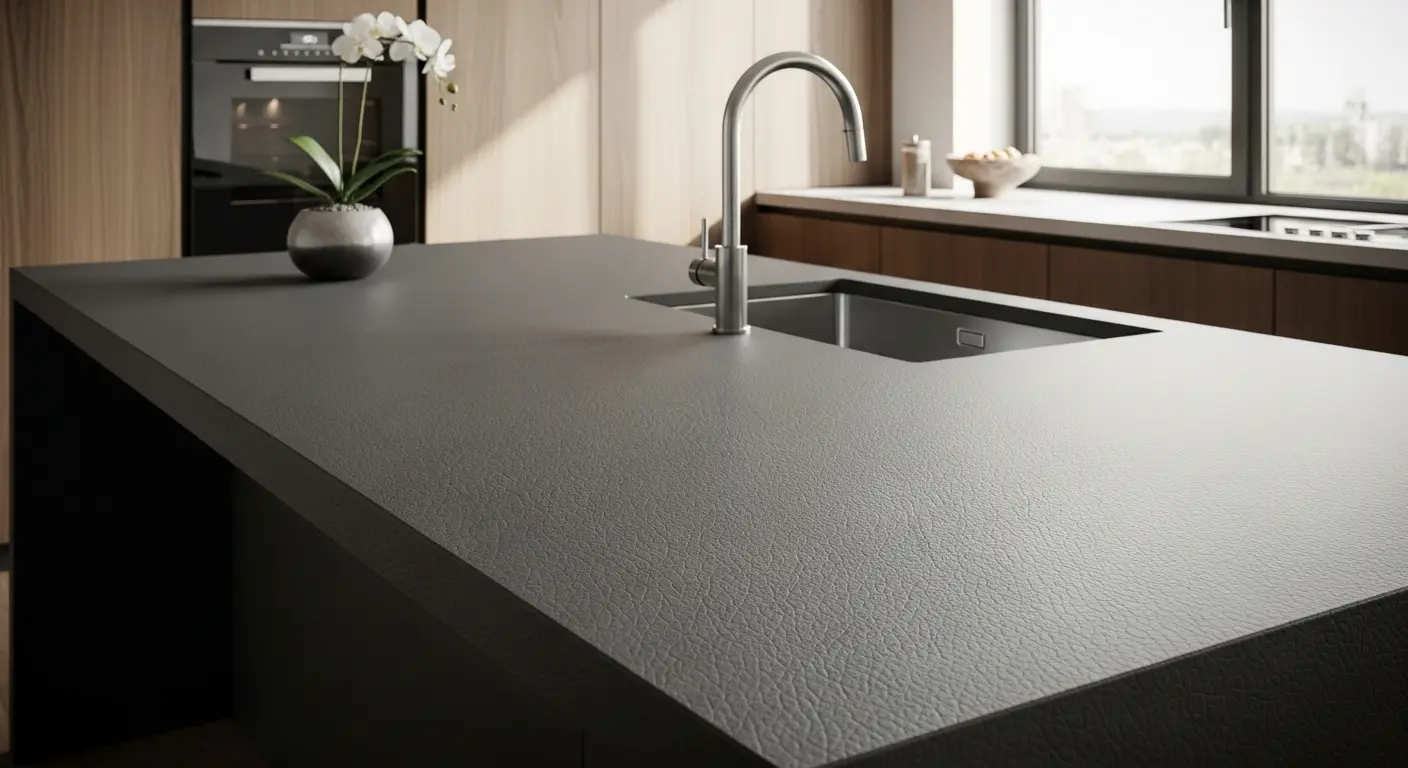
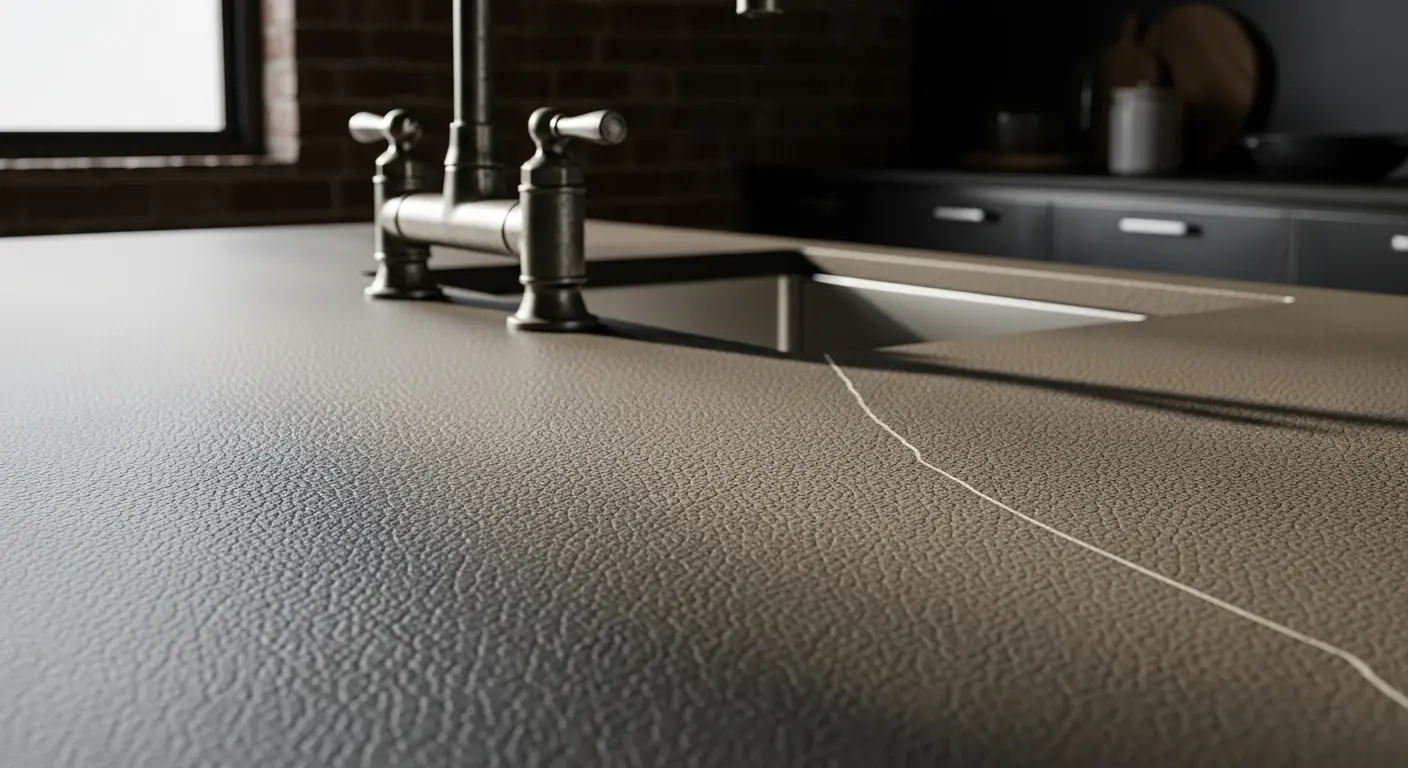
Leather finish quartz has a slightly textured surface that mimics the look and feel of leather. It’s sometimes called “textured” or “brushed” finish. This is less common in Malaysia but increasingly available from premium brands.
Visual Characteristics:
- Slight texture you can feel
- Low sheen (between honed and polished)
- Dimensional, tactile appearance
- Unique, contemporary aesthetic
The Polished Finish: Malaysia’s Most Popular Choice
Let’s start with what most Malaysians already know and love—the polished finish.
Advantages of Polished Quartz in Malaysian Kitchens
1. Superior Stain Resistance
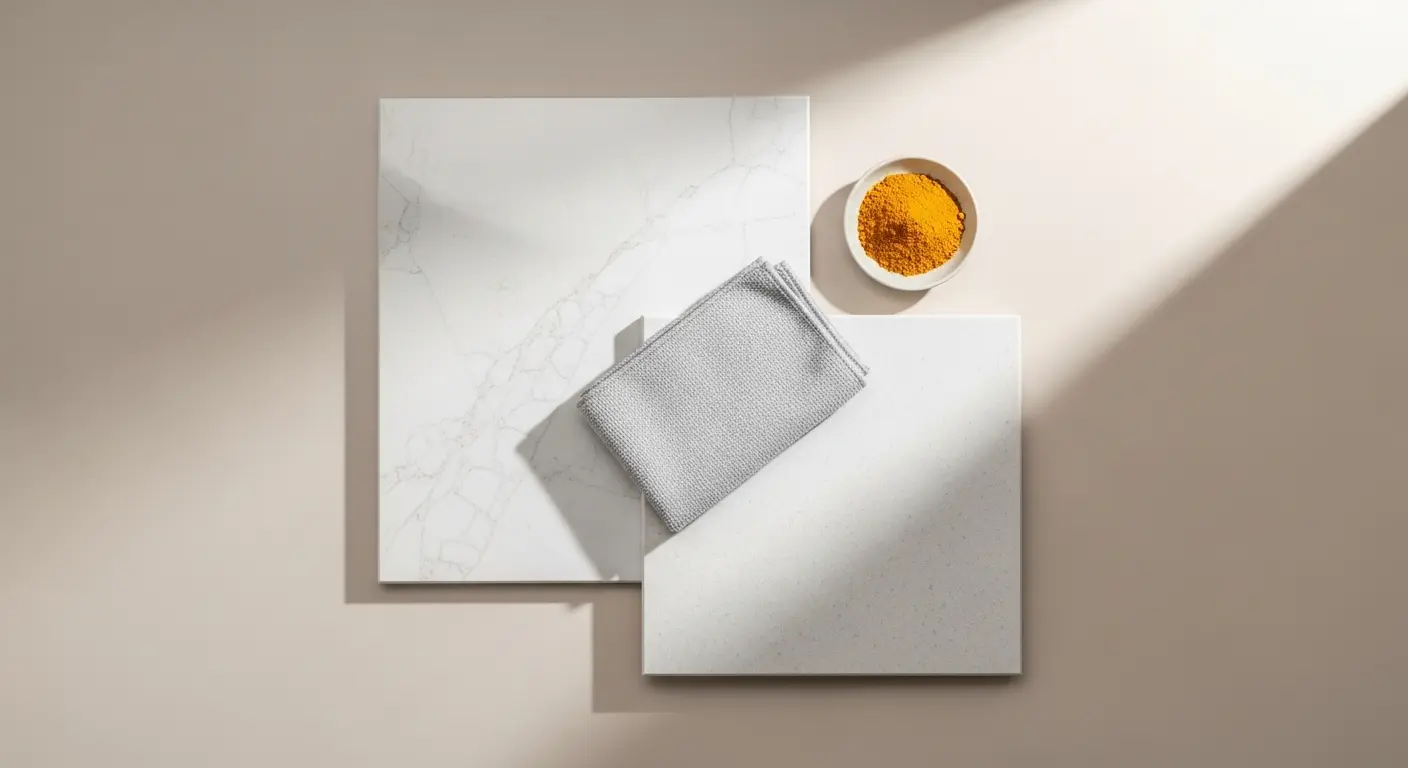
Whilst all quartz finishes have the same porosity level (they’re all non-porous engineered stone), the polished surface is smoother and easier to wipe clean quickly, reducing the chance of staining from turmeric, belacan, kicap, and curry—staples in Malaysian cooking that are notorious for leaving marks.
The smooth, sealed surface of polished quartz gives you more time to wipe up spills before they can potentially leave surface marks, making it slightly more forgiving for busy Malaysian kitchens.
2. Easier Daily Cleaning
In Malaysia’s humid climate where cooking oils and condensation can accumulate quickly, polished quartz is remarkably easy to wipe clean. A simple damp cloth removes most spills and splatters without much effort.
This makes it ideal for busy Malaysian families who don’t have time for complicated maintenance routines.
3. More Vibrant Appearance
Polished quartz enhances the depth and vibrancy of patterns and colours. If you’ve chosen a beautiful Caesarstone or Silestone design with intricate veining or bold colours, the polished finish will showcase it best.
4. Wider Selection
In Malaysia, polished quartz offers the most extensive range of colours and patterns. Brands like Caesarstone, Silestone, and Zenstone primarily stock polished options, giving you more choices.
Disadvantages of Polished Quartz
1. Shows Fingerprints and Watermarks
The glossy surface shows every fingerprint, water spot, and smudge—particularly noticeable on dark colours like black or deep grey. In Malaysian kitchens where water splashing is common, you’ll find yourself wiping down polished surfaces frequently.
2. Can Feel Slippery
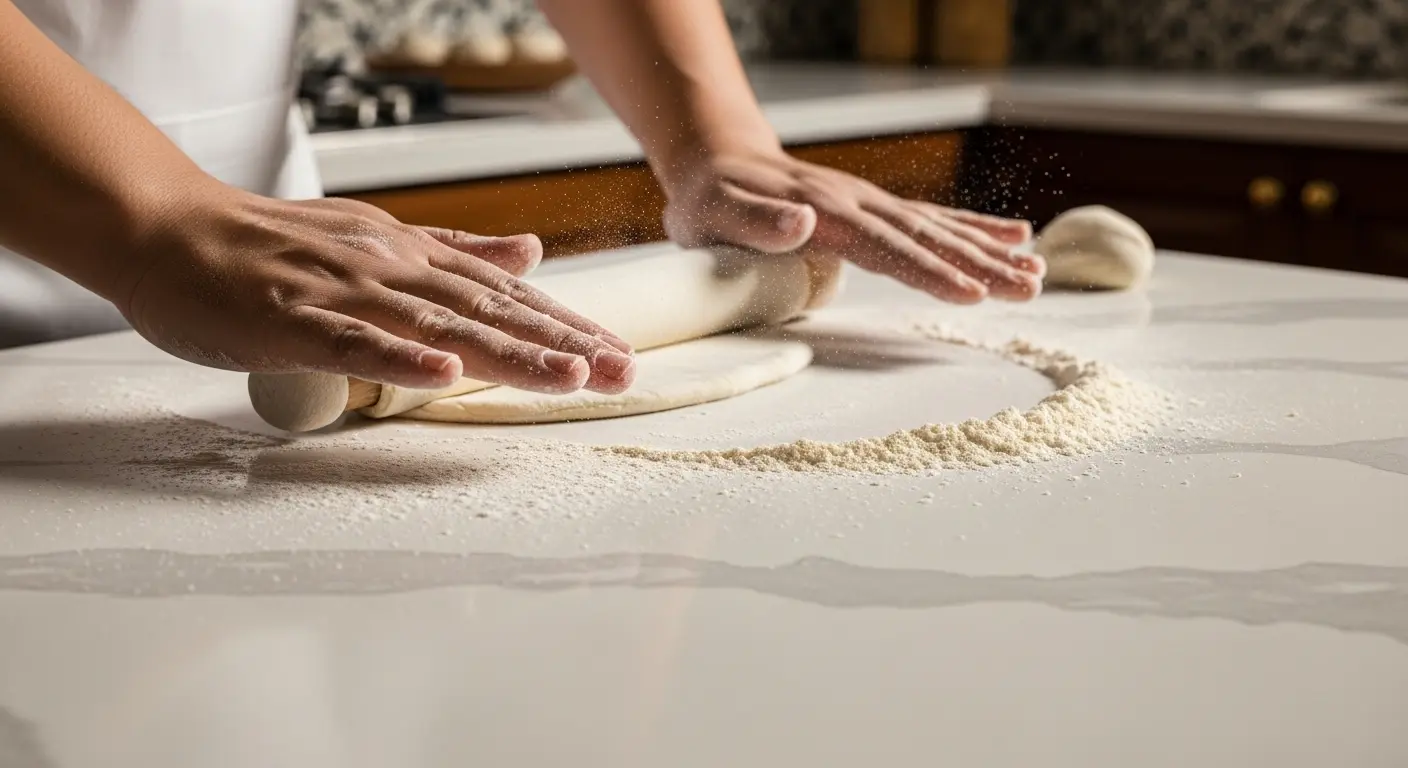
When wet, polished quartz becomes quite slippery. If you frequently roll out dough or work with wet ingredients, this can be slightly inconvenient.
3. More Formal Aesthetic
Polished quartz has a sleek, formal look that may not suit every design style. If you’re going for a rustic, farmhouse, or industrial aesthetic, the high gloss might feel out of place.
The Honed Finish: The Sophisticated Alternative
Honed quartz is becoming increasingly popular in Malaysia, particularly amongst homeowners renovating landed properties and high-end condominiums.
Advantages of Honed Quartz in Malaysian Kitchens
1. Hides Fingerprints and Watermarks
The matte surface of honed quartz is far more forgiving than polished. Fingerprints, water spots, and minor smudges are much less visible—a significant advantage in Malaysian kitchens where high humidity means surfaces stay damp longer.
2. Contemporary, Sophisticated Look
Honed finishes offer a modern, understated elegance that’s trending in Malaysian interior design. They create a soft, natural appearance that works beautifully in minimalist, Scandinavian, or contemporary kitchens.
3. Better Grip When Wet
The matte surface provides better grip than polished quartz when wet, making it more practical for rolling dough, kneading, or working with flour-based preparations.
4. Timeless Appeal
Honed finishes are less likely to look dated over time. The subtle, matte appearance has a timeless quality that won’t feel “so 2020s” a decade from now.
Disadvantages of Honed Quartz
1. May Show Stains More Visibly
This is a consideration for Malaysian kitchens, though the actual stain resistance is identical to polished quartz (both have the same porosity and are non-porous).
The matte surface texture can sometimes make certain stains more visible compared to the smooth polished surface. Turmeric, curry, kicap, and other strongly pigmented ingredients may appear more noticeable on the matte finish.
However, the cleanup timeline is the same as polished - you don’t need to rush to wipe spills any faster than you would with polished quartz.
2. Requires Same Maintenance as Polished
Since honed and polished quartz have identical porosity, they require the same maintenance approach. You don’t need to wipe up spills any faster with honed than with polished.
The only difference is that the matte surface texture may require slightly more scrubbing effort for certain stains compared to the smooth polished surface, but the timing for cleanup remains the same.
3. Limited Availability in Malaysia
Not all quartz brands offer extensive honed options in Malaysia. You may find your colour choices more limited compared to polished finishes.
4. Can Show Oil and Grease More
Cooking oils and grease can be more visible on honed surfaces, particularly on lighter colours. Malaysian cooking often involves significant oil use, so this is worth considering.
The Leather Finish: The Textured Middle Ground
Leather finish quartz is less common in Malaysia but offers a unique compromise between polished and honed.
Advantages of Leather Finish Quartz
1. Distinctive, Tactile Appeal
Leather finish creates a unique, three-dimensional appearance that adds character to your kitchen. It’s an excellent choice if you want something different from the standard polished look.
2. Hides Minor Scratches and Wear
The textured surface naturally camouflages minor surface imperfections better than smooth finishes.
3. Still Easy to Maintain (Compared to Natural Stone)
Whilst leather finish requires slightly more effort than polished or honed quartz, it’s still significantly easier to maintain than honed natural stone like granite or marble. You get the tactile appeal without the intensive maintenance requirements of textured natural stone.
Disadvantages of Leather Finish Quartz
1. Very Limited Availability in Malaysia
Leather finish is rare in the Malaysian market. You’ll struggle to find extensive options from local suppliers.
2. Slightly More Effort to Clean Than Honed
The textured surface requires a bit more effort to clean compared to smooth honed quartz. The texture can trap particles slightly, requiring occasional use of a soft brush for thorough cleaning.
However, it’s important to note that leather finish quartz is still significantly easier to clean than honed natural stone like granite. The non-porous engineered quartz surface means you’re not dealing with the maintenance challenges of natural stone—leather finish quartz just needs a bit more attention than smooth polished or honed quartz.
3. Higher Cost
When available, leather finish typically commands a premium price over standard polished finishes.
Performance Comparison: Malaysian Kitchen Conditions
Let’s examine how these finishes perform under typical Malaysian kitchen conditions.
Stain Resistance: Dealing with Turmeric, Curry & Sambal
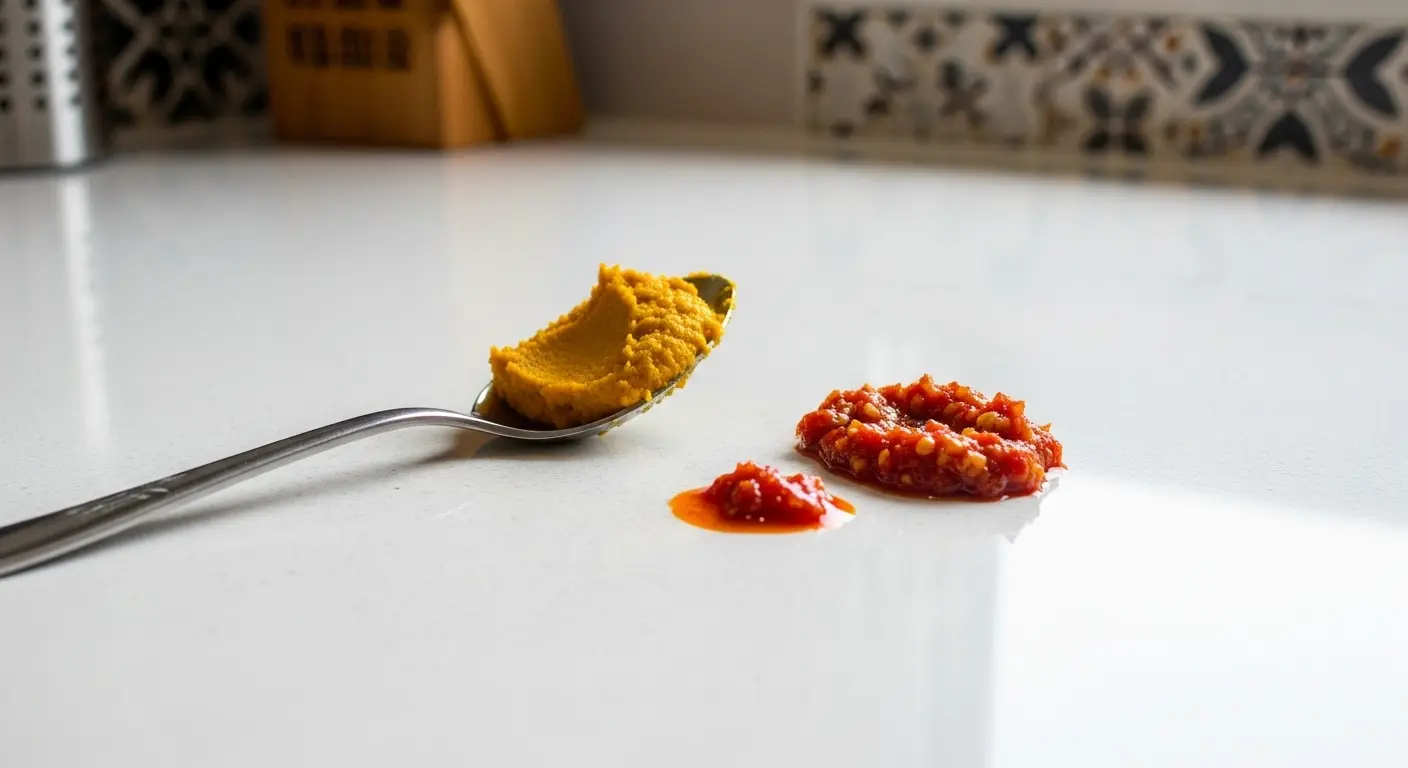
Winner: Equal Performance (Polished Easier to Clean)
Malaysian cooking is beautiful but demanding on countertops. Turmeric, curry powder, belacan, sambal, and kicap all have strong pigments.
Here’s the important truth: all quartz finishes have identical stain resistance—they have the same porosity level and are all non-porous engineered stone with resin binders. The finish (polished, honed, or leather) doesn’t change the fundamental material structure or stain resistance.
The practical differences are:
- Visibility: Stains may be more visible on honed/leather finishes due to the matte texture, even though the actual staining is the same
- Ease of cleaning: The smooth polished surface wipes clean with less effort compared to the textured matte surfaces
- Cleanup timing: Identical - you have the same window to clean spills regardless of finish
In practical terms for Malaysian kitchens, polished quartz offers a convenience advantage through easier wiping, but not superior stain resistance.
Performance Ranking (Based on Cleaning Convenience):
- Polished - Easiest to wipe clean due to smooth glossy surface
- Honed - Smooth matte surface, may require slightly more scrubbing effort than polished
- Leather - Textured surface requires the most effort amongst quartz finishes
Important Context: Even leather finish quartz is significantly easier to clean than honed natural stone (like honed granite or marble). The non-porous engineered quartz surface doesn’t have the sealing and maintenance challenges of natural stone—it simply requires a bit more attention than smooth quartz finishes.
Heat Resistance: All Equal
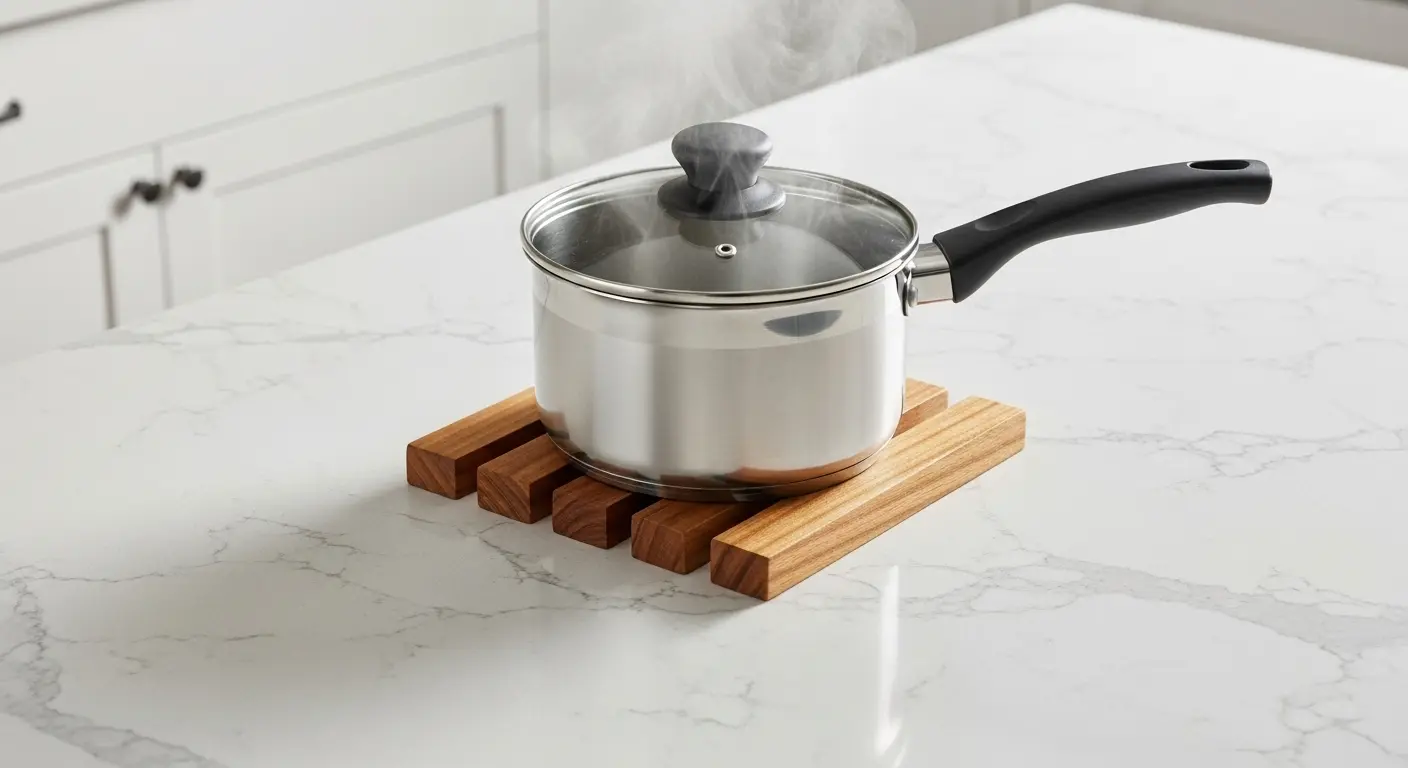
Good news—the finish doesn’t affect heat resistance. All quartz surfaces, regardless of finish, have the same heat tolerance limitations. You should still use trivets or hot pads for pots and pans straight from the stove, as quartz can be damaged by extreme heat.
Scratch Resistance: All Similar
The finish has minimal impact on scratch resistance. Quartz hardness remains consistent regardless of whether it’s polished, honed, or leather finish. However, scratches may be slightly more visible on polished surfaces due to the contrast between the scratch and the glossy finish.
Daily Cleaning Ease: Depends on Your Priorities
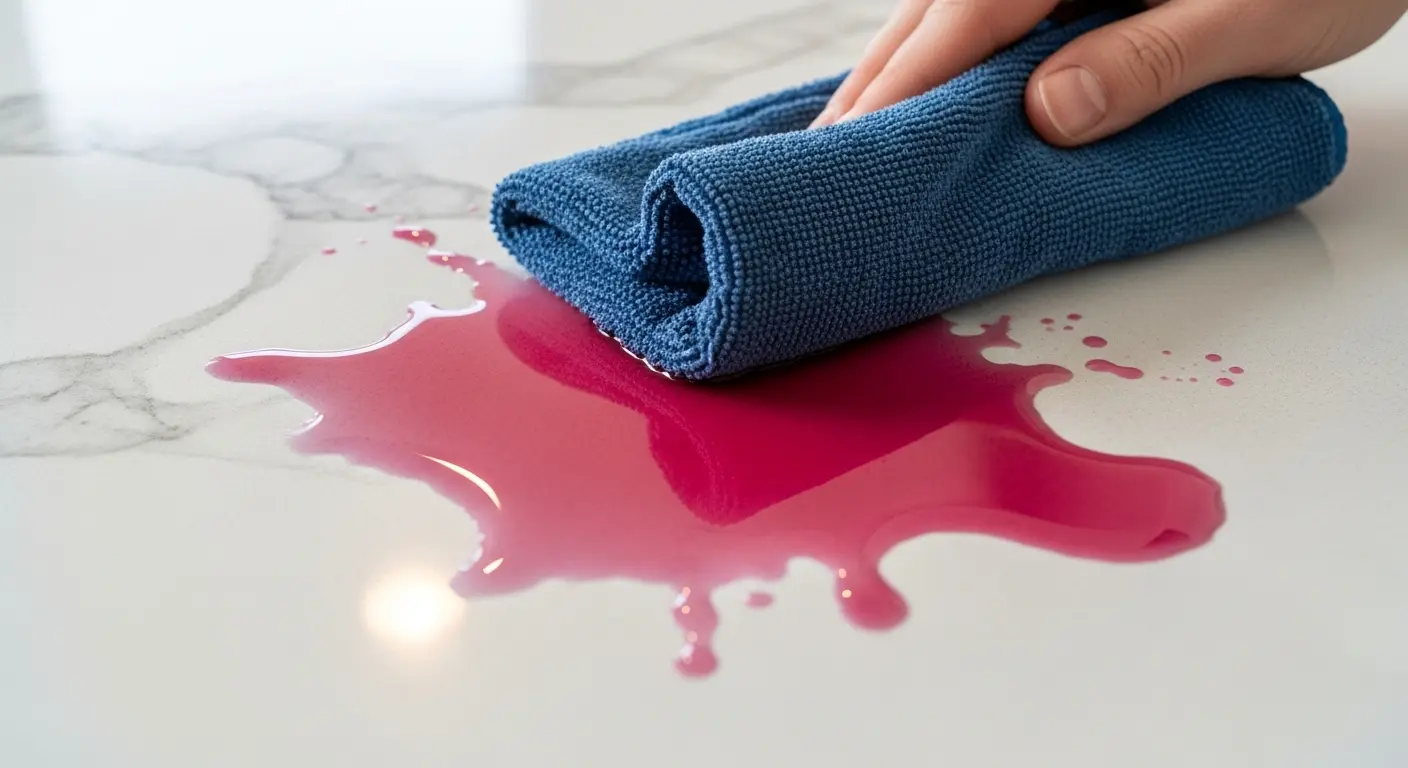
For quick daily wipes: Polished wins
If you want to quickly wipe down your countertop with a damp cloth and move on with your day, polished is more convenient.
For hiding mess between cleanings: Honed wins
If you want your countertop to look presentable even when you haven’t cleaned it recently, honed surfaces hide minor untidiness better.
Cost Considerations in Malaysia
Understanding the pricing differences helps you make an informed decision.
Polished Quartz Pricing
Based on current Malaysian market rates:
- Standard Range: RM200-260 per foot run (brands like Zenstone Classic)
- Premium Range: RM260-710 per foot run (brands like Caesarstone, Silestone)
- Ultra-Premium Range: RM750-1,265 per foot run (premium Caesarstone collections)
Honed Quartz Pricing
Honed finishes typically cost approximately 10% more than polished finishes from the same collection. This premium reflects the additional manufacturing processes required for the matte finish.
Expected Pricing:
- Add 10% to the polished price for the same colour/collection
- Example: If a polished Caesarstone costs RM710 per foot run, the honed version would be approximately RM781 per foot run
Additionally, since honed options are often only available in premium collections rather than standard ranges, you may find your overall selection limited to higher-priced collections.
Leather Finish Pricing
When available, leather finishes usually command a 10-20% premium over polished finishes from the same collection.
Budget Tip: Polished quartz offers the best value in Malaysia due to wider availability across all price points and no price premium. Honed finishes command approximately 10% more than polished, and leather finishes are typically 10-20% higher than polished—so factor this into your renovation budget.
For a complete breakdown of quartz stone costs across all brands, collections, and series, check out our comprehensive quartz stone price guide for Malaysia.
Design Considerations: Which Finish Suits Your Style?
Your kitchen’s overall design should influence your finish choice.
Best Finish for Modern Contemporary Kitchens
Honed or Polished
Both work beautifully in modern Malaysian kitchens. Choose honed for a softer, more sophisticated look or polished for a sleek, high-contrast aesthetic.
Design Tip: Pair honed quartz with matte black fixtures and handle-less cabinets for an ultra-modern look that’s trending in Malaysian interior design.
Best Finish for Traditional Malaysian Kitchens
Polished
Traditional kitchen designs in Malaysia typically feature warmer tones and classic elements. Polished quartz complements these spaces better and is more practical for traditional Malaysian cooking methods.
Best Finish for Scandinavian/Minimalist Kitchens
Honed
The matte finish of honed quartz perfectly captures the understated elegance of Scandinavian and minimalist design. Light colours like whites, greys, and beiges in honed finishes create that signature calm, uncluttered aesthetic.
Best Finish for Industrial Kitchens
Honed or Leather
The matte, slightly rough appearance of honed or leather finishes complements the raw, utilitarian vibe of industrial kitchens better than high-gloss polished surfaces.
Maintenance Requirements: What You Need to Know
Let’s discuss the realistic maintenance expectations for each finish in Malaysian households.
Daily Cleaning for All Finishes
Regardless of finish, quartz requires simple daily maintenance:
- Wipe with a damp microfibre cloth
- Use mild dish soap for greasy residue
- Dry with a clean cloth to prevent water spots (especially important for polished)
For detailed guidance on cleaning your countertop and removing stubborn Malaysian cooking stains like turmeric and curry, we have a comprehensive guide that covers all the techniques you need.
Cleaning Effort Comparison:
- Polished quartz: Easiest - smooth surface wipes effortlessly
- Honed quartz: Very easy - smooth matte surface, slightly more scrubbing than polished
- Leather quartz: Easy - textured surface may need soft brush occasionally, slightly more effort than honed
- Honed natural stone (granite/marble): Moderate to difficult - porous surface requires sealing, more intensive maintenance
Important: Even leather finish quartz is far easier to maintain than any honed natural stone. You’re still benefiting from the non-porous engineered surface that makes quartz so popular in Malaysian kitchens.
Never use: Abrasive cleaners, bleach, or acidic cleaners (vinegar, lemon juice) on any quartz finish.
Dealing with Malaysian Cooking Stains
Important Note: All quartz finishes (polished, honed, leather) have identical stain resistance and the same cleanup timing requirements. The porosity level is the same across all finishes. The difference lies only in cleaning ease and stain visibility, not in the material’s fundamental performance.
For Polished Quartz:
- Stains wipe away quickly and easily due to smooth glossy surface
- Requires minimal scrubbing effort
- Standard cleanup timeline applies
- Clean within 24 hours for best results
For Honed Quartz:
- Same stain resistance and cleanup timeline as polished
- Smooth matte surface may require slightly more scrubbing effort than polished
- Stains may be more visible on matte surface
- Use a paste of baking soda and water for stubborn surface marks if needed
For Leather Finish:
- Identical stain resistance to polished and honed
- Textured surface requires the most effort amongst quartz finishes
- May require a soft brush to clean textured areas thoroughly
- Pay attention to texture where particles can settle
- Same cleanup timeline as other finishes
Perspective: Even leather finish quartz requires far less effort than honed natural stone like granite or marble, which need regular sealing and more intensive maintenance routines.
Sealing: Not Required for Quartz
Good news—unlike natural stone, quartz (regardless of finish) doesn’t require sealing. The resin binders make all quartz non-porous with identical porosity levels across polished, honed, and leather finishes.
This is a crucial point: The finish doesn't change the material's fundamental porosity. Whether polished or honed, your quartz has the same non-porous structure and requires no sealing treatments. If you're curious about what impregnators and sealers are and whether they're ever needed for quartz, we've covered this topic in detail.
Making Your Decision: Key Questions to Ask
Still unsure which finish is right for you? Ask yourself these questions. If you need a more comprehensive framework for your entire countertop selection process, our ultimate homeowner's checklist for choosing stone kitchen countertops can help you evaluate all factors beyond just finish type.
1. How Important Is Ease of Cleaning to You?
I want the easiest possible wiping (smooth surface): Choose polished - spills wipe away with minimal effort.
I don’t mind slightly more scrubbing effort: Honed works perfectly fine - same stain resistance, just requires a bit more elbow grease.
Cleaning convenience isn’t my priority: Either finish works for you.
2. How Quickly Do You Typically Clean Up Spills?
I wipe spills immediately: Any finish works equally well.
I sometimes leave spills for several hours: Any finish still works - all have identical stain resistance and timing.
I want the surface that looks cleanest between wipes: Choose honed - it hides watermarks and fingerprints better.
3. What’s Your Design Aesthetic?
Modern, minimalist, or Scandinavian: Consider honed for that sophisticated matte look.
Contemporary or transitional: Both polished and honed work beautifully.
Traditional or classic: Polished is your best bet.
Industrial or rustic: Honed or leather finish (if available).
4. How Important Is Hiding Fingerprints and Watermarks?
Very important (I dislike constant wiping): Choose honed.
Not a major concern (I don’t mind maintaining the shine): Polished works fine.
5. What’s Your Budget?
Working with a tight budget: Polished offers the most options across all price ranges in Malaysia.
Flexible budget: You have freedom to choose based on preference rather than price.
Special Considerations for Malaysian Homeowners
Wet Kitchen vs Dry Kitchen
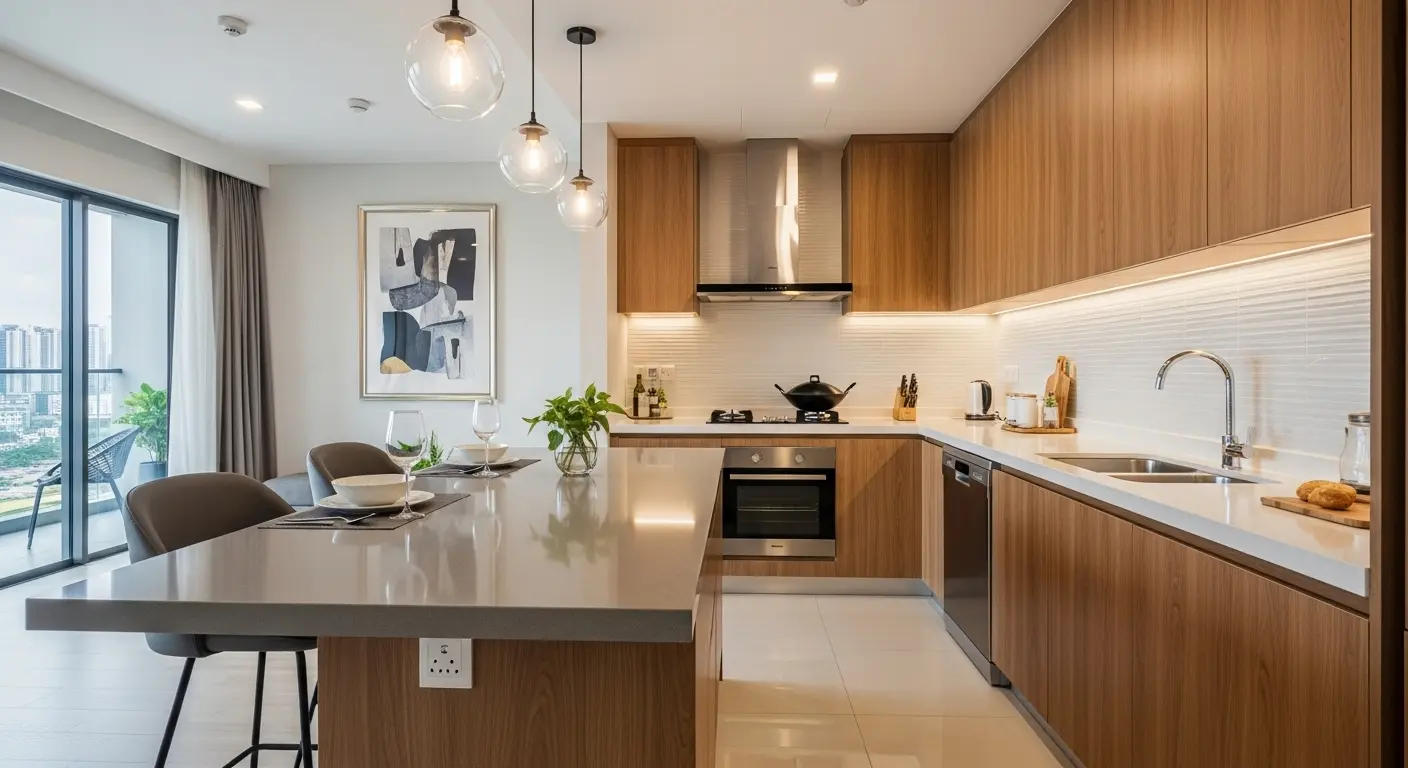
Many Malaysian homes have separate wet and dry kitchens. Your finish choice can vary between the two:
Wet Kitchen (Heavy Cooking): Polished finish for maximum stain resistance and easy cleaning after intense cooking sessions.
Dry Kitchen (Light Prep, Display): Honed finish works beautifully since it sees less intensive use and you can maintain its aesthetic appeal more easily.
Resale Value Considerations
If you plan to sell your property in the future, polished quartz is the safer choice. Malaysian buyers are more familiar with polished finishes and perceive them as “standard” quality. Honed finishes, whilst stylish, may not resonate with all potential buyers.
Recommendations from Malaysian Homeowners
Based on feedback from Malaysian homeowners who’ve lived with different finishes:
“I Love My Polished Quartz Because…”
- “Spills wipe away so easily with minimal effort”
- “It still looks brand new after 5 years”
- “The smooth surface is so convenient for daily cleaning”
- “The glossy look makes my small kitchen feel more spacious”
“I Love My Honed Quartz Because…”
- “No more visible fingerprints from my kids”
- “The sophisticated matte look elevates my entire kitchen”
- “Water spots don’t show like they did on my old polished countertop”
- “It photographs beautifully—perfect for my home-based baking business”
- “Turmeric cleans up just fine—no issues despite cooking daily”
“I Wish I’d Known Before Choosing Honed…”
- “It requires a bit more scrubbing effort than polished for certain stains”
- “Oil splatters from frying are more visible than on polished”
- “Fewer colour options compared to polished”
The Bottom Line: Which Finish Should You Choose?
After examining all the factors, here’s our straightforward recommendation for Malaysian kitchens:
Choose Polished Quartz If:
- You want the easiest possible cleaning (smooth surface wipes effortlessly)
- You prefer a classic, timeless look
- You want the widest selection of colours and patterns
- You’re working with a tighter budget
- You’re renovating for resale value
- You want stains to be less visible on the surface
Choose Honed Quartz If:
- You don’t mind slightly more scrubbing effort for cleaning
- You want a contemporary, sophisticated aesthetic
- Fingerprints and watermarks bother you
- You’re designing a modern or Scandinavian-style kitchen
- You have a flexible budget for premium collections
- You’re renovating your forever home based on personal taste
- You understand that stain resistance is identical to polished
Choose Leather Finish Quartz If:
- You want something truly unique
- You’re willing to search for specialty suppliers
- You have a higher budget
- You don’t mind slightly more complex cleaning
Conclusion
The truth is, there’s no universally “better” finish—polished, honed, and leather each excel in different areas.
The most important fact to remember: All quartz finishes have identical stain resistance. The porosity is the same whether polished, honed, or leather. Your turmeric curry won’t stain one finish faster than another.
The real differences are practical convenience and aesthetics:
- Polished = easier to wipe clean, more colour options, wider availability
- Honed = hides fingerprints and watermarks, sophisticated matte look, requires slightly more scrubbing effort
For most Malaysian kitchens, polished quartz remains the most practical choice due to easier cleaning, wider selection, and better value in our market. However, the common belief that honed quartz stains more easily is simply incorrect—it performs identically to polished in terms of stain resistance.
If you’re designing a contemporary kitchen and don’t mind a bit more elbow grease when cleaning, honed quartz can be absolutely stunning and performs just as well as polished for Malaysian cooking.
The good news? Regardless of which finish you choose, you're getting the fundamental benefits that make quartz Malaysia's most popular countertop material—durability, hygiene, and beauty that lasts for decades. If you're still weighing up whether quartz or sintered stone is right for your Malaysian kitchen, we have a complete comparison guide to help with that decision too.Take time to visit showrooms, touch different finishes in person, and imagine them in your kitchen context. The right choice is the one that matches your lifestyle, cooking habits, and design vision.
Ready to explore your quartz options? Visit a showroom to see polished and honed finishes side by side, and don't be afraid to ask about trying a sample in your home lighting before making your final decision. Browse our quartz stone collection to see available colours and finishes, or explore our comprehensive guide to transforming your kitchen with the perfect countertop.
Looking for more guidance on selecting the perfect countertop for your Malaysian kitchen? Explore our comprehensive guides on materials, maintenance, and design to make an informed decision that you’ll love for years to come.