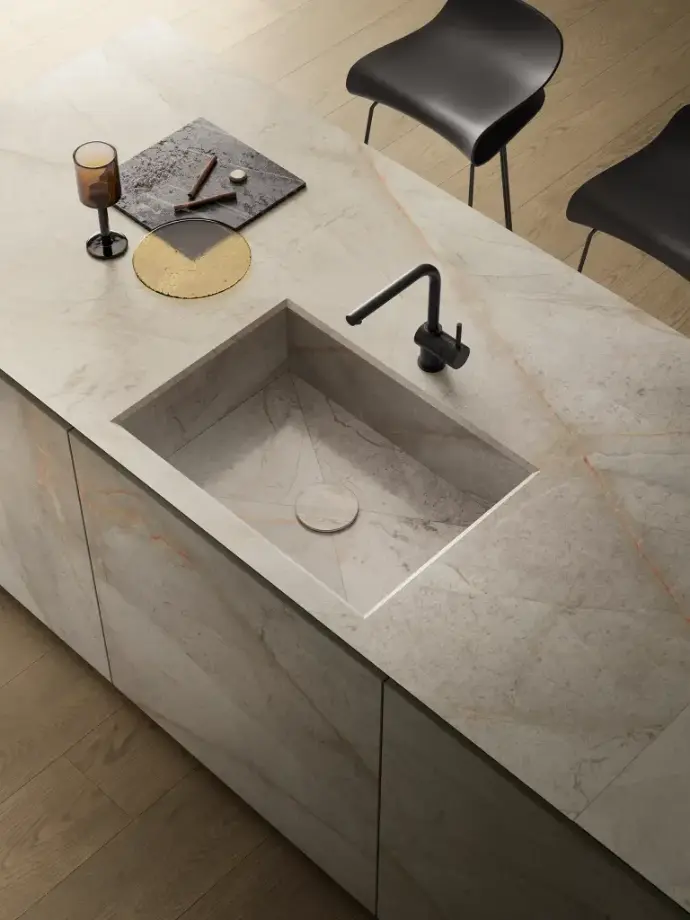
You invested good money in a quartz countertop. Whether it's a Zenstone slab running through your dry kitchen or a Caesarstone island in your wet kitchen, quartz is built to last — but only if you treat it right. The truth is, many homeowners unknowingly damage their quartz surfaces not with cooking or heavy use, but with the wrong cleaning products sitting right under the kitchen sink.
In Malaysia, we cook hard. Wok hei, sambal tumis, turmeric-stained curries, rendang that splatters, and everything in between — our kitchens see real action. And that means our countertops need a cleaning routine that actually works without quietly destroying the surface over time.
This guide covers everything you need to know: how to clean quartz daily, how to tackle stubborn Malaysian kitchen stains, and — critically — exactly what you must avoid.
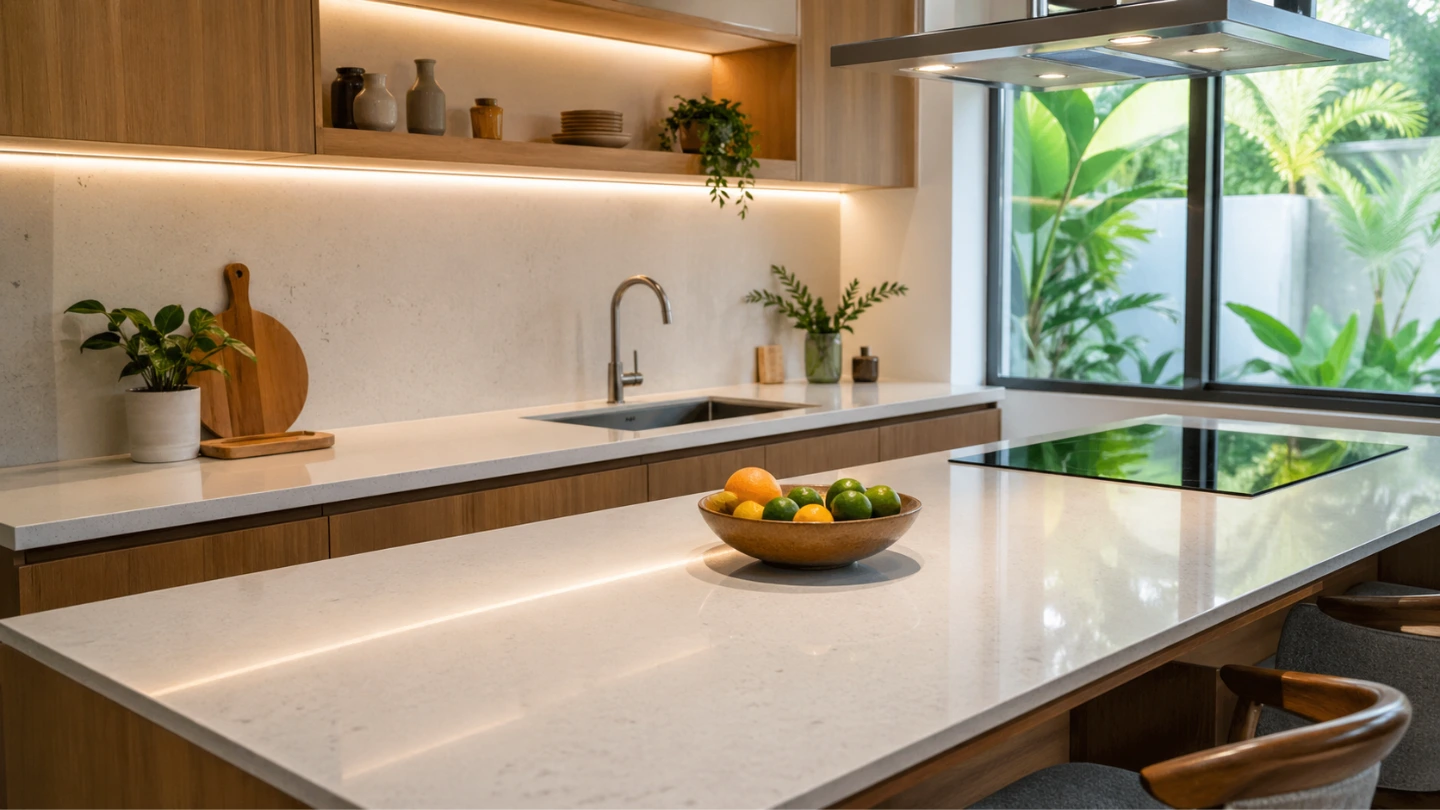
Why Cleaning Quartz Properly Actually Matters
Quartz countertops are engineered stone — typically 90–93% crushed quartz bound together with polymer resins and pigments. That resin binder is what gives quartz its non-porous, low-maintenance surface. But it is also quartz's Achilles' heel when it comes to cleaning.
Unlike granite, quartz does not need to be sealed. The resin does that job for you. But precisely because of the resin, quartz is sensitive to harsh chemicals — particularly strong alkalis and undiluted bleach. Use the wrong cleaner often enough, and you will notice the surface becoming dull, discoloured, or developing a faint haze that no amount of wiping will fix.
Understanding this one thing — that quartz is resin-bound, not fully natural stone — changes how you should approach cleaning entirely.
Everyday Cleaning: What to Do After Each Use
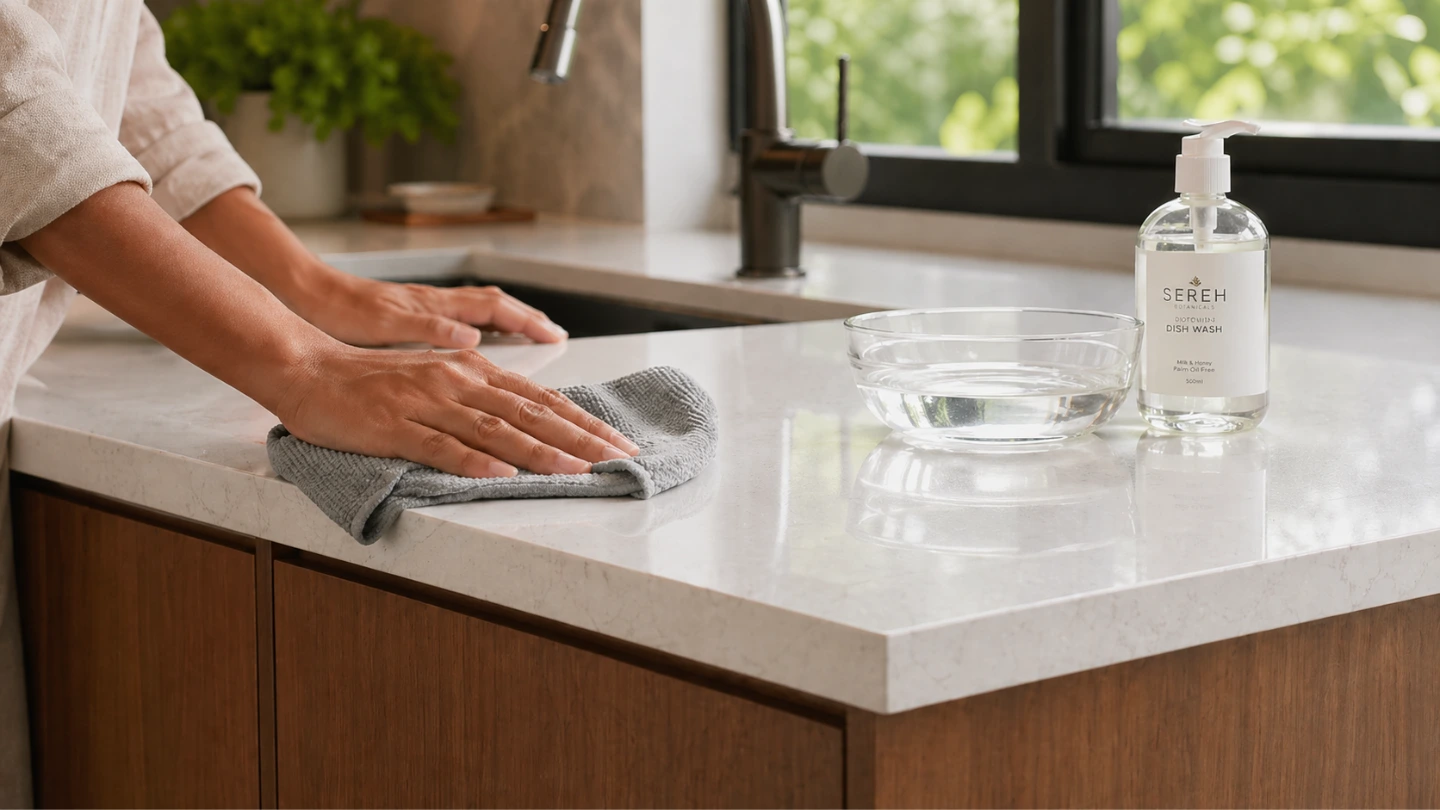
For daily cleaning, quartz is genuinely low-maintenance. You do not need any specialist products.
The Standard Daily Routine
What you need:
- Warm water
- A few drops of mild dish soap (e.g., Mama Lemon or any neutral pH dish wash liquid)
- A soft microfibre cloth or non-scratch sponge
How to do it:
- Wipe away any food residue or liquid spills — there is no need to panic over acidic foods like citrus or tomatoes, but cleaning up after cooking keeps the surface looking its best.
- Dampen your microfibre cloth with warm water and add a small amount of mild dish soap.
- Wipe down the countertop surface using gentle circular motions.
- Rinse the cloth with clean water and wipe away any soapy residue.
- Dry the surface with a clean, dry cloth to prevent water spots — particularly important in Malaysia where tap water often has mineral content that leaves marks.
That is truly all you need for day-to-day maintenance. No sprays, no special stone cleaners, no wax. Simple and effective.
How Long Can Spills Sit on Quartz?
Here is some reassuring news: quartz is genuinely non-porous, which means food spills — including turmeric — will not immediately absorb into the surface. You do not need to drop everything mid-cooking just because something splattered on the countertop.
That said, the general guideline is to clean up spills within 48 hours. Beyond that window, pigmented substances and sticky residues can become harder to remove and may require more effort to lift fully.
The common spills to keep in mind in a Malaysian kitchen:
- Turmeric (kunyit) — Its intense yellow pigment can set if left too long, but it is still manageable within 48 hours using the baking soda method below.
- Kicap manis and dark soy sauce — Can leave a brownish residue once dried; clean within the day where possible.
- Curry oil and coconut milk — Greasy residues that become stickier over time; clean before they harden.
- Coffee and tea — Tannin-based stains are easier to remove when fresh, but still manageable within 48 hours.
- Red wine and Ribena — Particularly visible on white or cream quartz; aim to wipe within 24 hours.
The practical rule: clean spills as part of your regular kitchen routine — after each cooking session or at the end of the day is perfectly fine. There is no need to panic over every splash.
Deep Cleaning: Tackling Stubborn Stains
Even with the best daily habits, stubborn stains happen — especially in a kitchen that sees daily Malaysian cooking. Here is how to handle the most common tough situations.
Dried Food and Grease
For dried-on food (think rendang splatter or dried rice water), the temptation is to scrub hard. Resist that urge.
Instead:
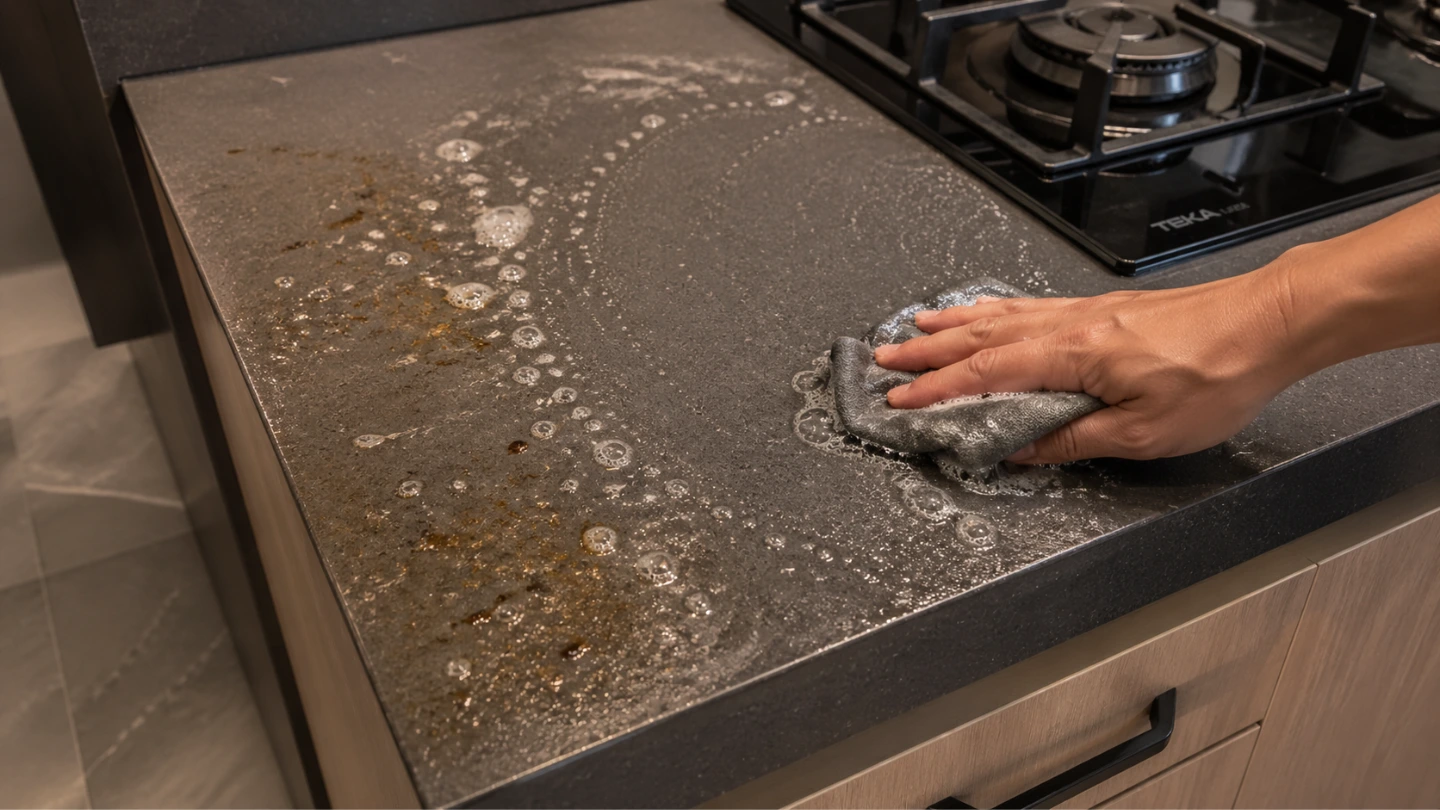
- Soak a cloth in warm, soapy water and lay it over the affected area for 5–10 minutes to soften the residue.
- Use a plastic scraper or an old credit card to gently lift the dried food.
- Wipe clean with a damp cloth.
Never use metal scrapers or steel wool — these will scratch the surface permanently.
Turmeric and Curry Stains
Turmeric is the ultimate test for a quartz countertop.
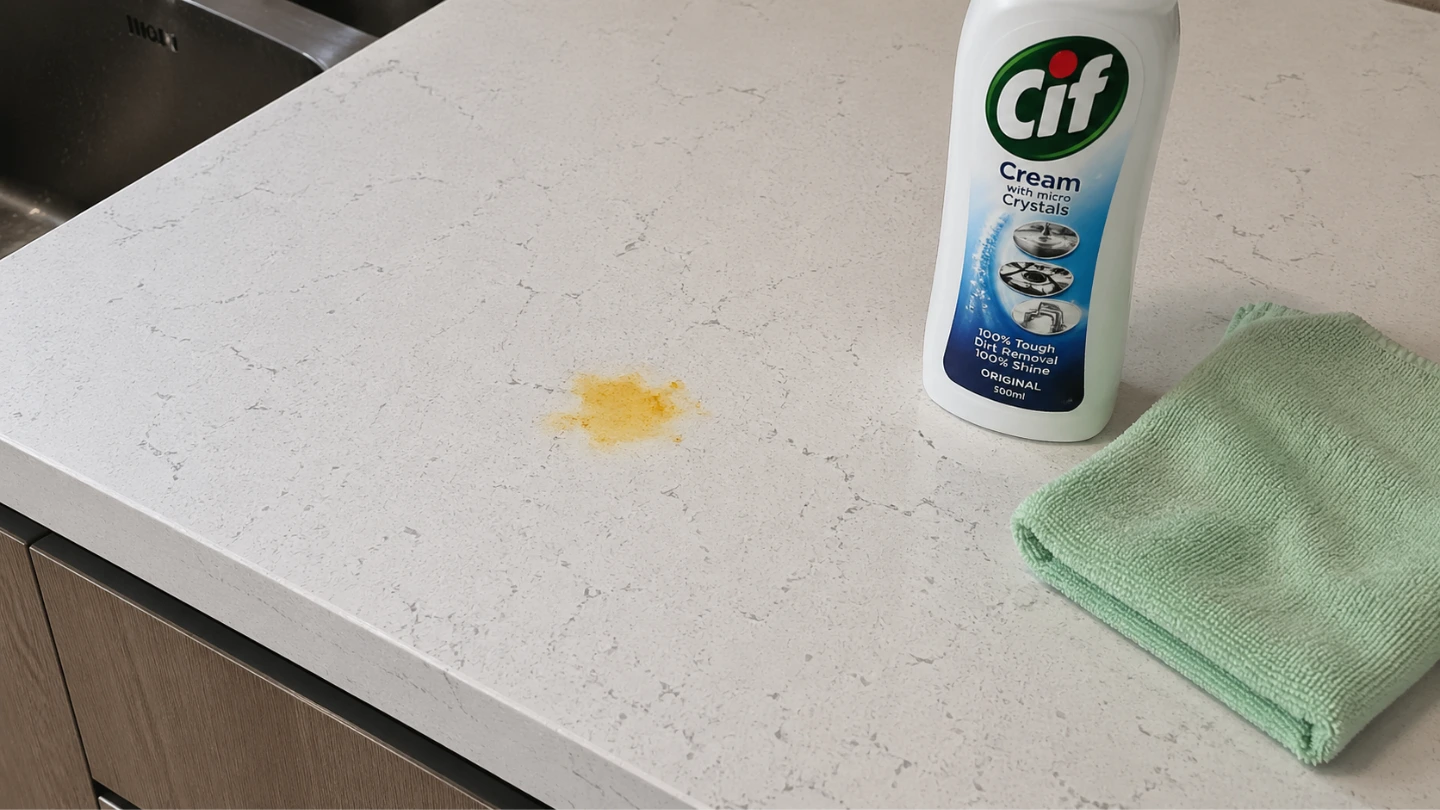
For persistent kunyit stains that refuse to budge, our recommendation is CIF cream cleaner applied with a clean cloth. Some homeowners worry that the micro-crystals in CIF cream cleaner will scratch the quartz surface — but in practice, this does not happen. At our Sinno Stone showroom, we have been using CIF cream cleaner to remove turmeric stains from our display quartz countertops every working day for three consecutive years, and the surfaces remain completely scratch-free. Apply a small amount to a damp cloth, rub gently over the stain, then rinse and dry thoroughly.
Sticky Residue (Tape, Labels, Stickers)
If you have renovated recently, there may be adhesive residue left from protective tape or stickers. Use a small amount of isopropyl alcohol or nail polish remover on a cloth to dissolve the adhesive. Wipe away and rinse.
Genuine quartz countertops can handle acetone — it will not strip or damage the surface.
Grease Build-Up Near the Hob
In Malaysian wet kitchens especially, grease accumulates quickly near the cooking area. A solution of warm water with a few drops of dish soap handles most of it. For heavy build-up, a degreasing kitchen cleaner with a neutral pH is acceptable — but always check that it does not contain bleach, ammonia, or abrasive particles before using it on quartz.
What You Must NEVER Use on Quartz
This is the most critical section of this guide. Many homeowners damage their quartz countertops not through carelessness, but through genuinely believing they are doing the right thing. Some common household cleaners are seriously harmful to quartz.
Acidic Foods — Not a Concern for Genuine Quartz
Genuine quartz countertops are not damaged by acidic foods or liquids. You can place lemon, lime, vinegar, tomatoes, or calamansi juice on the surface without worrying — the resin-bound surface holds up well against food-grade acids. Simply wipe clean as part of your normal routine.
What you should still avoid for cleaning purposes:
- Toilet bowl cleaners — Highly acidic and contain harsh chemicals; never use on kitchen countertops.
Bleach and Ammonia-Based Cleaners
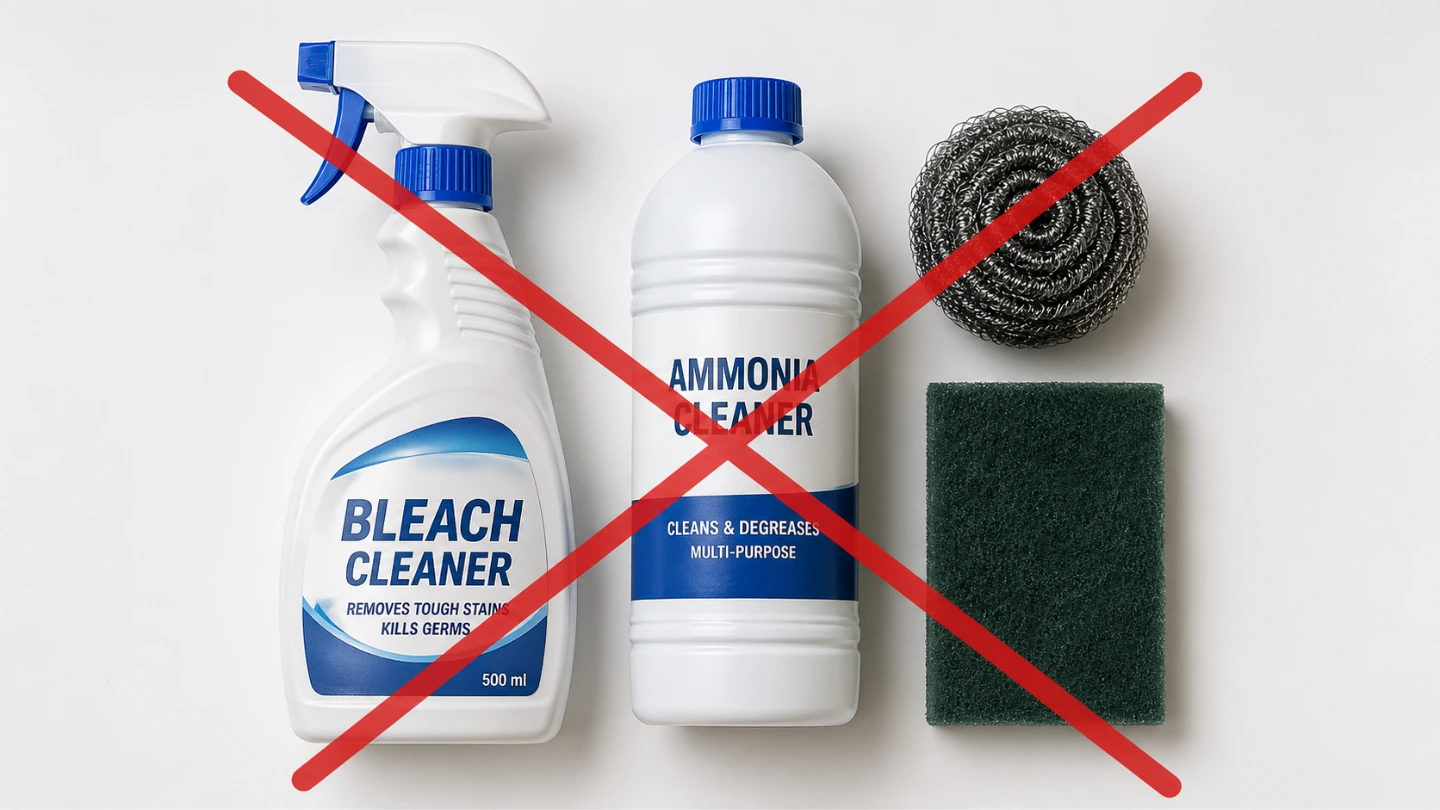
Bleach (sodium hypochlorite) and ammonia are two of the most damaging substances for quartz surfaces.
Do not use:
- Undiluted bleach — Will discolour and degrade the resin binder, especially with repeated use.
- Ammonia-based glass cleaners (e.g., some multi-purpose sprays) — Will dull the surface.
- Chlorinated swimming pool cleaning products — Some homeowners use these for general household cleaning. Do not use them on quartz.
Note: a highly diluted bleach solution (1 part bleach to 10 parts water) used very occasionally for disinfection purposes is generally considered acceptable by most quartz manufacturers — but this is for occasional use only, not regular cleaning.
Abrasive Cleaners and Tools
Physical abrasion is the other way quartz gets damaged.
Do not use:
- Steel wool or wire scrubbers — Will permanently scratch the surface.
- Abrasive powder cleaners (e.g., Vim, Ajax powder) — The grit particles scratch quartz.
- Rough scouring pads — Use soft microfibre cloths or non-scratch sponges only.
- High-pressure steam cleaners — The combination of heat and pressure can damage the resin bonding in quartz.
Solvents and Paint Strippers
Paint thinner and turpentine can actually be useful for removing stubborn sticky glue or adhesive residue from quartz surfaces during or after renovation work. However, use with caution on dark or black quartz — thinner can lighten or affect the appearance of very dark surfaces. For light-coloured quartz, it is generally fine. Acetone and nail polish remover are safe on genuine quartz regardless of colour.
Cleaning Tips Specific to Malaysian Kitchens
Malaysian cooking habits create specific cleaning challenges that are worth addressing directly.
After Wok Cooking
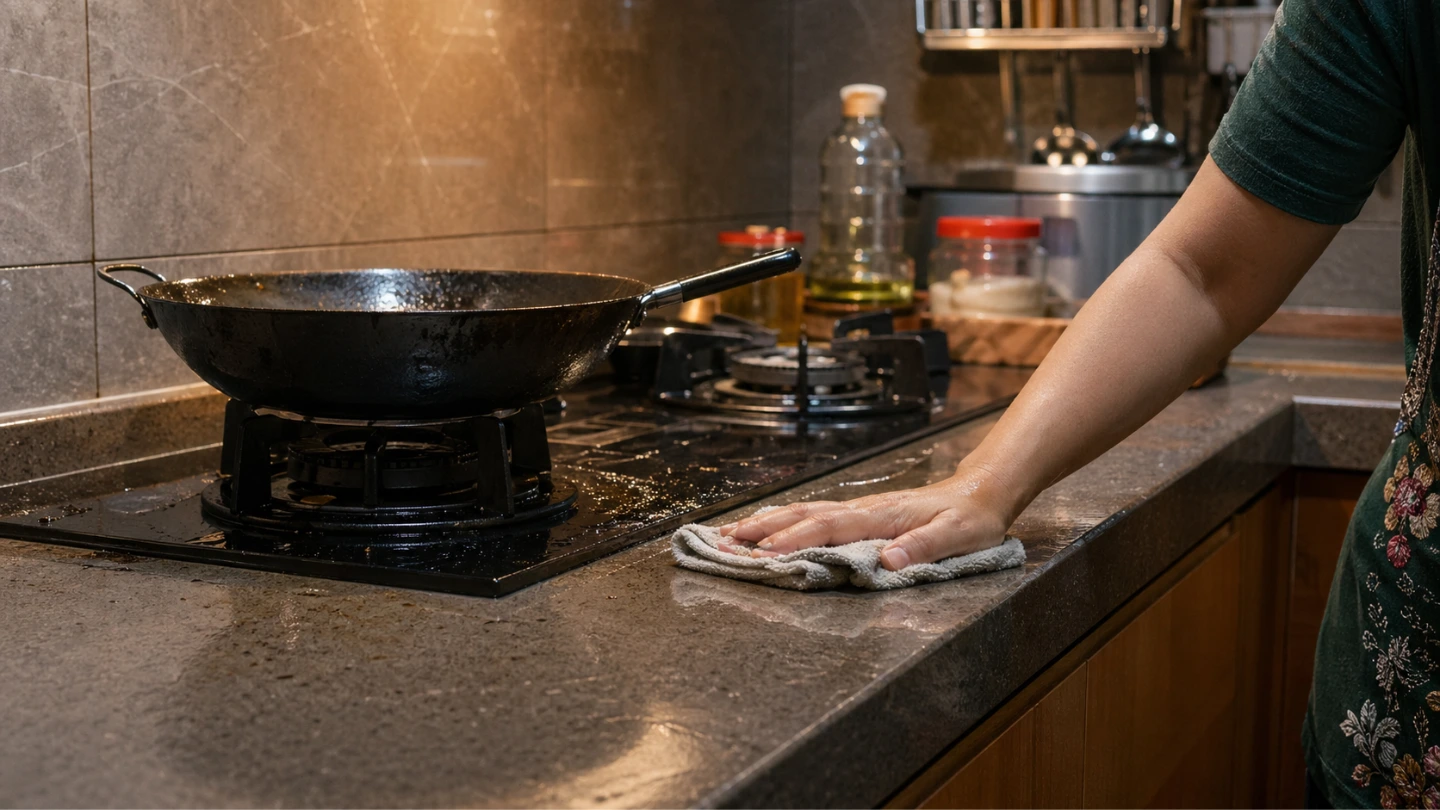
Wok hei cooking generates intense heat and splatters oil across the cooking area. After wok cooking:
- Let the countertop cool for a few minutes before wiping with a damp cloth — placing a cold wet cloth on a hot surface repeatedly can cause thermal shock over time.
- Use a degreasing dish soap to cut through the oil residue.
- Pay attention to the area right next to the hob, where grease accumulates in the gaps between the countertop and the appliance.
If you are curious about how direct heat from a hot wok affects the quartz surface itself, read Can You Put Hot Pans Directly on a Quartz Stone Kitchen Top? — it covers the heat tolerance of quartz in detail.
Belacan and Fermented Paste Residue
Belacan, cincaluk, and other fermented shrimp pastes have strong pigments and acidity. If these end up on the countertop:
- Wipe immediately with a damp cloth.
- Follow with a mild soapy wipe.
- Rinse clean.
Do not let fermented pastes sit — the strong pigment can become stubborn on light-coloured quartz if left to dry.
Preventing Mould Around the Sink Area
In Malaysia's tropical humidity, moisture that lingers around the sink area can lead to mould growth — particularly in the silicone joint between the countertop and the sink or backsplash. This is not a quartz problem per se, but a hygiene issue that many homeowners discover.
Keep the area around the sink dry, and check the silicone seals regularly. If you have noticed mould appearing around your countertop or sink area, Mould on Your Kitchen Countertop? It's Not the Stone – Here's What You Need to Know has a thorough guide on what causes it and how to prevent it.
Batu Lesung (Stone Mortar) on the Countertop
Many Malaysian cooks use a heavy granite batu lesung directly on the quartz countertop. The grinding and pounding motion can scratch quartz, especially around the base of the mortar. Always place a rubber mat or thick cloth underneath a batu lesung before use — and wipe the area clean after, as ground spices can stain.
Does Quartz Finish Affect How You Clean It?
Yes — slightly. If your quartz has a honed (matte) finish rather than a polished finish, be aware that honed surfaces are more susceptible to showing fingerprints and oil marks. They require slightly more frequent wiping but are cleaned in the same way.
Honed quartz should not be cleaned with products that leave a waxy or glossy residue, as these will create uneven sheen marks on the matte surface.
For a deeper look at how finish affects both the look and the day-to-day experience of your countertop, Honed vs Polished Quartz: Which Finish Is Best for Malaysian Kitchen Countertops? covers all the relevant trade-offs.
Do You Need to Seal Quartz? (No — But Here Is Why)
A common question: does quartz need to be sealed like granite?
No. Quartz is non-porous because of its resin binder — it does not absorb liquids the way natural stone does. Sealing quartz is unnecessary and a waste of money. If a supplier tells you otherwise, be sceptical.
However, there are products called impregnators that are sometimes marketed for quartz. If you want to understand whether these serve any purpose on quartz or sintered stone, What Is an Impregnator? Should You Use One on Quartz or Sintered Stone? breaks it down clearly.
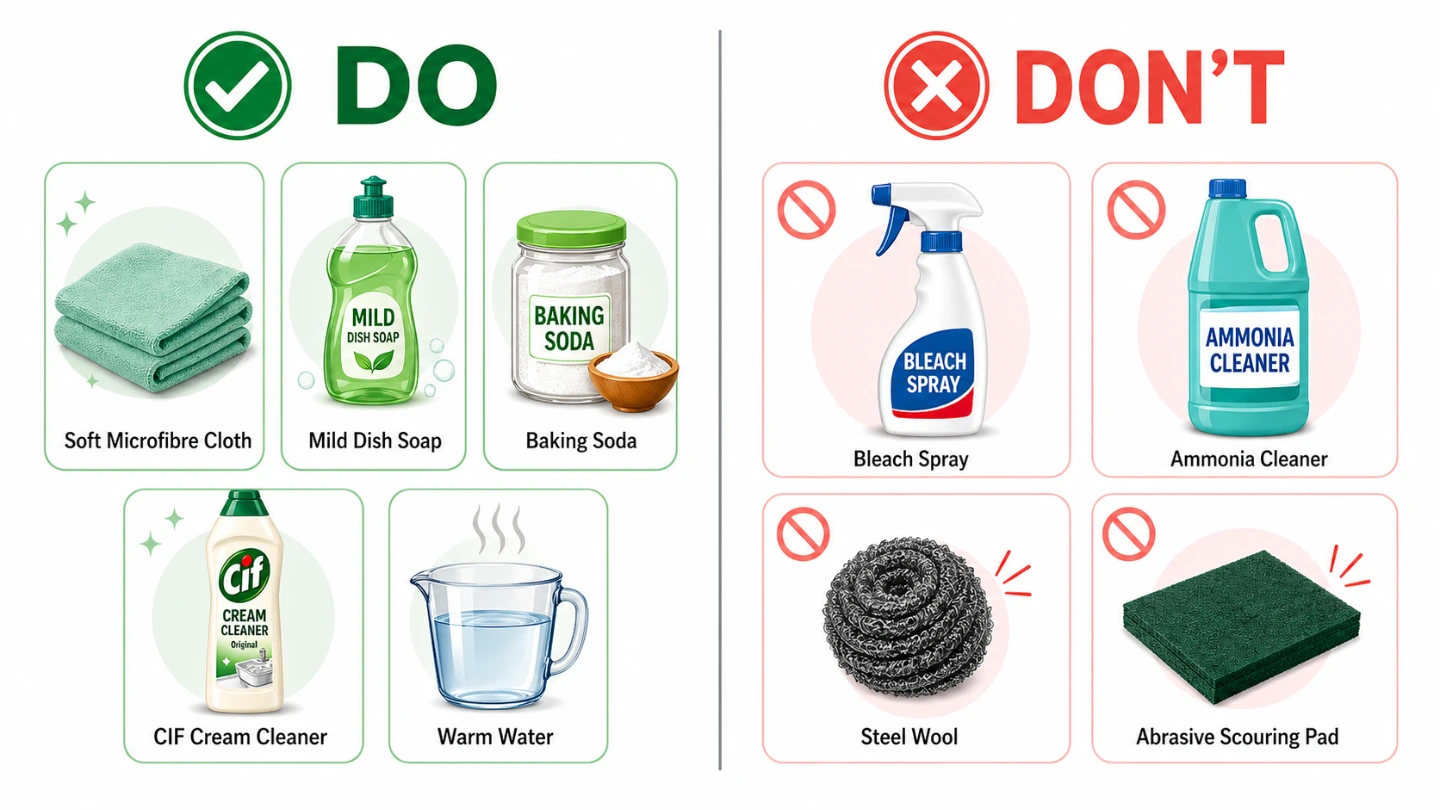
Quick Reference: Quartz Cleaning Dos and Don'ts
| DO | DON'T |
|---|---|
| Use warm water + mild dish soap | Use vinegar or lemon juice |
| Use soft microfibre cloths | Use steel wool or abrasive scrubbers |
| Wipe spills as part of your normal routine | Let turmeric or curry dry on the surface |
| Use baking soda paste for stains | Use bleach regularly or undiluted |
| Use isopropyl alcohol or nail polish remover for sticky residue | Use paint thinner or turpentine |
| Use a plastic scraper for dried food | Use metal scrapers or knives to scrape |
| Dry the surface after cleaning | Leave standing water on the surface |
Conclusion
Quartz is one of the most practical countertop materials for a Malaysian kitchen — durable, non-porous, and genuinely easy to maintain when you know what you are doing. The cleaning routine is not complicated: mild soap, warm water, and a soft cloth will handle 95% of situations.
The real challenge is knowing what to avoid. Vinegar, bleach, ammonia, abrasive scrubbers — these are the things that quietly degrade your countertop over months and years, until one day you notice the surface has lost its original lustre. Now you know better.
Treat your quartz with the same respect you give the rest of your kitchen investment, and it will serve you well for decades — through countless rendang sessions, sambal preparations, and everything else a Malaysian kitchen demands.