Your bathroom vanity top has a harder life than most people realise. It soaks up water every single morning, gets splashed with facial toner and perfume, and regularly has a hair straightener left on it while someone rushes through their routine.
In Malaysia, where humidity rarely dips below 70% and bathrooms can feel like a steam room on a rainy Monday, the material you choose matters more than it would in a cooler climate.
Quartz and sintered stone come up most often in bathroom renovation discussions — both non-porous, both low-maintenance, and both available across a range of price points. But they perform differently in ways that are genuinely relevant to how Malaysians live. This guide focuses specifically on the bathroom context. If you're deciding between these materials for your kitchen as well, our comparison of quartz versus sintered stone for Malaysian kitchens covers that space in detail.
Here's how both materials compare, honestly.
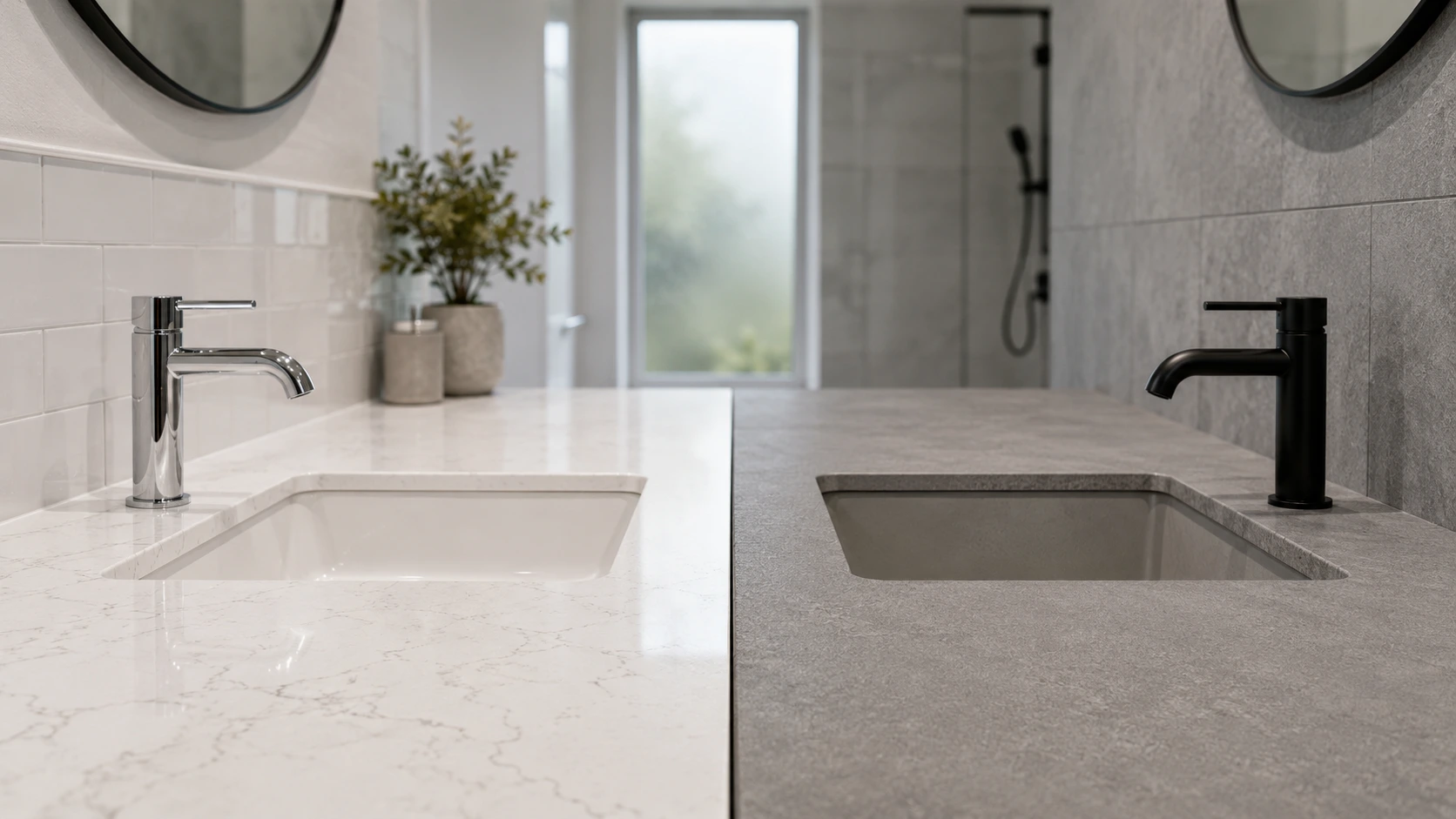
Why Your Bathroom Vanity Top Needs More Thought Than Your Kitchen Countertop
Most people spend more time choosing their kitchen countertop than their bathroom vanity top. That's understandable — the kitchen countertop is larger and more visually dominant. But the bathroom vanity operates under its own distinct conditions:
- Daily water pooling around the tap area, especially with countertop basins
- Exposure to personal care products — including acids (AHA/BHA toners are mainstream now), retinol, nail polish remover, and alcohol-based products
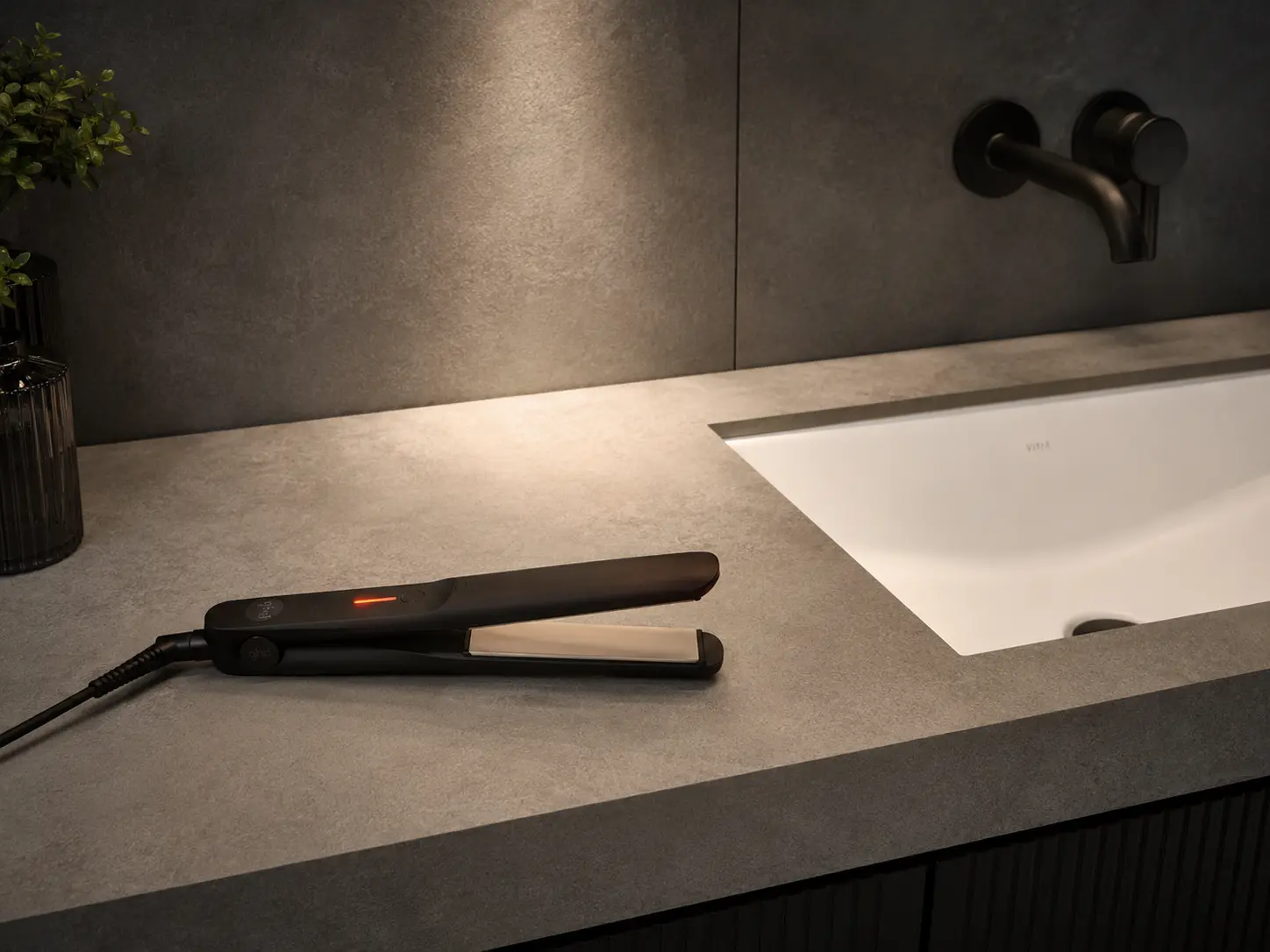
- Heat from styling tools — hair straighteners and curling wands at 150–220°C, set directly on the surface
- Humidity cycles — the bathroom heats up during a shower and cools down after, cycling repeatedly over years
- Smaller surface area — typically 3 to 8 square feet, which means a higher proportion of the total cost goes toward fabrication (the sink cutout, edge profiling) rather than material
Understanding these conditions is how you choose the material that will actually hold up — not just the one that looks good in the showroom.
Quartz Stone: Reliable, Refined, and Slightly Fussy About Heat
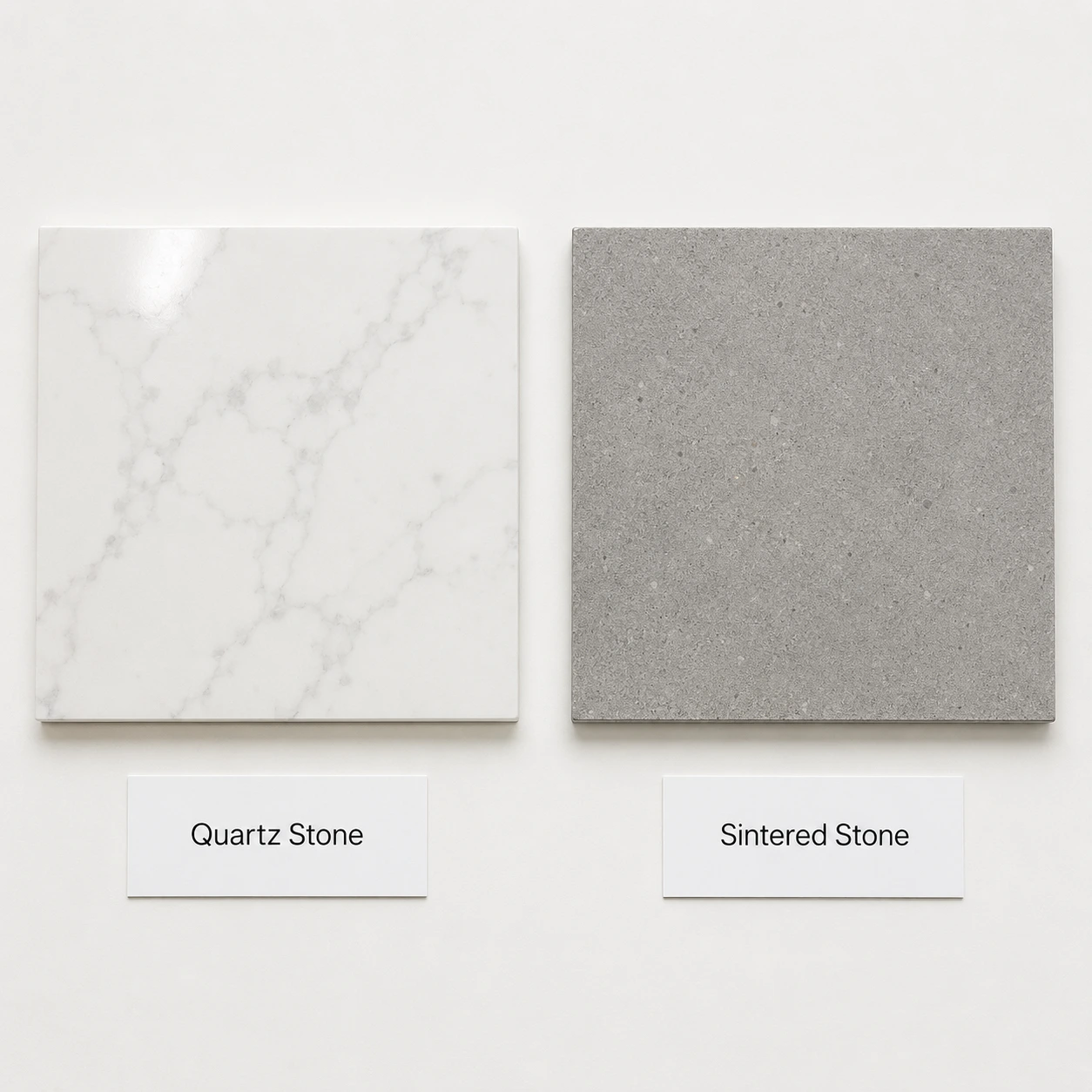
Quartz stone is engineered from roughly 90% natural quartz crystals bound with polymer resins and pigments. The result is a dense, non-porous surface with consistent colour and pattern throughout.
Moisture and Humidity Resistance
Quartz performs well in the bathroom on the moisture front. Its non-porous surface means water cannot penetrate the material, so there's no risk of swelling, internal staining, or mould growth within the slab itself.
The watch point is the silicone bead around the sink. As it ages, the seal can lift or discolour, and water that slips underneath can damage the cabinet below. This is a maintenance issue rather than a material flaw — but it's worth keeping an eye on, especially in bathrooms with poor ventilation.
Chemical Resistance
Quartz handles the full range of everyday bathroom products without issue — mild detergents, disinfectant sprays, alcohol-based toners, and acetone (nail polish remover). Acetone is actually a safe cleaning agent for quartz; fabricators use it to clean the surface during installation and maintenance.
Where quartz needs more care is at the extremes: prolonged contact with very high-concentration bleach or professional-grade cleaning acids can affect the polymer resins over time. For typical home use, this is rarely a real-world concern. A quick splash of any standard bathroom cleaner — including nail polish remover — is not a problem.
The practical watch point for most homeowners is AHA/BHA toners with high active concentrations. Leaving a soaked cotton pad sitting on the surface for several minutes, done repeatedly over months, is the kind of sustained acid contact that can eventually dull the finish.
Heat Resistance — The Known Limitation
Quartz's polymer resin binders begin to degrade at sustained temperatures above 150°C. A hair straightener at full heat, placed directly on the surface, can cause thermal discolouration or surface cracking.
The practical solution is a heat-resistant mat — a small silicone or bamboo pad that takes less than a second to reach for. Most people use one already out of habit. If your mornings are frantic or you have teenagers who move fast, sintered stone's superior heat tolerance becomes a real advantage.
Design Variety
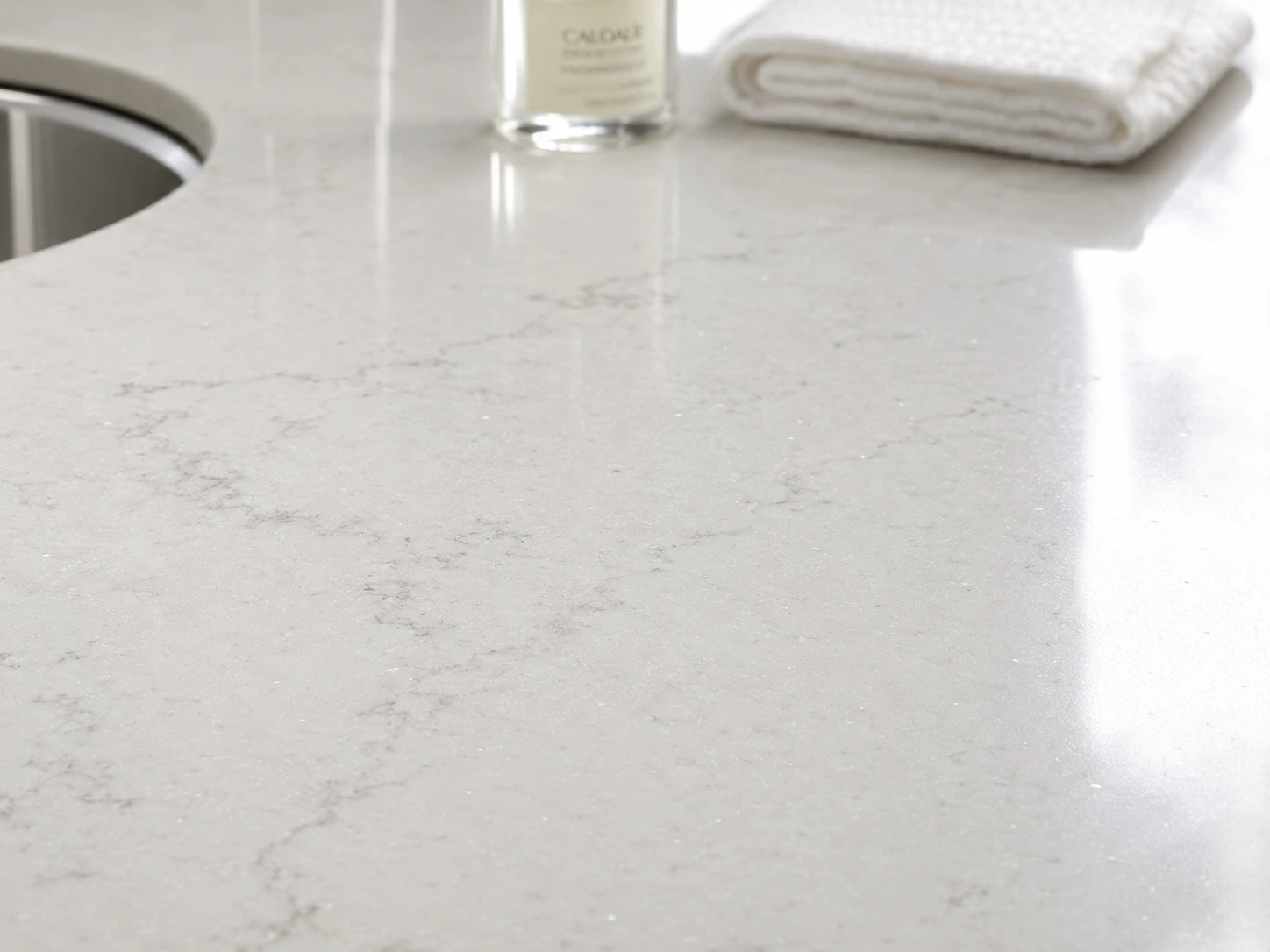
This is where quartz has a clear lead. Brands like Caesarstone and Silestone offer an extensive range of colours and patterns — crisp whites, warm beiges, deep blacks, and veined Calacatta-look designs — with excellent consistency from slab to slab. When you're trying to match a vanity top to specific wall tiles, fittings, or an overall bathroom palette, this predictability is genuinely useful.
One practical note on colour choice: avoid black or very dark quartz for a bathroom vanity top. Surface wear — fine micro-scratches from daily use, toothbrush holders being dragged across, rings from product bottles — is invisible on lighter colours but shows up clearly on dark quartz. The human eye picks up surface marks far more easily against a dark background, and a bathroom vanity gets that kind of low-level abrasion every single day. A black quartz vanity top that looked stunning on day one can start looking tired within a year of regular use. White, grey, and beige quartz hold their appearance far better over time in a bathroom setting.
Maintenance
Minimal. Wipe down with a damp cloth, use mild detergent for stubborn marks, avoid abrasive pads and harsh chemicals. No sealing required. No periodic treatments.
Sintered Stone: High-Performance, No Compromises
Sintered stone is created by subjecting raw mineral materials — glass, feldspar, clay, silica — to extreme heat and pressure, fusing them into a dense, non-porous slab. The process mirrors the natural formation of stone, compressed into an industrial timeframe.
The result is a surface with remarkably few weaknesses.
Moisture and Humidity Resistance
Like quartz, sintered stone is non-porous and handles moisture without any issues. For Malaysian bathrooms, both materials are effectively equal on this point.
Chemical Resistance — Sintered Stone at the Extremes
Sintered stone resists acids, alkalis, and cleaning agents at virtually all concentrations — including the most aggressive professional-grade products that would eventually affect quartz's resin binders. It's partly why sintered stone is specified for laboratory surfaces and commercial environments where extreme chemical exposure is a given.
For standard bathroom use, the difference between quartz and sintered stone on this front is minimal. Where sintered stone genuinely pulls ahead is concentrated industrial bleach, professional solvent-based cleaners, and very high-strength acid formulas — things most Malaysian homeowners will never encounter in a bathroom. If you or someone in your household uses extremely aggressive cleaning products regularly, sintered stone gives you a wider margin.
Heat Resistance — Where Sintered Stone Stands Apart
Sintered stone surfaces withstand temperatures exceeding 300°C with no thermal damage. Hair straighteners, curling wands, candles — they make no impression on sintered stone.
If styling tools are part of your daily bathroom routine, sintered stone removes the anxiety entirely. There's no mat to remember, no temperature to worry about. For a full picture of where sintered stone still has limitations despite these strengths, this honest guide to sintered stone disadvantages covers the points most suppliers won't raise upfront.
Design Options
Sintered stone's design range has improved considerably. Brands like Dekton and Moca Compact offer marble-look, concrete, and monochromatic designs that suit contemporary and minimalist bathrooms well.
The range is narrower than quartz, particularly at entry-level price points. At the premium end, polished Dekton can be genuinely striking — especially in a bathroom designed around clean lines and a restrained palette.
One note: sintered stone at standard 12mm thickness can occasionally look slightly less substantial than a thick polished quartz slab in close-up. In a bathroom where the vanity top is a design centrepiece, this is worth comparing with samples in hand.
Maintenance
As close to zero as any countertop material gets. Clean it with virtually anything — any product, any cloth. Sintered stone is arguably the lowest-maintenance countertop surface available. For a broader comparison of how sintered stone stacks up against quartz across everyday use, this Malaysian homeowner's guide to sintered stone versus quartz is a useful read alongside this one.
Head-to-Head: Quartz vs Sintered Stone for the Bathroom
| Factor | Quartz | Sintered Stone |
|---|---|---|
| Moisture resistance | Excellent | Excellent |
| Chemical resistance | Very good — handles acetone, alcohol, and standard cleaning products; caution with prolonged high-concentration bleach or industrial acids | Excellent — no restrictions at any concentration |
| Heat resistance | Limited — avoid direct contact above ~150°C | Outstanding — handles 300°C+ |
| Scratch resistance | Good | Excellent |
| Design variety | Very wide | Moderate (improving) |
| UV resistance | Moderate — may yellow near windows over time | Excellent |
| Maintenance | Low | Minimal |
What Does It Actually Cost in Malaysia?
Bathroom vanity tops are small — but fabrication (the sink cutout, edge finishing) makes the labour cost proportionally higher than on a kitchen countertop. That applies to both materials.
Quartz pricing (supply and installed per sqft):
- Zenstone — from RM 110/sqft. A 5 sqft vanity top starts from around RM 550
- Moonstone — from RM 182/sqft. A 5 sqft vanity top from around RM 910
- Caesarstone — from RM 332/sqft. A 5 sqft vanity top from around RM 1,660
- Silestone — from RM 282/sqft. A 5 sqft vanity top from around RM 1,410
Sintered stone pricing (supply and installed per sqft):
- Moca Compact — from RM 110/sqft. A 5 sqft vanity top from around RM 550
- Dekton — from RM 248/sqft. A 5 sqft vanity top from around RM 1,240
At the entry level, the price gap between quartz and sintered stone is minimal. As you move toward premium brands, Dekton tends to be somewhat more accessible than top-tier quartz from Caesarstone or Silestone. Pricing varies based on colour selection, finish, and the complexity of the cutout.
For a complete breakdown of what drives cost differences across all brands, our 2026 Malaysia stone countertop price guide has the detail you need before requesting quotes.
Which Material Is Right for Your Bathroom?
Choose quartz if:
- Design consistency matters most — you want a specific pattern or colour to match your tiles and fittings
- Your skincare routine doesn't involve heavy active ingredients
- You're comfortable using a heat mat for styling tools
- Your budget works better with entry to mid-range brands like Zenstone or Moonstone
- Stick to lighter colours — white, grey, or beige. Black and very dark quartz show surface wear and micro-scratches far more readily in a bathroom environment
Choose sintered stone if:
- Heat from styling tools is a daily constant in your bathroom
- You or your household use very high-concentration bleach or professional-grade cleaning agents regularly
- The bathroom has a window with direct sunlight — sintered stone won't yellow over time the way some quartz can
- You want the absolute minimum maintenance burden
If you want to explore how granite, porcelain slab, or compressed marble compare alongside these two options, our guide to the best stone materials for bathroom vanity tops in Malaysian homes covers all five materials side by side.
The Bottom Line
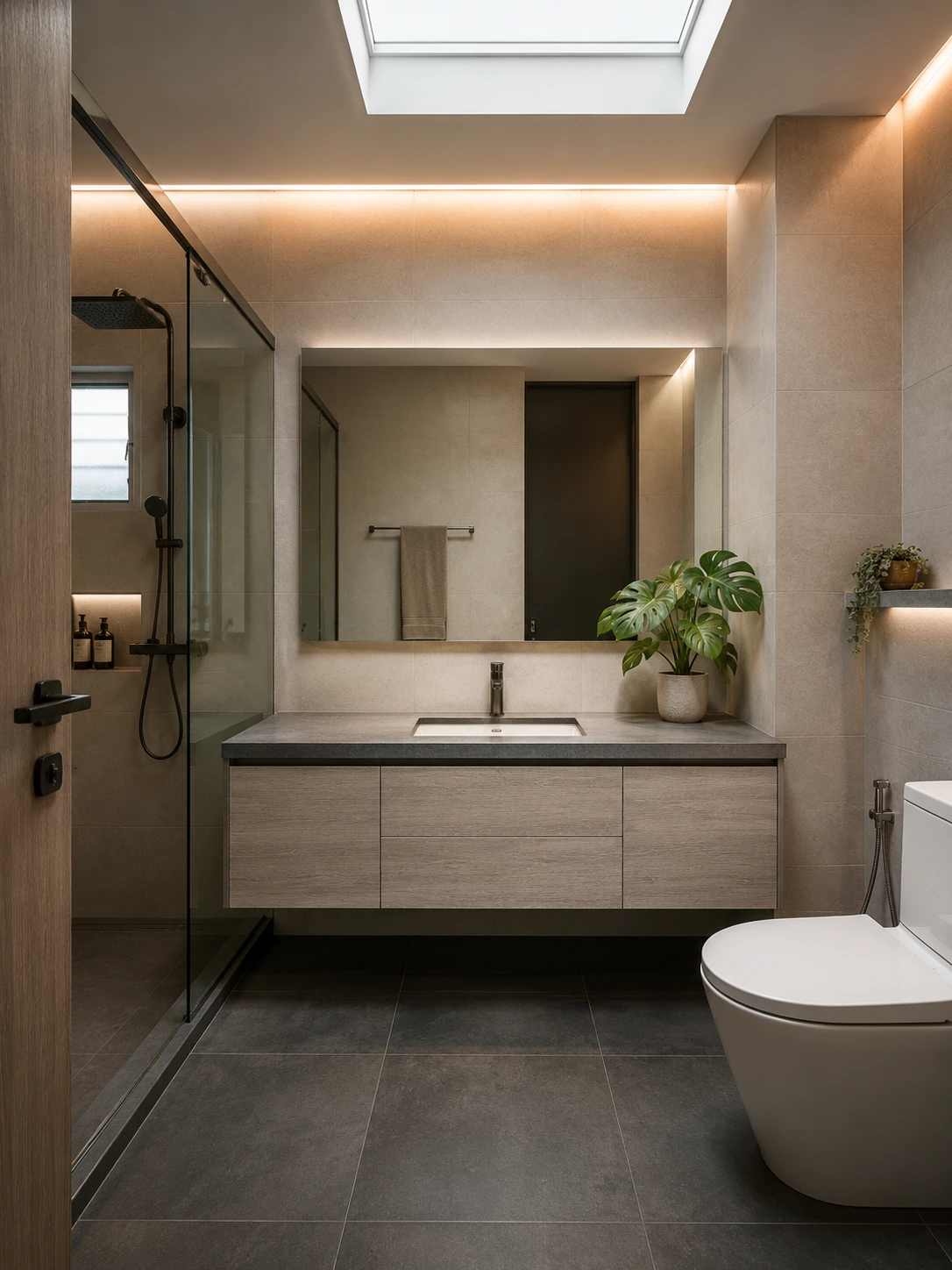
Both quartz and sintered stone are solid choices for a Malaysian bathroom vanity top. They're non-porous, easy to maintain, and available at a range of price points.
The real difference comes down to your household's actual habits. If heat and chemical resistance are priorities — styling tools, active skincare, strong cleaning products — sintered stone is the better fit. If design flexibility and colour predictability matter more, quartz gives you more to work with.
Neither will disappoint you in the bathroom. But one of them will suit your daily life better than the other. Know which one before you commit.