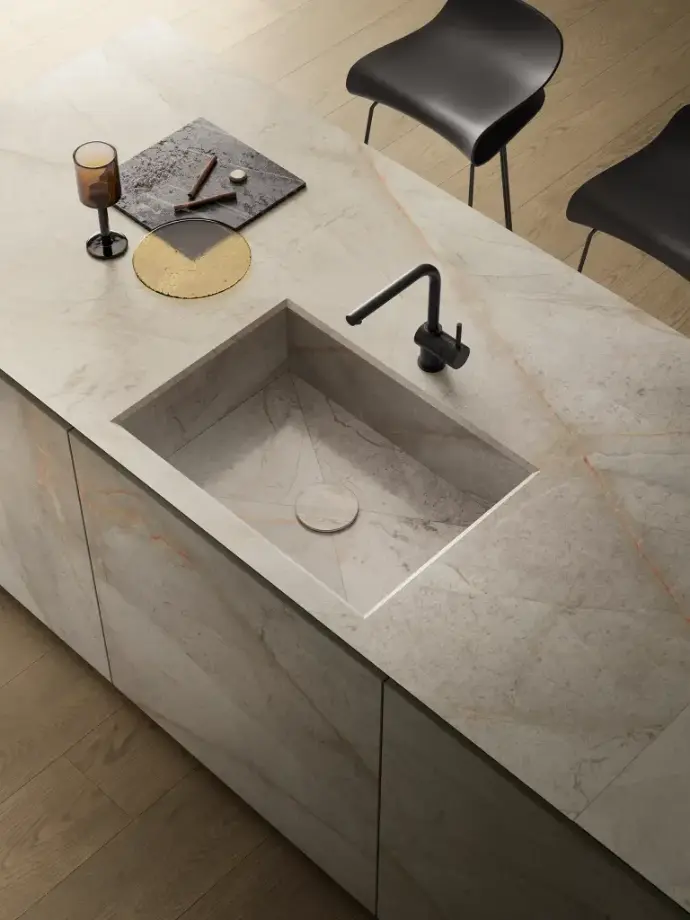
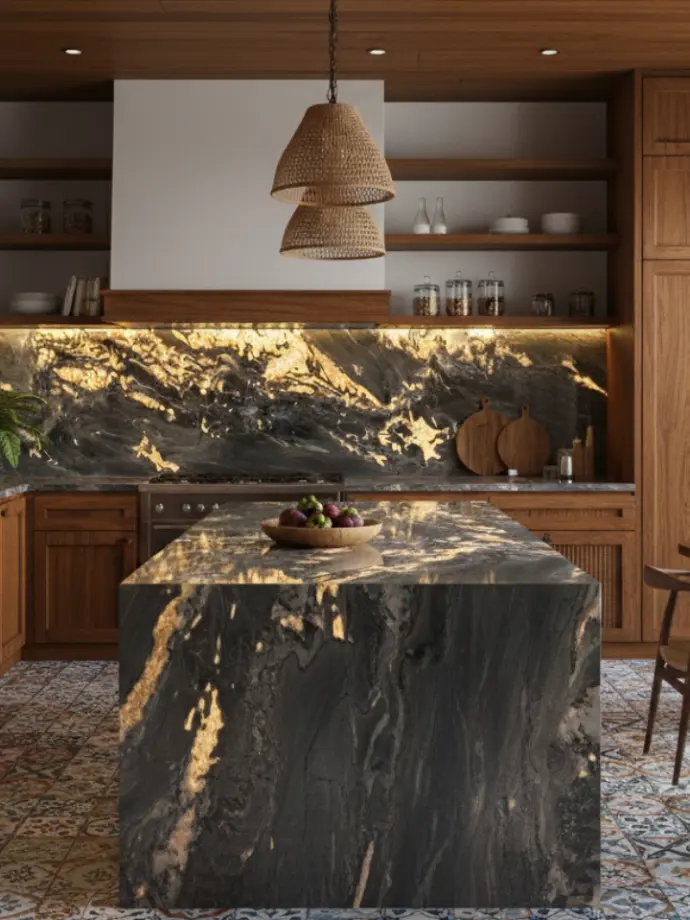
You've been scrolling through renovation forums, chatting with your interior designer, and watching countless before-and-after videos — and two names keep coming up: sintered stone and quartz stone.
Both look stunning in showroom photos. Both are marketed as premium and durable. So which one actually belongs in your kitchen?
In this 2026 guide, we break down exactly how sintered stone and quartz stone compare across every performance factor that matters — so you can make a decision based on facts, not showroom talk.
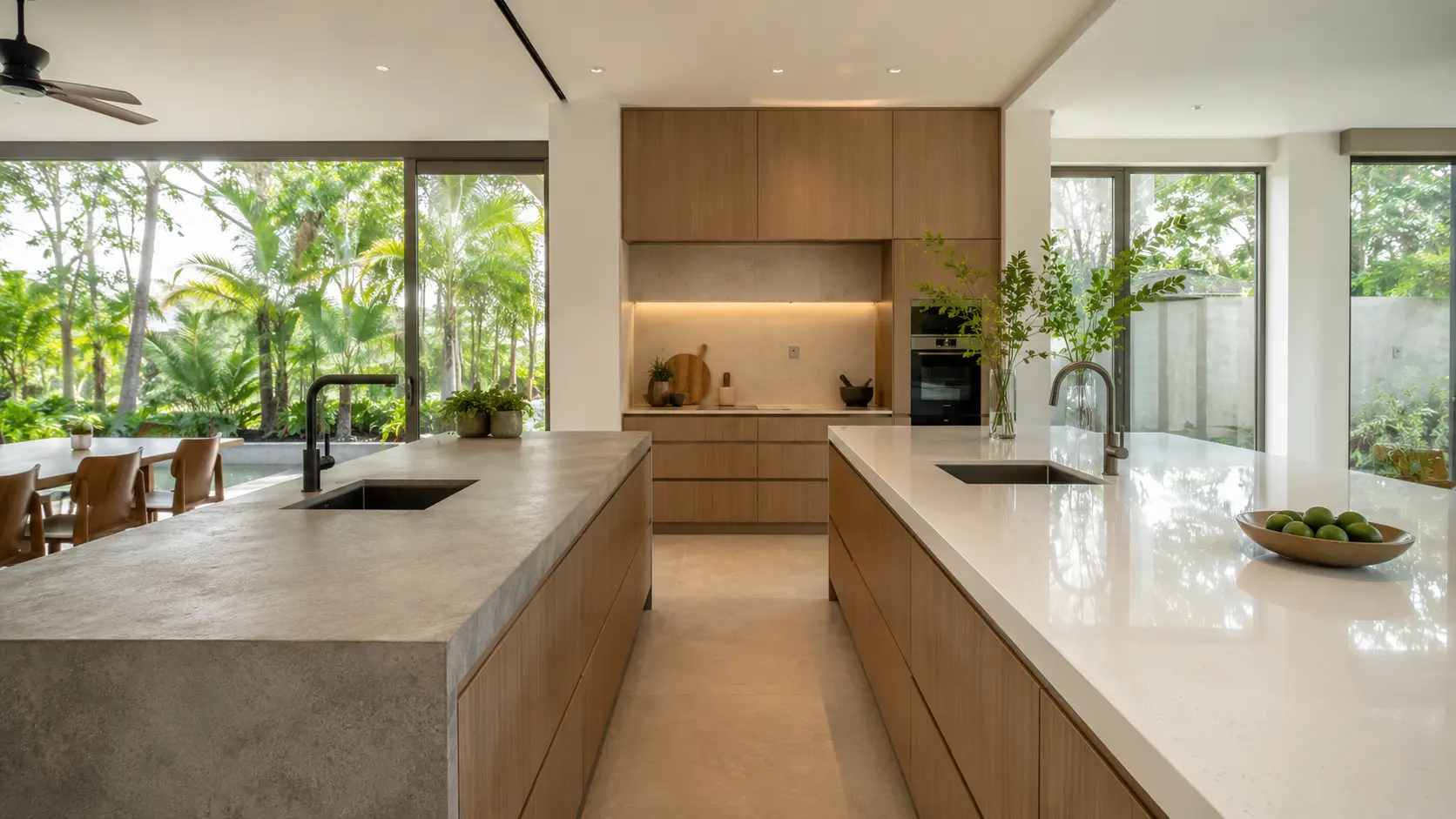
What Is Sintered Stone?
Sintered stone is one of the newest countertop materials available today. It is manufactured through a process called sintering — where natural minerals (feldspar, quartz, silica, and glass) are subjected to extreme pressure and baked at temperatures exceeding 1,200°C.
The result is an ultra-dense, non-porous slab that contains no resins, no polymers, and no binding agents. What you get is essentially a man-made stone engineered to perform in demanding environments — making it particularly suited for outdoor kitchens and spaces exposed to direct sunlight.
Popular sintered stone brands available in Malaysia include Dekton (by Cosentino) and Moca Compact.
What Is Quartz Stone?
Quartz stone — sometimes called quartz surface or engineered quartz — is composed of approximately 90% crushed quartz crystals bound together with resins, pigments, and other additives. The mixture is compressed and cured under heat to form slabs.
Because of this resin content, quartz stone has a degree of flexibility that gives it excellent impact resistance. It is also a fully homogenous material — meaning the colour and pattern run through the entire slab, not just on the surface.
Popular quartz stone brands in Malaysia include Caesarstone, Silestone, Moonstone, and Zenstone.
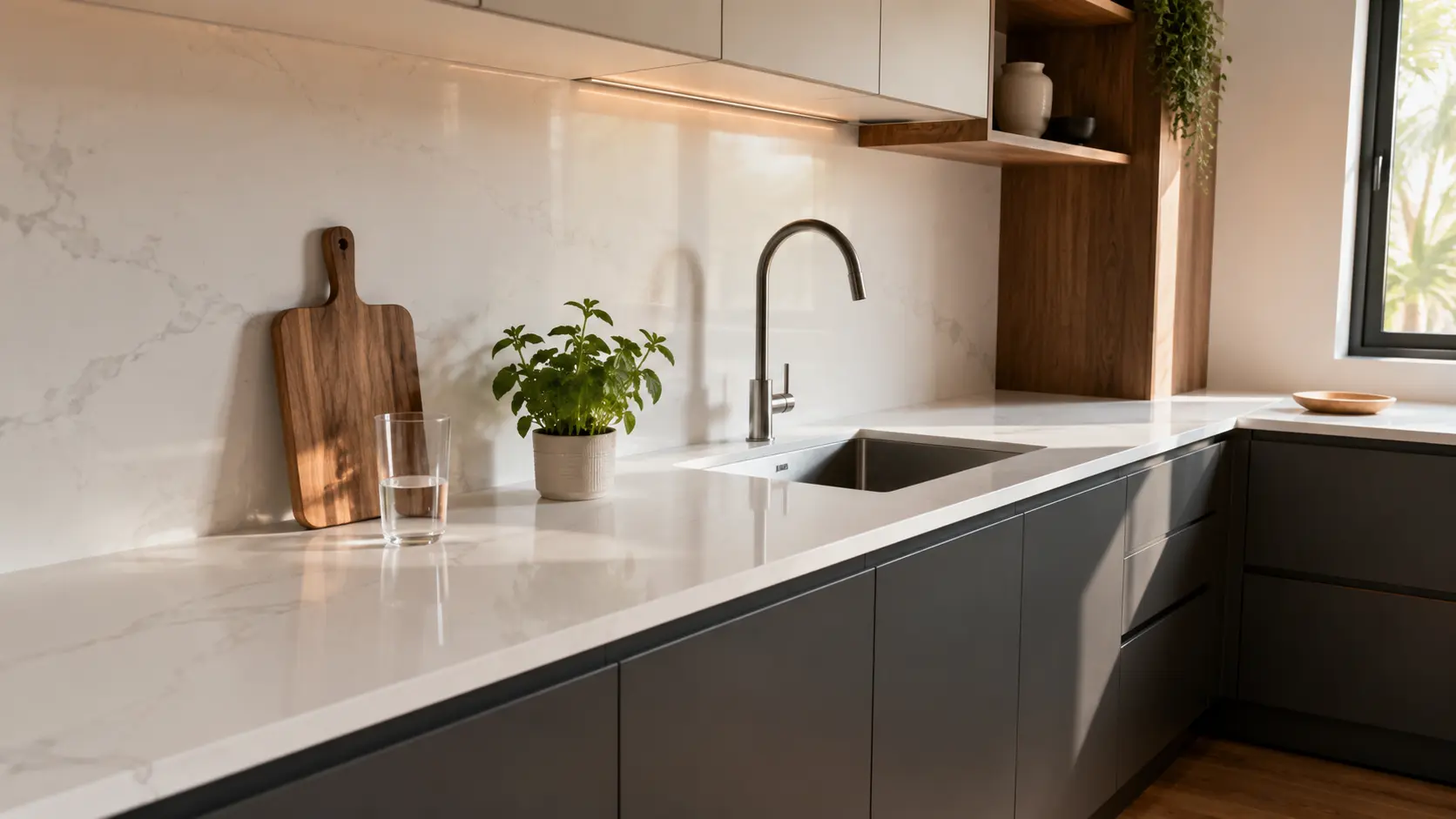
Sintered Stone vs Quartz Stone: 2026 Comparison Chart
| Quartz Stone | Sintered Stone | |
|---|---|---|
| Mohs Hardness Scale | 5–7 | 6–8 |
| Acid Resistance | High | High |
| Non-Porous Material | Yes | Yes |
| Food Stain Resistance | High | High |
| Colour Consistency | Yes | Yes |
| Book Match Option | Yes | Yes |
| Easy To Clean | Yes | Yes |
| Easy To Maintain | Yes | Yes |
| Heat Resistance | Up To 150°C | Up To 300°C |
| Available Finishes | Polished, Matt, Rough | Glossy, Smooth Matt, Rough |
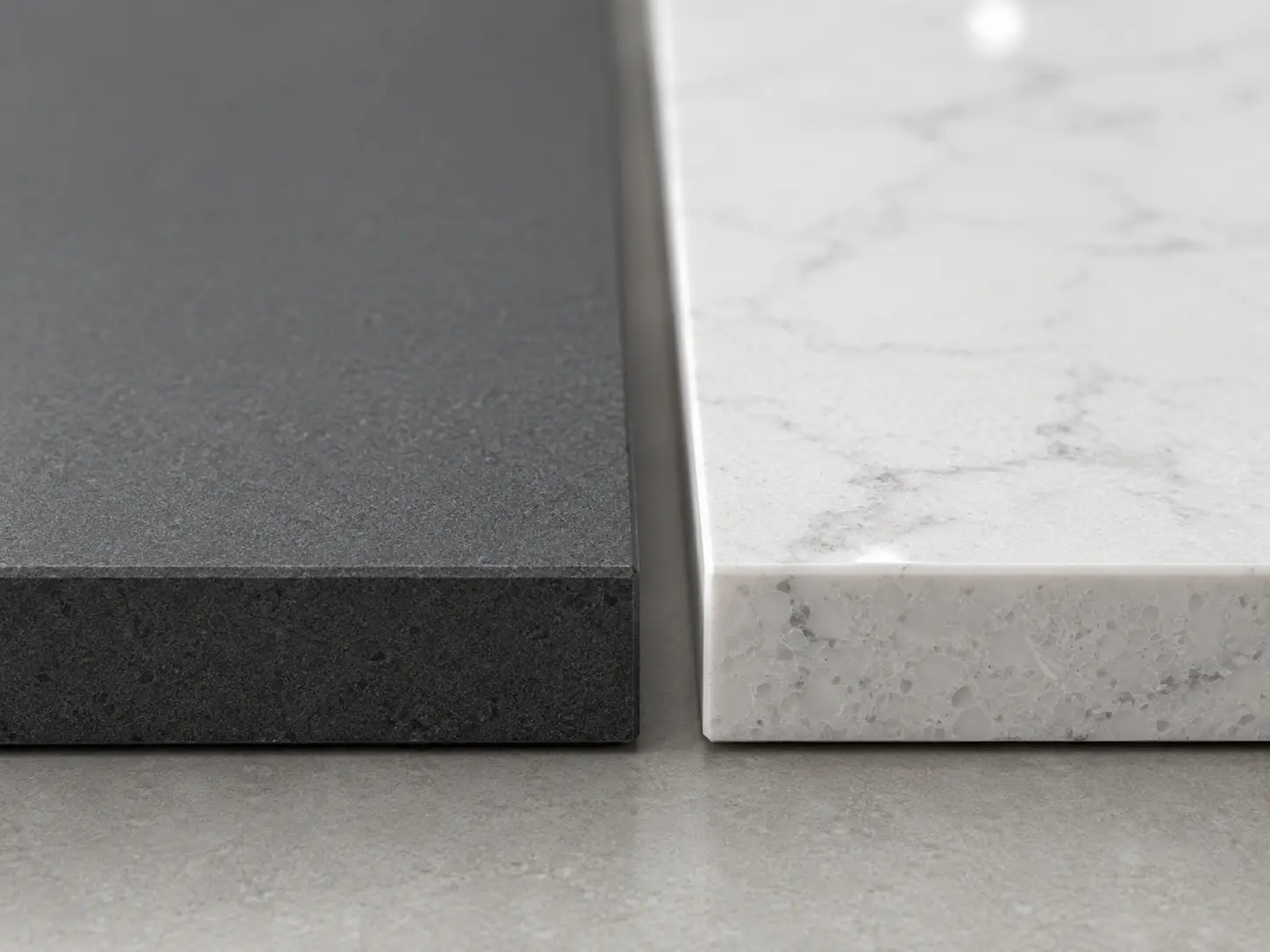
| Material Consistency | Full Body (Homogenous) | Surface Layer Only (1–2mm) |
| Key Strength | Resists high impact without cracking | Resists UV rays and extreme heat |
| Key Weakness | UV rays can fade colour over time | High impact may cause chipping |
A Closer Look at the Key Differences
Heat Resistance: Sintered Stone Wins
This is where the two materials differ most significantly — and it matters a great deal in Malaysian kitchens.
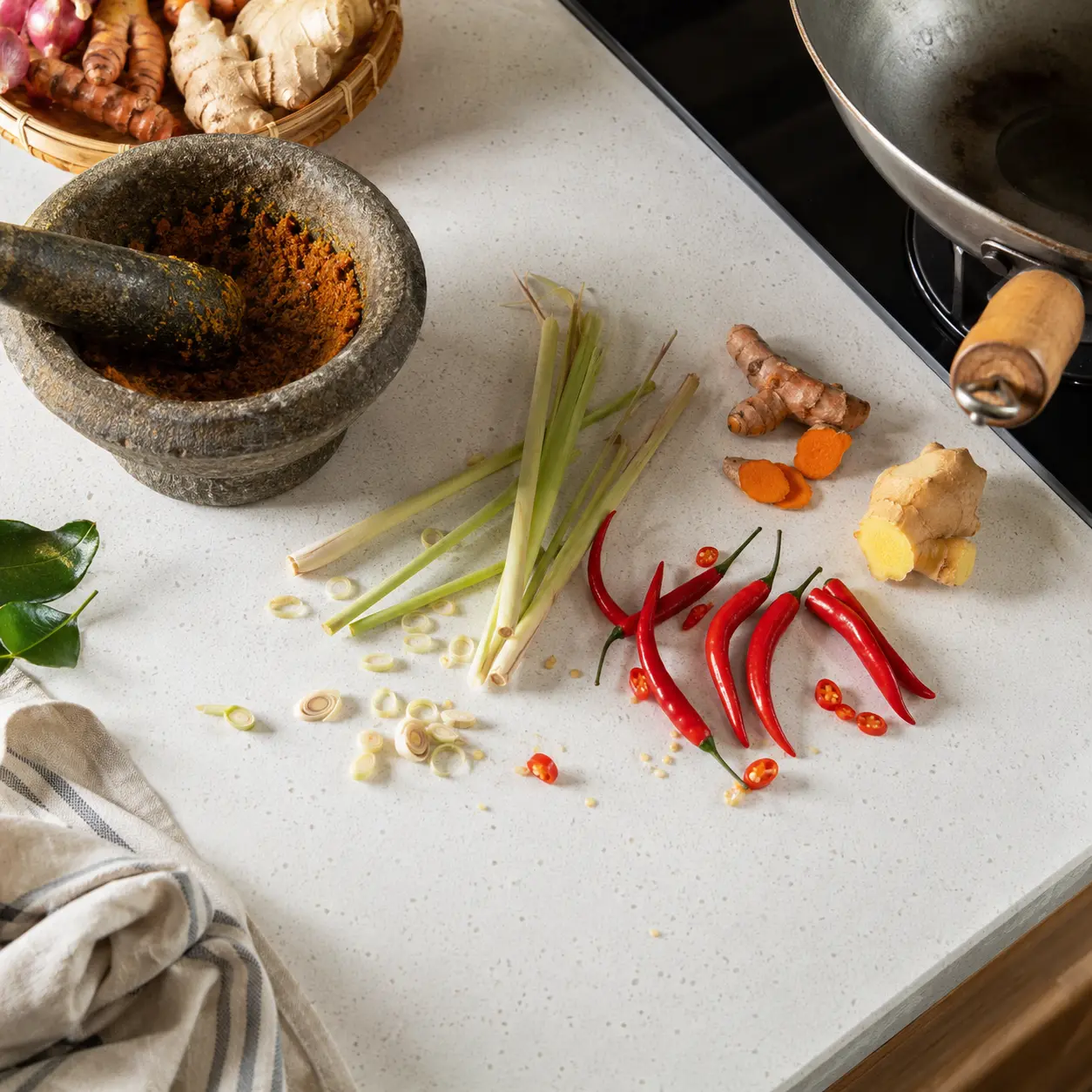
Quartz stone can withstand temperatures of up to approximately 150°C. For everyday cooking — boiling water, hot saucepans briefly placed on the surface — this is generally sufficient. However, the resin content means that prolonged or direct contact with extreme heat (such as a wok fresh off a high-flame gas hob) can cause discolouration or even surface cracking over time.
Sintered stone, on the other hand, is rated to withstand temperatures of up to 300°C and beyond. Because it contains no resins, it is far less susceptible to thermal shock.
If your household involves heavy wok cooking or frequent use of high-flame gas burners, sintered stone offers a meaningful advantage here. That said, no reputable supplier recommends placing extremely hot pans directly on any countertop — using a trivet or pot stand remains the safest practice regardless of material.
Hardness and Scratch Resistance
Both materials are highly scratch-resistant compared to natural stones like marble or granite.
On the Mohs hardness scale, quartz stone scores 5–7, whilst sintered stone scores 6–8. In practical terms, everyday kitchen items — knives, ceramic mugs, utensils — will not scratch either surface under normal use.
That said, we would still recommend always using a chopping board. Cutting directly on any countertop, regardless of material, will leave micro-scratches over time that gradually dull the surface finish.
Stain and Acid Resistance
Both sintered stone and quartz stone are non-porous materials, which means they do not absorb liquids. This makes them inherently resistant to the most common kitchen stains — coffee, turmeric, curry, red wine, and cooking oil.
High-acid substances such as citrus juice, vinegar, and most household cleaning agents are handled well by both materials. Neither requires sealing, unlike natural stone surfaces such as marble or granite.
For Malaysian kitchens where spice-heavy, oil-intensive cooking is the daily norm, both materials perform strongly in this category.
UV Resistance and Colour Stability
This is where sintered stone has a clear and decisive advantage.
Quartz stone contains polymer resins, which are susceptible to UV degradation. Over time, prolonged direct sunlight exposure can cause the colour to fade or develop a subtle yellowish tint. This is why quartz stone is not recommended for outdoor countertops or indoor spaces that receive intense, continuous sunlight — such as a covered patio kitchen or a space with large west-facing windows.
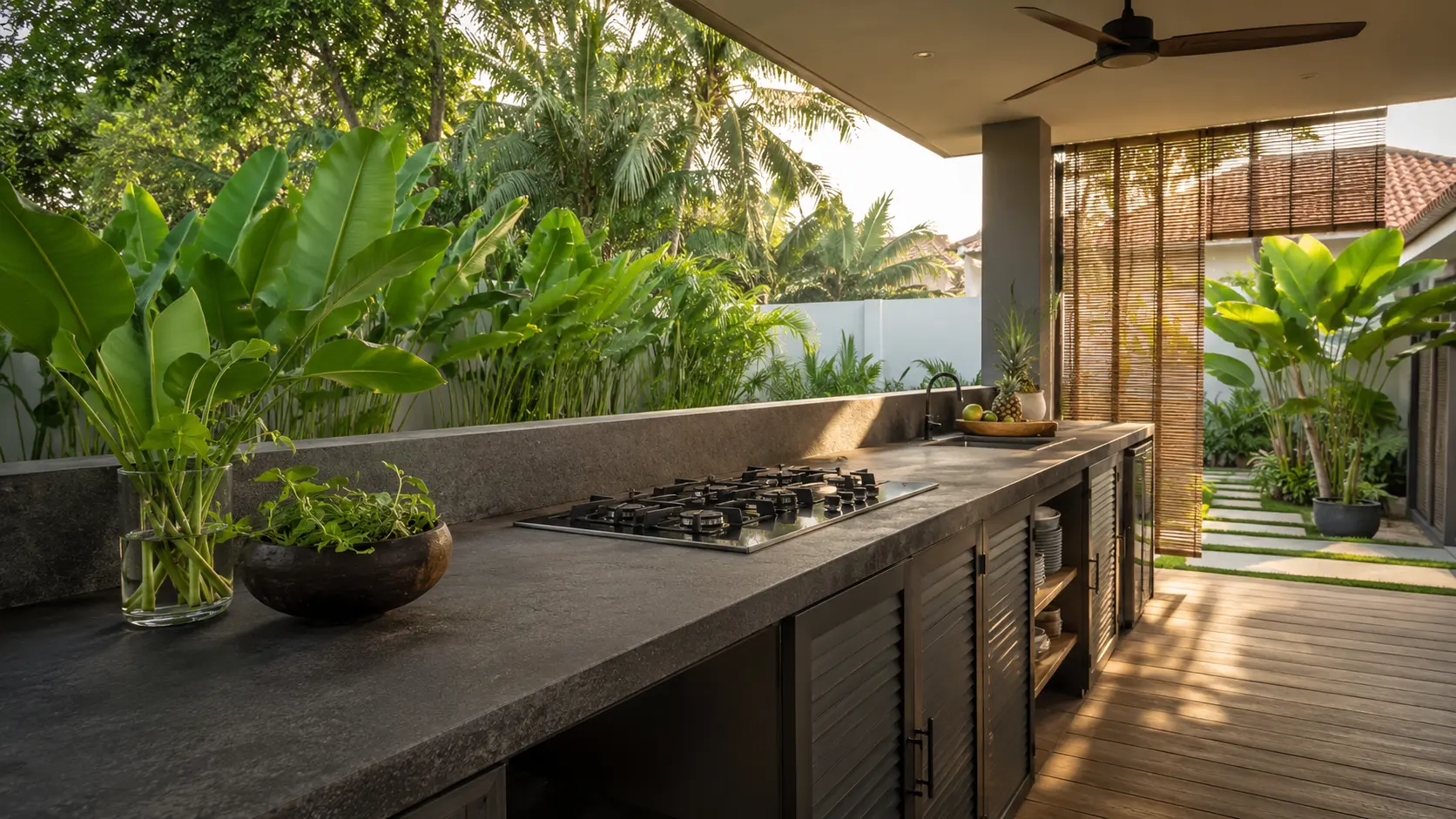
Sintered stone, being entirely resin-free, does not fade or discolour under UV exposure. It is fully suitable for outdoor kitchens, balcony countertops, alfresco dining areas, and any space that receives direct sunlight throughout the day.
If your kitchen or entertaining space is sun-exposed for significant portions of the day, this single factor may tip the decision firmly in favour of sintered stone.
Impact Resistance and Chipping Risk
Here is where quartz stone holds the advantage.
Because quartz stone contains resin as a binding agent, it retains a slight flexibility that makes it far more resistant to impact. Dropping a heavy pot or striking the edge of the countertop with force is less likely to cause chipping or cracking on a quartz surface.
Sintered stone, despite its impressive hardness, is more brittle by nature. It can chip at edges or corners when subjected to a strong, concentrated impact — for example, if a heavy cast-iron pot or heavy tool is dropped onto the edge. This brittleness also means sintered stone requires experienced, specialist fabricators for cutting and templating; improper handling during installation can cause cracking.
For active family kitchens where the countertop takes regular knocks and heavy use, quartz stone's superior impact resistance is a practical advantage.
Colour and Pattern Depth
Quartz stone is fully homogenous — the colour and pattern extend all the way through the slab. This means that even if the surface chips or is edge-detailed, the appearance remains consistent throughout.
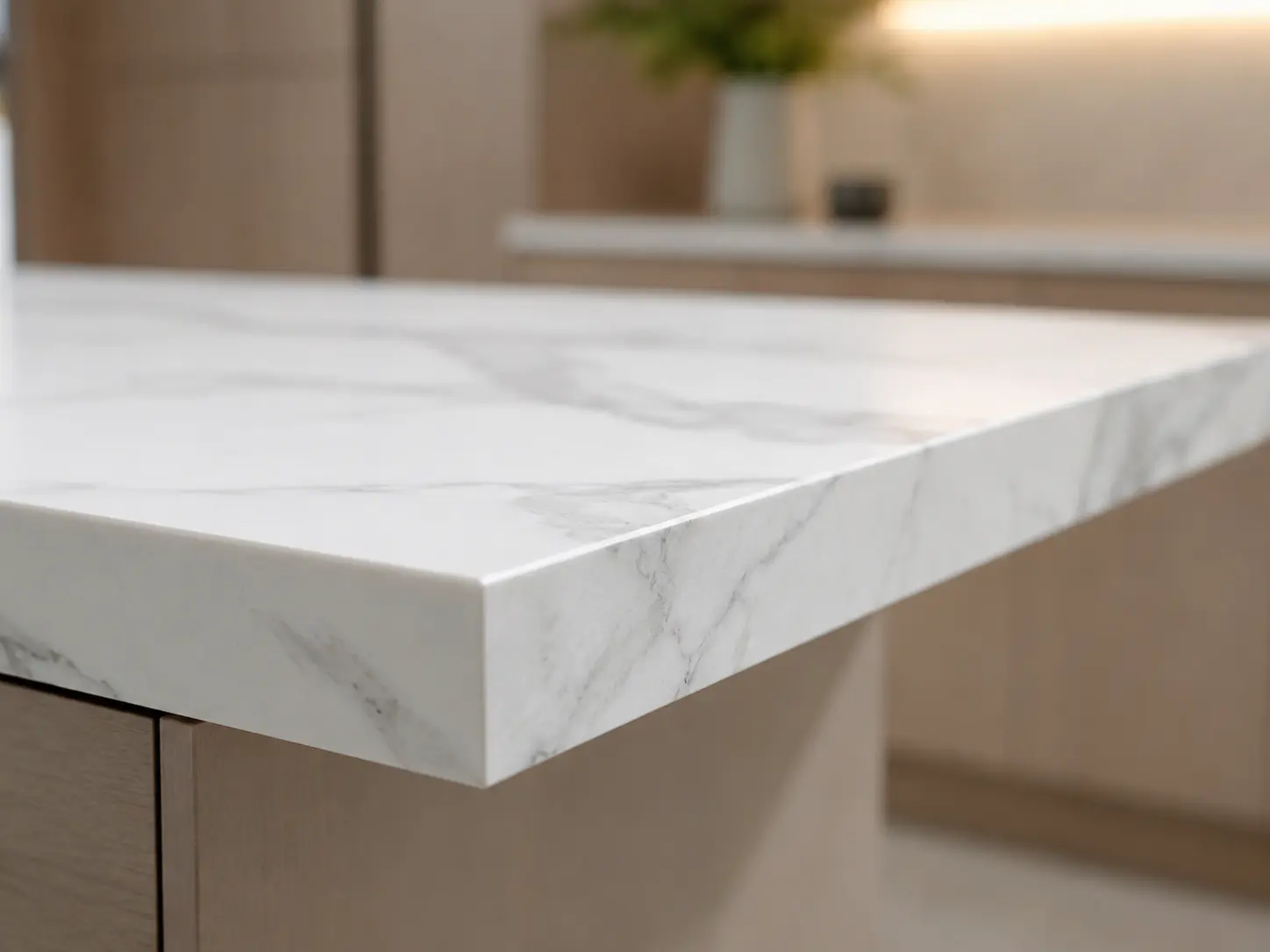
Sintered stone reproduces the look of natural stone (marble, concrete, slate, and wood) with exceptional realism. However, the decorative surface pattern only penetrates approximately 1–2mm below the surface. This is important to consider if complex edge detailing is part of your design — a waterfall end or mitre edge on sintered stone will expose the plain, undecorated body beneath the surface pattern.
Available Finishes
Both materials offer a range of finishes to suit different aesthetic preferences:
- Quartz stone: Polished (high gloss), honed (smooth matt), and textured (rough/leather)
- Sintered stone: Glossy, smooth matt, and rough/textured
In Malaysia, polished and honed finishes are the most popular for kitchen countertops across both material types. For busy kitchens, a honed or matte finish is often preferred as it better conceals fingerprints, water marks, and light surface scratches during daily use.
What About Pricing in Malaysia?
Pricing for both sintered stone and quartz stone varies depending on the brand, colour, thickness, and the complexity of your kitchen layout.
As a general reference:
- Quartz stone tends to be more accessible in price, particularly for established mid-range brands. Entry-level quartz options offer excellent value for everyday kitchen applications.
- Sintered stone commands a premium, particularly for leading international brands such as Dekton.
For a detailed breakdown of what each brand and material type costs in Malaysia for 2026, refer to our complete stone countertop price guide.
Which One Should You Choose?
There is no universal answer — the right material depends on your kitchen layout, sun exposure, cooking habits, and budget.
Choose Quartz Stone If You:
- Have an indoor kitchen without prolonged direct sunlight exposure
- Prioritise impact resistance — particularly in a busy household or with young children
- Want a fully homogenous material where colour and pattern run through the entire slab
- Are renovating a wet kitchen or bathroom vanity top
- Prefer a wider range of brand and pricing options
Quartz stone is the ideal choice for indoor countertops, particularly for wet kitchens and bathroom vanities. It is also the better option when impact resistance is the highest priority.
Choose Sintered Stone If You:
- Have a kitchen or entertaining area with direct and prolonged sunlight exposure
- Need an outdoor countertop — balcony, patio, alfresco dining, or an open-sided kitchen
- Do a lot of high-heat, high-flame cooking and want added thermal resistance
- Value the realistic natural stone aesthetic — sintered stone reproduces marble, slate, and concrete patterns with outstanding detail
- Want a surface that works seamlessly both indoors and outdoors without UV degradation
Before committing to either material, it is worth reading both our guide on the disadvantages of quartz stone and our guide on the disadvantages of sintered stone — so you go in with a complete picture of what each material cannot do.
Conclusion
Both sintered stone and quartz stone are excellent countertop materials — and both represent a significant upgrade over natural stone for the majority of Malaysian households.
The decision comes down to your kitchen environment and how you use your space:
- Quartz stone for heavy-duty indoor kitchens where impact resistance and value matter most.
- Sintered stone for sunlit or outdoor spaces where UV stability and heat tolerance are the priority.
If you are still undecided, our in-depth guide on sintered stone vs quartz stone for Malaysian kitchens explores real-world scenarios in greater detail — and helps you avoid the costly mistakes many homeowners make during their renovation.