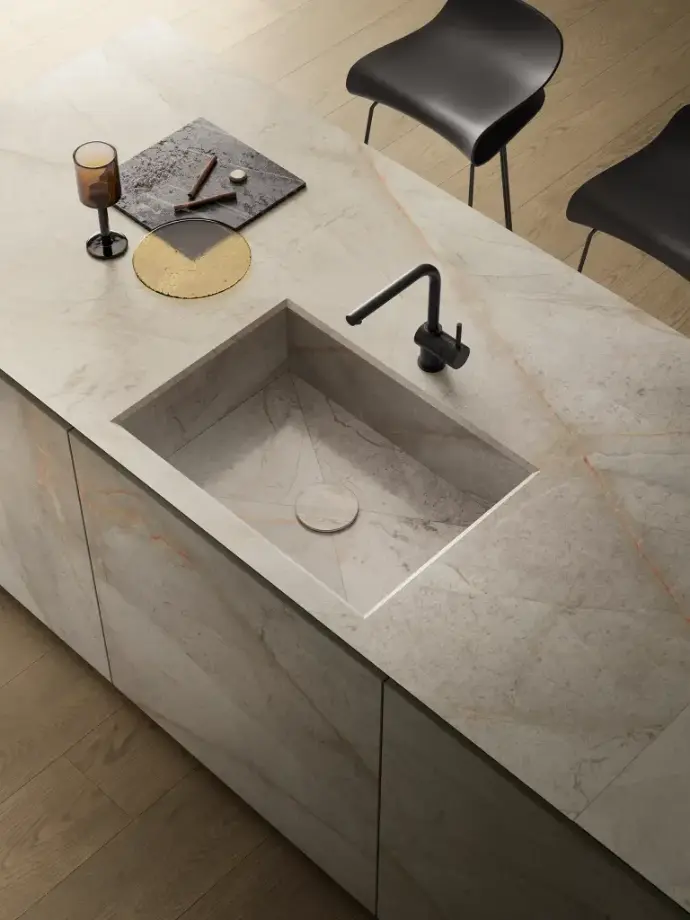
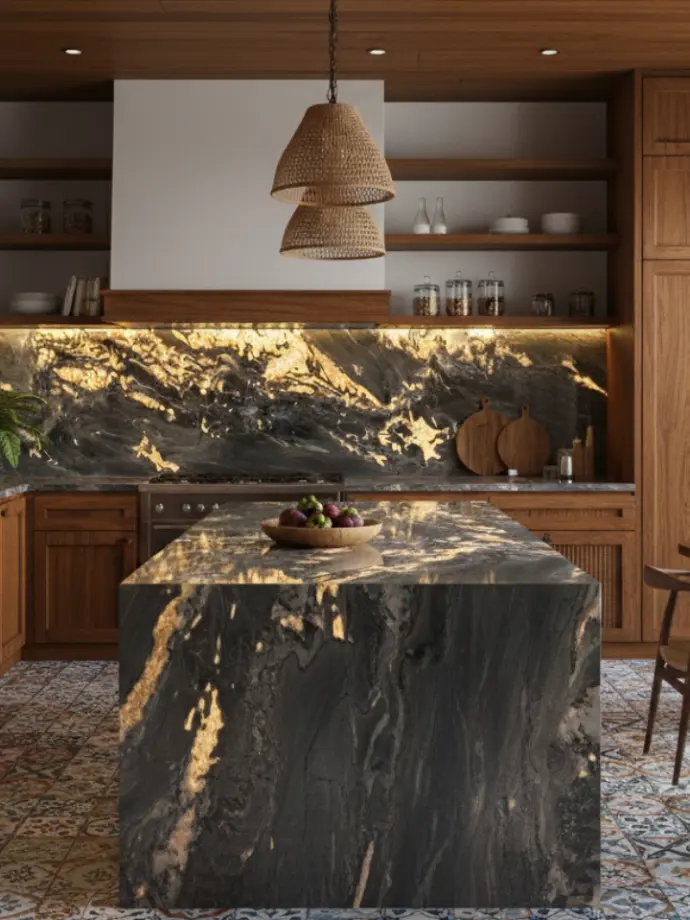
Sintered stone has earned its reputation as the premium countertop material of choice for discerning Malaysian homeowners. With its exceptional heat resistance, UV stability, and virtually indestructible surface, it's easy to see why brands like Dekton have become synonymous with luxury kitchen design.
But here's what showroom consultants rarely mention: sintered stone isn't perfect for everyone.
After years of fabricating and installing countertops across Malaysia, we've seen homeowners make costly decisions based on incomplete information. This guide presents the honest disadvantages of sintered stone—not to discourage you, but to ensure you make a fully informed choice for your home.
Understanding Sintered Stone's Premium Position
Before diving into the disadvantages, it's worth understanding what makes sintered stone unique. Unlike quartz, which uses resin binders, sintered stone is created by subjecting natural minerals to extreme heat (over 1,200°C) and pressure, mimicking the natural stone formation process that takes millions of years.
This manufacturing process creates a material that's genuinely impressive: completely non-porous, resistant to UV degradation, and able to withstand direct heat from hot pans. For outdoor kitchens or homes with significant sun exposure, these properties make sintered stone genuinely superior to alternatives.
However, these advantages come with trade-offs that every Malaysian homeowner should understand.
The Cost Factor: Premium Pricing Requires Serious Investment
Let's address the elephant in the room: sintered stone commands premium pricing that puts it beyond many renovation budgets.
Dekton, the most common sintered stone brand in Malaysia, ranges from RM229 to RM474 per square foot for supply and installation. For a typical Malaysian kitchen with 40-50 square feet of countertop space, you're looking at RM9,160 to RM23,700 just for the countertop alone.
Compare this to quality quartz options:
- Zenstone (budget quartz): RM110-160 per square foot
- Caesarstone (premium quartz): RM318-819 per square foot
- Silestone (premium quartz): RM280-645 per square foot
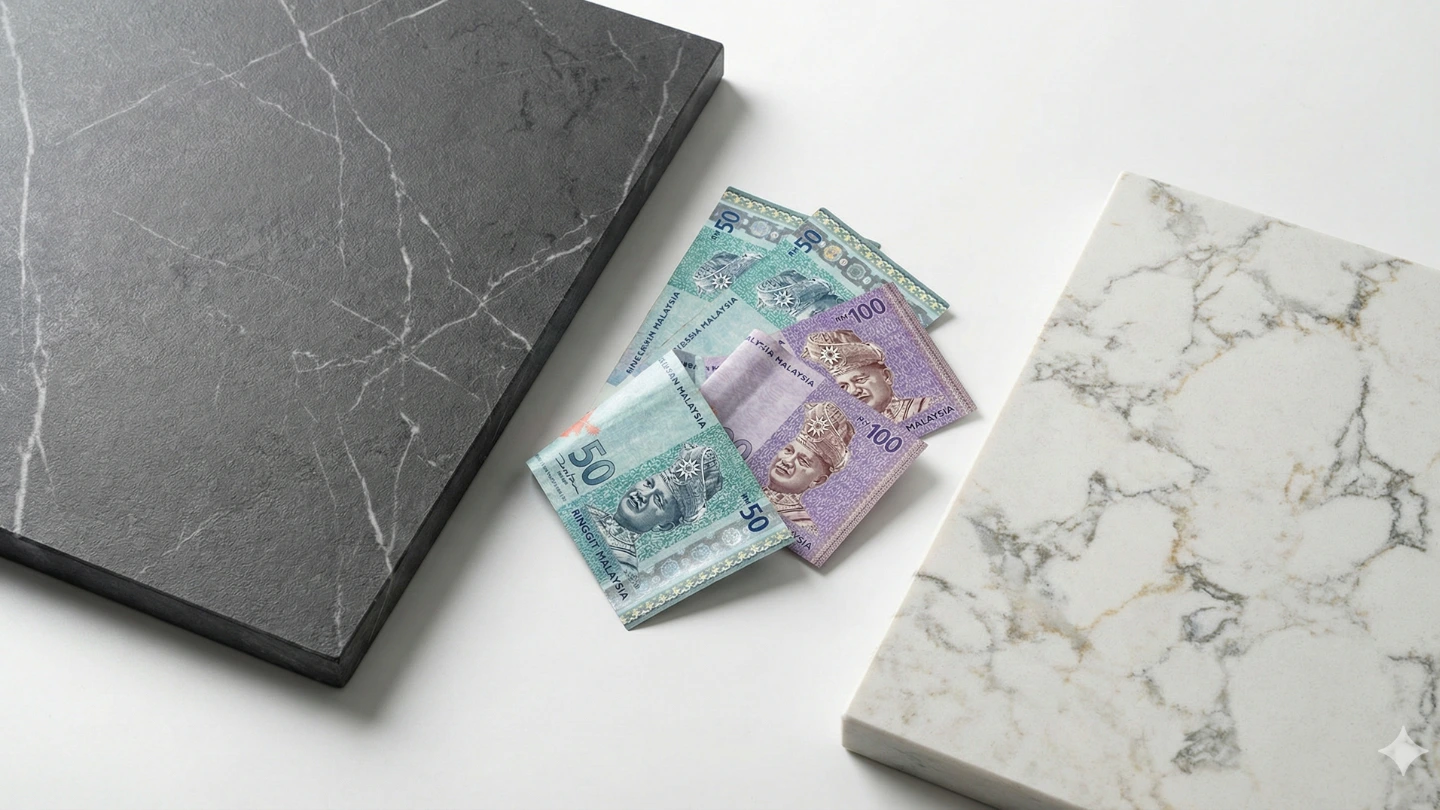
For many Malaysian families, the price difference between sintered stone and quality quartz could fund an entire kitchen cabinet upgrade, new appliances, or significant flooring improvements.
The honest question to ask yourself: does your lifestyle genuinely require sintered stone's superior heat and UV resistance? If you're primarily cooking indoors, rarely place hot pans directly on countertops, and your kitchen doesn't receive intense direct sunlight, premium quartz may deliver 90% of the benefits at 60% of the cost.
For a detailed breakdown of how much quality stone countertops cost in Malaysia, including all the factors affecting final pricing, our comprehensive price guide covers everything you need to budget accurately.
Brittleness and Edge Vulnerability
Here's a disadvantage that surprises many homeowners: despite its hardness, sintered stone is more brittle than quartz.
Sintered stone rates approximately 8 on the Mohs hardness scale—harder than quartz at 7. However, hardness and brittleness are different properties. The same density that makes sintered stone scratch-resistant also makes it more susceptible to chipping at edges and corners, particularly during:
- Transportation and handling: The rigid, inflexible nature means impacts during delivery can cause edge chips
- Installation: Improper handling by inexperienced installers frequently results in corner damage
- Daily use: Dropping heavy objects like cast iron pans near edges creates higher chip risk than with quartz
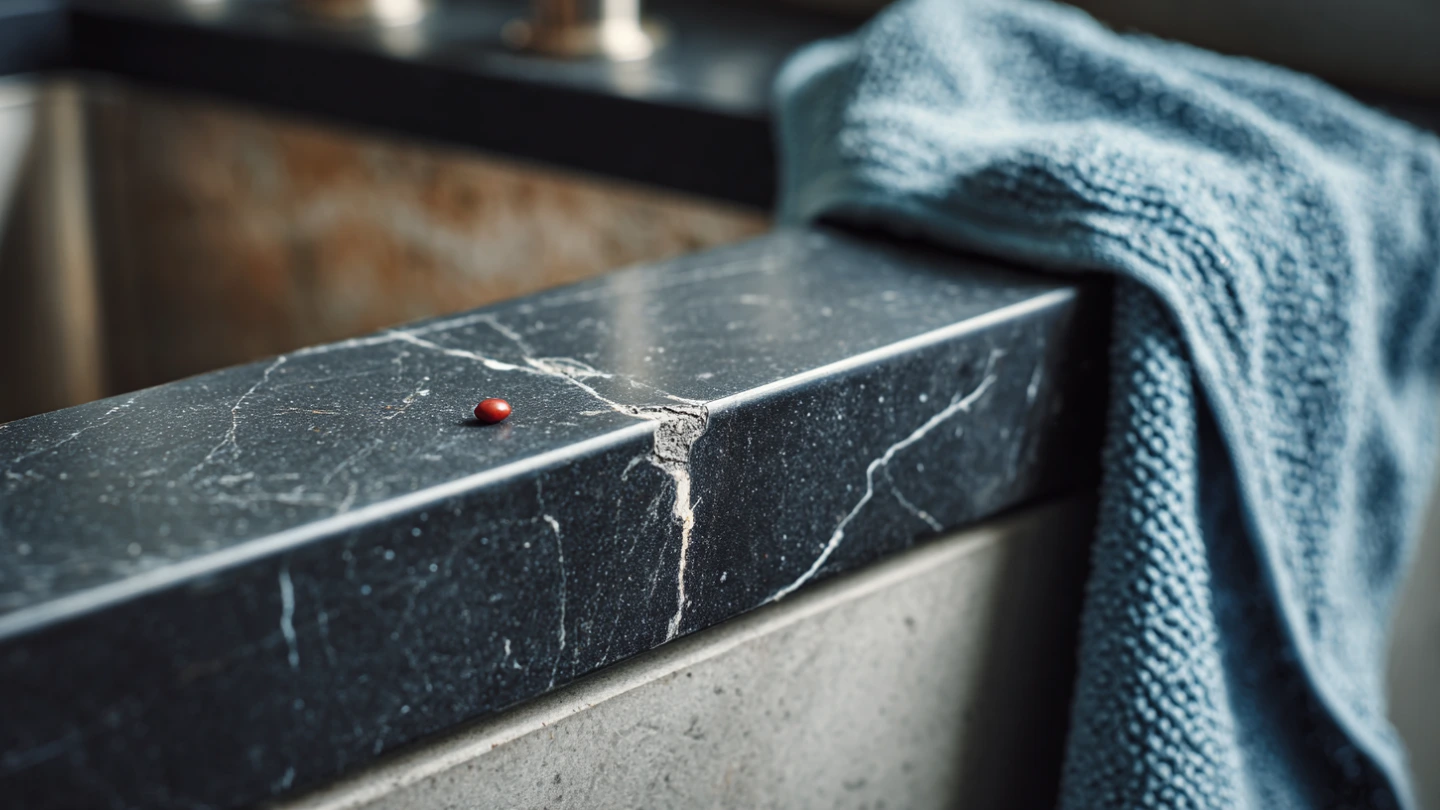
This brittleness is especially problematic for certain edge profiles. Whilst quartz can accommodate decorative edges like ogee or bullnose relatively safely, sintered stone performs best with simple, reinforced edges. Many fabricators recommend chamfered or eased edges specifically to reduce chipping vulnerability.
The practical implication? If you have young children prone to dropping things, or if you prefer decorative edge profiles, sintered stone's brittleness becomes a meaningful consideration.
Limited Fabricator Expertise in Malaysia
This disadvantage often catches homeowners off guard: not all stone fabricators in Malaysia are equipped or trained to work with sintered stone properly.
Sintered stone requires:
- Specialised cutting equipment: Standard quartz tools can crack sintered stone during cutting
- Different blade types: Diamond blades designed specifically for ultra-compact surfaces
- Modified installation techniques: Different adhesives and support requirements
- Specific training: Understanding the material's behaviour during fabrication
Many smaller fabrication shops in Malaysia have built their expertise around quartz and granite. When they attempt sintered stone work without proper training, the results can be problematic—from rough cut edges to cracks that appear weeks after installation.
This expertise gap creates two challenges for Malaysian homeowners:
First, your choice of installers becomes significantly limited. Whilst dozens of fabricators can competently install quartz, far fewer have genuine sintered stone expertise.
Second, the risk of installation problems increases if you choose based on price rather than proven sintered stone experience. We've seen homeowners save RM2,000 on installation only to face RM8,000 in replacement costs when improper techniques caused cracking.
If you're considering buying sintered stone independently and hiring separate installers, understand why most Malaysian fabricators refuse such arrangements—and the genuine risks involved.

Repair Limitations: When Damage Happens
Accidents happen in every kitchen. With quartz, minor chips and scratches can often be repaired by skilled technicians using colour-matched resins that blend nearly invisibly with the original surface.
Sintered stone? Not so straightforward.
The same properties that make sintered stone incredibly durable also make it extremely difficult to repair:
- No resin content: Quartz repairs work because resin-based fillers bond with the resin in the stone. Sintered stone contains no resin, making traditional repair methods ineffective.
- Cannot be polished: Unlike quartz, sintered stone in Malaysia features printed surface designs rather than through-body colouring. The veins and patterns exist only on the surface layer, with the body colour underneath being a close match but not identical. Attempting to polish out scratches or damage removes the printed surface, revealing the plain body colour and eliminating the veins entirely.
- Chip repairs visible: Even professional repairs on sintered stone typically remain visible upon close inspection.
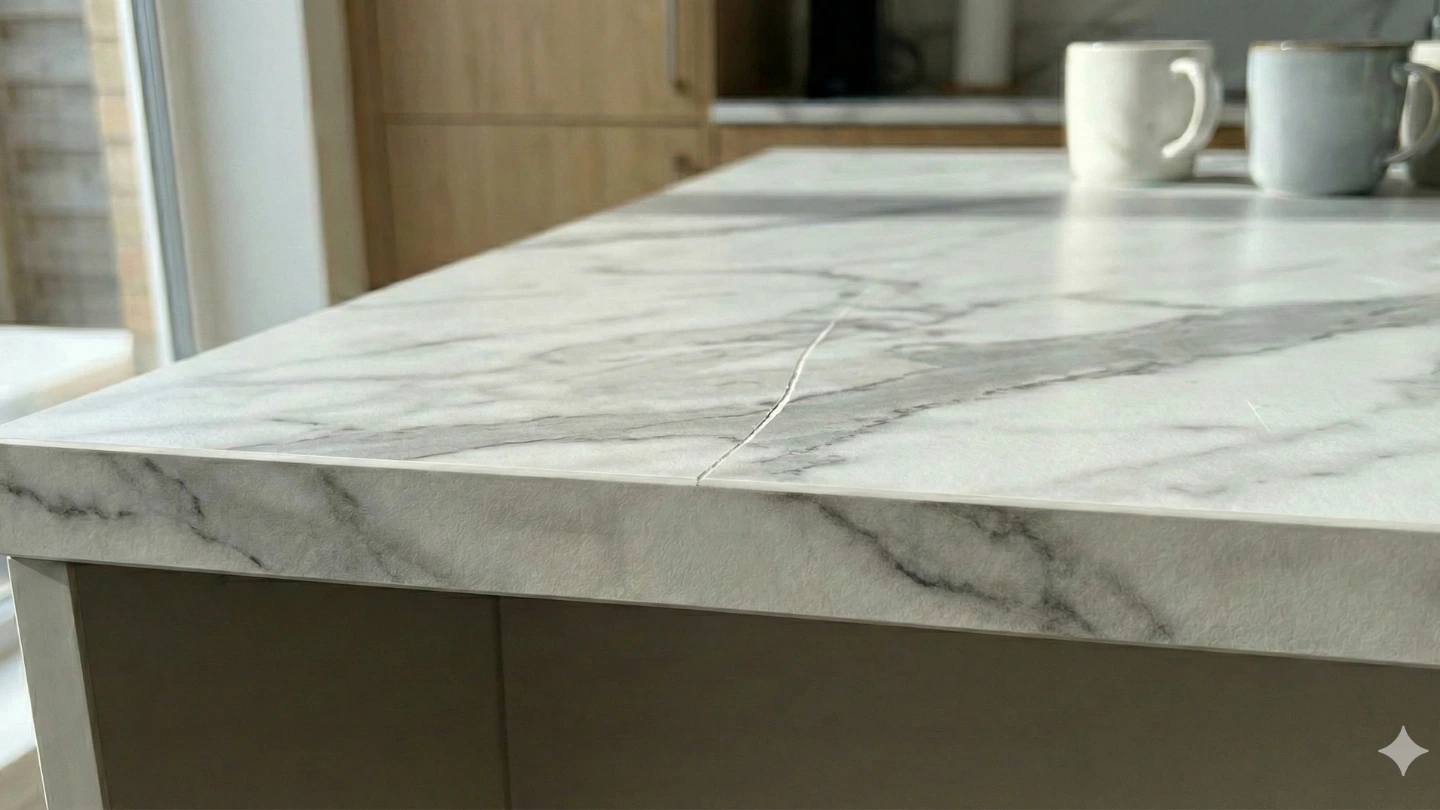
For significant damage—a large chip or crack—the practical solution often becomes full slab replacement rather than repair. Given sintered stone's premium pricing, this represents a substantial financial risk.
The lesson here isn't that sintered stone damages easily (it doesn't), but that when damage does occur, your options are limited and expensive. Homeowners who prioritise repairability may find quartz's easier maintenance more practical for their lifestyle.
Weight and Structural Considerations
Sintered stone is dense. Very dense. This creates genuine structural considerations that quartz doesn't present to the same degree.
A standard 20mm sintered stone slab weighs approximately 50kg per square metre—roughly 15-20% heavier than equivalent quartz. For a large kitchen island, this weight difference becomes significant:
- Cabinet requirements: Standard Malaysian kitchen cabinets may need reinforcement to support sintered stone's weight safely
- Cantilevered sections: Overhanging breakfast bars or island extensions require more robust support structures
- Transportation logistics: Heavier slabs mean more challenging delivery, especially to upper-floor apartments without lift access
- Installation labour: Two-person minimum for most installations, often three for larger pieces
For landed properties with solid cabinetry, these weight considerations are manageable. For older condominiums or apartments with less robust cabinet construction, sintered stone's weight may necessitate cabinet upgrades that add to your total renovation cost.
If you're planning a large island with significant overhang, discuss structural requirements with your fabricator before finalising your material choice. Understanding how countertops are fabricated and installed in Malaysia helps you appreciate why these structural considerations matter.
Design and Aesthetic Limitations
Sintered stone offers stunning designs, but with a narrower range than quartz.
The sintered stone manufacturing process—whilst creating superior performance properties—limits design possibilities compared to quartz production. Here's what this means practically:
Colour and pattern availability: Dekton offers approximately 50-60 colours and patterns. Compare this to quartz stone brands like Caesarstone, Silestone, and Zenstone's combined 150+ options. For homeowners seeking specific colours or unusual patterns, quartz simply offers more choices.
Veining replication: Whilst sintered stone beautifully replicates marble and natural stone appearances, the patterns tend toward more subtle, natural-looking designs. If you prefer bold, dramatic veining, certain quartz patterns offer more striking visual impact.
Finish options: Sintered stone typically comes in matte, silk, and gloss finishes. Quartz offers these plus additional textured finishes that some designers prefer.
Custom colours: Quartz manufacturers occasionally offer custom colour matching for large projects. This option rarely exists for sintered stone due to the complexity of the manufacturing process.
For homeowners who've fallen in love with a specific quartz colour that doesn't exist in sintered stone, this becomes a genuine deciding factor. Aesthetic preferences are personal—if a particular quartz pattern captures your vision better than any sintered stone option, that preference is valid regardless of performance differences.
The Cold, Industrial Feel
This disadvantage is subjective but worth mentioning: sintered stone can feel cold and clinical compared to quartz.
The dense, non-porous surface that makes sintered stone so practical also creates a harder, cooler tactile experience. Some homeowners describe it as "industrial" or "commercial" feeling compared to quartz's slightly warmer touch.
This perception varies significantly between individuals. Some appreciate sintered stone's sleek, modern aesthetic. Others find it lacks the warmth they want in a family kitchen.
If possible, visit showrooms and place your hands on both materials for extended periods. The tactile difference may or may not matter to you—but it's worth experiencing before committing to either material.
Installation Complexity Increases Risk
Sintered stone installation requires more precision than quartz, creating additional points where things can go wrong.
Adhesive requirements: Sintered stone needs specific adhesives designed for ultra-compact surfaces. Using standard stone adhesives can result in poor bonding or surface damage.
Support requirements: The material's weight and rigidity demand proper support throughout. Gaps in support structure can lead to stress fractures over time.
Seam placement: Sintered stone seams require expert placement and execution. Poor seam work is more visible on sintered stone than on many quartz patterns.
Cutout precision: Sink and hob cutouts must be executed with extreme precision. The material's brittleness means errors often result in cracks extending from the cutout.
These installation complexities don't make sintered stone impractical—they simply mean the margin for error is smaller. Choosing an experienced installer isn't just recommended; it's essential.
Limited Availability and Lead Times
Sintered stone's smaller market share in Malaysia compared to quartz creates practical availability challenges.
Stock limitations: Whilst popular Dekton colours are generally available, less common colours may require ordering from overseas with lead times of 12-16 weeks.
Matching challenges: If you need additional material later (for a matching backsplash or bar top), obtaining slabs from the same batch may be impossible.
Fabricator schedules: With fewer fabricators handling sintered stone, scheduling your installation may take longer than for quartz work.
For renovation projects with tight timelines, these availability constraints can create genuine scheduling problems. Always confirm colour availability and realistic lead times before finalising your material choice.
The Porcelain Confusion Factor
Many homeowners confuse sintered stone with porcelain slabs—and some suppliers exploit this confusion.
Sintered stone and porcelain slab are different materials with different properties, despite superficial similarities. Porcelain slabs typically cost less than genuine sintered stone (like Dekton), leading some suppliers to market porcelain as sintered stone to justify higher pricing.
This confusion isn't strictly a disadvantage of sintered stone itself, but it creates a purchasing risk. When evaluating sintered stone options, verify you're actually getting sintered stone—not porcelain marketed misleadingly.
For a detailed comparison of how sintered stone differs from porcelain slab, including performance characteristics and appropriate applications, our comprehensive guide explains everything.
Should You Still Choose Sintered Stone?
After reading these disadvantages, you might wonder if sintered stone is worth considering at all. The answer depends entirely on your specific situation.

Sintered stone makes excellent sense when:
- Your kitchen receives intense direct sunlight (east or west-facing windows)
- You're installing an outdoor kitchen or BBQ area
- You regularly place hot pots directly on countertops
- You prioritise ultimate durability over repairability
- Your budget comfortably accommodates premium pricing
- You've found a sintered stone design you love
Quartz may serve you better when:
- Budget is a significant consideration
- You prefer warmer, less industrial aesthetics
- Repairability matters to your peace of mind
- You want maximum design and colour options
- Your kitchen has minimal direct sun exposure
- You primarily cook with trivets and hot pads anyway
For a comprehensive comparison of sintered stone versus quartz for Malaysian kitchens, including real-world performance in our tropical climate, our detailed guide helps you evaluate which material suits your lifestyle.
Making Your Decision
Every countertop material involves trade-offs. Sintered stone's disadvantages—higher cost, brittleness, limited fabricator expertise, repair challenges, and design constraints—are the price of its genuine advantages in heat resistance, UV stability, and overall durability.
The goal isn't finding a perfect material (none exists), but finding the material whose advantages matter most to your lifestyle whilst whose disadvantages you can live with comfortably.
If sintered stone's premium performance justifies its premium price for your situation, it remains an excellent choice. If the disadvantages outlined here give you pause, quality quartz from reputable brands like Caesarstone or Silestone delivers exceptional performance at more accessible pricing.
Whatever you choose, ensure you're working with fabricators who genuinely understand your chosen material. For sintered stone especially, installation expertise isn't optional—it's essential for achieving the beautiful, long-lasting results you're investing in.
Ready to explore your countertop options? Understanding the complete range of materials available for Malaysian kitchens helps you make confident decisions that serve your home for decades to come.