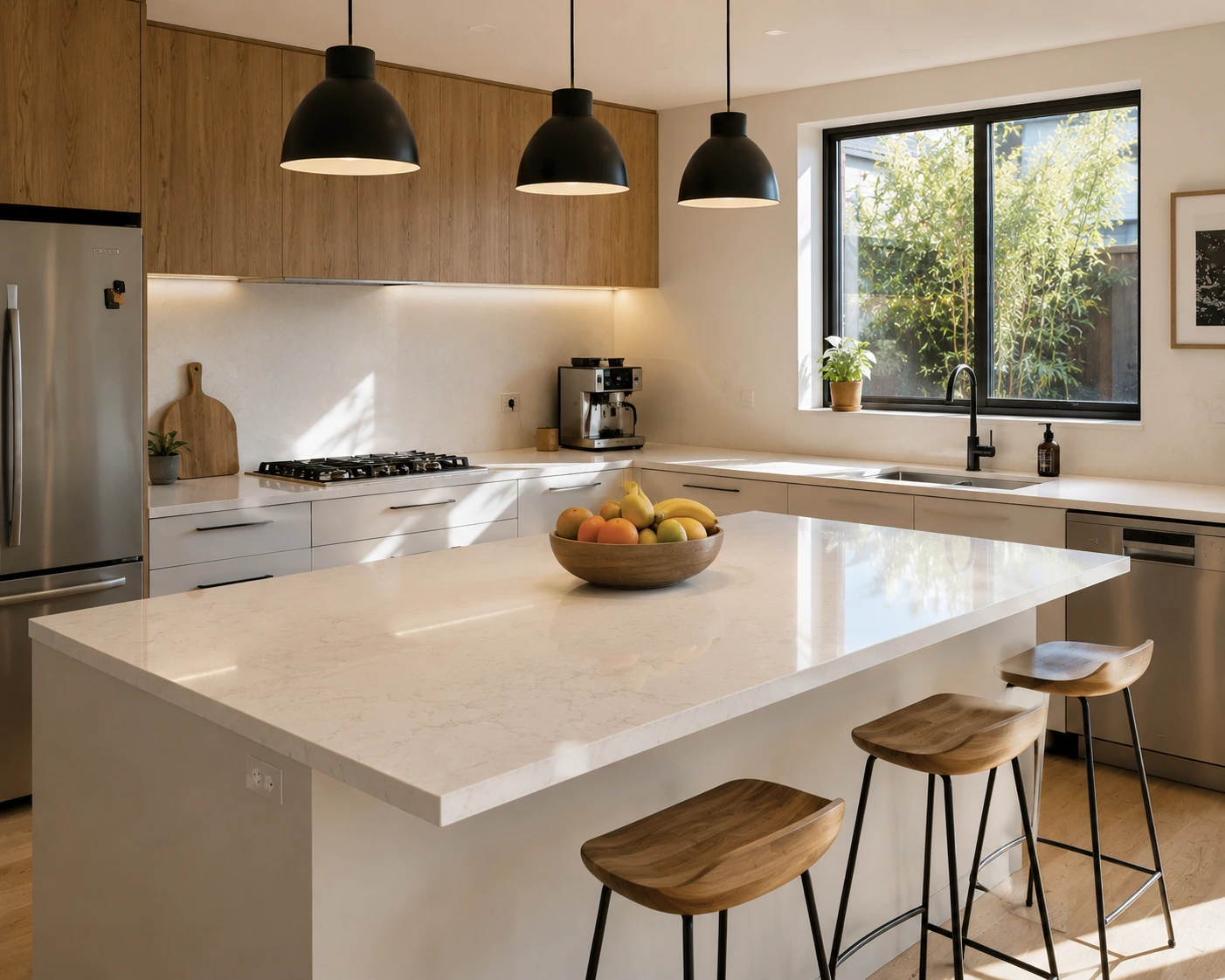
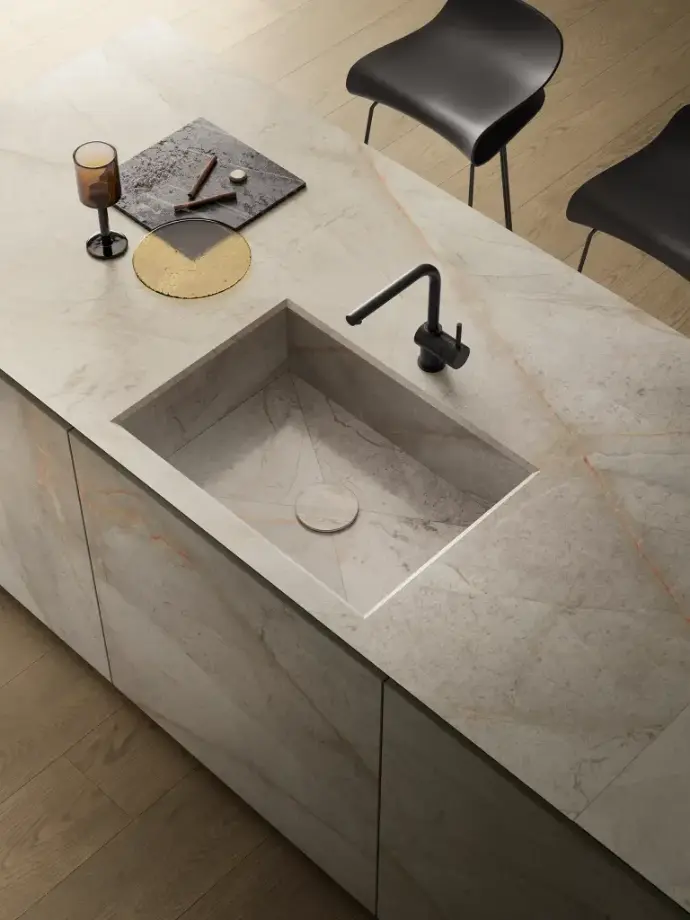
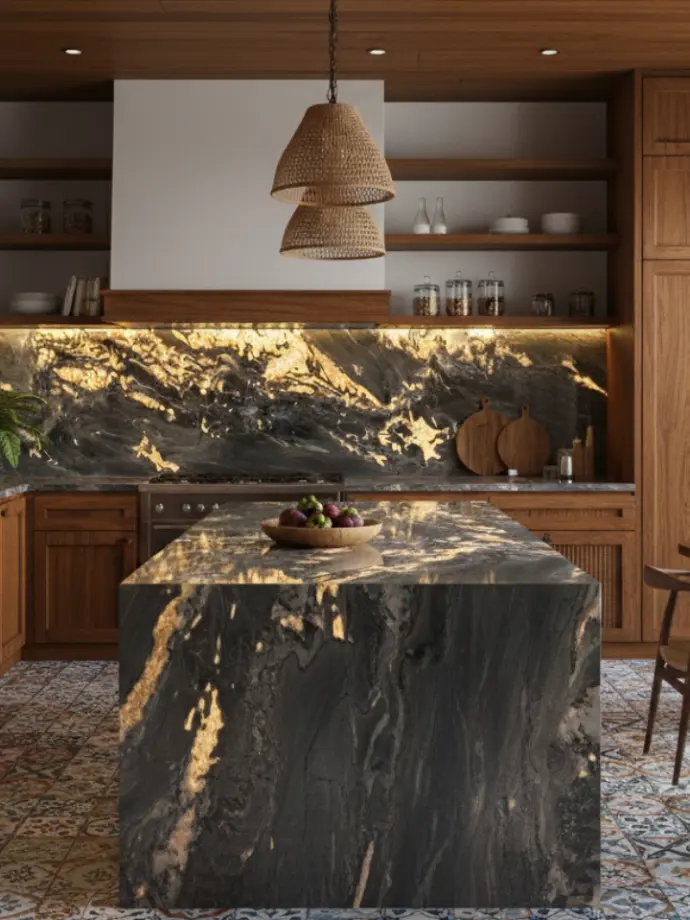
Most Malaysians spend more time researching a handphone than they do a kitchen countertop. That's a mistake — a countertop is a permanent fixture in your home, and unlike a phone, you cannot trade it in when you get tired of it or it starts showing wear. Once the stone is cut and installed, you are committed.
The good news is that most regrettable countertop purchases come down to one thing: not asking the right questions before signing off. A supplier who genuinely knows their product will welcome your questions. One who hedges, deflects, or gets defensive is telling you something important.
Here is a practical guide to the questions you should be asking — and what the right answers sound like.

Questions About the Material
Before you discuss prices or timelines, you need to understand what you are actually buying. The countertop market in Malaysia offers everything from quartz stone and sintered stone to porcelain slab, compressed marble, granite, and quartzite. Each material behaves very differently in a kitchen environment.
1. What materials do you carry, and which would you recommend for my kitchen?
A good supplier will ask follow-up questions before recommending anything. Do you cook daily? Is it a wet kitchen or a dry kitchen? Do you have children? A supplier who immediately pushes one material without understanding your lifestyle is either selling on margin or does not know the product well enough to advise you.
2. What is the difference between these two materials?
This is a test. Ask specifically about the materials you are considering — quartz versus sintered stone, for example — and listen for a clear, honest answer. A good supplier will explain the differences without overselling one over the other. If their answer sounds like a sales pitch rather than an explanation, be cautious.
If you want to do your own research before walking into a showroom, a good starting point is understanding the full range of countertop materials available in Malaysia — from natural stone through to engineered surfaces.
3. Does this material suit how I actually cook?
Malaysian kitchens are harder on countertops than most. High-heat wok cooking, the pounding of spices, the splashing of curries and sambal — these are real stress tests that a European or American kitchen might never experience. The right material depends on your actual cooking habits, not how the stone looks under showroom lighting.
Quartz is not ideal directly beneath a wok burner because extreme heat can damage the resin binders that hold the stone together. Sintered stone handles heat far better, but it is also more brittle — which matters if you pound lemongrass or use a batu lesung regularly. Knowing how quartz and sintered stone compare under real Malaysian kitchen conditions will help you ask sharper questions at the showroom.
Questions About Quality and Authenticity
Malaysia has a documented problem with countertop fraud — compressed marble sold as quartz, low-grade China-manufactured stone labelled as premium European brands, and porcelain tiles masquerading as sintered stone slabs. Asking the right questions protects your renovation investment.
4. Where is this stone manufactured?
Premium brands have specific countries of origin. Zenstone is manufactured in China. Silestone comes from Spain. Dekton is a Cosentino product, also from Spain. If a supplier claims to carry these brands but the declared origin does not match, ask for documentation.
5. Can you show me a certificate of authenticity or brand certification?
Genuine brand distributors can provide technical specifications from the manufacturer, along with documentation confirming their authorised reseller status — typically available as a PDF softcopy. Ask the supplier to share it with you. If they hesitate or tell you the paperwork "is at the warehouse," treat that as a red flag. Knowing how to identify fake or misrepresented quartz before you shop makes you a much harder target.
6. Can I see a physical sample of the exact slab I am buying?
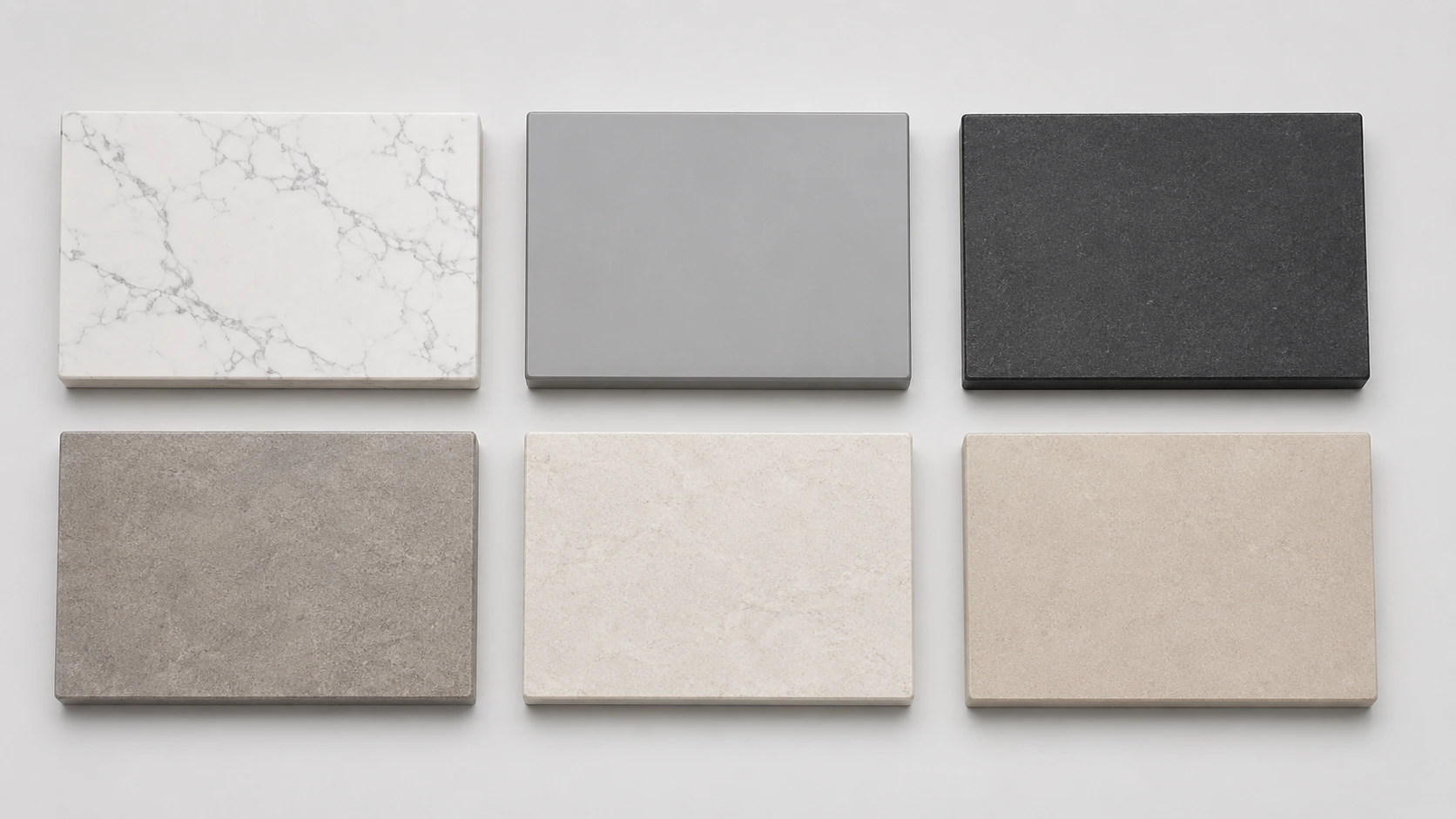
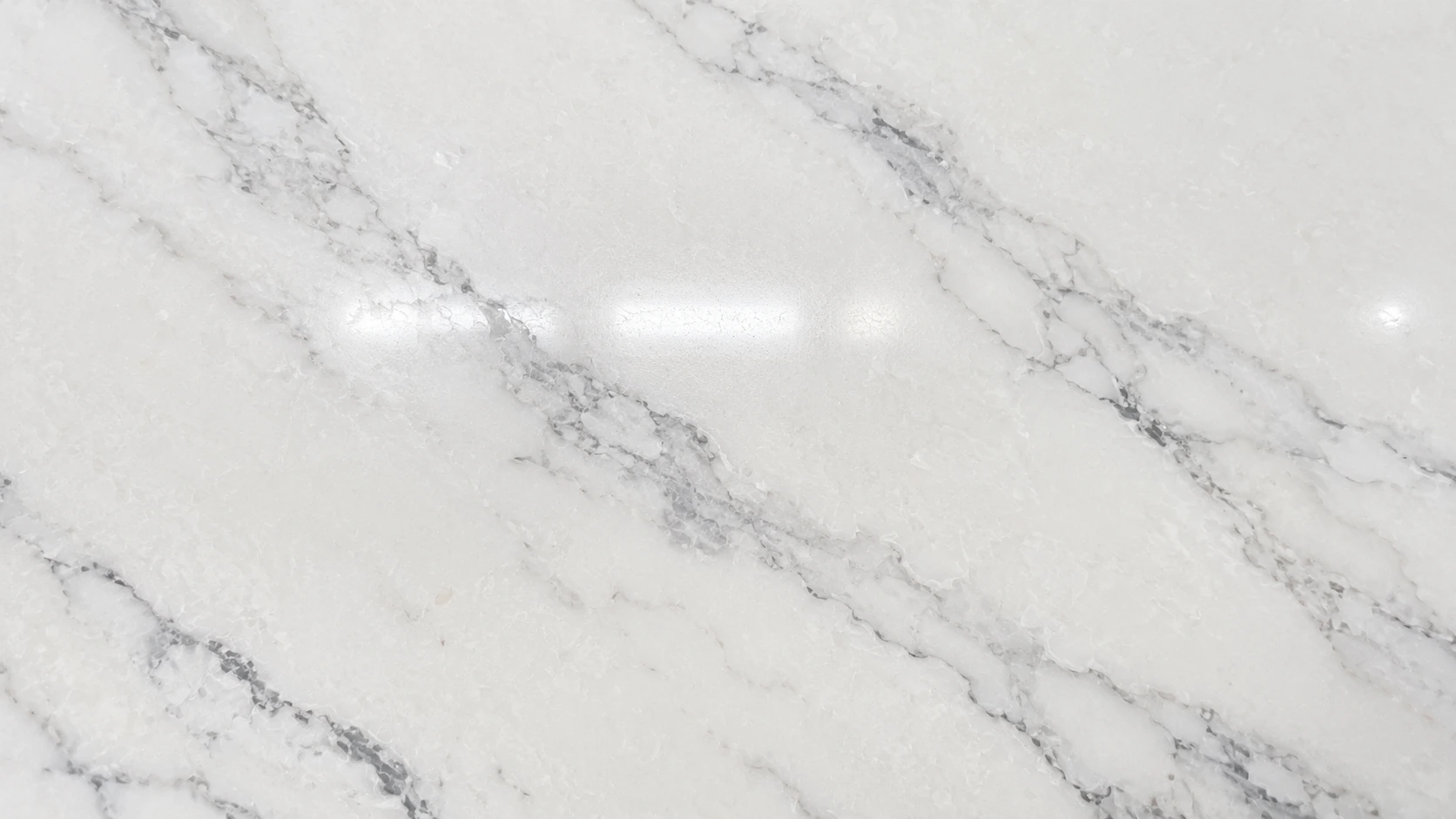
Catalogue images and showroom display pieces can look very different from the actual slab that ends up in your kitchen. Colour, veining, and texture vary significantly from one slab to another, especially in marble-look designs. Ask to see the full slab whenever possible — or at minimum, a cut sample from the same batch.
Questions About Pricing and the Quote
Countertop quotes in Malaysia can be confusing. Some are priced per square foot, some per foot run. Some quotes bundle everything together whilst others itemise selectively. If you do not understand what you are paying for, you cannot compare quotes accurately.
7. How is your pricing structured — per square foot or per foot run?
Foot run pricing is common when countertops are a standard depth (typically 600mm), whilst square-foot pricing applies when dimensions vary significantly. Neither method is inherently better, but you need to know which your supplier uses so you can cross-compare quotations.
8. What is included in this price — and what is not?
Ask specifically about:
- Cutouts — for the sink, cooker hob, tap holes, and electrical outlets
- Edge profiling — bevelled, bullnose, or waterfall edges often carry a surcharge per running foot
- Transportation — delivery from the fabrication factory to your site
- Installation labour — fitting, sealing, and finishing at your home
- Waste factor — some suppliers charge for the full slab even if only a portion is used
A quote that looks RM500 cheaper can quickly become RM1,000 more expensive once cutouts and edge profiling are added. Learning how to read every line item on a countertop quote before you request quotations will save you from unpleasant surprises.
9. Are there different quality tiers for this material?
Some suppliers offer the same brand or material in multiple grades — first quality, seconds (with minor cosmetic flaws), or economy range. Know what grade you are buying. A "seconds" slab at a discounted price may be perfectly fine depending on your installation, but you should be making that decision consciously, not discovering it after the fact.

Questions About Installation
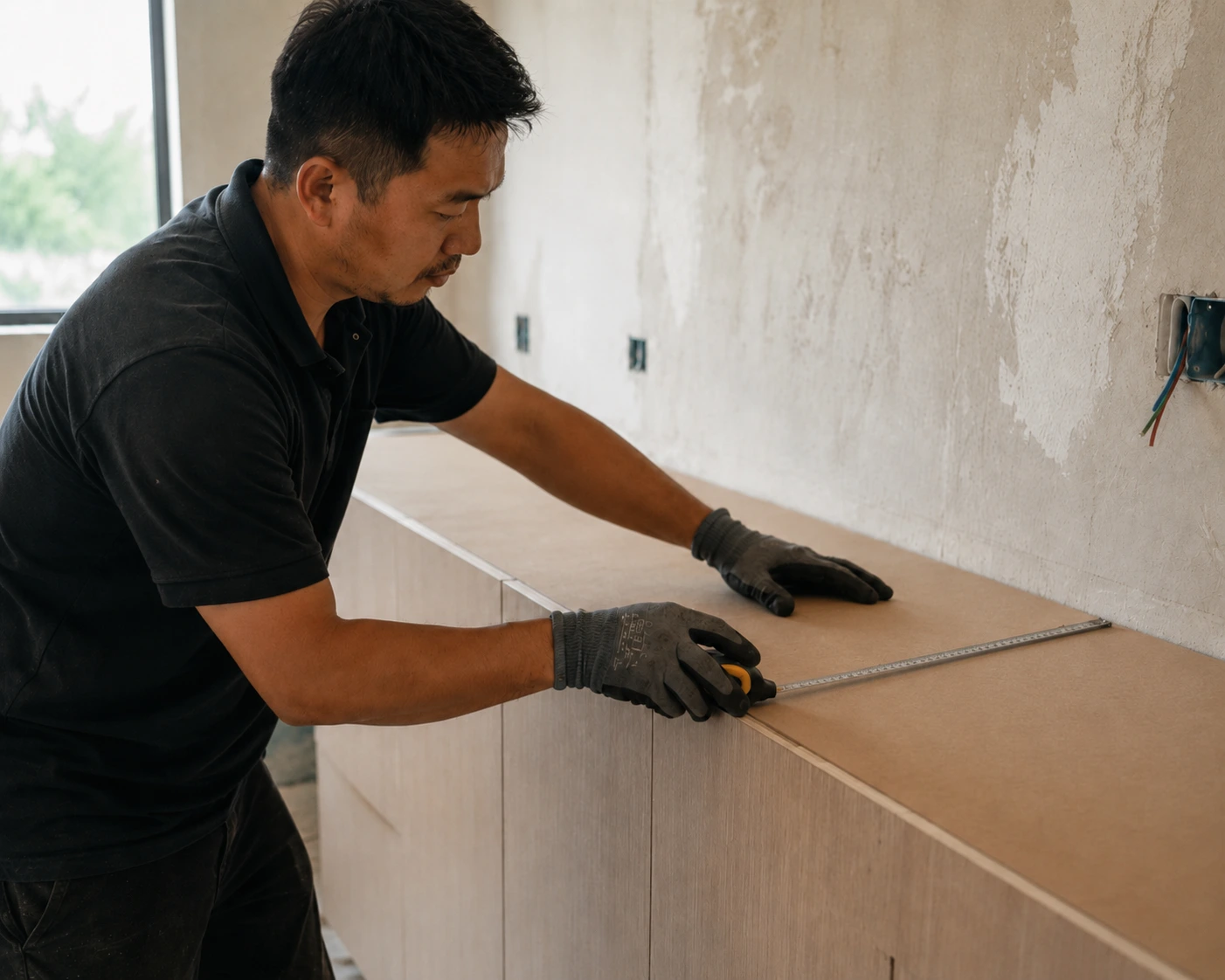
A poorly installed countertop is a disaster regardless of the quality of the stone. Installation is a specialised skill, and not every contractor who handles stone does it well.
10. Who handles the installation — and can they communicate clearly with you?
This question matters more than most people realise, and it has nothing to do with skill level.
In Malaysia, many countertop installation crews include foreign workers who may be highly experienced with stone but limited in their ability to communicate in Malay or English. The concern is not their competence — it is the miscommunication that can happen on installation day. You explain your requirements clearly. They nod, say "Boleh, boleh," and proceed to work their own way — not out of disrespect, but because they did not fully understand your instructions and were reluctant to say so.
A good installation team will have at least one person on-site — a local sifu or a local supervisor — who speaks Malay or English fluently and can relay your instructions accurately. This person bridges the gap between what you want and what gets done. They can also push back constructively if something is not feasible, rather than nodding along and leaving a problem for you to discover after the crew has left.
We are not suggesting all foreign workers are a liability — many are highly skilled, and some speak fluent Malay. The point is straightforward: make sure the supplier has someone on the ground who can communicate clearly with you. Ask directly: "Who will be on-site during installation, and who can I speak to if I have questions on the day?" The answer will tell you a lot about how the experience will go.
11. How long does the full process take, from measurement to installation day?
Expect roughly 7–10 working days for in-stock materials and up to 3–4 weeks for special orders or imported slabs. If the countertop is part of a larger renovation, the timeline needs to align with your cabinet completion date — your cabinets must be installed and level before templating can begin. A more detailed breakdown of how long countertop installation typically takes in Malaysia is worth reading before you plan your renovation schedule.
12. What happens if something goes wrong on installation day?
Cracks during cutting, incorrect measurements, damaged edges — these things happen even with experienced teams. Ask upfront what the supplier's policy is if the slab is damaged during fabrication or fitting. Do they replace it at their cost? How long does a replacement take? Getting clarity on this before you sign is far easier than arguing about it afterwards.
Questions About Warranty and After-Sales Support
A countertop should last 10–20 years or more with reasonable care. Your supplier should stand behind the product long after the installation crew has packed up.
13. What warranty do you offer, and what exactly does it cover?
Premium brands such as Caesarstone and Silestone offer international manufacturer warranties. Smaller or unbranded suppliers may offer their own limited warranties — which are only as reliable as the company behind them. Ask specifically what the warranty covers: material defects, staining, cracking, colour fading, and for how many years.
14. What is your policy if the countertop chips, cracks, or discolours after installation?
Chips and cracks are typically caused by impact damage (usually not covered under warranty) or installation stress (which may be covered). Understand the difference before you commit. Knowing the claims process in advance prevents frustration later when the warranty conversation is no longer theoretical.
15. Can you share photos of past installations or a reference I can speak to?
An established supplier will have a portfolio of completed projects and, ideally, customers willing to vouch for the experience. If a supplier cannot provide either, ask why. A newer business without a portfolio is not necessarily a bad choice, but your risk is higher and your due diligence should be proportionally greater.
Questions About Long-Term Care and Maintenance
The most beautiful countertop in the world will look shabby within three years if it is cleaned with the wrong products or misused consistently. Before you commit to a material, understand what you are signing up for in terms of daily care.
16. What is the recommended cleaning routine for this material?
Different materials have different requirements. Quartz can generally be cleaned with mild dish soap and water. Sintered stone is similarly low-maintenance. Granite may require periodic sealing. Compressed marble is sensitive to acids and requires careful handling. Know the routine before the stone is installed, not after.
17. Are there any products I must never use on this surface?
Bleach, acidic cleaners like vinegar and calamansi juice, abrasive scrubbers, and certain multipurpose sprays can permanently damage countertop surfaces. Ask for a written list of what to avoid. Knowing how to clean your countertop correctly — and what products to stay away from is one of the most practical things you can do to protect a long-term investment.
18. How will this material hold up in a Malaysian kitchen over 5–10 years?
This is a reasonable question, and a supplier who knows their product well should be able to give you a realistic picture — including known limitations. A supplier who promises zero problems, forever, is not being honest with you. The honest answer will include some caveats, and that is a good sign, not a reason to walk away.

The Question That Matters Most
Behind every question on this list is one bigger question that you should be asking yourself: Do I trust this supplier?
Price matters. The material matters. The warranty matters. But the quality of your experience — from the first showroom visit through to the day the countertop is installed and beyond — depends almost entirely on whether the person selling it to you is being straight with you.
Suppliers who know their products welcome scrutiny. They have nothing to hide because they are selling something real. The ones who rush you towards a decision, obscure costs in vague language, or cannot explain what they are selling are giving you useful information — just not the kind they intend to.
Conclusion
Buying a countertop is not a minor purchase. In a Malaysian home, it sits at the centre of daily life — every meal prepared, every family gathering in the kitchen, every school holiday that fills your home with activity. Getting it right is worth the effort.
The suppliers worth your business will answer every question on this list without hesitation. Take your time. Ask clearly. And if a supplier cannot answer these questions with confidence, find one who can.