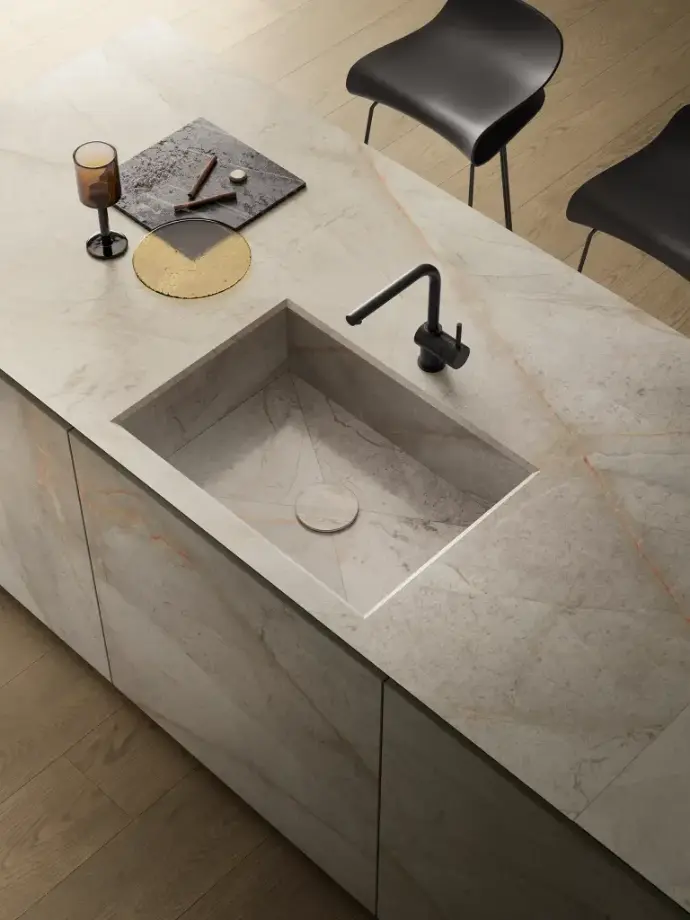
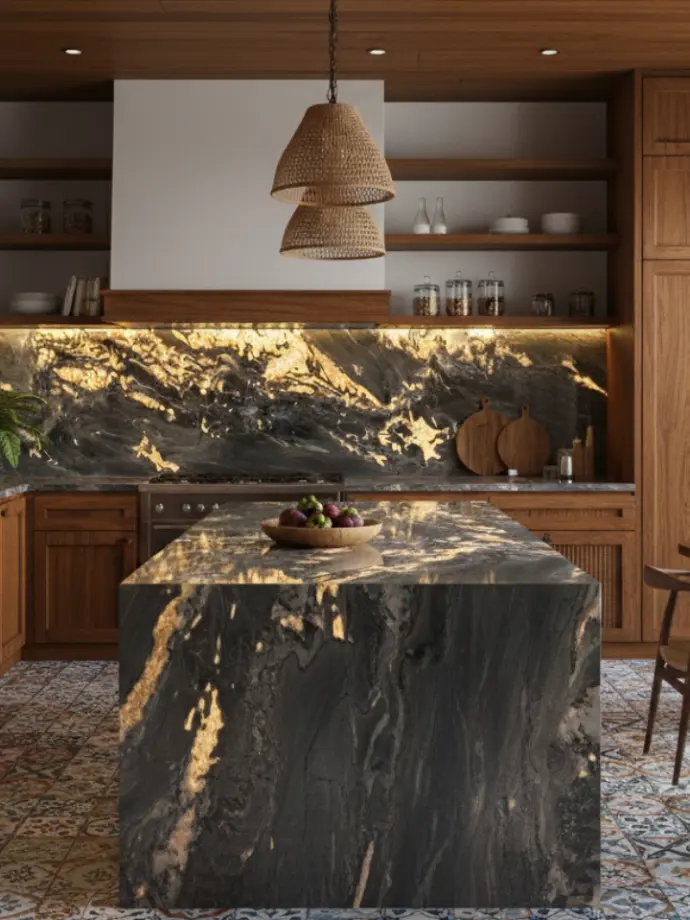
When planning your kitchen renovation, the price tag on quartz countertops might make you pause. With quality quartz ranging from RM200 to RM1,200+ per foot run in Malaysia, it’s natural to wonder: is this investment truly worth it?
The short answer? Absolutely—and here’s why. Whilst the initial cost may seem steep compared to alternatives, quartz countertops deliver exceptional value that extends far beyond the installation day. For Malaysian homeowners, this engineered stone offers a unique combination of durability, hygiene, and performance that’s specifically suited to our climate and cooking styles.
Let’s explore five compelling reasons why quartz countertops justify every ringgit you spend.
Reason 1: Unmatched Durability That Saves Money Long-Term
Quartz is built to last decades, not just years.
Unlike natural stone or acrylic-based solid surfaces that may require replacement within 10-15 years, properly installed quartz countertops can easily last 20-25 years. This longevity transforms what appears to be a premium purchase into a cost-effective long-term investment.
The Numbers Tell the Story
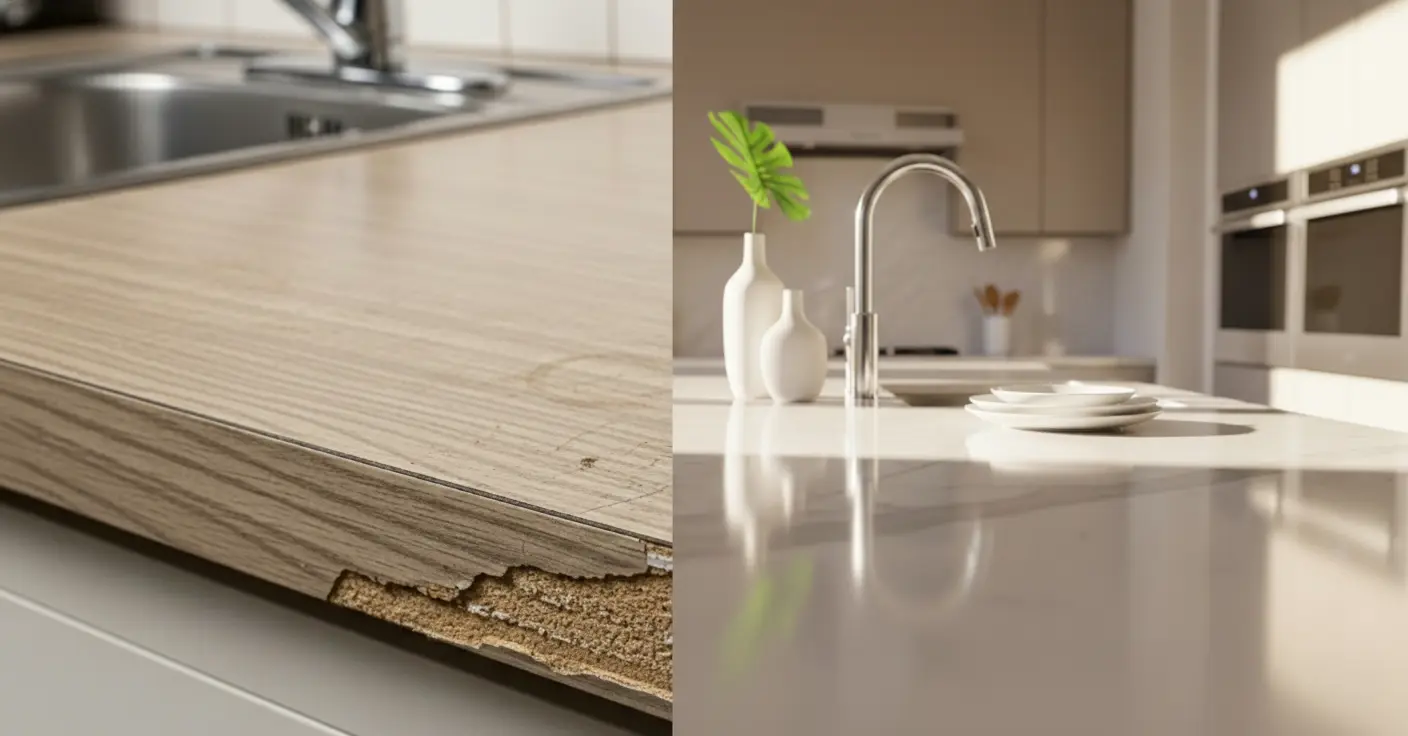
Consider this comparison for a typical Malaysian kitchen (10-foot countertop):
- Budget laminate: RM1,000 initial cost, replacement every 3-5 years = RM5,000-8,000+ over 25 years
- Mid-range acrylic-based solid surface: RM3,500 initial cost, replacement every 10-15 years = RM7,000+ over 25 years
- Quality quartz (Caesarstone/Silestone): RM6,000-8,000 one-time investment = RM6,000-8,000 over 25 years
When you factor in installation costs and the hassle of repeated renovations, quartz actually costs less over its lifetime.
Why Quartz Outlasts Other Materials
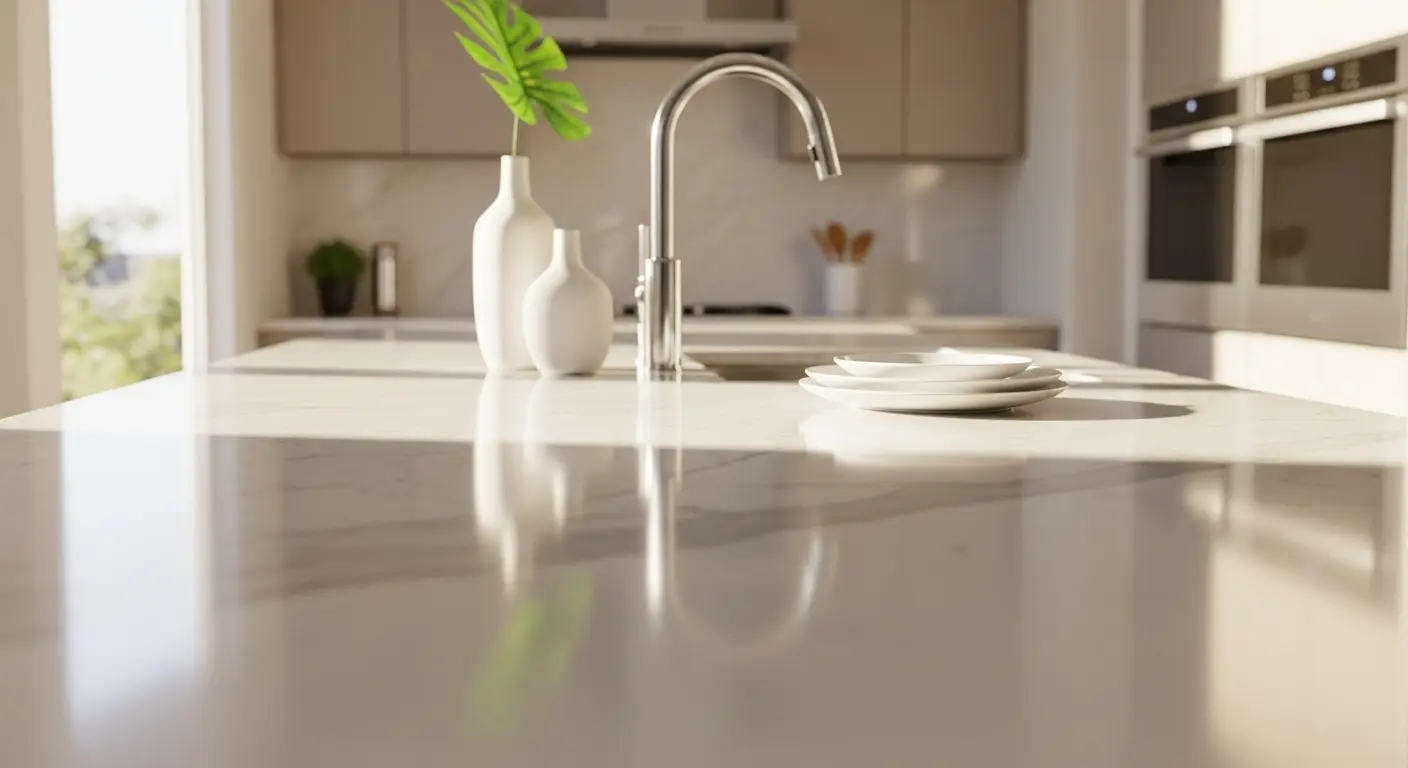
The secret lies in its engineering. Quartz countertops are composed of approximately 93% natural quartz crystals—one of the hardest minerals on earth—combined with polymer resins and pigments. This composition creates a surface that:
- Resists scratching from daily knife work and kitchen tools
- Withstands impact from dropped pots and heavy cookware
- Maintains structural integrity even with Malaysia’s temperature fluctuations
- Doesn’t chip easily when properly installed with 3mm chamfered edges
For Malaysian kitchens where heavy wok cooking and vigorous food preparation are the norm, this resilience is invaluable. Your countertop won’t show wear patterns even after years of intense daily use.
Reason 2: Minimal Maintenance Means Lower Lifetime Costs
The easiest countertop to maintain is the one that saves you time and money.
One of quartz’s most valuable features isn’t what you need to do—it’s what you don’t need to do. Unlike granite or marble, quartz requires no sealing, no special cleaners, and no ongoing professional maintenance.
The True Cost of “Cheaper” Materials
Many homeowners don’t account for the hidden maintenance costs of natural stone:
- Marble sealing: RM300-500 every 2-3 years depending on usage (professional service)
- Specialised stone cleaners: RM50-150 every few months
- Polishing and restoration: RM800-1,500 every 3-5 years
- Stain removal treatments: RM200-400 per incident
Over 15 years, these costs can add up to RM4,000-7,000—potentially matching or exceeding the price difference between marble and quartz.
Quartz Maintenance: Simple and Affordable
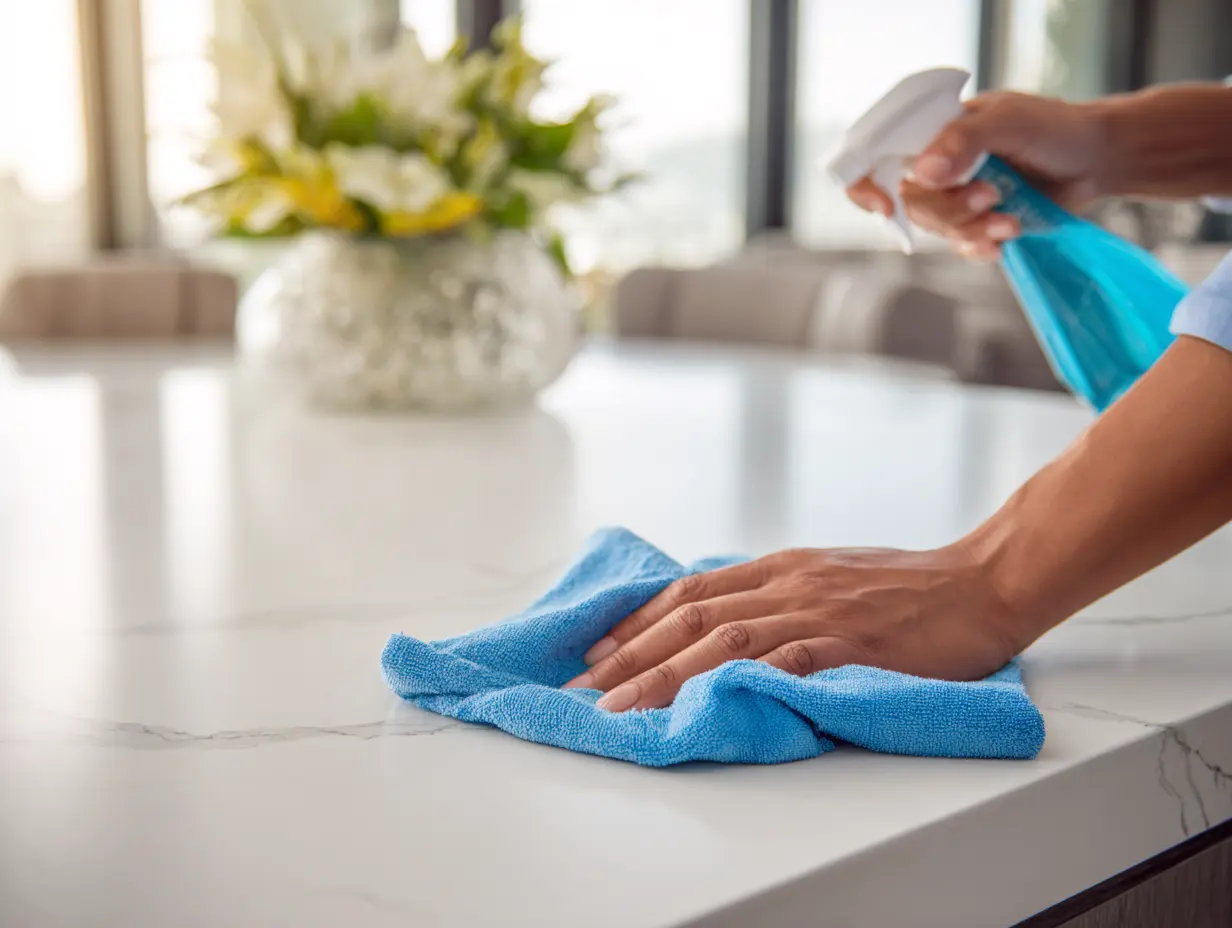
With quartz, your maintenance routine consists of:
- Daily wiping with soap and water
- Occasional use of household cleaning products
- That’s it.
No sealing. No polishing. No special treatments. The cleaning process remains straightforward even when dealing with Malaysian kitchen challenges like turmeric stains or sambal residue—simply wipe clean with a damp cloth and mild detergent.
This simplicity translates to:
- Time savings: No scheduling professional maintenance visits
- Money savings: No recurring treatment costs
- Peace of mind: No worry about forgetting to seal or causing permanent damage
Reason 3: Perfect for Malaysian Cooking and Climate
Engineered specifically to handle our unique challenges.
Malaysia’s tropical climate and distinctive cooking styles create demands that many countertop materials simply can’t meet. Quartz, however, performs exceptionally well in these exact conditions.
Heat and Humidity Resistance
With Malaysia’s year-round humidity levels averaging 70-90% and temperatures regularly exceeding 30°C, your countertop faces daily challenges:
The Humidity Factor:
Quartz’s non-porous surface means zero moisture absorption. Unlike natural stone that can develop mould in humid conditions, or laminate that can swell and warp, quartz remains completely stable. You won’t find mysterious dark spots appearing over time, and you won’t deal with delamination issues.
Heat Performance:
Whilst quartz isn’t completely heat-proof (always use trivets for pots directly from the stove), it handles the ambient heat in Malaysian kitchens far better than materials like acrylic-based solid surfaces that can become soft in sustained heat.
Built for Malaysian Cooking Styles
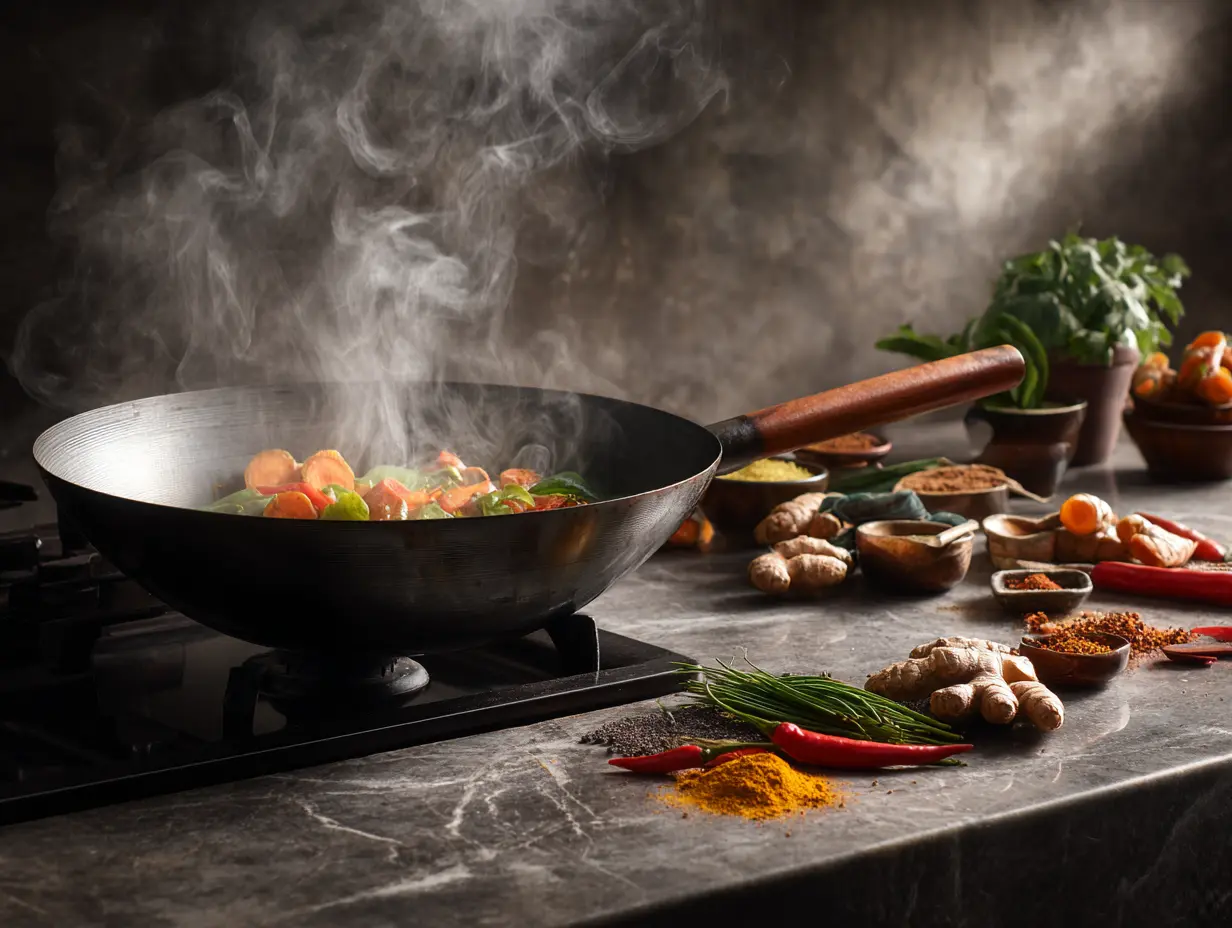
If your family prepares traditional meals, you know the specific demands this places on your countertop:
Wok Cooking:
The inevitable splashes of hot oil and sauce don’t penetrate quartz’s surface. A quick wipe removes residue completely—no staining, no etching.
Spice Preparation:
Grinding sambal, handling turmeric, preparing curry pastes—these activities would permanently stain marble or granite within months. Quartz’s resistance to staining means even the most intense spices wipe away cleanly.
Heavy Chopping:
Malaysian cooking often involves preparing large quantities of ingredients. Quartz stands up to this intensive use without showing knife marks (though we still recommend using cutting boards to protect both your countertop and knives).
Chemical Resistance Matters
Many Malaysian households use strong cleaning products to combat the constant battle against humidity and bacteria. Quartz won’t be damaged by:
- Bleach solutions (in reasonable concentrations)
- Disinfectants commonly used in tropical climates
- Standard household cleaners
- Acidic substances like lime or vinegar (which would etch marble and some natural stones)
This chemical tolerance means you can truly clean your countertop—essential in our climate where bacterial growth is a constant concern.
Reason 4: Hygiene Standards That Protect Your Family
The only countertop material with food-safety certification that matters.
In Malaysia’s warm, humid environment, bacterial growth on surfaces isn’t just a theoretical concern—it’s a daily reality. This makes your countertop choice a genuine health consideration, not merely an aesthetic one.
NSF-51 Certification: What It Actually Means
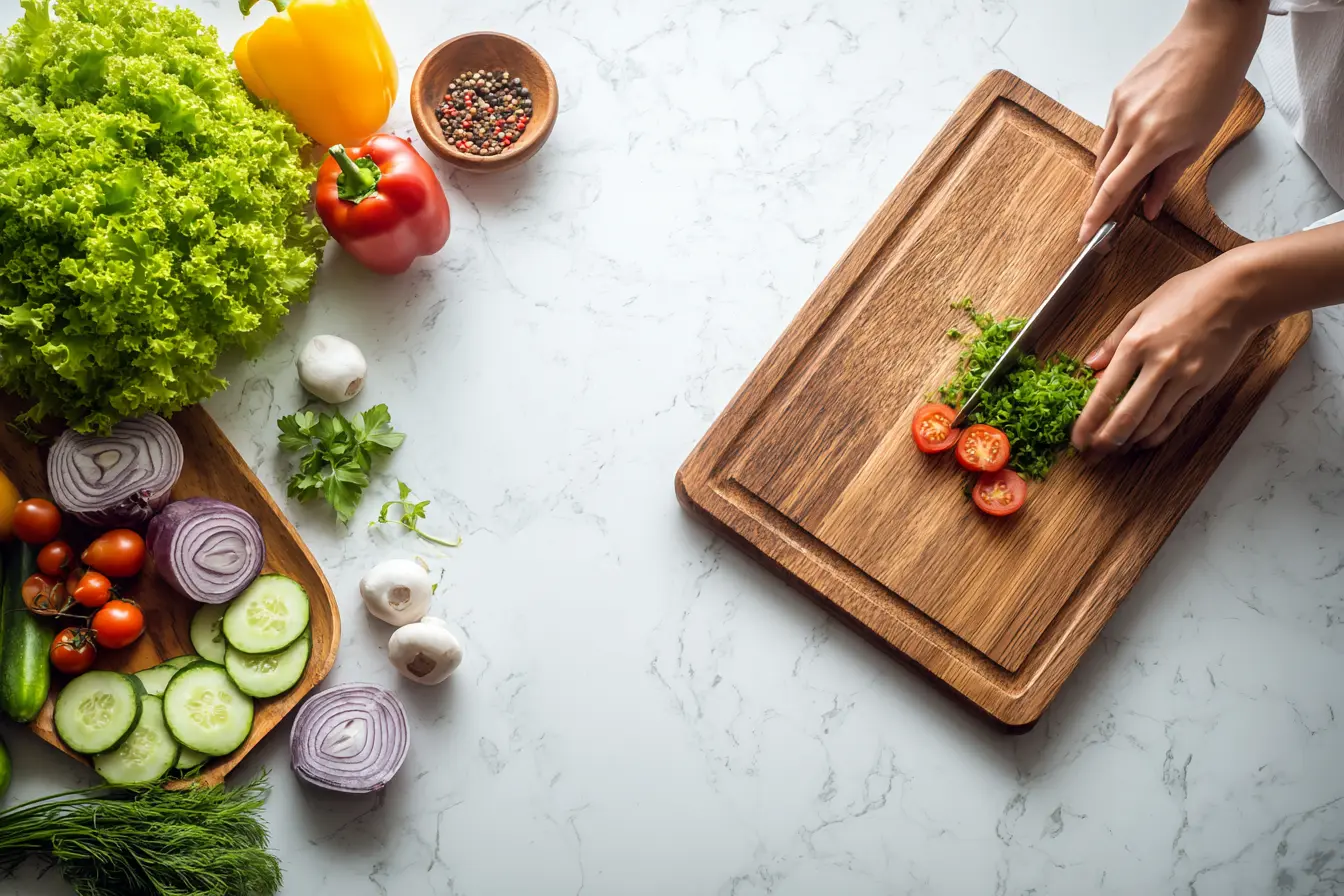
Premium quartz brands like Caesarstone and Silestone carry NSF-51 certification, designating them as safe for direct food contact. This isn’t marketing fluff—it’s a rigorous international standard that requires:
- Non-porous surface that doesn’t harbour bacteria
- Resistance to bacterial growth even in moist conditions
- Safe composition with no harmful chemical leaching
- Durability that maintains hygiene properties over time
For Malaysian homeowners, this certification has practical implications. When you’re preparing laksa, rolling out roti dough, or handling raw meat before cooking rendang, you’re doing so on a surface that genuinely inhibits bacterial colonisation.
The Porosity Problem with Other Materials
Why non-porous matters in tropical climates:
Natural stone like granite and marble, regardless of how well they’re sealed, contains microscopic pores. In Malaysia’s humid environment, these pores:
- Absorb moisture from the air
- Trap food particles and liquids
- Create environments where bacteria can multiply
- Harbour odours over time
- Require periodic sealing (marble needs sealing every 2-3 years depending on usage)
Even with diligent sealing, granite typically has 3-5% porosity, whilst marble is even more porous. That might seem minimal, but in a humid climate with daily food preparation, it’s enough to create hygiene concerns.
Quartz, by contrast, has essentially 0% porosity. There are no microscopic spaces for bacteria to colonise, no hidden moisture pockets, and no gradual absorption of food residues.
Real-World Hygiene Benefits
This translates to tangible advantages for Malaysian kitchens:
After preparing raw chicken:
With natural stone like granite or marble (especially marble which is more porous), bacteria can potentially settle into surface pores even after cleaning. With quartz, a simple wipe with disinfectant genuinely removes all contaminants because there’s nowhere for them to hide.
During monsoon season:
When humidity peaks and everything in your home feels slightly damp, your quartz countertop remains completely unaffected by moisture—no musty smells, no mould growth, no compromised surface.
For families with young children:
If you have children who help with cooking or food preparation, quartz provides genuine peace of mind that your surface maintains hygiene standards.
Investment in Health Prevention
Consider the hidden health costs that poor hygiene might create:
- Medical bills from food-related illnesses
- Time lost to preventable sickness
- Stress and worry about food safety
- Potential need for countertop replacement if hygiene becomes unmanageable
A countertop that genuinely prevents bacterial growth isn’t a luxury—it’s a health investment that protects your family daily for 20-25 years.
Reason 5: Resale Value and Long-Term Investment
Quality countertops aren’t an expense—they’re an asset.
When it’s time to sell your property or simply reassess its value, quality quartz countertops contribute significantly to your home’s worth. Malaysian property buyers increasingly recognise the difference between budget installations and premium materials.
Market Perception of Quality
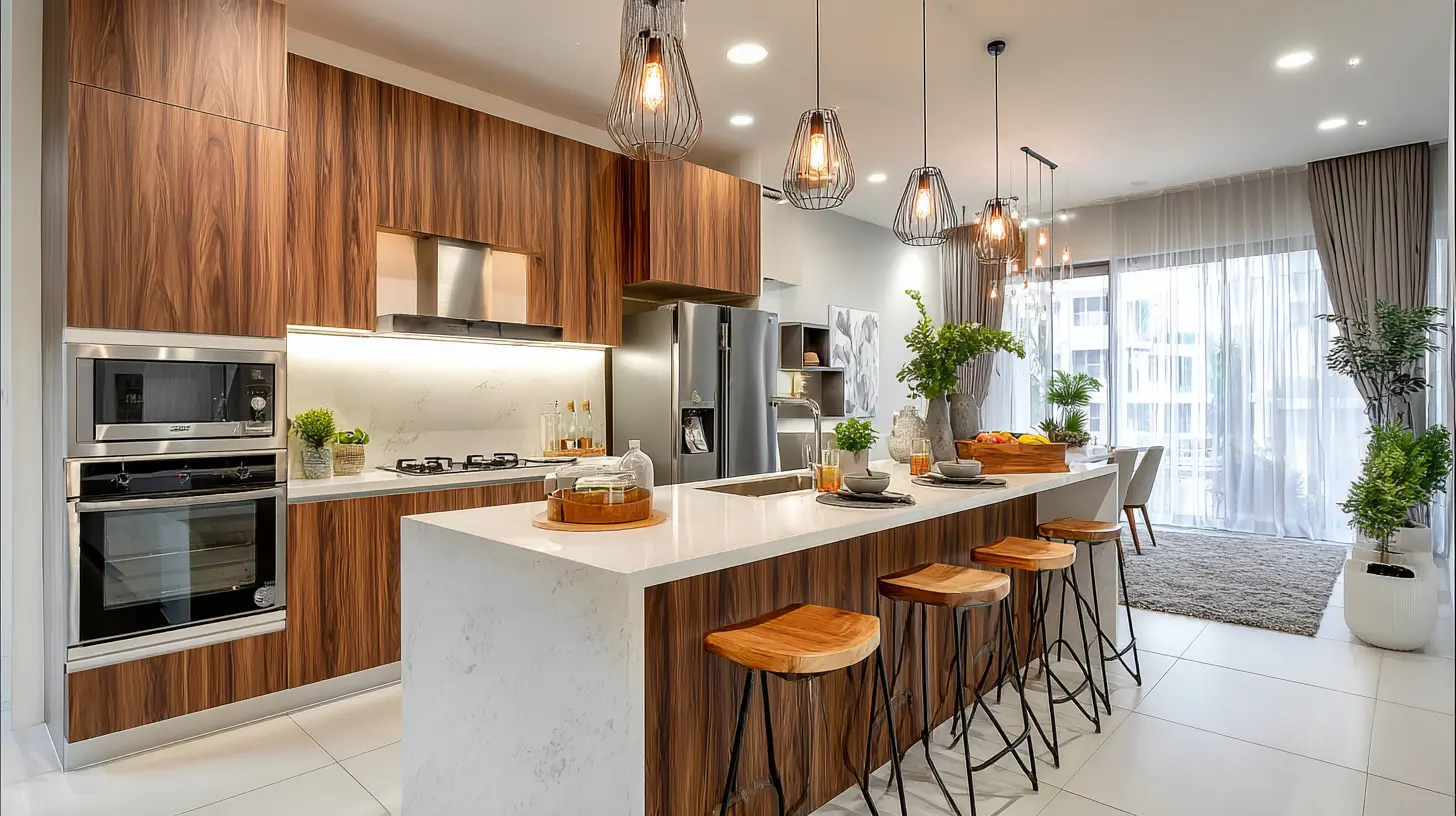
In Malaysia’s competitive property market, potential buyers make quick judgements based on kitchen quality. A well-appointed kitchen with quality stone countertops signals:
- Proper maintenance: Owners who invest in quality materials typically maintain their properties well
- Reduced renovation needs: Buyers won’t need to budget immediately for kitchen updates
- Modern standards: The property meets contemporary expectations for kitchen functionality
- Attention to detail: Quality extends beyond surface aesthetics to practical considerations
Quantifying the Return
Whilst exact figures vary by property type and location, Malaysian property valuers generally observe:
- Premium kitchens can add 5-10% to property valuations in mid-range properties
- Quality countertops specifically contribute 2-4% of that increase
- Faster sale times for properties with modern, well-appointed kitchens
For a property valued at RM500,000, a quality kitchen could contribute RM10,000-20,000 to the valuation. When your countertop investment was RM6,000-8,000, you’re potentially recovering most or all of that cost, plus benefiting from 15-20 years of daily use.
Competitive Advantage in Listings
Property agents consistently report that listings featuring quality stone countertops:
- Photograph better for online listings
- Attract more viewing requests
- Generate fewer negotiation requests for renovations
- Close faster than comparable properties with dated kitchens
In practical terms, your quartz countertop investment helps your property stand out in crowded listing platforms like PropertyGuru or EdgeProp.
The Alternative: Renovation Requirements
Consider the opposite scenario: selling a property that needs immediate kitchen renovation. Potential buyers typically:
- Deduct renovation costs from their offers (usually estimated higher than actual costs)
- Factor in the hassle and time of renovations
- May simply move on to properties requiring less work
Even if your countertop still functions, if it appears dated or worn, buyers perceive it as requiring replacement. A 20-year-old quartz countertop still looks impressive; a 5-year-old laminate often doesn’t.
Protection Against Market Fluctuations
Quality home improvements provide value stability:
- During property booms: Premium features command higher prices
- During slower markets: Quality installations help properties stand out
- Across economic cycles: Tangible quality remains valuable whilst trends shift
Your countertop isn’t subject to the same value fluctuations as purely aesthetic choices. Functional quality maintains worth regardless of current design trends.
Making the Investment Decision
Now that you understand why quartz delivers exceptional value, let’s address the practical considerations for Malaysian homeowners making this investment.
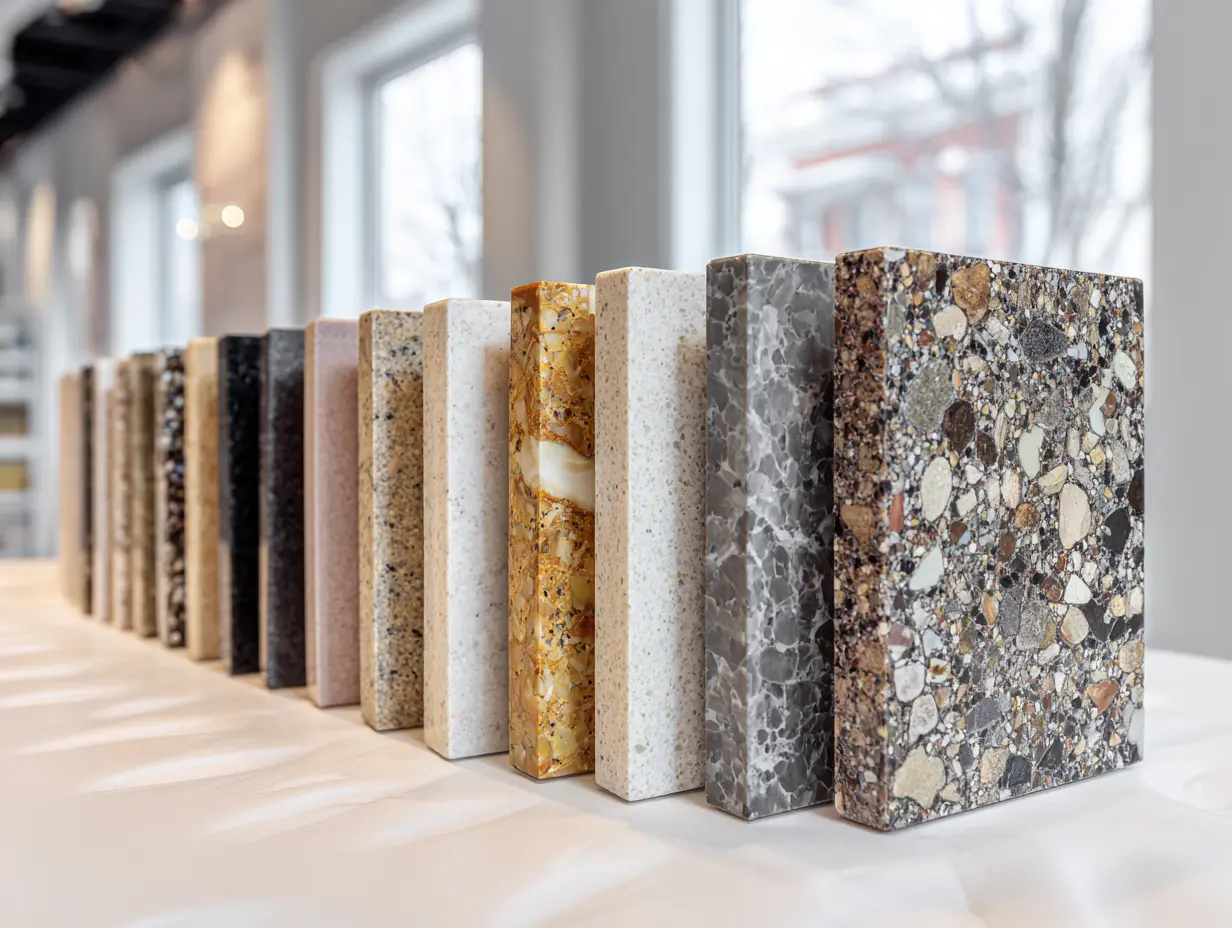
Choosing the Right Quartz Brand
Not all quartz is equal. In the Malaysian market, you’ll encounter various options:
Premium International Brands (Caesarstone, Silestone):
- Price: RM600-1,200+ per foot run
- Benefits: Proven durability, comprehensive warranties, NSF-51 certification, extensive colour ranges
- Best for: Primary kitchens, homeowners prioritising longevity and guarantees
Mid-Range Options (Zenstone, quality alternatives):
Price: RM200-600 per foot run
Benefits: Good performance, reasonable warranties, cost-effective
Best for: Budget-conscious renovations, secondary kitchens, laundry areas
The comparison between Caesarstone and Silestone can help you understand the differences amongst premium brands, whilst broader quartz pricing information helps set realistic budget expectations.
Key Questions Before Purchasing
Protect your investment by asking your supplier essential questions:
- What specific warranty is included, and what does it cover?
- Is installation included, and who performs it?
- What edge profiles are available at the quoted price?
- Are measurements and templating included?
- What’s the timeline from order to installation?
Avoiding Common Pitfalls
Malaysian homeowners should be particularly cautious about:
Compressed Marble Fraud:
Some suppliers sell compressed marble as “quartz” at premium prices. This inferior product lacks quartz’s durability and stain resistance. Learn how to spot fake quartz to protect your investment.
Installation Quality:
Even premium quartz performs poorly if installed incorrectly. Insist on proper 3mm chamfered edges to prevent chipping, adequate support for overhangs, and experienced installers familiar with quartz’s specific requirements.
Finish Selection:
Choose between honed or polished finishes based on your aesthetic preferences and practical needs. Both finishes offer identical durability and porosity—this is purely about appearance and feel.
Considering Alternatives
Whilst quartz offers exceptional value, it’s worth understanding your alternatives:
Sintered Stone:
For homeowners seeking even greater heat resistance and scratch resistance, sintered stone offers advantages—though typically at a higher price point.
Porcelain Slabs:
Not all porcelain slabs are suitable for countertops. Whilst some premium options perform well, many are manufactured on tile equipment and lack the structural integrity for countertop applications.
Beyond the Kitchen
Don’t limit quartz to kitchen countertops. This versatile material excels in:
- **Laundry room applications:** Perfect for utility areas with frequent water exposure
- Bathroom vanities: Hygiene benefits extend to bathroom environments
- Study desk surfaces: Durable, attractive surfaces for home offices
- Outdoor bar counters (under covered areas): Can withstand Malaysian weather if protected from direct UV
Each additional application increases your return on investment by leveraging quartz’s performance across multiple spaces.
The Bottom Line: Value That Lasts
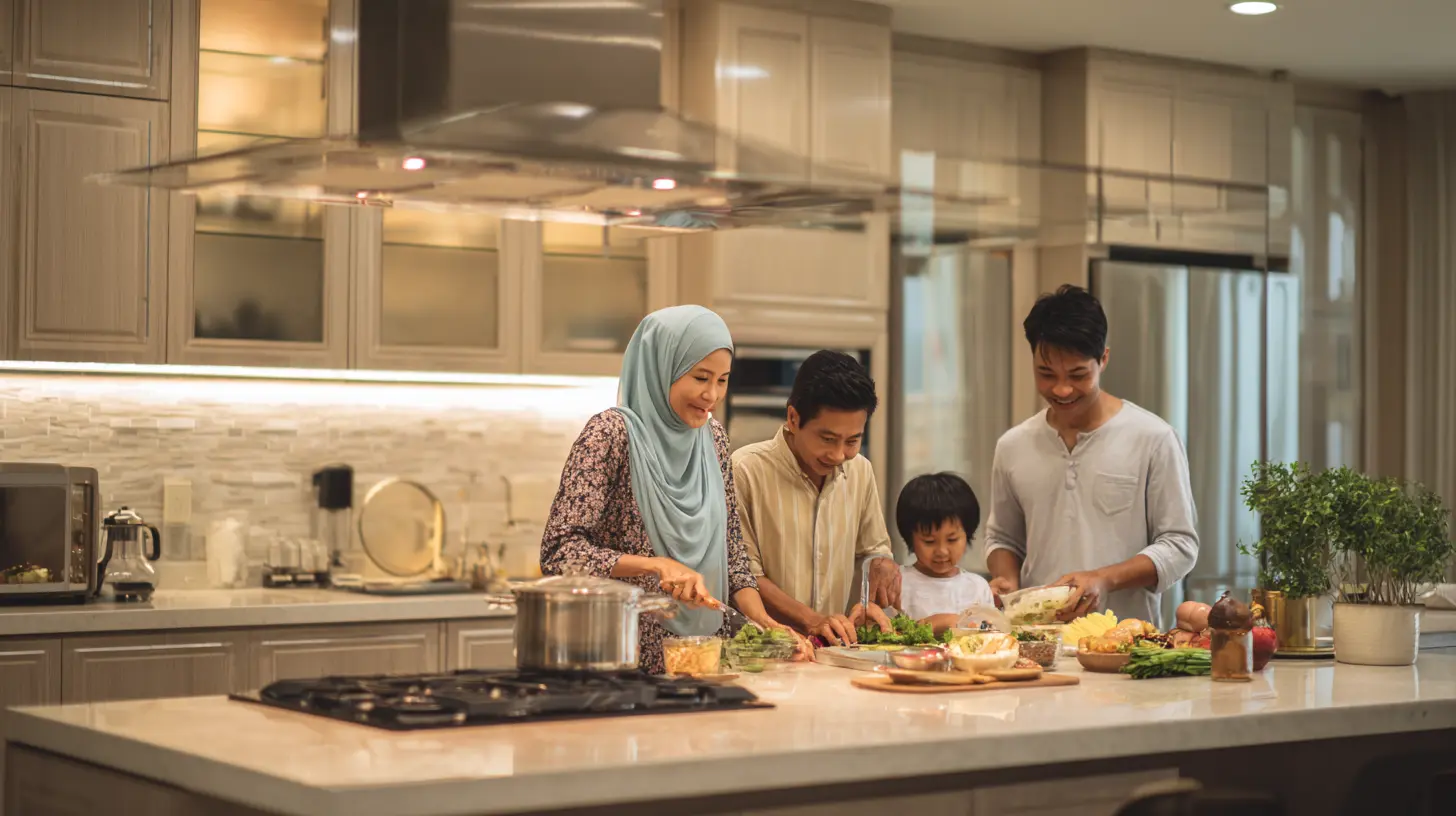
After examining durability, maintenance costs, climate suitability, hygiene benefits, and resale value, the case for quartz becomes clear: this isn’t merely a countertop purchase—it’s a long-term investment in your home’s functionality, your family’s health, and your property’s value.
Yes, quartz requires a higher initial investment than laminate or tile.
Yes, it costs more upfront than many natural stone options.
But no, it’s not an expense—it’s an investment that pays returns for 20-25 years.
The Malaysian homeowners who chose quality quartz 15-20 years ago are still enjoying pristine countertops today, with zero replacement costs, minimal maintenance expenses, and surfaces that look nearly identical to installation day. Meanwhile, those who chose “cheaper” alternatives have often replaced their countertops multiple times, spending more money overall whilst dealing with the disruption of repeated renovations.
For Malaysian kitchens specifically—with our humid climate, intensive cooking styles, and year-round heat—quartz delivers unmatched performance that justifies every ringgit of the initial cost.
When you’re ready to make this investment, visit a showroom (never confirm based solely on photos), examine actual slabs, understand the full cost including installation, and choose a supplier with proven expertise. Your kitchen deserves materials that match how much you’ll use it over the next 20-25 years.
Quality quartz countertops aren’t worth every penny because they’re expensive—they’re worth every penny because they deliver exceptional value that lasts 20-25 years.