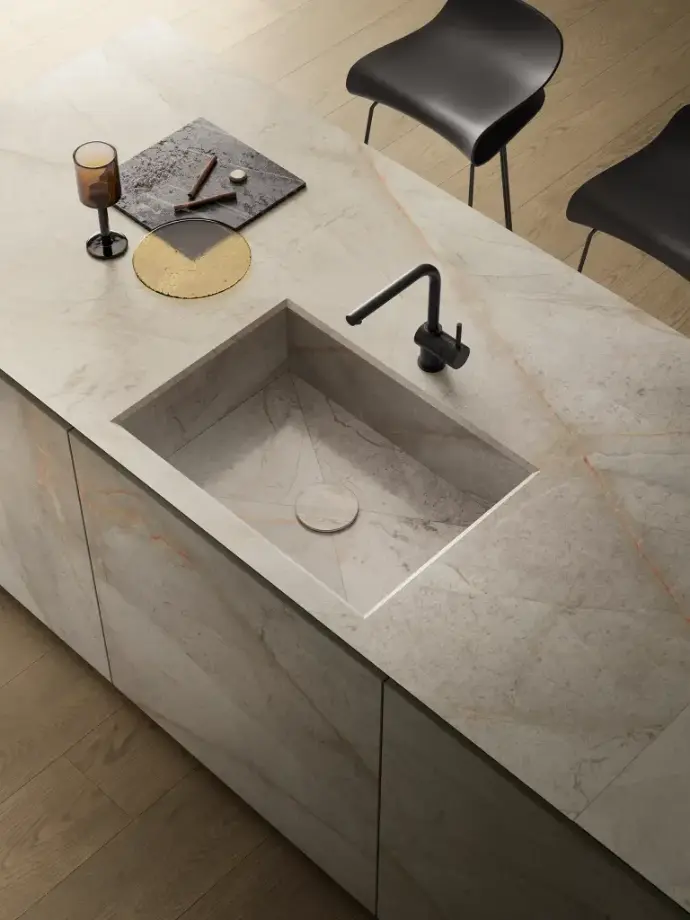
It’s 10 PM on a Tuesday, and you’re scrolling through your contractor’s WhatsApp messages about your upcoming kitchen renovation in Puchong. The numbers are adding up quickly—cabinets, electrical work, plumbing—and then you see the quote for quartz countertops: RM7,200 for supply, fabrication, and installation.
Your mind immediately goes to cost-saving mode: “Can’t I just buy the quartz slab myself from a supplier and get my tiler or wet worker to install it? I could save at least RM1,500, right?”
It’s one of the most common questions we hear from Malaysian homeowners. And honestly, it makes perfect sense on the surface—why pay extra for professional fabrication when you’ve already got skilled trades on-site?
The short answer: No, you really shouldn’t.
The longer answer involves precision cutting, specialised equipment, irreplaceable warranties, and the very real risk of turning a RM4,800 quartz slab into an expensive pile of broken stone. Let me walk you through exactly why DIY quartz installation rarely works out the way Malaysian homeowners hope—and what you should do instead.
Why Quartz Stone Isn’t Just Another Building Material
Here’s what most homeowners don’t realise until it’s too late: quartz stone is an engineered material that requires specialised fabrication equipment and trained fabricators.
Unlike ceramic tiles that your tiler can cut and lay with a standard wet saw, or cement render that a wet worker can shape on-site, quartz slabs are fundamentally different:
- Extremely hard and dense – Quartz ranks 7 on the Mohs hardness scale, making it harder than most steel and far more difficult to cut than natural stone
- Requires precise cutting techniques – One wrong cut angle or inadequate tool, and a RM5,000 slab can chip severely or require complete re-fabrication
- Precision-cut to tolerances of less than 1mm – Your kitchen walls aren’t perfectly straight, your corners aren’t exactly 90 degrees, and your cabinet tops aren’t perfectly level (especially in older Malaysian properties)
- Finished with polished edges – The exposed edges need diamond tooling and progressive polishing to match the slab’s top surface
A standard tiler’s wet saw, angle grinder, or hand tools simply cannot achieve the clean cuts, precise measurements, and polished edges that proper quartz installation demands.
Think of it this way: Would you ask your tiler to service your car’s engine because they both involve “working with tools”? The skill sets are completely different.
What Professional Quartz Fabrication Actually Involves
When you work with a professional quartz fabricator in Malaysia, here’s what happens behind the scenes that you’re not seeing:
1. Precision Templating (Not Just “Measuring”)
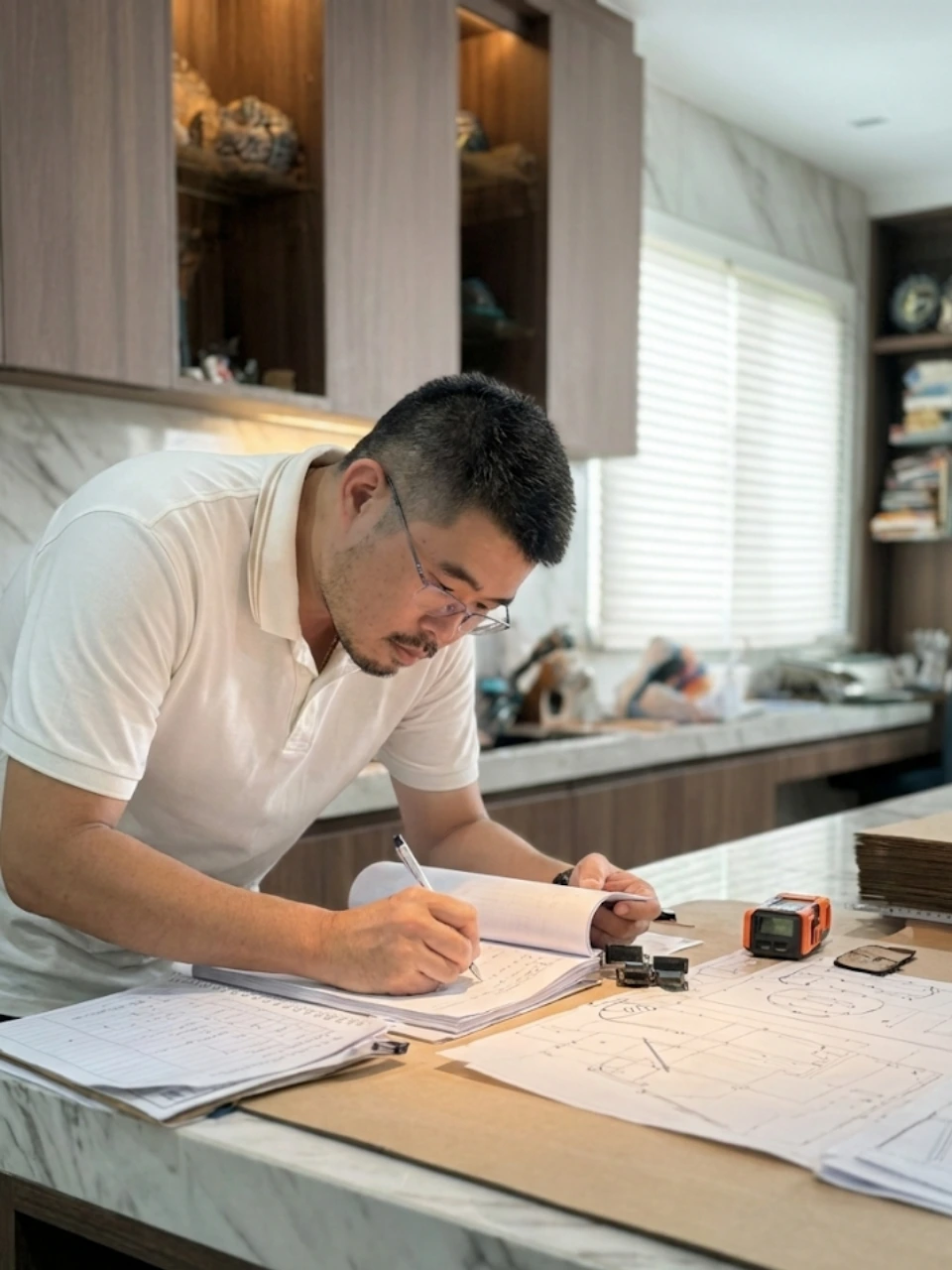
Professional fabricators don’t just measure your countertop area with a tape measure. They create exact templates using specialised tools that account for:
- Walls that aren’t perfectly straight (common in Malaysian terrace houses and apartments)
- Corners that aren’t quite 90 degrees (even in newer developments)
- Uneven cabinet tops that need levelling
- Exact sink and cooktop placements down to the millimetre
- Gas pipe and water supply locations
In a recent project in Subang Jaya, we discovered a 15mm variance in wall straightness over a 2.4-metre run. If the homeowner had simply provided measurements to a tiler, the countertop would have had visible gaps along the wall.
Your tiler typically works with tiles that can be adjusted on-site—grout lines can hide minor imperfections. Quartz doesn’t offer that flexibility. Once it’s cut, it’s cut. There’s no “adjusting” a solid slab.
2. Computer-Aided Cutting (CNC Machinery)
Most professional quartz fabricators use CNC (Computer Numerical Control) machinery or specialised bridge saws with laser guides. These industrial machines ensure:
- Perfectly straight cuts – Tolerance of ±0.5mm over a 3-metre span
- Accurate curved cuts – For undermount sinks, rounded corners, and cooktop openings
- Consistent depth – Critical for undermount sink installations where the edge profile must be perfect
- Minimal material waste – Important when you’re working with slabs costing RM200-300 per square foot
Compare this to a tiler’s handheld wet saw, which:
- Requires manual guiding (human error inevitable)
- Has limited cutting depth (quartz slabs are 20mm thick)
- Cannot achieve the precision needed for seamless joints
- Creates irregular edges that cannot be properly polished
3. Edge Profiling and Polishing (The Visible Quality Mark)
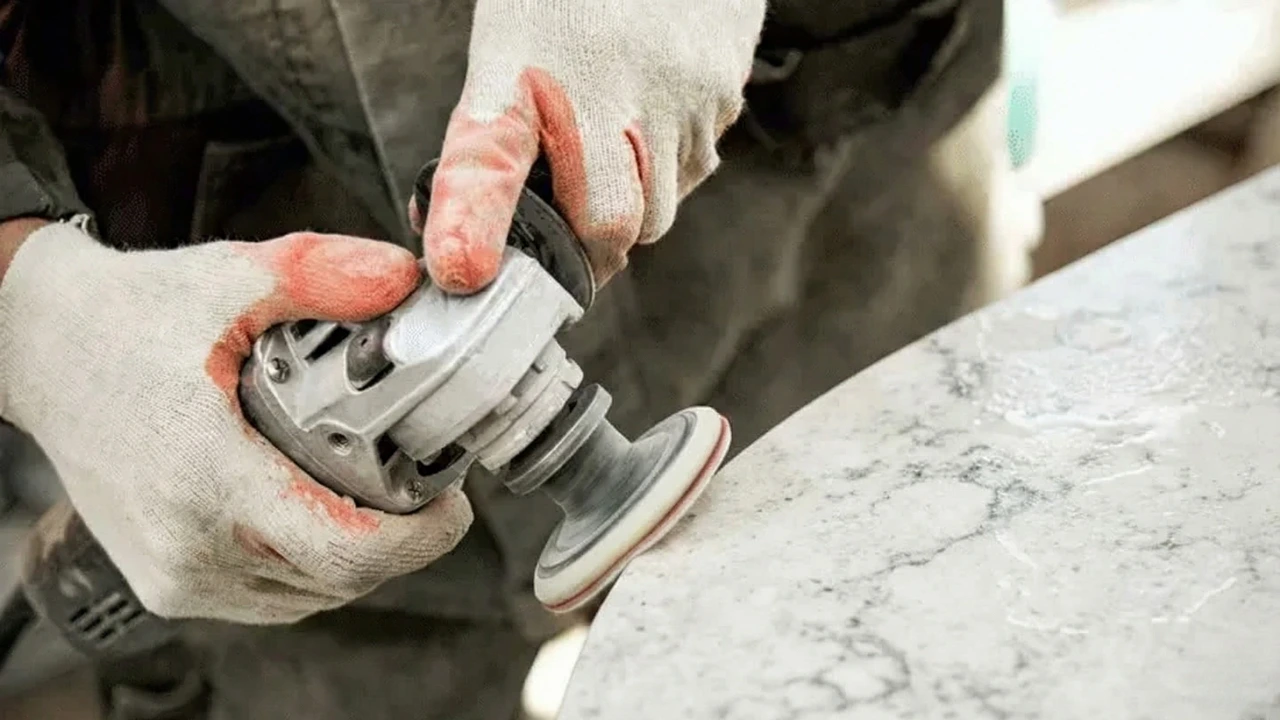
The edges of your countertop are what you see and touch every day. They need to be shaped and polished to match the slab’s top surface. This requires:
- Industrial edge polishing machines – Not available to typical contractors
- Diamond polishing pads – Progressive grits from 50 to 3000 for mirror finish
- Water cooling systems – To prevent heat damage and silica dust
- Trained hands – Understanding of pressure, speed, and technique
Without proper edge finishing, your expensive Caesarstone or Silestone slab will have:
- Rough, dull edges that look unfinished
- Sharp corners that are dangerous (especially with children)
- Inconsistent edge profiles
- Chips that quickly worsen with daily use
We’ve seen homeowners spend RM5,200 on a premium Caesarstone slab, only to have it installed with rough-cut edges because the contractor used basic tools. The countertop looked budget despite the premium material.
4. Cutouts for Sinks, Cooktops, and Fixtures (Where Most DIY Attempts Fail)
Creating precise cutouts with clean edges is where professional expertise really matters. This requires:
- Specialised diamond core bits and hole saws – Designed specifically for engineered stone
- Proper support underneath during cutting – Prevents chipping and ensures clean cuts
- Experience with cutout positioning – Knowing the correct placement to maintain structural integrity
- Understanding of quartz properties – How the resin content affects cutting behaviour and edge finishing
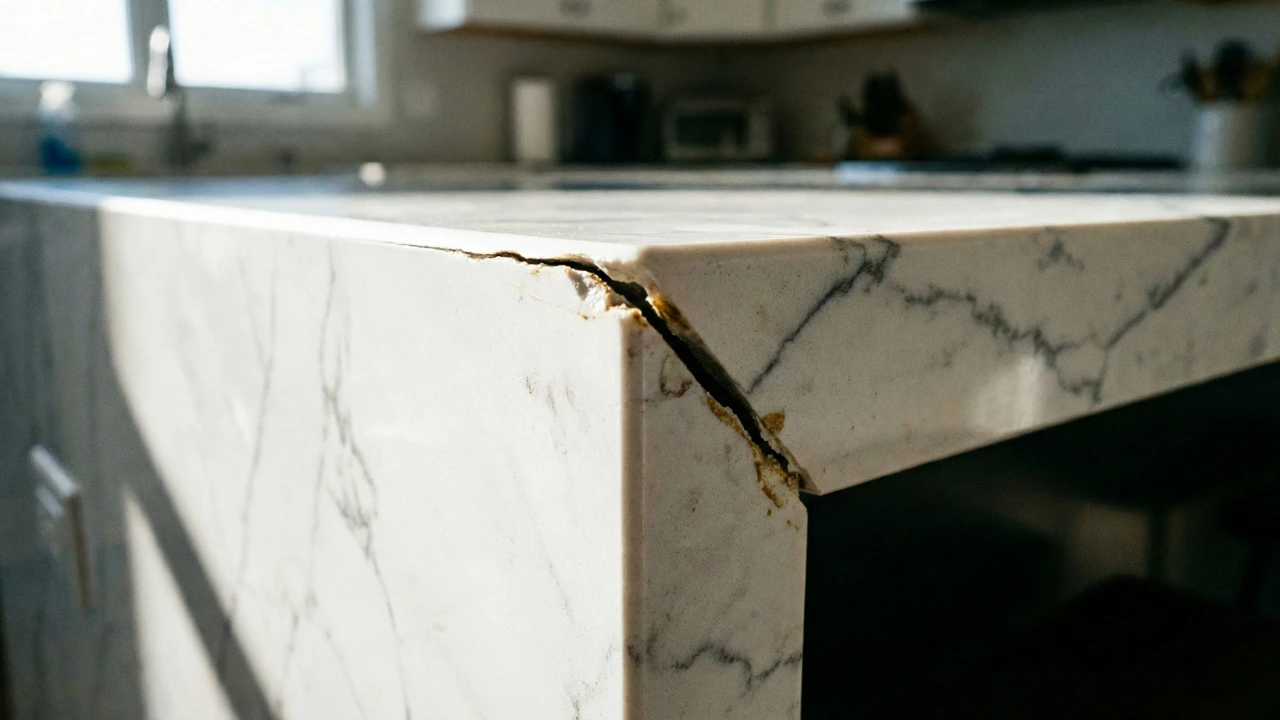
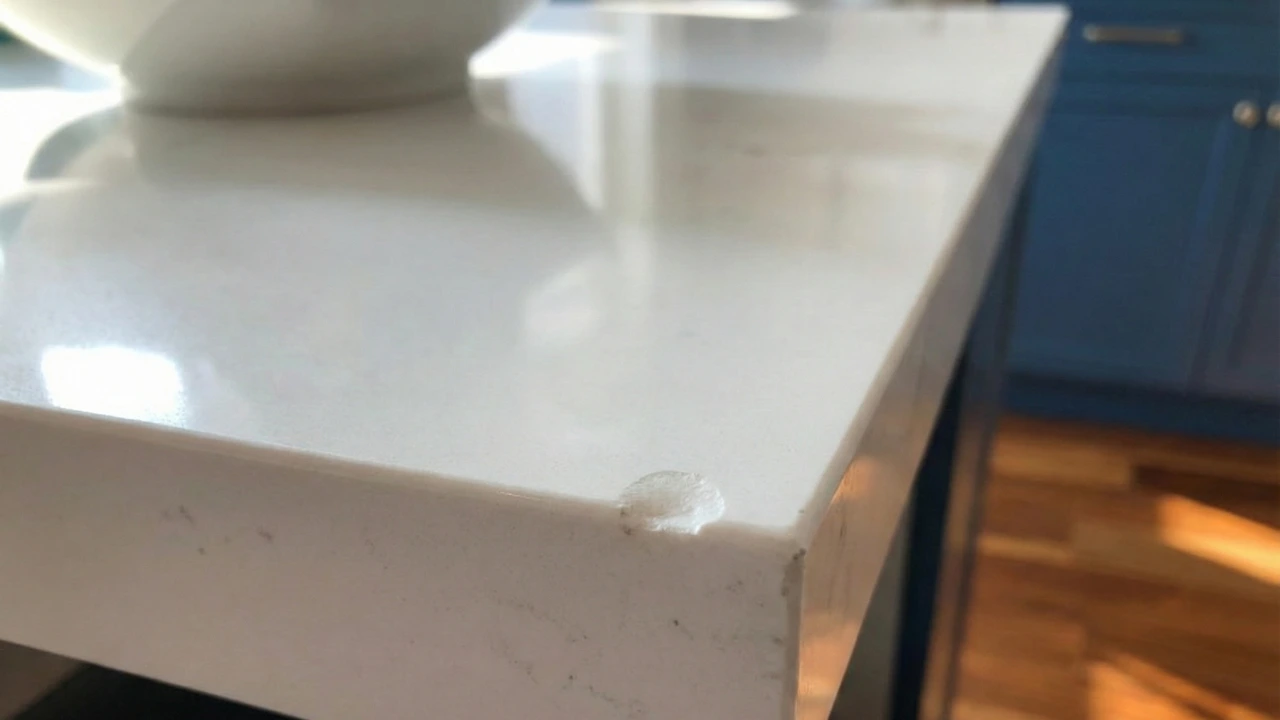
Real story from Petaling Jaya (2024): A homeowner purchased a RM4,800 Silestone slab (Snowy Ibiza) and asked their renovation contractor to install it. The problems started immediately upon delivery—the contractor arranged 6 workers to unload the 250kg slab from the lorry. When the contractor asked the 65-year-old lorry driver to help with the unloading, the driver refused, explaining his job was driving only, not carrying heavy items. The homeowner ended up helping to carry the slab himself. The installation went ahead, but the disaster became apparent after completion: the contractor’s worker had used a basic angle grinder to polish the exposed front edges. The results were disastrous—visible round grinding marks across the entire edge profile and a two-tone colour effect where the polished areas looked completely different from the slab’s original finish. The RM4,800 premium Silestone countertop looked cheap and unfinished. The homeowner had no choice but to pay for the countertop to be removed and professionally re-fabricated with proper edge polishing. Total cost of the mistake: RM11,200 (original slab wasted + professional re-fabrication + second installation).
The Real Risks of DIY Quartz Installation in Malaysia
Let’s talk about what actually happens when Malaysian homeowners try the “buy the slab and get the tiler to install it” approach:
Risk #1: Irreversible Mistakes Mean Total Loss
Quartz slabs in Malaysia typically cost:
- Entry-level brands (Zenstone Classic series): RM1,900-2,500 per slab
- Mid-range brands (Zenstone Premium, Zenstone Marble): RM2,300-2,800 per slab
- Premium international brands (Caesarstone Standard, Silestone Group 1-2): RM5,500-6,000 per slab
- Luxury collections (Caesarstone Supernatural, Silestone Group 6-7): RM10,000-14,000 per slab
If your contractor makes a measuring error, if the slab is cut incorrectly with visible grinding marks, or if the cutout is positioned incorrectly—that entire investment is gone. You cannot repair or “fix” a badly cut quartz slab.
Unlike ceramic tiles where you replace a few broken pieces, or granite where natural variation can sometimes hide minor flaws, a ruined quartz slab means:
- Absorbing the full cost of the destroyed slab
- Purchasing a replacement slab
- Waiting for new material to arrive (2-4 weeks for some brands)
- Starting the fabrication process over
Risk #2: Void All Warranties (Material + Installation)
When you purchase authentic quartz from an authorised dealer like Sinno Stone and have it professionally fabricated and installed, you receive:
- Material warranty – 10 years (Zenstone) or 25 years (Caesarstone, Silestone) covering manufacturing defects
- Workmanship warranty – 2 years covering fabrication, cutting, edging, seam work, and installation
The moment you hand that slab to an unqualified installer, every single warranty becomes void.
This isn’t just fine print—manufacturers like Cosentino (Silestone) and Caesarstone explicitly require professional installation by certified fabricators. If something goes wrong with the material itself (manufacturing defect, resin discolouration, structural issue), you have zero recourse if the installation wasn’t done professionally.
Real scenario: A Caesarstone customer in Mont Kiara noticed yellowing near the cooktop area after 8 months. Because they used professional installation through an authorised dealer, Caesarstone investigated and determined it was a manufacturing batch issue—full replacement at no cost. If they’d used DIY installation? They’d be living with a discoloured RM8,000 countertop.
Risk #3: Poor Installation Quality (Problems That Plague You for Years)
Even if the cutting somehow goes well, improper installation can lead to:
Functional Problems:
- Uneven surfaces where water pools (hello, perfect breeding ground for mould in our humid Malaysian climate)
- Inadequate support causing delamination or separation over time (especially problematic with overhangs)
- Visible and poorly sealed seams (ugly and unhygienic)
- Gaps between countertop and wall (allows water, cockroaches, and food particles behind counter)
- Improper sealing around sinks and taps (leading to cabinet water damage)
Aesthetic Issues:
- Mismatched edge profiles
- Inconsistent overhang depths
- Rough or unpolished cut edges
- Visible adhesive residue
- Colour variations at seams (poor grain matching)
These aren’t minor cosmetic annoyances—they’re functional problems that will frustrate you daily for the 15-20 year lifespan of your quartz countertop.
Risk #4: Health and Safety Hazards
Cutting quartz produces silica dust—a serious respiratory hazard classified as a Group 1 carcinogen by the International Agency for Research on Cancer (IARC).
Professional fabricators work in controlled environments with:
- Industrial dust extraction systems capturing 99% of airborne particles
- Proper personal protective equipment (respirators, not just dust masks)
- Water suppression during cutting to minimise dust
- Enclosed cutting areas preventing spread to other workspaces
Your contractor working on-site in your kitchen or car porch with a wet saw? They’re creating hazardous crystalline silica dust that:
- Exposes your family to serious health risks (especially young children and elderly)
- Contaminates your home (silica dust is extremely fine and travels far)
- Puts the worker at risk (many Malaysian contractors don’t have proper respiratory protection)
- Affects your neighbours (in terraced houses and apartments)
Is saving RM1,500 worth exposing your family to a known carcinogen?
“But I’ll Get the Factory to Fabricate, Then My Tiler Just Installs It”
This is perhaps the most common variation we hear from Malaysian homeowners trying to save money:
“I’ll buy the slab and send it to a proper fabrication workshop for cutting and polishing. Then they deliver the finished countertop to my site, and my tiler just installs it. Simple, right? My tiler is already there doing my flooring, walls, and bathroom. Why should I pay extra for installation when he can just place the countertop on the cabinets?”
On the surface, this sounds perfectly reasonable. You’re getting professional fabrication (the hard part), and installation is just “placing” the countertop, right?
Wrong. And here’s why this approach fails just as badly as full DIY:
Installation Isn’t Just “Placing” the Countertop
Many homeowners don’t realise that installation is a specialised skill requiring specific training, tools, and experience. Here’s what proper quartz installation actually involves:
1. Structural Assessment and Preparation Before the countertop even arrives, professional installers must:
- Verify cabinet structure can support 40-60kg per square metre (quartz weight)
- Check cabinet levelness with precision levelling tools (tolerance: ±1mm)
- Install support bracing where needed (especially for overhangs)
- Prepare cabinet tops for adhesion (cleaning, sealing)
- Verify all measurements one final time against the fabricated piece
Your tiler doing bathroom work? They’re not trained to assess whether your kitchen cabinets need additional structural support for heavy stone.
2. Specialised Adhesive Application Quartz countertops require specific adhesives:
- Professional stone bonding adhesive (not generic silicone or tile adhesive)
- Precise application pattern to ensure even weight distribution
- Correct curing time and conditions
- Understanding of how much adhesive to use (too little = weak bond, too much = squeeze-out and mess)
Real Puchong disaster (2024): A homeowner had a RM5,800 Silestone countertop professionally fabricated. Their renovation contractor used bathroom tile adhesive for installation. After 4 months, the countertop developed severe delamination due to improper bonding—sections of the countertop were separating from the cabinet, creating dangerous movement and instability. Because the installation wasn’t done by the fabricator, both the fabrication workshop and material supplier refused warranty claims. Total loss: RM5,800 plus RM2,200 for cabinet water damage.
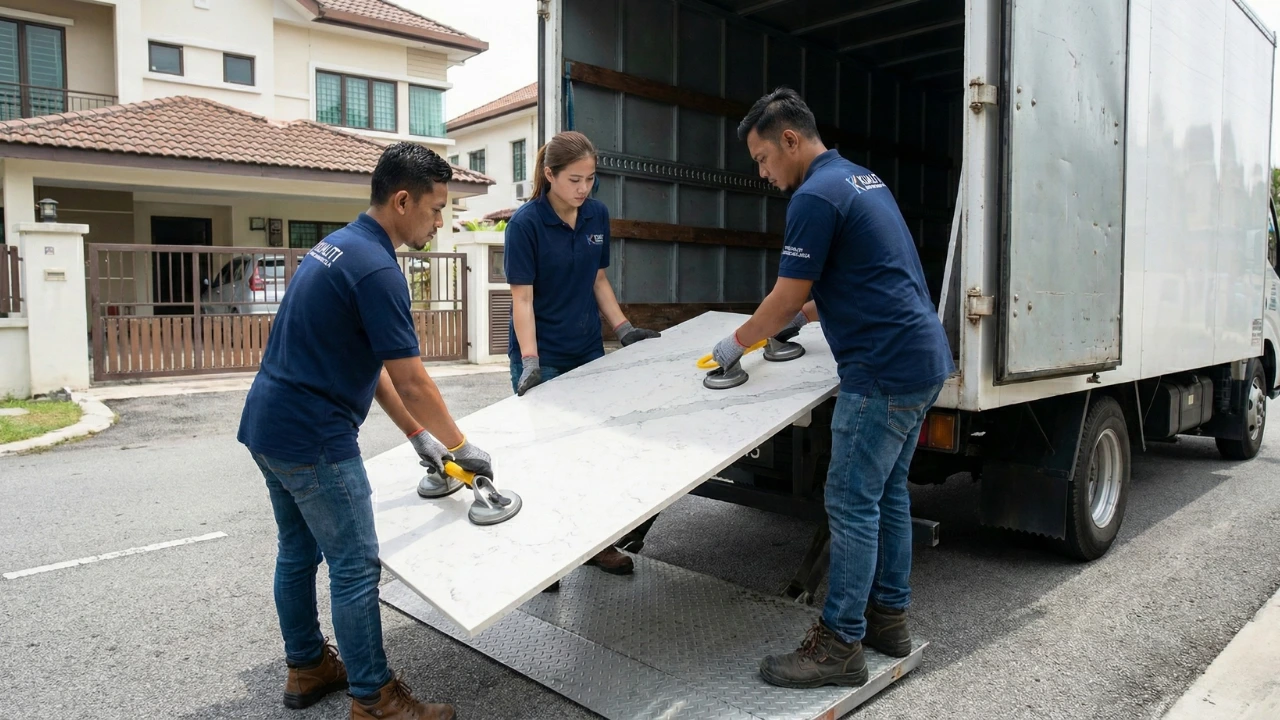
3. Heavy Material Handling A typical kitchen countertop weighs 80-150kg:
- Requires proper lifting technique (minimum 3-4 people)
- Needs suction cup lifters rated for stone weight
- Must be supported correctly during positioning (one wrong move = severe chipping)
- Requires precise placement on the first attempt (you can’t just “slide it around”)
Real scenario from Subang Jaya: A renovation contractor with 2 workers attempted to install a fabricated Caesarstone countertop. Whilst manoeuvring it into position, they lost grip on one corner. The corner hit the cabinet edge and suffered severe chipping damage along the entire front edge—over 30cm of the polished edge was destroyed. Despite professional fabrication, poor handling ruined the RM6,200 countertop.
4. Seam Joining (for L-shaped or Large Kitchens) If your countertop requires multiple pieces:
- Seams must be joined with colour-matched epoxy resin
- Requires specific clamping technique and curing time
- Proper seams are nearly invisible; improper seams are obvious and weak
- Must be done before final adhesive curing
Your tiler has never worked with stone-specific epoxy resins and doesn’t know the clamping pressure or curing requirements.
5. Sink and Cooktop Installation Even with pre-cut holes, proper installation requires:
- Correct positioning and securing of undermount sinks
- Professional-grade sink clips (not just silicone)
- Proper sealing with appropriate materials
- Understanding of weight distribution
- Correct tap and fixture positioning
A bathroom tiler installs ceramic sinks mounted on walls or pedestals—completely different from mounting a stainless steel undermount sink to quartz.
Why “My Tiler Is Already On-Site” Isn’t a Money-Saver
Let’s address the core logic: “I’m already paying my tiler to do flooring and walls, so asking him to install one more thing should save money.”
Here’s the problem with this thinking:
Scenario Analysis:
What you think you’re saving:
- Professional installation fee: RM800-1,200
- Your tiler’s “extra work”: RM300-400 (since he’s already there)
- Perceived saving: RM400-900
What actually happens:
Best case scenario (nothing goes wrong):
- Fabrication: RM1,500
- Your tiler’s installation: RM400
- Total: RM1,900
- But: Void all warranties, likely installation quality issues
Realistic scenario (something goes wrong):
- Fabrication: RM1,500
- Your tiler’s installation attempt: RM400
- Severe edge chipping or ruined edge finishing: RM5,500 (new slab + new fabrication)
- Professional installation (the second time): RM1,200
- Total: RM8,600
Compare to doing it right from the start:
- Professional fabrication + installation: RM2,500-2,800
- Full warranty protection
- Zero risk of installation failure
Is saving RM400 worth risking RM8,600?
The Insurance and Warranty Problem
Here’s what most homeowners don’t realise until it’s too late:
When the fabricator installs:
- They take full responsibility for the countertop from workshop to completion
- If something goes wrong during transport or installation, they handle it
- Full warranty coverage: material warranty (10-25 years) AND workmanship warranty (2 years)
- Insurance covers any accidents during their work
When your tiler installs:
- Fabrication workshop’s responsibility ends at their door
- Any damage during transport = your problem
- Any damage during installation = your problem
- Material warranty may be void (check fine print)
- Your tiler’s standard renovation insurance likely doesn’t cover expensive stone installation
- If the countertop develops issues (delamination, poor sealing, edge damage), who’s responsible? The fabricator says installation was wrong. Your tiler says the fabrication was faulty. You’re stuck in the middle with a damaged countertop and no recourse.
Real Setapak scenario (2023): Homeowner paid RM2,100 for professional Zenstone fabrication. Renovation contractor installed it. After 3 months, severe delamination appeared near the sink area—the countertop was separating from the cabinet with visible gaps and movement. Fabrication workshop claimed improper installation caused the bonding failure. Renovation contractor claimed the slab had improper preparation. Neither would take responsibility. Homeowner paid RM5,800 out of pocket for complete replacement with professional installation.
Your Tiler Isn’t Trained for This
This isn’t about your tiler’s general competence. They may be excellent at:
- Laying floor tiles perfectly level
- Creating beautiful bathroom walls
- Grouting with precision
But quartz installation requires:
- Understanding of engineered stone properties
- Knowledge of proper adhesives and their application
- Experience with heavy slab handling
- Familiarity with stone-specific tools
- Training in structural assessment for stone weight
It’s a different skill set entirely.
Think of it this way: Your car mechanic might be brilliant with engines, but would you ask them to repair your laptop because “they’re good with technical stuff”? Different expertise.
What Fabrication Workshops Actually Recommend
We’ve spoken with dozens of fabrication workshops across Klang Valley. Here’s what they consistently say:
Most reputable fabricators will:
- Strongly recommend against third-party installation
- Explain that warranty is void if they don’t install
- May refuse to fabricate if you insist on separate installation
- Warn you about liability issues
Some fabricators will fabricate anyway (because business is business), but:
- They’ll make you sign a waiver releasing them from all responsibility
- They’ll likely refuse any future warranty claims
- They won’t offer any installation support or advice
Red flag: If a fabrication workshop is perfectly happy to fabricate with no questions asked about installation, they’re either desperate for business or don’t care about quality outcomes.
The “But My Friend Did It and It Was Fine” Problem
Yes, sometimes people get lucky. Sometimes:
- The cabinets happen to be perfectly level
- The tiler is naturally careful and gets lucky with handling
- The countertop is small and simple with no complications
- Nothing goes wrong during installation
But here’s the thing about risks: The outcome isn’t determined by how many people succeed—it’s determined by what happens when you’re the unlucky one.
Would you drive without a seatbelt because “most people don’t get into accidents”? Of course not. You wear a seatbelt because if you ARE in an accident, it’s the difference between walking away and serious injury.
Professional installation is your seatbelt.
“But I Found a Contractor Who Says They Can Do It”
Beyond the fabricate-separately scenario, we also hear these variations:
“My contractor has installed quartz before”
“My tiler says it’s just like cutting granite”
“I know someone who did it themselves and it turned out fine”
Here’s what you need to ask any contractor claiming they can install quartz:
Equipment Questions:
- Do you have professional quartz fabrication equipment (CNC or bridge saw with laser guides)?
- What specific brand and model of edge polisher do you use?
- Do you have industrial dust extraction systems?
Experience and Credentials: 4. Can you provide photos from at least 5 previous quartz installations? 5. Are you an authorised fabricator for any quartz brands? 6. Do you have certification from any stone fabrication training programmes?
Warranty and Insurance: 7. What specific warranty do you offer on workmanship (fabrication and installation)? 8. Do you have insurance that specifically covers quartz fabrication work? 9. What happens if the slab is damaged during installation—who absorbs the cost?
Process Questions: 10. How do you handle templating and precision measurement? 11. What’s your process for creating undermount sink cutouts? 12. How do you polish and finish the edges?
If the answers to these questions aren’t rock-solid (pun intended), or if the contractor seems hesitant or vague, you’re taking an enormous financial risk.
Most importantly: If they’re doing the work at your site rather than in a dedicated fabrication workshop, that’s a major red flag.
The Real Cost Comparison: DIY vs. Professional (2025 Malaysia Pricing)
Let’s break down what you’re actually “saving” by going DIY, using real Malaysian pricing:
Scenario 1: Mid-Range Quartz (Zenstone Premium Series)
DIY Approach:
Zenstone Premium quartz slab (3000x1400mm): RM2,800-3,200
Contractor/tiler cutting and installation: RM1,000-1,500
Subtotal: RM3,800-4,700
Risk of total loss if something goes wrong: RM4,700
No material warranty (voided)
No workmanship warranty
Likely poor edge finishing and seam work
Potential for functional issues (uneven, gaps, poor sealing)
Professional Approach:
- Zenstone Premium supply + fabrication + installation: RM5,900-7,000
- Total investment: RM5,900-7,000
- 10-year material warranty from Zenstone
- 2-year workmanship warranty (fabrication + installation)
- Professional templating and precision cutting
- Polished edges matching slab finish
- Proper support, levelling, and installation
- Sealed seams and sink installations
The difference: RM1,200-2,300
Scenario 2: Premium International Brand (Caesarstone Standard Collection)
DIY Approach:
- Caesarstone Standard slab (Snow 2141, 3000x1400mm): RM5,600
- Contractor cutting and installation: RM1,200-1,800
- Subtotal: RM6,800-7,400
- Risk exposure: RM7,400
- All warranties voided
- Unknown quality of fabrication and installation
Professional Approach:
- Caesarstone Standard supply + fabrication + installation: RM8,500-9,200
- Total investment: RM8,500-9,200
- 25-year Caesarstone material warranty
- 2-year workmanship warranty (fabrication + installation)
- Brand certification and traceability
- Access to authorised service if issues arise
The difference: RM1,700-1,800
The Real Question
For RM1,200-2,300, you get:
- Professional expertise and specialised equipment
- Complete warranty protection (material warranty + workmanship warranty)
- Peace of mind
- Finished product that looks and functions as designed
- Zero risk of catastrophic material loss
Is it really worth risking RM4,700-9,200 to save RM1,500-2,000?
Let’s put it another way: That RM1,500-2,000 savings represents just 20-25% of your total countertop investment. But if something goes wrong with DIY, you lose 100% of that investment plus have to start over.
When DIY Quartz Installation Makes Sense (Spoiler: Almost Never)
There are exactly three scenarios where DIY quartz installation might be acceptable:
Scenario 1: You’re a Trained Stone Fabricator
If you’re literally a professional stone fabricator taking on your own home renovation project—and you have access to professional equipment—then yes, DIY makes sense. But if you’re reading this blog post looking for advice, you’re probably not in this category.
Scenario 2: You Have Access to Professional Equipment
If you somehow have legitimate access to CNC cutting machines, industrial edge polishers, diamond tooling, dust extraction systems, and proper templating tools—and you know how to use them—then potentially yes.
Scenario 3: Very Simple, Small Piece with No Cutouts
If you’re installing something like a small bathroom vanity countertop (under 1 metre) with zero cutouts, no undermount sink, and you’re willing to accept rough edges—maybe. But even then, why risk a RM2,000 investment to save RM400?
For 99.9% of Malaysian homeowners, none of these scenarios apply.
What You Should Do Instead: Smart Cost Management Strategies
If you’re concerned about the cost of professional quartz installation in Malaysia, here are proven ways to manage your budget without compromising on quality:
Strategy 1: Choose a More Affordable Quartz Brand
Instead of compromising on installation, consider more affordable quartz options that still offer excellent quality:
Malaysian-manufactured brands:
- Zenstone Classic Series (RM110/ft² slab price) – Excellent value, budget-friendly quality
- Zenstone Premium Series (RM130/ft² slab price) – Mid-range pricing with premium look
- Zenstone Marble Series (RM155/ft² slab price) – Calacatta and veined marble aesthetics
Cost saving example:
Caesarstone Supernatural (RM664/ft² slab) vs. Zenstone Premium (RM130/ft² slab)
Slab cost saving: RM18,000-24,000 for a typical kitchen (then add professional fabrication + installation to both)
Strategy 2: Select Standard Colours Rather Than Premium Collections
Within the same brand, colour selection dramatically affects pricing:
Caesarstone pricing tiers (slab prices):
- Standard Collection (Snow, Jet Black, Oyster): RM318/ft²
- Deluxe Collection (Fresh Concrete, Raven, Organic White): RM325/ft²
- Premium Collection (Pure White, Alpine Mist): RM373/ft²
- Supernatural Collection (Statuario Maximus): RM664/ft²
Silestone pricing tiers (slab prices):
- Group 1 (Blanco Maple, Marengo): RM280/ft²
- Group 2 (Persian White, Night Tebas): RM316/ft²
- Group 4 (Et. Statuario, Corktown): RM450/ft²
- Group 7 (Jardin Emerald, Bohemian Flame): RM645/ft²
Cost saving example:
Silestone Group 7 (RM645/ft²) vs. Silestone Group 1 (RM280/ft²)
Slab cost saving: RM12,000-16,000 for a typical kitchen (then add professional fabrication + installation to both)
Strategy 3: Simplify Edge Profiles
Edge profiles affect fabrication time and cost:
Standard edges: (included in base price)
- Straight edge (most affordable)
- Pencil round (slight rounding)
- Small bevel
Premium edges: (additional RM50-150 per linear metre)
- Ogee edge
- Waterfall edge
- Dupont edge
- Custom profiles
For a typical 6-metre kitchen countertop, choosing a standard edge profile over premium can save RM300-900.
Strategy 4: Reduce Overall Countertop Area
Install quartz only where it matters most:
Priority areas for quartz:
- Main food preparation countertop
- Areas around the sink and cooktop
- High-visibility countertops (near dining area)
Alternative materials for less critical areas:
- Dry kitchen or utility areas: Laminate countertops (RM50-80/ft²)
- Laundry areas: Solid surface (RM120-180/ft²)
- Outdoor kitchens: Sintered stone (better UV resistance)
This mixed-material approach can save RM3,000-5,000 while maintaining quartz where you’ll appreciate it most.
Strategy 5: Get Multiple Professional Quotes
Quartz fabrication costs can vary between Malaysian suppliers. Get at least three quotes from reputable fabricators, but ensure you’re comparing like-for-like:
What to compare:
- Same or equivalent quartz brand and collection
- Same edge profile specifications
- Same installation scope (undermount sink, cooktop cutouts, etc.)
- Warranty terms clearly stated
- Timeline and payment terms
Red flags to watch for:
- Quotes significantly below market rate (might be using compressed marble or fake quartz)
- Vague descriptions of materials (“imported quartz” without brand specification)
- No warranty mentioned
- Unwilling to show you the actual slab before fabrication
- Pressure to decide immediately without seeing samples
Strategy 6: Consider Alternative Materials for DIY Projects
If you’re absolutely set on saving money through DIY and have capable contractors, consider materials that are actually suitable for non-professional installation:
DIY-friendly alternatives:
- Laminate countertops – RM50-80/ft², easy to install, good for dry areas
- Tile countertops – RM60-100/ft², your tiler can definitely handle this
- Some solid surface materials – RM120-180/ft², somewhat more forgiving than quartz
These materials are designed to be more forgiving during installation and don’t require the same level of precision fabrication as quartz.
Important note: If you choose these alternatives, you’re making a conscious trade-off in terms of durability, longevity, and appearance compared to quartz. But at least you’re choosing materials suited to your installation method rather than mismatching premium material with unsuitable installation.
What Professional Quartz Installation Should Look Like
When you work with a qualified stone fabricator in Malaysia, here’s the proper process you should expect:
Phase 1: Consultation and Site Assessment
What happens:
- Site visit to assess your kitchen space
- Discussion of your needs: cooking habits, aesthetic preferences, budget
- Review of colour options with actual samples (not just photos)
- Discussion of edge profiles and their costs
- Assessment of cabinet structure and any reinforcement needs
- Preliminary measurements
What you should receive:
- Detailed quotation breaking down material, fabrication, and installation costs
- Timeline estimate
- Warranty information in writing
- Brand certification (for premium brands)
Phase 2: Precise Templating
What happens:
- Professional templating using physical templates or laser measurement
- Verification of cabinet levelness and structure
- Confirmation of sink and cooktop models for exact cutout dimensions
- Final verification of measurements with you present
- Discussion of any site-specific challenges
What you should receive:
- Template approval form
- Final measurements confirmation
- Any additional costs if scope has changed
Phase 3: Fabrication
What happens (at fabricator’s workshop, not your home):
- CNC cutting of your quartz slab based on approved templates
- Edge profiling and polishing to specified finish
- Creation of sink and cooktop cutouts
- Drilling for tap holes (if needed)
- Quality control checks
- Dry-fitting of pieces (for multiple-piece installations)
What you should see:
- Progress photos if requested
- Notification when fabrication is complete
- Confirmation of installation date
Phase 4: Installation
What happens:
- Verification of cabinet structure and any last-minute adjustments
- Application of professional-grade adhesive
- Careful placement using suction cups and proper support
- Precise levelling and alignment
- Seam joining (if applicable) with colour-matched epoxy
- Installation of undermount sink (if included)
- Sealing around sink and cooktop
- Final inspection with you present
- Cleaning and site cleanup
What you should receive:
- Installation completion certificate
- Care and maintenance instructions
- Warranty documentation
- Contact information for any future issues
Total timeline: 2 weeks from first consultation to completed installation
This isn’t just “cutting and placing”—it’s a carefully orchestrated process designed to ensure your countertop looks beautiful and lasts for decades.
How to Verify You’re Working with a Legitimate Professional
Not all companies claiming to be “professional fabricators” actually are. Here’s how to verify:
Check 1: They Have a Proper Fabrication Workshop
Legitimate fabricator:
- Has a dedicated workshop with industrial equipment
- Will invite you to view their facility (for local suppliers)
- Has photos/videos of their workshop and equipment
- Fabricates off-site, then installs
Red flag:
- Plans to do all cutting at your home
- Vague about where fabrication happens
- Only shows you display samples, never the workshop
Check 2: They’re Authorised Dealers for Major Brands
For premium brands like Caesarstone and Silestone:
- Verify authorisation directly with the manufacturer (brand websites list authorised dealers)
- Authorised dealers have brand certifications displayed
- They can provide manufacturer warranty documentation
At Sinno Stone:
- We’re authorised dealers for Caesarstone, Silestone, and Zenstone
- Our showroom in Sungai Buloh displays actual slabs, not just samples
- We provide full manufacturer warranty documentation with every installation

Check 3: They Show You the Actual Slab Before Fabrication
Professional practice:
- You select your specific slab from physical inventory
- They show you the exact slab that will be fabricated
- You see and approve any natural variations or characteristics
- They mark the slab with your name/project reference
Red flag:
- “We’ll order the slab after you pay the deposit”
- Refuse to show actual inventory
- Only show small samples, not full slabs
- Pressure you to decide without seeing the material
Check 4: Transparent Pricing and Detailed Quotations
Professional quotation includes:
- Specific quartz brand and colour
- Exact slab dimensions and thickness
- Edge profile specifications
- Installation scope (sink cutouts, cooktop cutouts, etc.)
- Separate line items for material, fabrication, installation
- Warranty terms clearly stated
- Payment schedule
- Project timeline
Red flag quotation:
- Vague material description (“imported quartz stone”)
- Lump sum pricing with no breakdown
- No mention of warranties
- Significantly below market rate
- Pressure tactics: “Special price only today”
The Bottom Line: Protect Your Investment
Could you technically buy a quartz slab and ask your tiler to install it?
Physically, yes.
Should you?
Absolutely not.
The RM1,300-1,800 you might save upfront is almost never worth:
- The risk of catastrophic material failure (losing RM5,000-8,000)
- The loss of all manufacturer and installation warranties
- The likelihood of poor-quality results that frustrate you daily
- The safety concerns of uncontrolled silica dust exposure
- The stress of dealing with irreversible problems
Quartz countertops are a significant investment in your Malaysian home—typically RM6,000-12,000 for a complete kitchen. They’re designed to last 15-20 years or more with minimal maintenance.
Doesn’t it make sense to ensure they’re installed correctly from the start?
Think of professional installation not as an extra cost, but as insurance:
- Insurance that protects your material investment
- Insurance that preserves your warranties
- Insurance that guarantees proper function and appearance
- Insurance that saves you from costly replacement
Your Next Steps: Making the Right Choice
If you’re planning a kitchen renovation in Malaysia, here’s what you should do:
Step 1: See Actual Slabs in Person
Don’t rely on online photos or small samples. Visit a proper showroom like Sinno Stone in Sungai Buloh where you can:
- See full-size slabs of various brands and colours
- Compare Caesarstone vs. Silestone side-by-side
- Understand variations within each colour
- Get advice on what works for Malaysian kitchens
- See edge profile options on actual installations
Step 2: Get Transparent Quotations
Request detailed written quotations from at least 3 authorised suppliers that include:
- Specific material specifications
- Complete scope of work
- Warranty terms
- Timeline
- Payment schedule
Step 3: Verify Credentials
For any supplier you’re considering:
- Check manufacturer authorisation (call the brand directly if needed)
- Ask to see their fabrication facility
- Request photos of recent completed projects
- Ask for customer references
Step 4: Understand What You’re Paying For
Make sure you understand exactly what’s included:
- Material cost
- Fabrication (cutting, edge polishing)
- Installation
- Sink installation and sealing
- Cleanup
- Warranties
Step 5: Don’t Make Price Your Only Decision Factor
Yes, budget matters. But consider:
- Warranty protection
- Quality of fabrication
- Professionalism and communication
- After-sales support
- Peace of mind
The RM1,500 extra you pay for professional installation is the best insurance policy you’ll ever buy.
Ready to Discuss Your Quartz Countertop Project?
At Sinno Stone, we believe in transparency, education, and treating every client with respect—whether you’re renovating a small Seremban apartment or building a luxury bungalow in Mont Kiara.
Visit our Sungai Buloh showroom to:
- See our range of Caesarstone, Silestone, and Zenstone quartz slabs
- Get transparent, detailed quotations with no hidden costs
- Understand exactly what professional fabrication involves
- See our fabrication workshop and equipment
- Get honest advice about what works best for your specific needs and budget
We promise:
- No high-pressure sales tactics
- Honest recommendations even if it means suggesting a more affordable option
- Full manufacturer warranties with every installation
- Clear communication throughout the process
- Professional installation you can trust
Your kitchen countertop will be the heart of your home for the next 15-20 years. Let’s make sure it’s done right from the start.