If you’re renovating your kitchen or bathroom in Malaysia, you’ve almost certainly come across the term “quartz stone” or “engineered quartz.” It’s one of the most popular countertop materials in Malaysian homes today, praised for its durability, low maintenance, and stunning aesthetics. But what exactly is quartz stone? How is it different from natural stone like granite or marble? And perhaps most importantly—how is it manufactured?
Understanding what goes into your countertop helps you make informed decisions about quality, pricing, and whether quartz is the right choice for your home. In this comprehensive guide, we’ll take you through everything you need to know about quartz stone—from its composition and manufacturing process to why it’s become a favourite amongst Malaysian homeowners.
What Is Quartz Stone?
Quartz stone, also known as engineered quartz or engineered stone, is a man-made surface material created by combining natural quartz crystals with polymer resins and pigments. Unlike natural stones such as granite or marble that are quarried directly from the earth and cut into slabs, quartz countertops are manufactured in factories under controlled conditions.
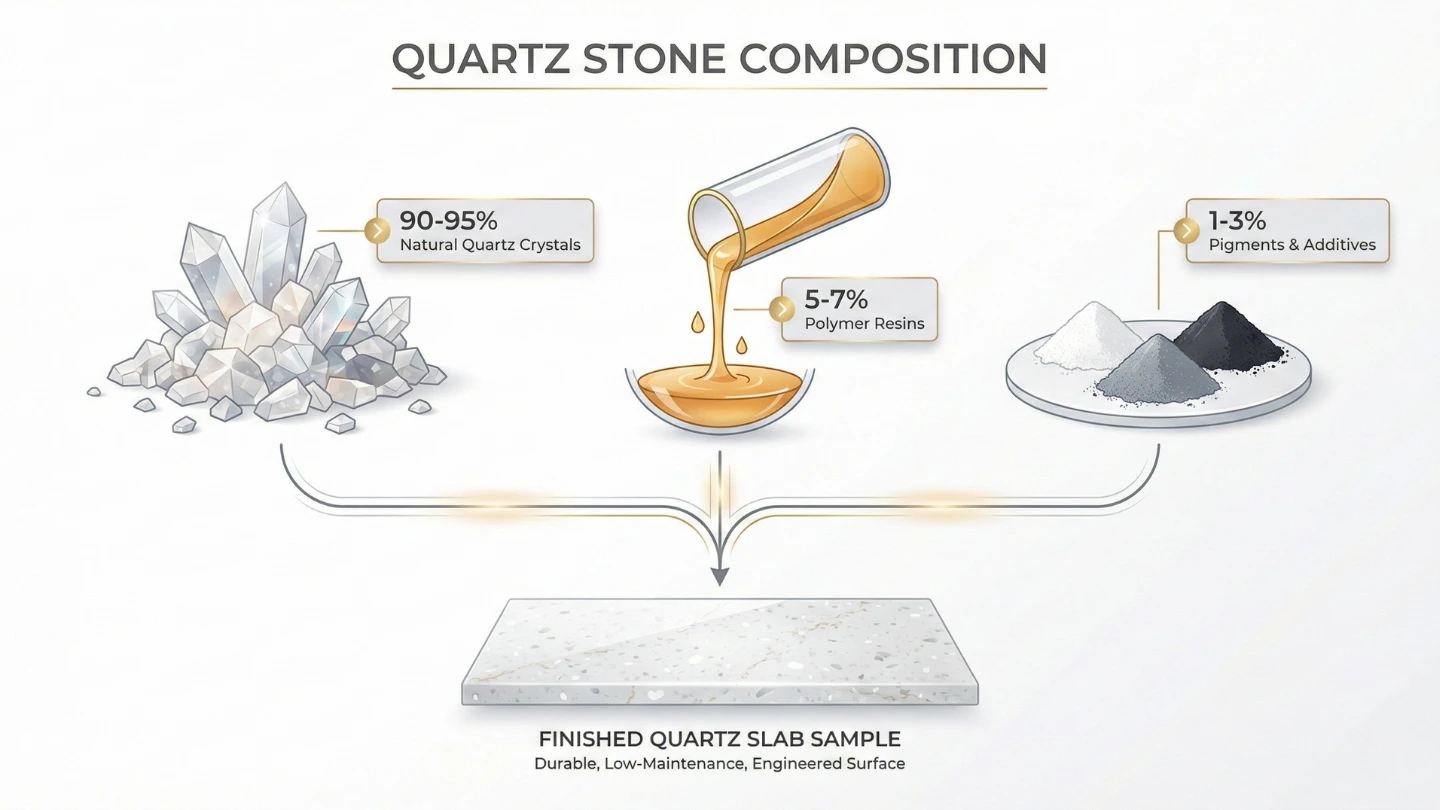
The key distinction here is important: whilst the name suggests it’s a natural material, quartz stone is actually an engineered product. The “quartz” in the name refers to the primary raw material—ground natural quartz crystals—which typically make up 90-95% of the finished product. The remaining 5-10% consists of polymer resins (which bind everything together) and pigments (which create colours and patterns).
This engineered nature is actually one of quartz stone’s greatest advantages. Because it’s manufactured rather than mined, quartz countertops offer consistency in colour and pattern that natural stones simply cannot match. Every slab from the same production batch looks virtually identical, making it much easier to plan your kitchen design.
Quartz Stone vs Natural Quartz: Understanding the Difference
Here’s where many Malaysian homeowners get confused. Natural quartz is a mineral—one of the most abundant on Earth. It’s the crystalline form of silicon dioxide and can be found in rocks like granite. However, natural quartz in its raw form isn’t suitable for countertops because it’s too brittle and porous.
Engineered quartz stone takes this natural mineral, processes it, and combines it with binding agents to create a surface that’s actually superior to natural stone in many practical ways. Think of it like this: natural quartz is the ingredient, whilst quartz stone is the finished product.
The Composition of Quartz Stone Countertops
Understanding what’s inside your quartz countertop helps explain why it performs the way it does. Let’s break down the three main components:
Natural Quartz Crystals (90-95%)
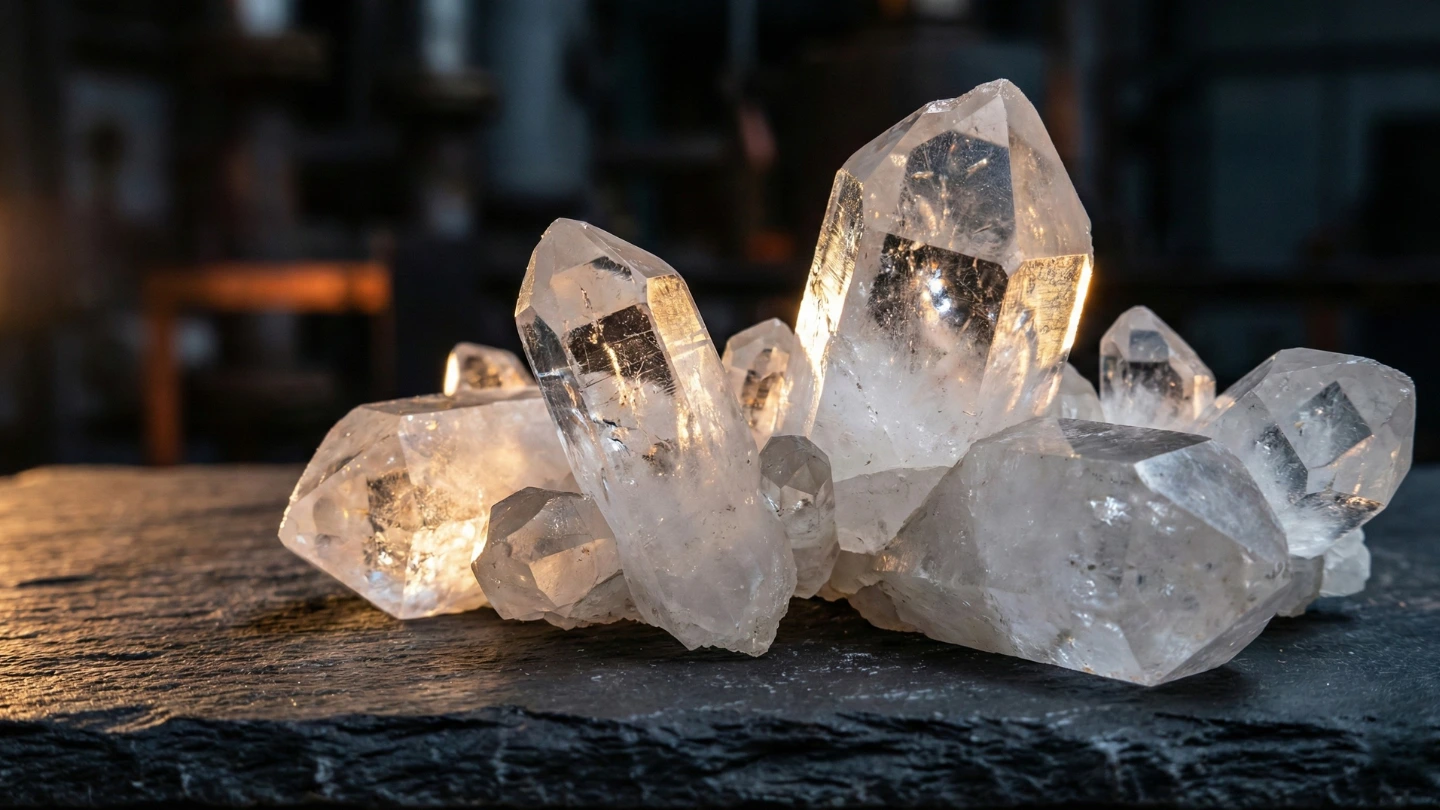
The foundation of any quartz countertop is ground natural quartz. Manufacturers source quartz crystals from quarries around the world, then crush and grind them into particles of varying sizes. Some manufacturers use fine powder, others use a mix of fine and coarse particles—the combination affects the final appearance and texture of the slab.
The high quartz content is what gives engineered quartz its exceptional hardness. Natural quartz ranks 7 on the Mohs hardness scale (diamond is 10), making quartz countertops highly resistant to scratches from everyday kitchen activities.
Polymer Resins (5-7%)
The resin component is what transforms loose quartz particles into a solid, cohesive slab. Most manufacturers use polyester or acrylic resins, though premium brands are increasingly exploring more sustainable alternatives.
The resin serves several crucial functions. It binds the quartz particles together, fills microscopic gaps to create a non-porous surface, and provides the slight flexibility that makes quartz countertops crack-resistant. This is a critical point that many homeowners don’t realise—the resin content is actually what makes quartz more durable than natural stone in many applications. Pure quartz would be brittle and prone to cracking, but the resin gives it resilience.
Pigments and Additives (1-3%)
This is where the magic of quartz design happens. Manufacturers add various pigments to create colours ranging from pure white to deep black, and everything in between. Some formulations include recycled glass, metallic flecks, or mirror chips for added visual interest.
The pigment distribution during manufacturing determines whether a slab has a uniform colour, subtle veining, or dramatic marble-like patterns. Premium brands invest heavily in developing realistic vein patterns that mimic natural Calacatta or Carrara marble—without the maintenance headaches of actual marble.
How Quartz Stone Is Made: The Manufacturing Process
The journey from raw quartz crystals to a beautiful countertop in your Malaysian kitchen involves several sophisticated manufacturing steps. Understanding this process helps explain why quality varies between brands—and why premium quartz brands command higher prices.
Step 1: Raw Material Selection and Preparation
Manufacturing begins with sourcing high-quality quartz crystals. Reputable manufacturers are selective about their quartz sources, testing for purity and consistency. The crystals are then cleaned to remove impurities that could affect the final product’s appearance or performance.
Once cleaned, the quartz is crushed and ground into particles. Different manufacturers use different particle size distributions—some prefer uniformly fine particles for a smooth, consistent look, whilst others deliberately mix coarse and fine particles to create more natural-looking patterns.
Step 2: Mixing and Blending
The ground quartz is transferred to industrial mixers where it’s combined with polymer resins and pigments. This stage is where each manufacturer’s proprietary formulas come into play. The exact ratios, the type of resin used, and the mixing technique all affect the final product’s characteristics.
For patterned slabs designed to mimic marble or granite, manufacturers may use multiple mixing stages with different coloured batches to create veining effects. This is a highly skilled process—creating convincing natural stone patterns requires both advanced technology and artistic expertise.
Step 3: Compaction Under Vacuum
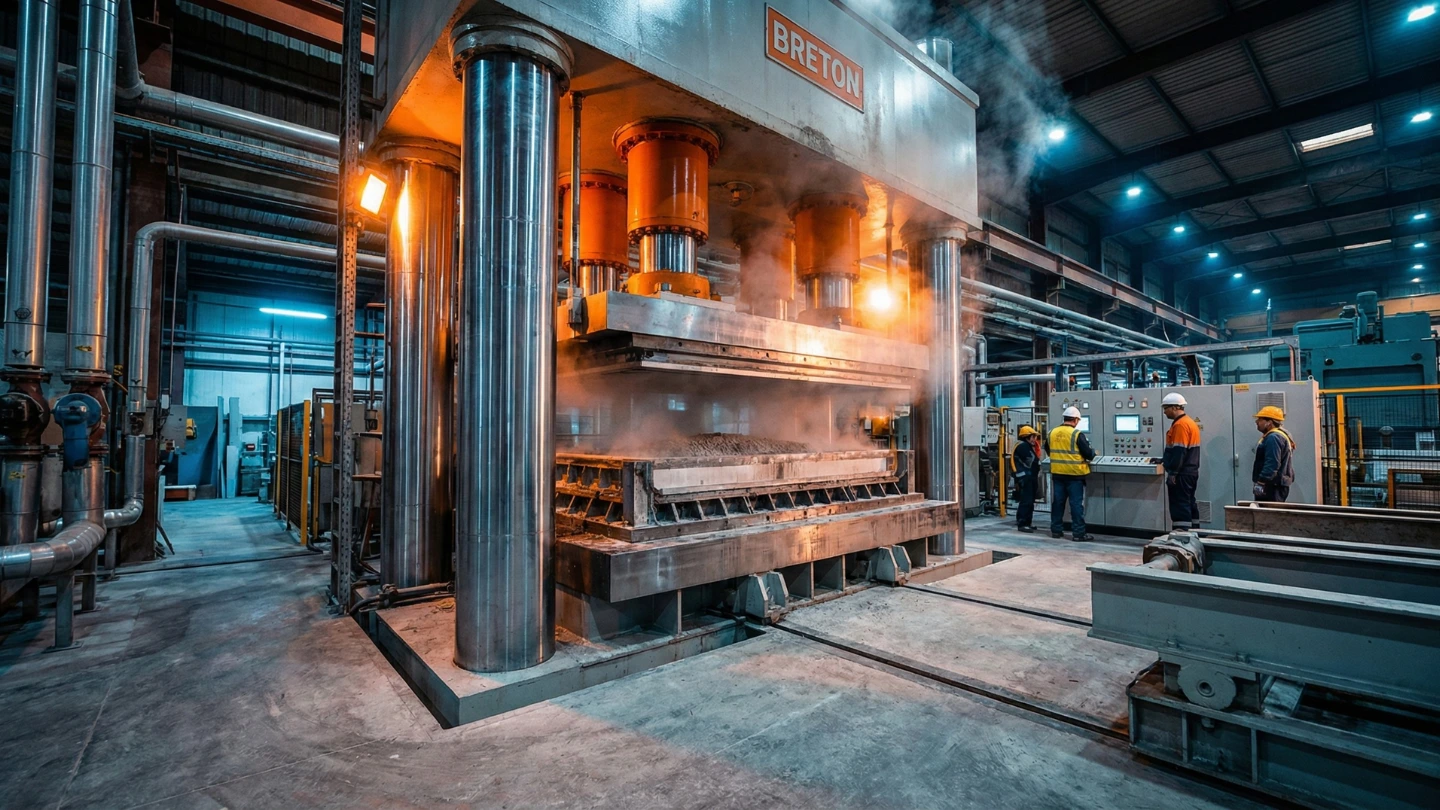
This is the most critical stage in quartz manufacturing. The mixed material is poured into moulds and subjected to a process called Breton technology (named after the Italian company that pioneered it) or similar vacuum compaction methods.
The mixture is vibrated under intense vacuum conditions whilst being compressed with tremendous force—typically around 100 tonnes of pressure. The vacuum removes air pockets, whilst the vibration ensures the material settles evenly. This combination is what gives quartz its non-porous nature. Without proper vacuum compaction, the finished slab would contain air bubbles that could trap moisture and bacteria.
Step 4: Curing and Hardening
After compaction, the slabs move to curing ovens where they’re heated to temperatures around 85-100°C. This heat activates the resin, causing it to polymerise and harden. The curing process typically takes 30-45 minutes, though exact times vary by manufacturer and slab thickness.
Some premium manufacturers use additional curing stages or modified temperatures to achieve specific performance characteristics. The curing process is carefully controlled—too little heat results in a soft, easily damaged surface, whilst too much can cause discolouration or structural weaknesses.
Step 5: Gauging and Calibration
Once cured, each slab passes through calibration machines that grind both surfaces to achieve uniform thickness. Standard quartz slabs are typically 20mm thick for countertop applications, though some manufacturers offer 12mm, 15mm, or 30mm options for specific uses.
This step ensures that every slab meets exact specifications—crucial for professional fabrication and installation. Inconsistent thickness would cause problems during templating and cutting, potentially resulting in uneven countertops or wasted material.
Step 6: Polishing and Finishing
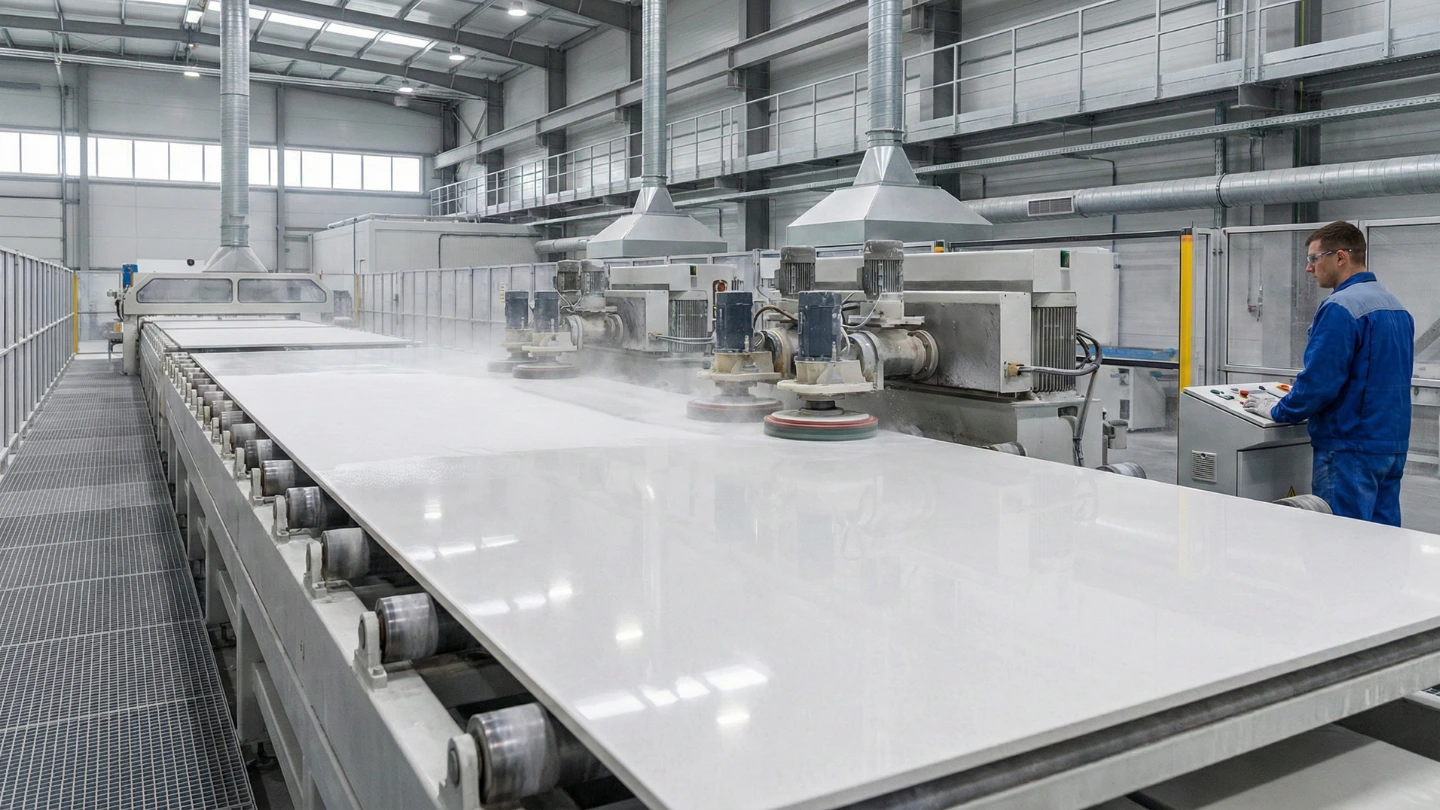
The final manufacturing stage involves polishing the slab surface to achieve the desired finish. Most quartz countertops have a polished (glossy) finish, though honed (matte) finishes are increasingly popular for contemporary designs.
Industrial polishing machines use progressively finer abrasives to bring out the material’s lustre. A typical polishing sequence might start with 50-grit abrasives and progress through 400, 800, 1500, and finally 3000-grit pads. The result is the smooth, reflective surface that makes quartz countertops so visually appealing.
Step 7: Quality Control and Inspection
Before leaving the factory, each slab undergoes rigorous quality control checks. Inspectors look for colour consistency, surface defects, dimensional accuracy, and structural integrity. Premium manufacturers like Caesarstone and Silestone have particularly stringent QC protocols—it’s one reason their products command premium prices but deliver consistent quality.
Slabs that don’t meet specifications are either rejected or downgraded. This is why purchasing from reputable brands matters—you’re paying not just for the material, but for the quality assurance process behind it.
Why the Manufacturing Process Matters for Malaysian Homeowners
You might wonder why understanding the manufacturing process is relevant to your kitchen renovation. The answer lies in quality variation and long-term performance.
Quality Varies Significantly Between Manufacturers
Not all quartz is created equal. The quality of raw materials, precision of the manufacturing process, and rigour of quality control all affect the finished product. Budget quartz from lesser-known manufacturers may use lower-quality resins that yellow over time, or insufficient vacuum compaction that leaves microscopic pores where bacteria can harbour.
This is particularly relevant in Malaysia’s tropical climate, where high humidity and heat can accelerate material degradation in lower-quality products. Investing in reputable quartz brands ensures your countertop performs well in local conditions.
Understanding Composition Helps You Avoid Scams
Unfortunately, the Malaysian market has seen cases of compressed marble being sold as quartz. Knowing what genuine quartz stone is—and isn’t—helps you identify authentic products and avoid costly mistakes.
Compressed marble (also called engineered marble or cultite) uses marble dust instead of quartz crystals as its primary component. It’s significantly less durable, more prone to staining, and not suitable for kitchen countertops. Yet unscrupulous sellers sometimes market it as “quartz” to unsuspecting homeowners.
Resin Content Affects Heat Resistance
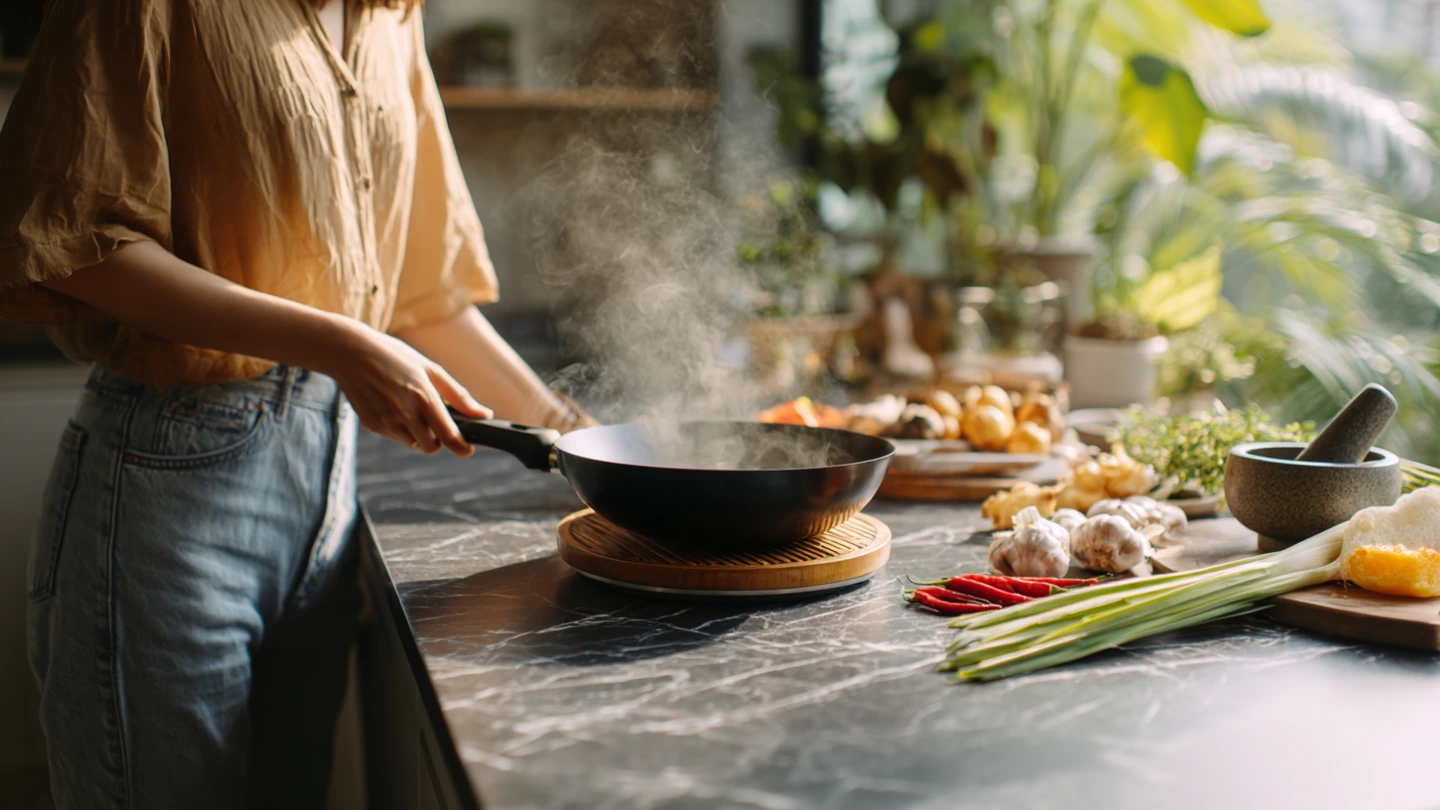
One important limitation of quartz stone is its heat sensitivity. The polymer resins that bind quartz particles together can be damaged by high temperatures—typically above 150°C. This is why you should always use trivets or heat pads when placing hot pots and pans on quartz surfaces.
For Malaysian kitchens where wok cooking and high-heat techniques are common, understanding this limitation helps you use your countertop properly. The resin doesn’t make quartz “bad”—it’s what makes quartz crack-resistant and non-porous—but it does require sensible heat management.
Key Properties of Quartz Stone
Now that you understand what quartz is and how it’s made, let’s examine the properties that make it such a popular choice for Malaysian homes.
Non-Porous Surface
Unlike natural stones like granite or marble, properly manufactured quartz is virtually non-porous. This means liquids, oils, and bacteria cannot penetrate the surface. For Malaysian kitchens where cooking involves turmeric, chilli oil, and other potentially staining ingredients, this property is invaluable.
The non-porous nature also means quartz never needs sealing—a significant advantage over natural stone that requires periodic resealing to maintain stain resistance.
Exceptional Durability
With a Mohs hardness rating of 7 (compared to granite at 6-7 and marble at 3-4), quartz is highly scratch-resistant. The resin content also makes it more impact-resistant than natural stone, so it’s less likely to chip or crack from everyday kitchen activities.
However, it’s worth noting that quartz can crack under extreme stress or if subjected to rapid temperature changes. Professional fabrication and installation is essential to ensure proper support and avoid stress points.
Consistent Appearance
Because quartz is engineered, manufacturers can achieve remarkable consistency between slabs. If you’re installing a large kitchen island or need multiple pieces to match perfectly, quartz offers predictability that natural stone cannot. This consistency also makes it easier for designers and homeowners to plan renovations with confidence.
Low Maintenance Requirements
Quartz requires minimal maintenance to keep it looking beautiful. Daily cleaning with mild soap and water is typically sufficient. There’s no need for special cleaners, periodic sealing, or intensive polishing routines. For busy Malaysian households, this low-maintenance nature is a significant practical advantage.
For specific cleaning guidance, especially for challenging stains like turmeric, check our guide on cleaning your countertop.
Design Versatility
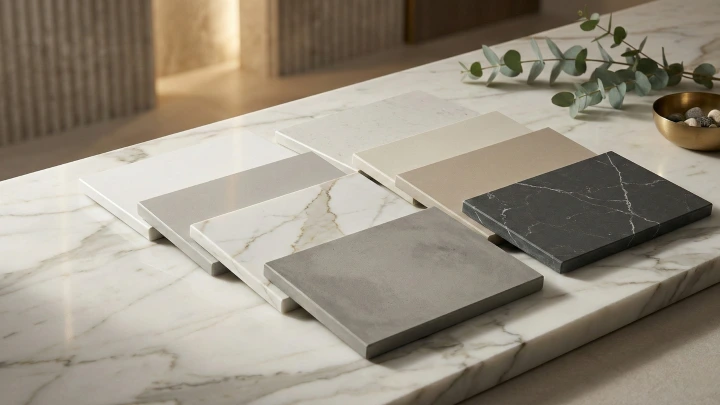
Modern manufacturing techniques allow quartz to mimic virtually any natural stone—from classic Carrara marble to exotic granite patterns. Solid colours, subtle speckles, dramatic veining—quartz can achieve looks that satisfy diverse design preferences. This versatility makes it suitable for everything from traditional Malaysian homes to contemporary minimalist designs.
Quartz Stone Pricing in Malaysia
Understanding the factors that influence quartz pricing helps you budget appropriately and recognise value. In Malaysia, quartz countertops vary significantly in price depending on brand, colour, and complexity.
Price Ranges by Brand (Supply and Install)
Based on current Malaysian market pricing for supply and installation:
Premium Brands:
- Caesarstone: RM159-814 per square foot
- Silestone: RM280-645 per square foot
Mid-Range Brands:
- Zenstone: RM110-160 per square foot
These prices include material, fabrication, and professional installation. The wide range within each brand reflects different collections and colour complexity—basic solid colours are typically more affordable, whilst designs that mimic exotic natural stones command premium prices.
Factors Affecting Price
Several factors influence the final cost of your quartz countertop:
Colour and Pattern Complexity: Slabs with intricate veining or multiple colours require more sophisticated manufacturing processes. The Calacatta-inspired designs from premium brands often sit at the top of the price range.
Brand Reputation and Quality Assurance: Established brands like Caesarstone and Silestone invest heavily in R&D, quality control, and warranty support. You’re paying for proven performance and peace of mind.
Slab Thickness: Standard 20mm slabs are most common and economical. Thicker 30mm options cost more but provide a more substantial look.
Edge Profile: Simple eased or bevelled edges are typically included in base pricing. More elaborate profiles like ogee or waterfall edges add to fabrication costs.
Installation Complexity: Cutouts for sinks and cooktops, corner joins, and support requirements all affect installation costs. A straightforward rectangular countertop costs less than a complex L-shaped design with multiple cutouts.
For a detailed breakdown of quartz pricing factors, read our comprehensive quartz stone cost guide for Malaysia.
How Quartz Compares to Other Countertop Materials
To put quartz in context, let’s briefly compare it to other popular countertop options in Malaysia.
Quartz vs Granite
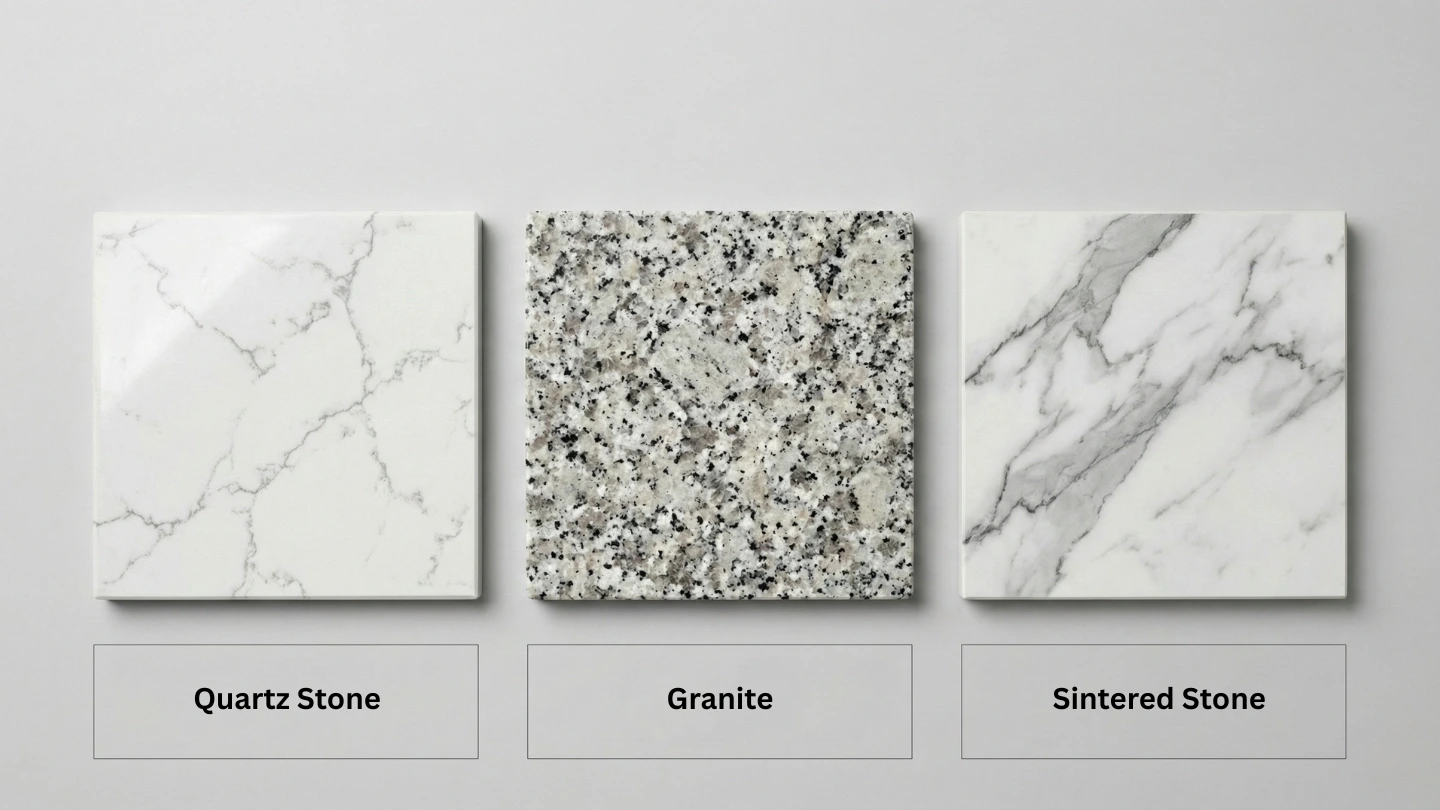
Granite is a natural stone quarried from the earth, whilst quartz is engineered. Granite offers unique, one-of-a-kind patterns but requires periodic sealing and can harbour bacteria in microscopic pores. Quartz provides more consistency and easier maintenance. For a detailed comparison, see our guide on quartz vs granite kitchen tops.
Quartz vs Sintered Stone
Sintered stone (like Dekton) is created through a different process that uses extreme heat and pressure without polymer resins. This makes sintered stone more heat-resistant and UV-stable than quartz—important considerations for outdoor use or kitchens with significant sun exposure. However, sintered stone is more brittle and requires more careful handling during fabrication. Learn more about quartz vs sintered stone to determine which suits your needs.
Quartz vs Porcelain Slab
Porcelain slabs share some characteristics with sintered stone—they’re made primarily from clay minerals fired at high temperatures. They offer excellent heat and UV resistance but can be brittle and prone to chipping at edges. For Malaysian homeowners weighing these options, our porcelain slab vs quartz comparison provides detailed guidance.
Quartz vs Solid Surface
Solid surface materials (like Corian) are entirely synthetic, made from acrylic or polyester resins with mineral fillers. They’re more affordable but less heat-resistant and scratch-resistant than quartz. For Malaysian kitchens with heavy cooking activity, quartz typically offers better long-term performance. Read our analysis on solid surface countertops for more insights.
Is Quartz Stone Right for Your Malaysian Home?
After understanding what quartz is and how it’s made, you can better assess whether it’s the right choice for your renovation. Here are some considerations specific to Malaysian homeowners:
Quartz Excels In:
High-humidity environments: Malaysia’s tropical climate means kitchens are often humid. Quartz’s non-porous surface resists mould and mildew growth, unlike some natural stones that can develop issues in humid conditions.
Busy family kitchens: If you cook frequently and want a surface that handles spills, stains, and daily use without fuss, quartz delivers. It stands up well to the demands of Malaysian cooking.
Consistent design schemes: If you want multiple countertops or a large island to match perfectly, quartz’s manufacturing consistency is a significant advantage.
Consider Alternatives If:
You need outdoor installation: Quartz is not UV-stable and will yellow or fade with prolonged sun exposure. For outdoor kitchens, sintered stone is a better choice.
You regularly place extremely hot items directly on the surface: Whilst quartz handles normal kitchen heat well, it’s not ideal if you frequently need to place scorching hot pots directly from the flame without trivets.
You want a truly unique, natural appearance: If the appeal of natural stone’s one-of-a-kind patterns is important to you, granite or quartzite might better suit your aesthetic preferences.
Choosing Quality Quartz for Your Kitchen
When shopping for quartz countertops in Malaysia, keep these quality indicators in mind:
Look for Established Brands
Brands like Caesarstone, Silestone, and Zenstone have proven track records and proper warranty support in Malaysia. They’ve invested in the technology and quality control that ensures consistent, durable products.
Verify Authenticity
Ask for brand certification and verify that you’re getting genuine product. Some sellers market inferior materials as premium brands. Authentic quartz from major manufacturers comes with documentation and can be verified through official channels.
Consider Certifications
Premium quartz brands often carry certifications like NSF-51 (food safety) and Greenguard (low emissions). For families concerned about food safety, NSF-51 certified quartz provides additional peace of mind.
Work with Reputable Fabricators
Even the best quartz slab can be ruined by poor fabrication. Choose experienced fabricators who specialise in engineered stone. They’ll have the proper equipment and expertise to cut, polish, and install your countertop correctly.
Conclusion
Quartz stone is a remarkable engineered material that combines the beauty of natural stone with enhanced durability and practicality. By understanding its composition—natural quartz crystals bound with polymer resins and pigments—and its sophisticated manufacturing process, you can appreciate why it performs so well in Malaysian kitchens.
The key takeaways for Malaysian homeowners are clear: quartz offers excellent stain resistance, low maintenance, and design versatility that suits our tropical climate and cooking habits. However, it does require sensible use—particularly regarding heat management—and benefits significantly from choosing reputable brands and professional installation.
Whether you’re building a new home or renovating your existing kitchen, quartz stone remains one of the most practical and beautiful countertop options available in the Malaysian market. Armed with the knowledge from this guide, you’re now better equipped to evaluate options, ask the right questions, and make a decision you’ll be happy with for years to come.
Ready to explore quartz options for your kitchen? Understanding the pros and cons of quartz stone kitchen tops can help you weigh the benefits against your specific needs and preferences.