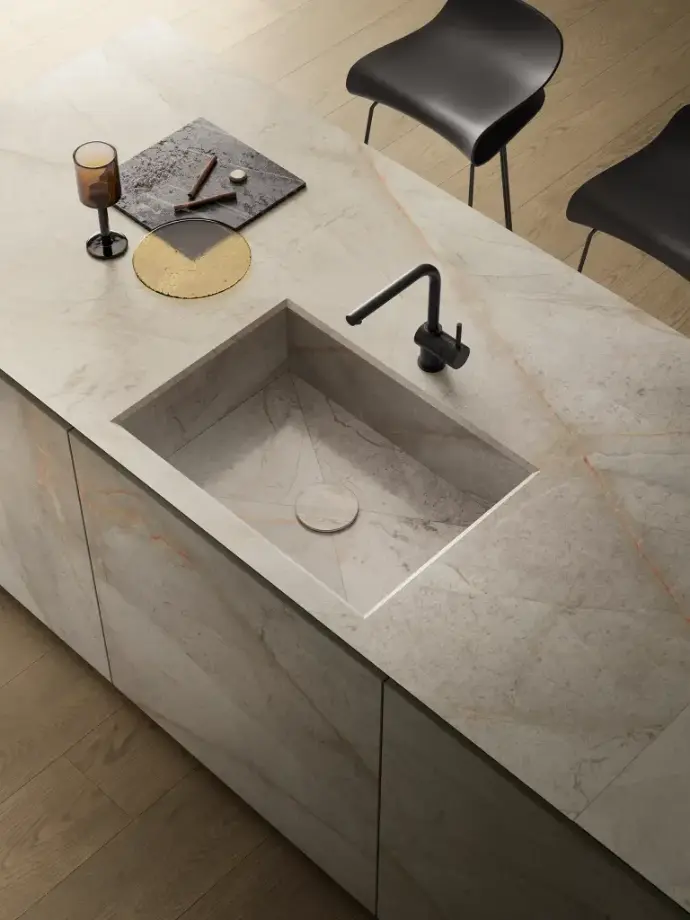
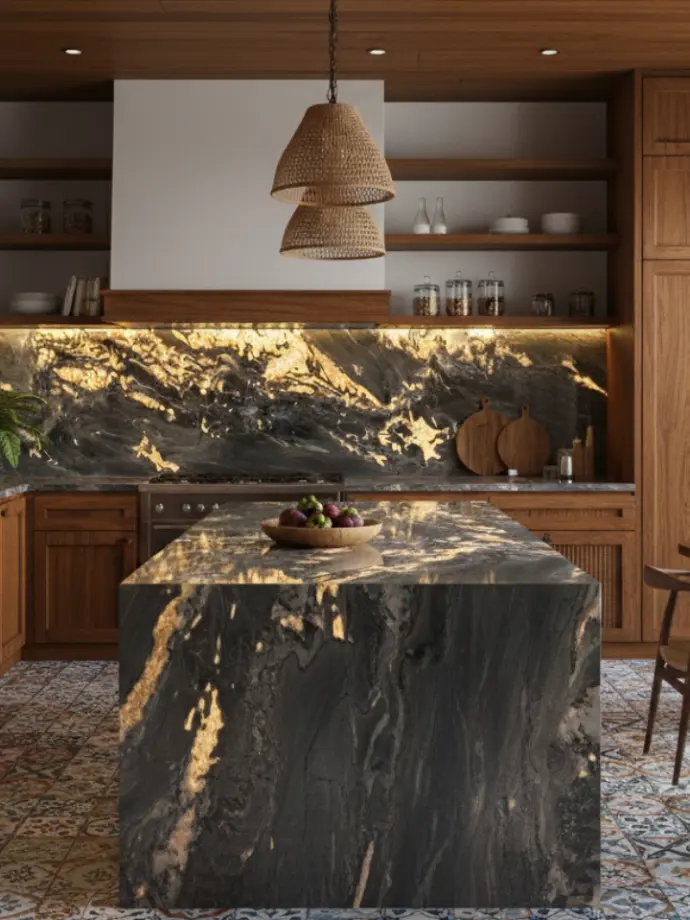
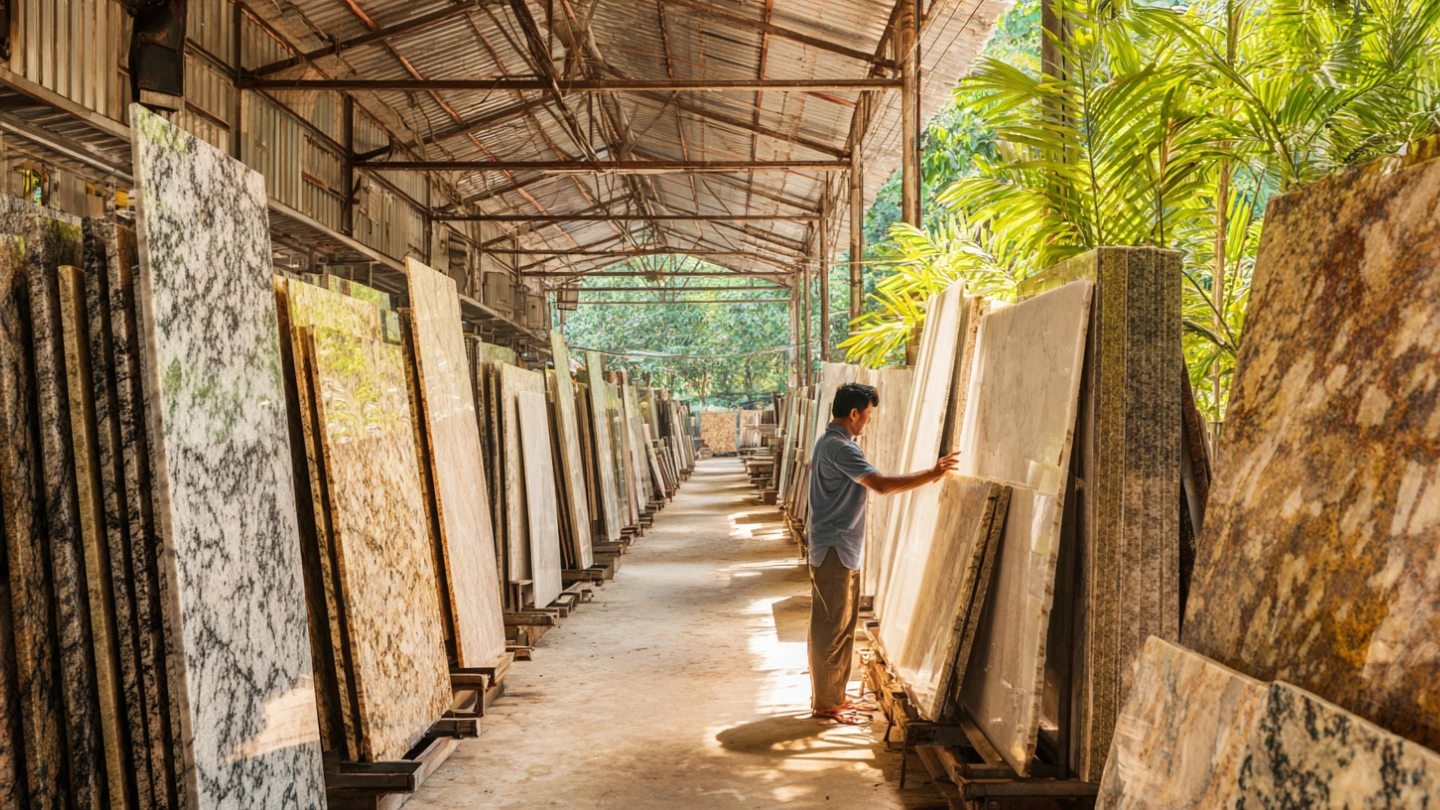
If you’ve ever visited a stone slab yard in Malaysia, you’ve probably noticed something confusing. A supplier points to a beautiful natural stone slab, calls it “quartzite,” and then another supplier shows you something that looks remarkably similar and calls it “granite.” You ask around, and suddenly it seems like nobody can agree on what’s what.
You’re not imagining things. The granite-quartzite naming confusion is one of the most common issues in Malaysia’s natural stone industry, and it genuinely affects the choices homeowners make — sometimes costing them money, performance, or both.
This guide explains exactly why these two names get mixed up, what the actual differences are between granite and quartzite, and most importantly, what you should ask your supplier before committing to a purchase.
Granite and Quartzite: Two Very Different Stones
Before we get into why the names get swapped around, it helps to understand what each stone actually is. Despite being lumped together at showrooms, granite and quartzite have fundamentally different origins.
What Is Granite?
Granite is an igneous rock, which means it formed from molten magma that cooled slowly beneath the Earth’s surface. This slow cooling process allows large mineral crystals to develop, giving granite its characteristic speckled appearance. The primary minerals in granite are quartz, feldspar, and mica — with feldspar typically making up the largest proportion.
Because granite forms deep underground under intense heat and pressure, it’s naturally hard and durable. It ranks around 6 to 7 on the Mohs hardness scale, making it resistant to scratches from everyday kitchen use. Granite has been a popular countertop material in Malaysian homes for decades, valued for its natural beauty and heat resistance.
What Is Quartzite?
Quartzite is a metamorphic rock, formed when sandstone (which is rich in quartz grains) is subjected to extreme heat and pressure over millions of years. This process fuses the quartz grains together so tightly that the resulting stone is often harder than granite — typically ranking 7 to 8 on the Mohs hardness scale.
Quartzite tends to have a more flowing, marble-like appearance compared to granite’s speckled look. It often features dramatic veining and can come in stunning whites, greys, and even soft pinks and blues. This visual similarity to marble — combined with superior hardness — is what makes quartzite increasingly popular amongst homeowners who want a marble aesthetic without marble’s fragility.
The Key Geological Difference
Here’s the simplest way to remember it: granite is born from fire (cooled magma), whilst quartzite is transformed by pressure (metamorphosed sandstone). They both contain quartz as a mineral component, but they’re formed through entirely different geological processes and have different mineral compositions.
This shared quartz content is actually one reason the naming confusion exists — but it’s far from the only one.
Why Malaysian Suppliers Mix Up the Names
The granite-quartzite naming swap doesn’t usually happen because suppliers are trying to deceive you. There are several legitimate reasons why the names get tangled, though the result is the same: homeowners end up confused.
The Commercial “Granite” Catch-All
In the international stone trade, “granite” has long been used as a commercial catch-all term for almost any hard natural stone that isn’t marble. This means quartzite, gneiss, schist, diorite, and several other rock types are routinely sold under the granite label. This isn’t unique to Malaysia — it’s a global industry practice that dates back decades.
When Malaysian suppliers import natural stone slabs from countries like Brazil, India, and Italy, the stones often arrive with commercial names rather than geological classifications. A slab of quartzite from Brazil might be labelled “Taj Mahal Granite” or “Fantasy Brown Granite” simply because the exporter classified it under the broad granite category.
Quartzite Sounds More Premium
In recent years, awareness of quartzite has grown amongst homeowners and interior designers. Quartzite is genuinely harder and often more visually striking than typical granite, which means it can command higher prices. Some suppliers have caught on to this and started relabelling certain granite slabs as “quartzite” to justify a premium.
This is where the naming confusion starts to become a problem. If you’re paying quartzite prices, you should be getting quartzite performance.
Genuine Geological Ambiguity
Nature doesn’t always draw clean lines between rock types. Some stones sit in a grey area between granite and quartzite — they might have characteristics of both, depending on the specific geological conditions under which they formed. Geologists themselves sometimes disagree on how to classify certain stones, so it’s not surprising that stone suppliers struggle with the same distinctions.
For example, some stones marketed as “quartzite” contain significant amounts of feldspar and mica (which would technically make them closer to granite or gneiss), whilst some “granites” have such high quartz content that they’re practically quartzite.
Language and Translation Barriers
Malaysia’s stone industry sources materials from all over the world. When slabs pass through multiple countries, languages, and distributors before reaching a Malaysian showroom, names can shift along the way. A stone correctly labelled as “quartzito” in Portuguese might be translated differently by the time it arrives at a Kuala Lumpur slab yard.
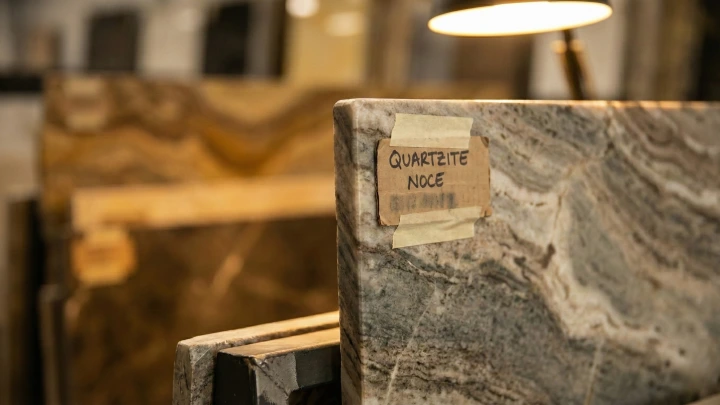
How This Naming Confusion Affects Your Countertop Decision
You might be thinking, “Does it really matter what the stone is called, as long as it looks good?” The answer is yes — it matters quite a bit, especially when you’re investing thousands of Ringgit in a surface you’ll use every day.
Performance Differences You’ll Feel Daily
Granite and quartzite behave differently in a kitchen. Understanding which stone you’re actually getting helps set realistic expectations for daily use.
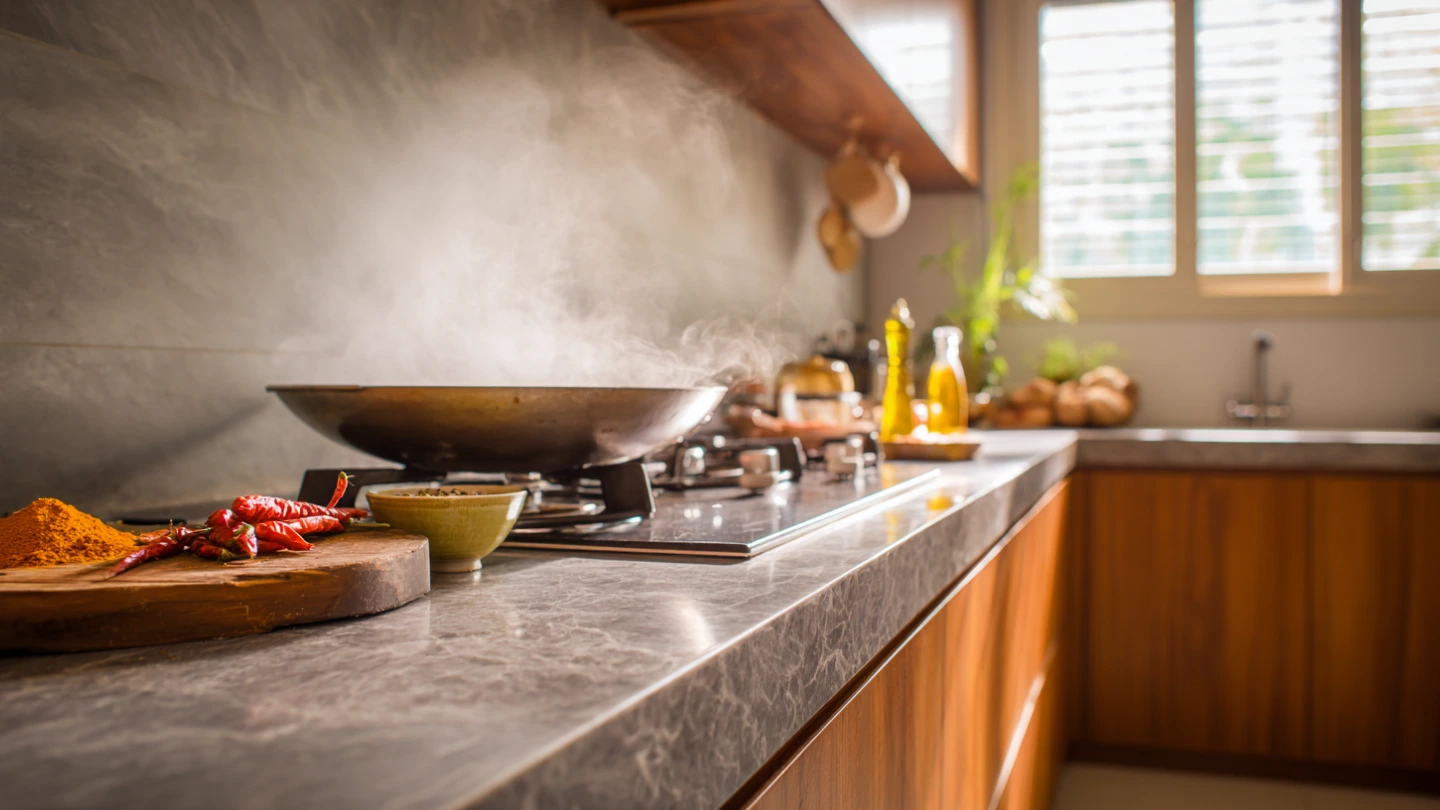
Porosity and staining: Granite is generally more porous than quartzite. In a Malaysian kitchen where turmeric, chilli paste, and coconut milk are everyday ingredients, porosity matters. Granite typically requires sealing every one to two years to maintain stain resistance, whilst high-quality quartzite — with its tightly fused quartz grains — is naturally less porous and may need less frequent sealing.
Heat resistance: Both stones handle heat well, which is important for Malaysian cooking that involves wok techniques and high-heat methods. However, quartzite generally tolerates heat slightly better because of its higher quartz content and denser structure.
Scratch resistance: Quartzite’s higher Mohs hardness rating means it resists scratches better than most granite varieties. For busy family kitchens, this can translate to a surface that stays looking newer for longer.
Durability in humid conditions: Malaysia’s tropical humidity affects natural stone over time. Denser stones with lower porosity — like true quartzite — generally perform better in high-humidity environments because they absorb less moisture.
Pricing Implications
If a supplier is selling you granite at quartzite prices, you’re overpaying. Conversely, if they’re selling genuine quartzite at granite prices, you might be getting excellent value — but you should still know what you have so you can care for it properly.
In the Malaysian market, natural stone pricing varies enormously based on the specific slab, its origin, rarity, and visual appeal. There’s no standard “granite costs X, quartzite costs Y” formula. However, knowing the true identity of your stone helps you compare prices more accurately and recognise when something doesn’t add up.
Maintenance Requirements Differ
Getting the stone identity wrong means following the wrong maintenance routine. Granite and quartzite have different sealing schedules, different sensitivities, and different long-term care needs.
For instance, if you treat a granite countertop as though it’s quartzite and skip regular sealing, you may end up with staining issues that could have been easily prevented. On the other hand, over-treating a dense quartzite with unnecessary sealants is a waste of money — though it won’t cause harm.
For guidance on keeping any stone countertop in top condition, our guide on cleaning your countertop — including turmeric stains covers the practical day-to-day care.
Don’t Confuse Quartzite with Quartz Stone
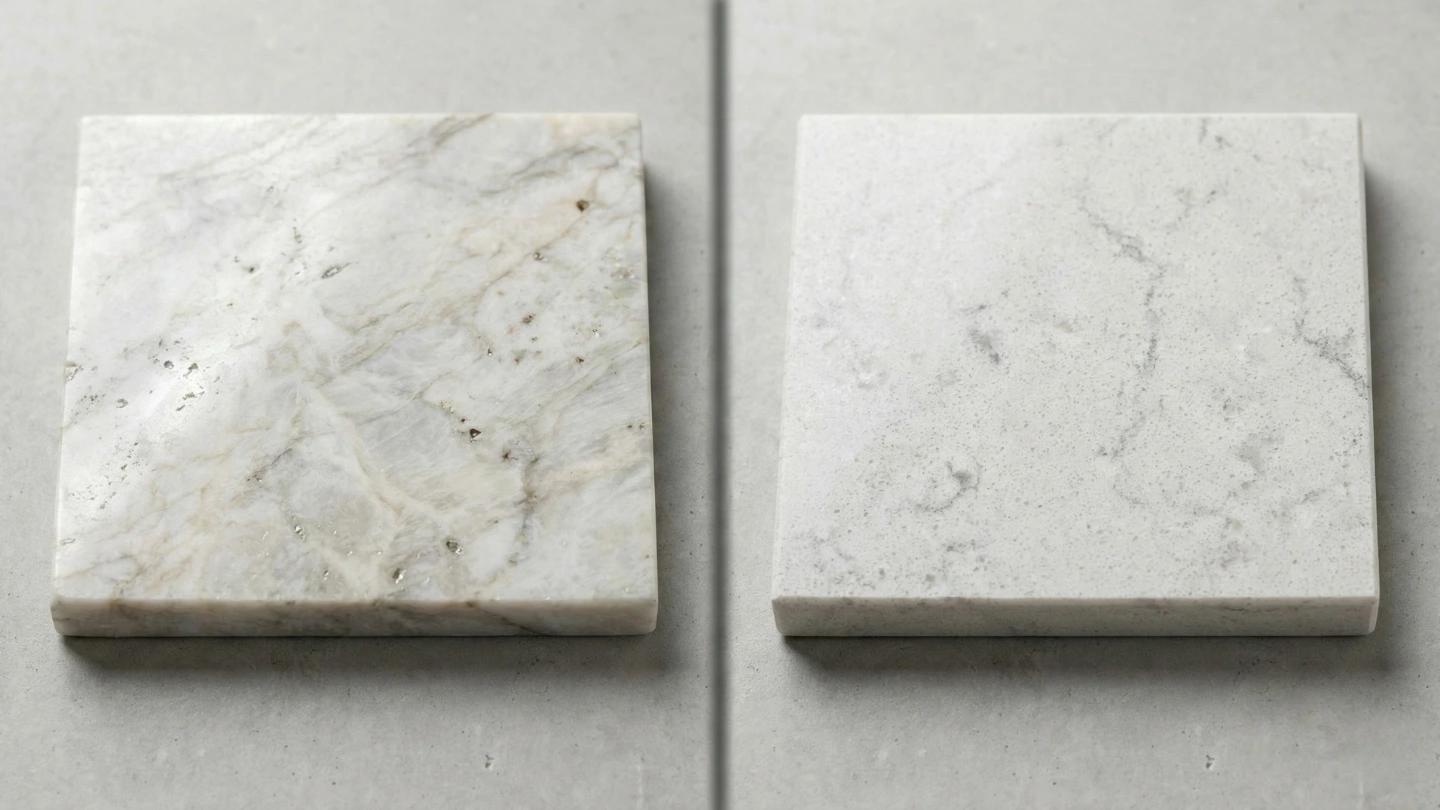
Here’s another layer of confusion that trips up many Malaysian homeowners: quartzite and quartz stone (also called engineered quartz) are completely different materials.
Quartzite is a natural stone — quarried from the earth, cut into slabs, and installed in its natural form. Every slab is unique, just like granite.
Quartz stone, on the other hand, is an engineered product manufactured by combining approximately 90-95% ground natural quartz crystals with polymer resins and pigments. It’s made in a factory, not extracted from a quarry. If you’d like to understand exactly what quartz stone is and how it’s made, we’ve written a comprehensive guide on the manufacturing process.
This three-way confusion between granite, quartzite, and quartz stone is remarkably common. Some suppliers even use “quartz” as a shorthand for all three, which helps nobody. When discussing options with your supplier, always clarify whether they’re referring to a natural stone (granite or quartzite) or an engineered product (quartz stone).
For a direct comparison between natural granite and engineered quartz, our guide on the difference between quartz and granite kitchen tops breaks down how these materials perform side by side.
How to Tell If You’re Getting Granite or Quartzite
Since you can’t always rely on what the supplier calls the stone, here are some practical ways to assess what you’re actually looking at in the showroom.
Visual Clues
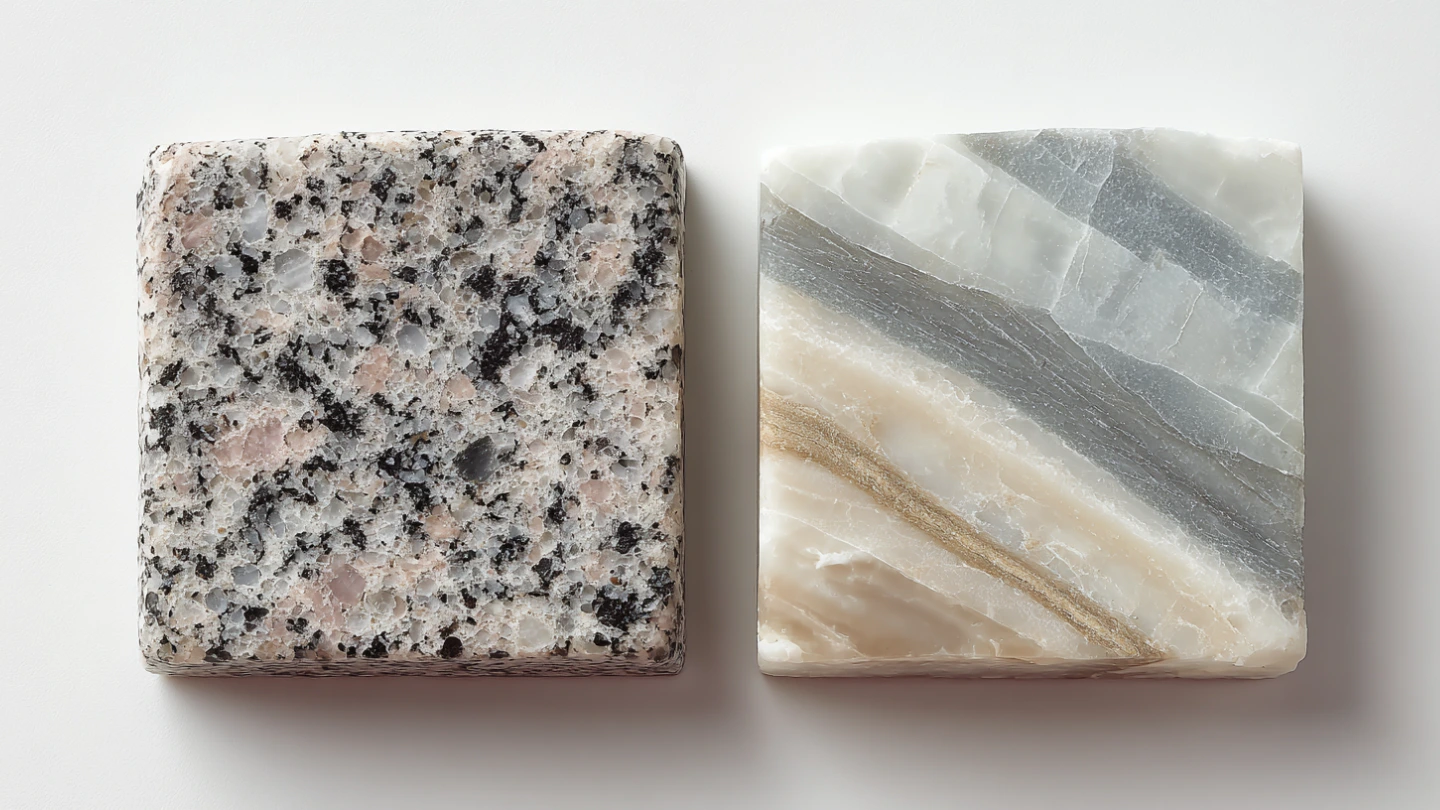
Granite typically has a speckled or granular appearance with visible crystals of different minerals. You’ll often see distinct flecks of black (mica), white or pink (feldspar), and translucent grey (quartz) scattered throughout the slab.
Quartzite tends to have a more uniform base colour with flowing veins or swirls, somewhat similar to marble. The overall appearance is usually smoother and less “busy” than granite. White and grey quartzites, in particular, can look strikingly similar to marble — which is actually one of the reasons they’re so popular.
The Scratch Test
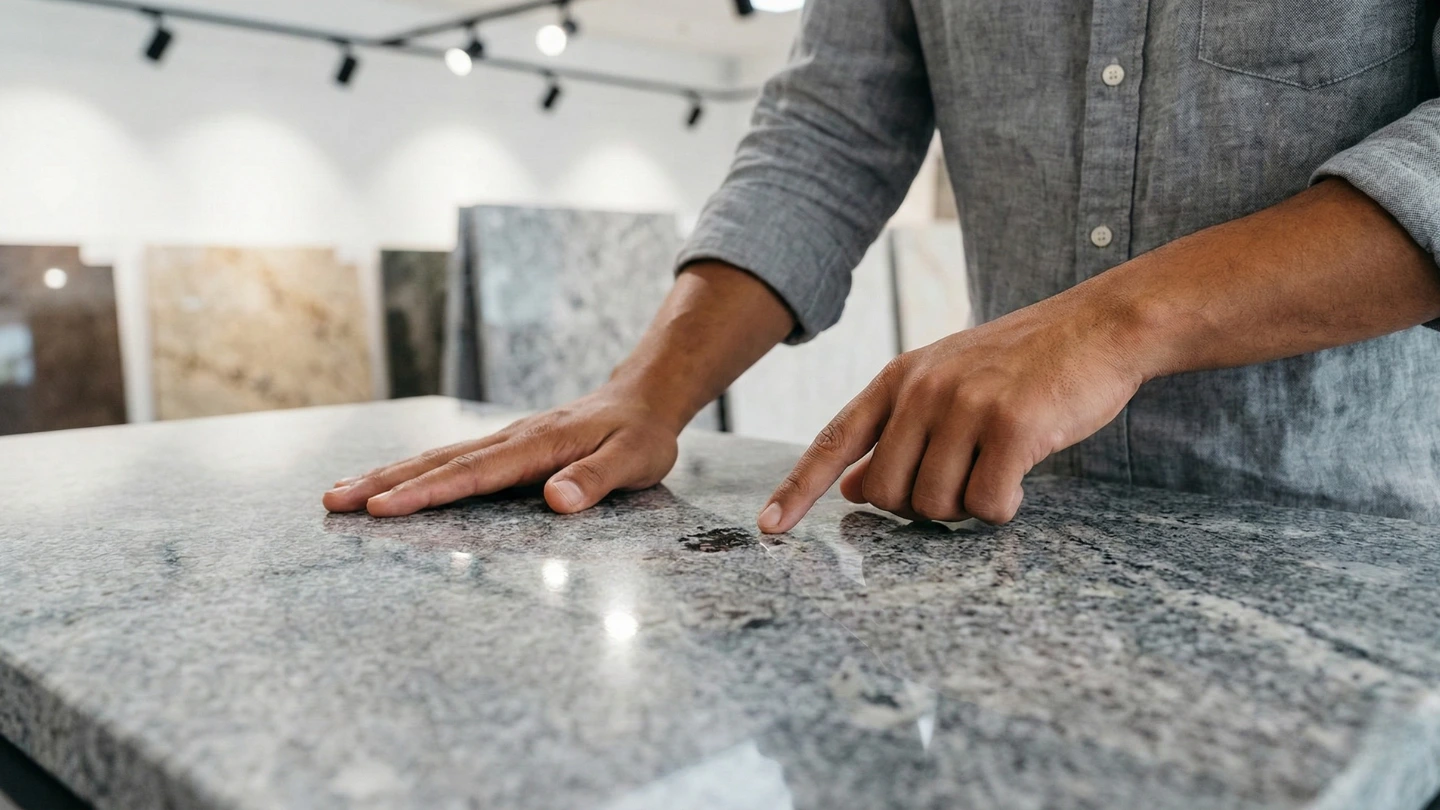
Because quartzite is harder than granite, one simple (if imperfect) test involves scratching a small, inconspicuous area with a steel nail or knife blade. True quartzite should resist scratching easily, whilst softer stones may show a faint mark. This isn’t a definitive geological test, but it can help distinguish between harder and softer stones.
Ask for the Geological Name
Reputable suppliers should be able to tell you the geological classification of any slab — not just its commercial name. Ask specifically: “Is this geologically granite, or is it quartzite?” If the supplier can’t answer or seems unsure, that’s a red flag.
Better yet, ask for the quarry of origin and the stone’s technical data sheet. Premium natural stone slabs from reputable quarries come with documentation that includes mineral composition, absorption rates, and hardness ratings.
Request a Water Absorption Test
Quartzite generally absorbs less water than granite. You can test this by placing a few drops of water on the surface and observing how quickly it’s absorbed. If the water sits on the surface without darkening the stone for several minutes, it’s likely a denser stone like quartzite. If the stone darkens almost immediately, it’s more porous — likely granite or a softer stone.
What This Means for Malaysian Homeowners
Understanding the granite-quartzite distinction isn’t just academic knowledge — it directly impacts your renovation experience.
Make More Informed Comparisons
When you’re comparing quotes from different countertop suppliers, knowing the true identity of each stone lets you compare like with like. A quote for genuine Brazilian quartzite should be evaluated differently from a quote for Indian granite, even if both suppliers call their product by similar-sounding names.
For a broader view of all available countertop options in the Malaysian market, including both natural and engineered materials, our complete guide to kitchen countertop materials in Malaysia compares 14 different options.
Set Realistic Expectations
Every natural stone has strengths and limitations. Granite is an excellent, time-tested kitchen surface — but it does need sealing, and some varieties are more porous than others. Quartzite offers superior hardness and density — but it’s also more expensive and can be trickier to fabricate due to its hardness.
Neither stone is “better” in absolute terms. The best choice depends on your priorities: budget, maintenance tolerance, aesthetic preference, and how you use your kitchen. The important thing is that you know which stone you’re actually getting, so your expectations match reality.
There are plenty of myths about stone countertops that circulate amongst Malaysian homeowners. Knowing the basic differences between stone types helps you see through the marketing noise and focus on what actually matters for your home.
Watch Out for Mislabelling — It Happens in Other Materials Too
The granite-quartzite naming issue isn’t the only mislabelling problem in Malaysia’s countertop market. We’ve documented cases of compressed marble being sold as quartz — a far more serious issue because compressed marble performs dramatically worse than genuine quartz in kitchen applications.
The lesson is consistent: always verify what you’re buying, not just what it’s called. Ask questions, request documentation, and work with suppliers who are transparent about their materials.
Questions to Ask Your Supplier Before Buying
To protect yourself from the granite-quartzite naming confusion, here’s a straightforward checklist of questions to raise with any natural stone supplier.
“What is the geological classification of this stone?” — Don’t accept vague answers like “it’s a type of granite.” You want to know if it’s igneous (granite), metamorphic (quartzite, marble), or something else entirely.
“Where was this stone quarried?” — Knowing the country and quarry of origin helps you research the stone independently. Brazilian quartzites like Taj Mahal, for example, are well-documented and their properties are widely known.
“Can you provide a technical data sheet?” — This should include water absorption rates, flexural strength, and mineral composition. Reputable stone comes with this documentation.
“What sealing schedule does this stone require?” — The answer reveals how porous the stone is, which in turn tells you something about its true nature. Very low porosity suggests quartzite; moderate porosity points towards granite.
“What’s the Mohs hardness rating?” — Granite typically falls around 6-7, whilst quartzite ranges from 7-8. This isn’t a perfect classifier on its own, but it adds to the picture.

Conclusion
The reason some suppliers call granite “quartzite” — and vice versa — comes down to a mix of commercial naming conventions, marketing incentives, genuine geological ambiguity, and simple miscommunication. None of this is your fault as a homeowner, but it is something you need to navigate carefully.
The practical takeaway is straightforward: don’t rely solely on the name a supplier gives a stone. Instead, look at the stone’s physical characteristics, ask for geological classification and documentation, and understand the performance differences between granite and quartzite so you can make a decision based on facts rather than labels.
Both granite and quartzite are beautiful, durable natural stones that can serve Malaysian kitchens well for decades. The key is knowing exactly which one you’re investing in — so you care for it correctly, pay a fair price, and end up with a countertop that truly meets your expectations.