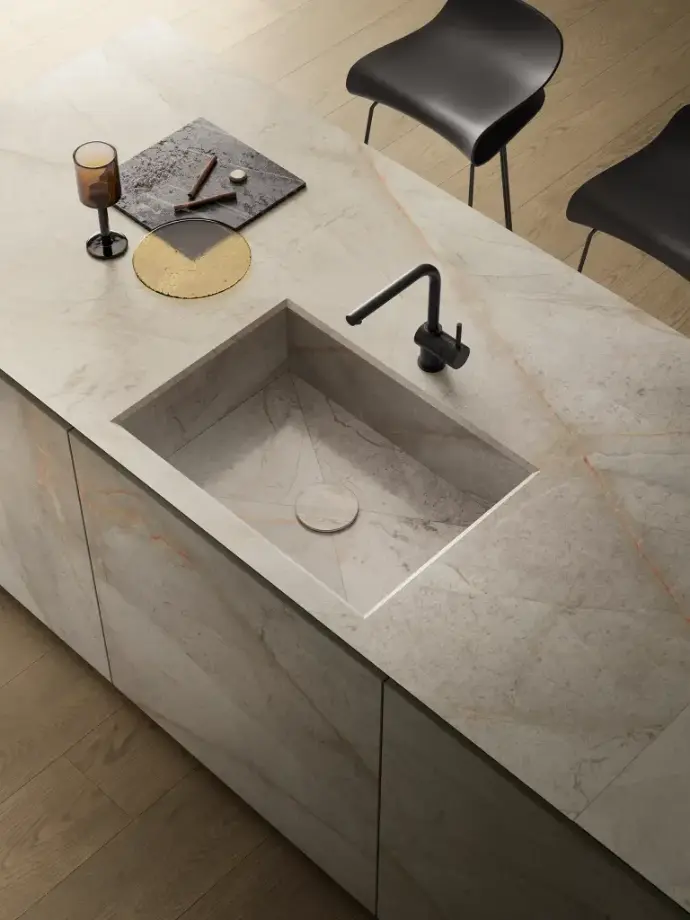
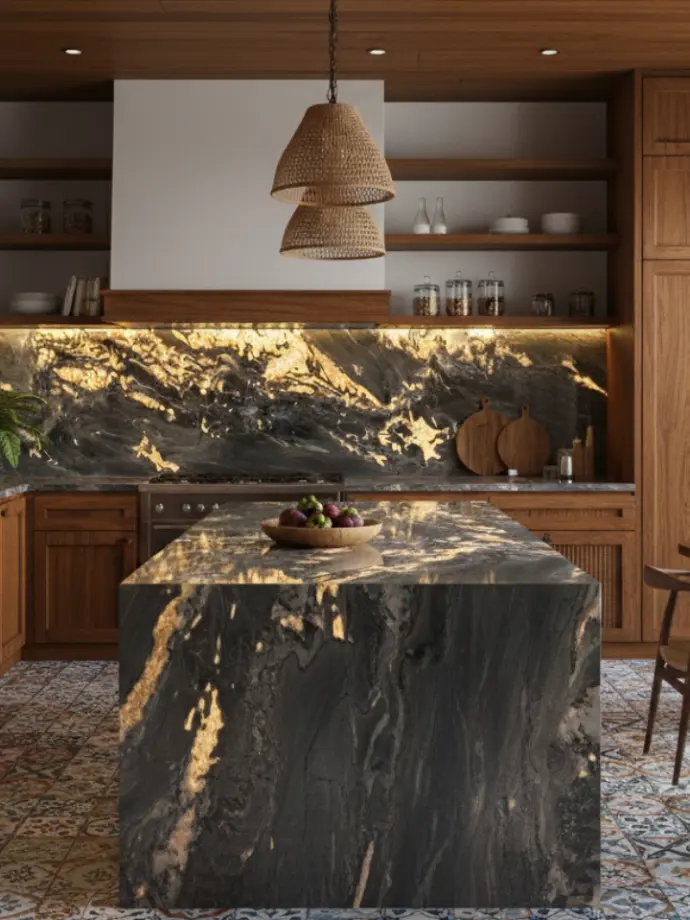
If you’ve ever lifted a smoking wok straight off the flame and wondered where to set it down, you’re not alone. For Malaysian homeowners who cook with serious heat—whether it’s high-temperature stir-frying, sambal tumis, or deep-frying keropok—countertop heat resistance isn’t just a nice feature. It’s essential.
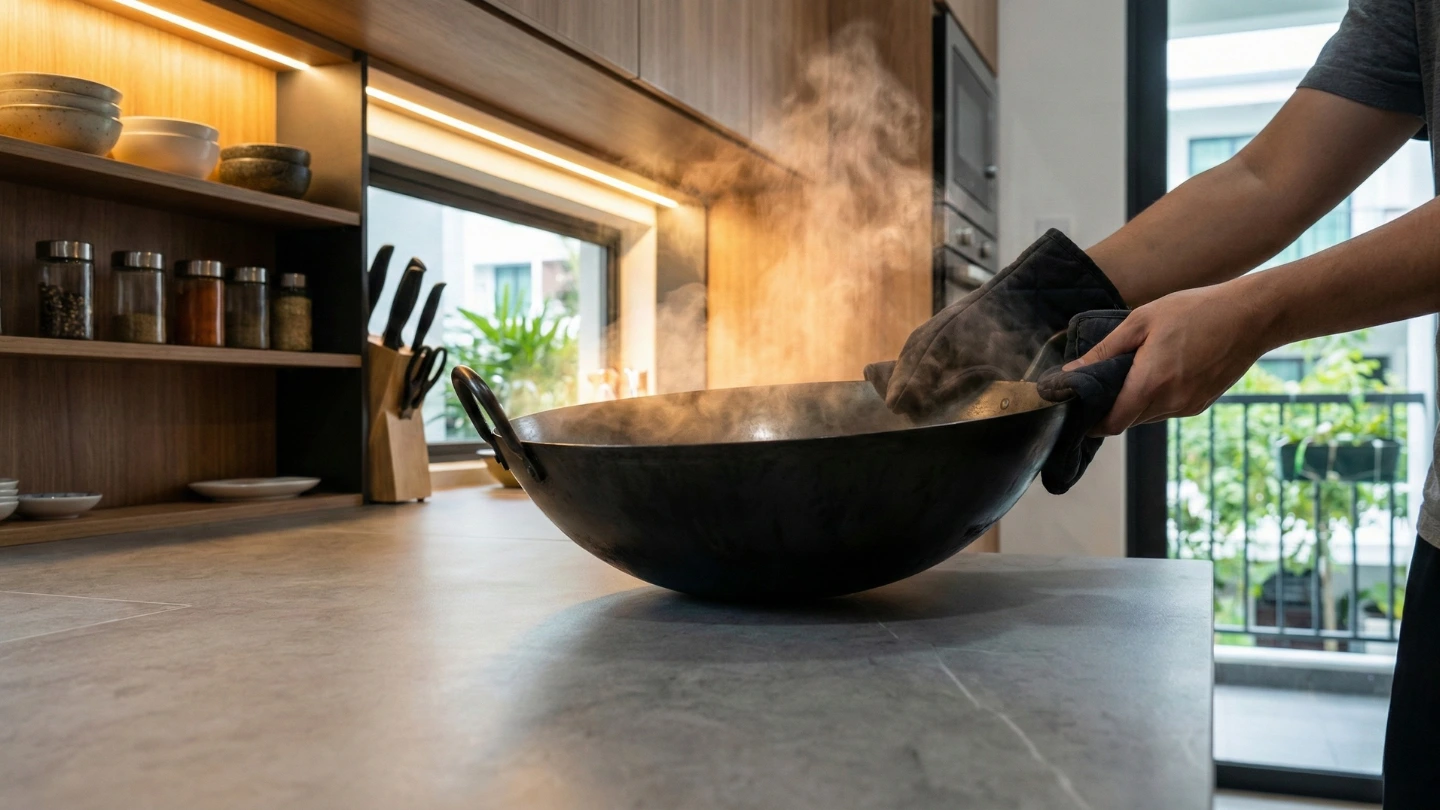
So, can you put a hot pan on a sintered stone countertop?
Yes, you absolutely can. Sintered stone is one of the most heat-resistant countertop materials available today, capable of withstanding temperatures that would damage or destroy other surfaces. But understanding why it handles heat so well—and how it compares to alternatives—will help you make the best decision for your Malaysian kitchen.
What Makes Sintered Stone So Heat Resistant?
The secret lies in how sintered stone is manufactured. Unlike other engineered surfaces that rely on resins or adhesives, sintered stone is created through an extreme manufacturing process that fundamentally changes the material’s structure.
The Manufacturing Process
Sintered stone begins as a carefully selected blend of natural minerals—primarily quartz, feldspar, silica, and natural clite pigments. These raw materials are ground into fine particles and then subjected to two extreme conditions simultaneously:
- Massive pressure – approximately 400 bar (equivalent to 5,800 psi)
- Extreme temperature – exceeding 1,200°C
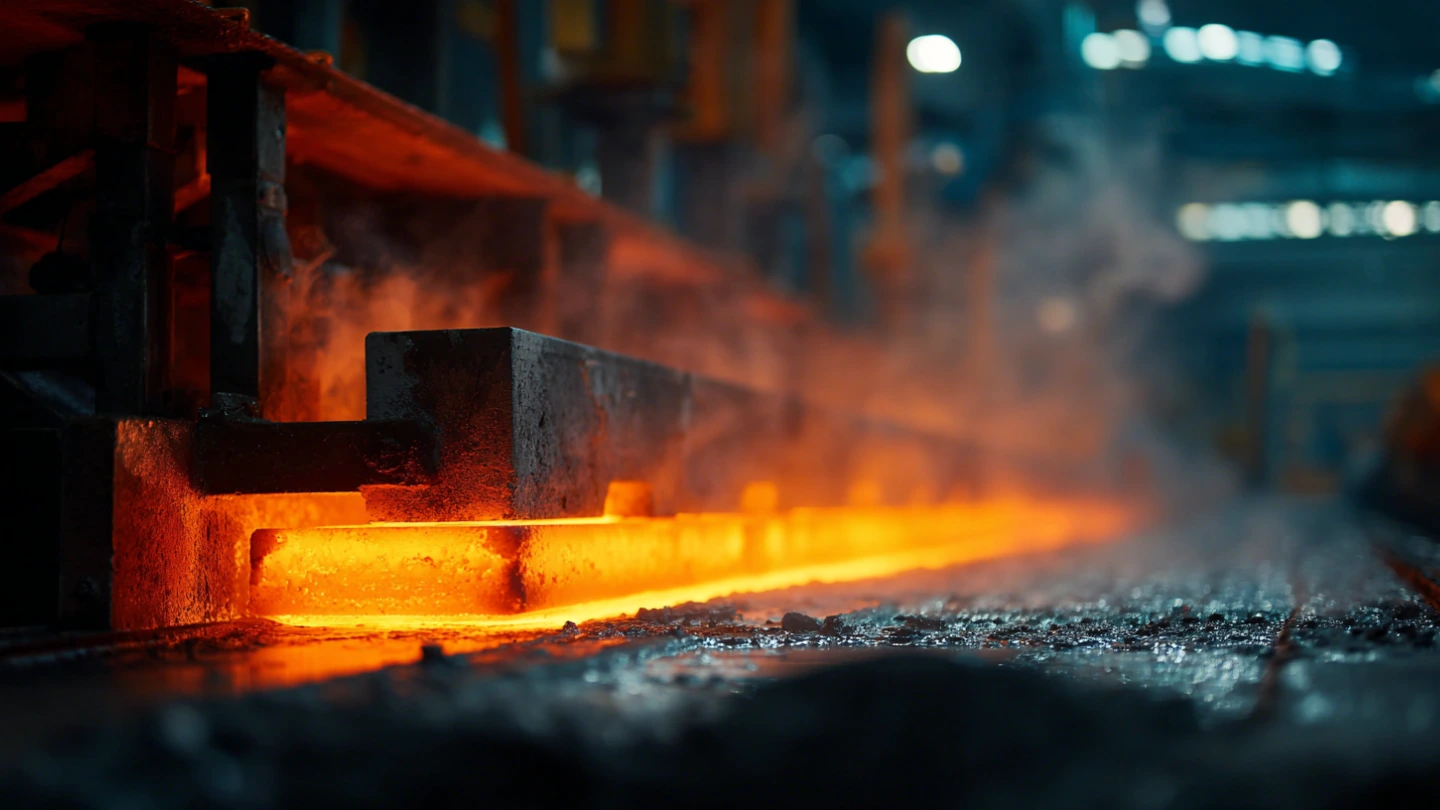
This process, called sintering, mimics what happens deep within the earth over millions of years—but achieved in a controlled factory environment within hours. The result is a material where particles fuse together at a molecular level, creating an incredibly dense, non-porous surface.
Why This Matters for Heat Resistance
When sintered stone is fired at temperatures above 1,200°C during manufacturing, it becomes inherently stable at temperatures far below its creation point. A hot wok from your stove typically reaches 200-300°C. A pan straight from the oven might hit 250°C. Neither comes close to challenging a material that was literally born in temperatures four to five times higher.
This isn’t marketing speak—it’s basic physics. You cannot damage sintered stone with household cooking temperatures because the material has already survived conditions far more extreme than anything your kitchen can produce.
Direct Hot Pan Contact: What Actually Happens
When you place a hot pan directly on a sintered stone countertop, several things occur (or rather, don’t occur):
No thermal shock – Unlike materials that contain resins or have variable density, sintered stone’s uniform molecular structure means it expands and contracts evenly when exposed to heat. There’s no risk of cracking from sudden temperature changes.
No scorching or discolouration – The surface won’t burn, yellow, or develop marks from heat exposure. This is a significant advantage over quartz countertops, which contain resin that can be damaged by high temperatures.
No surface degradation – The material won’t pit, bubble, or degrade over time from repeated heat exposure.
No trivets required – You can set hot pots and pans directly on the surface without protection. This isn’t just convenient—it’s liberating for busy Malaysian kitchens where counter space is precious and cooking happens at speed.
How Sintered Stone Compares to Other Materials
Understanding sintered stone’s heat resistance becomes clearer when you compare it to alternatives commonly found in Malaysian kitchens.
Sintered Stone vs Quartz
Quartz countertops are popular in Malaysia, and for good reason—they’re durable, beautiful, and low-maintenance. However, quartz contains polymer resins (typically 7-10% of the material) that bind the crushed quartz crystals together.
These resins have a critical weakness: they can be damaged by high heat. Placing a hot pan directly on quartz can cause the resin to discolour, scorch, or even crack. Most quartz manufacturers recommend using trivets for anything above 150°C—which includes most pans coming directly off the stove.
For Malaysian cooking styles that involve high-heat wok work and frequent hot pot placement, this limitation can be frustrating.
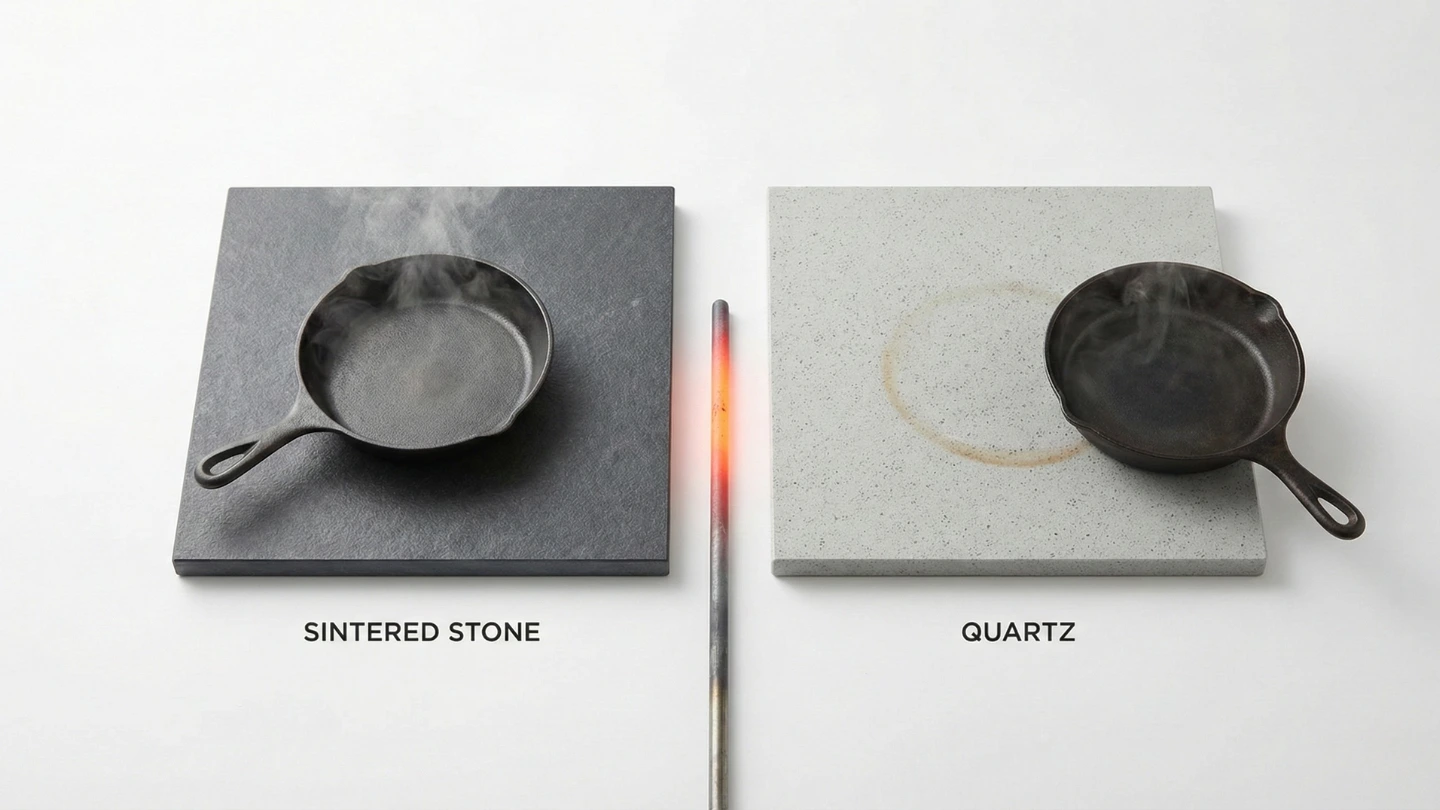
| Feature | Sintered Stone | Quartz |
|---|---|---|
| Maximum safe temperature | 300°C+ (direct contact safe) | 150°C (trivets recommended) |
| Hot pan placement | Safe without protection | Risk of damage |
| Thermal shock resistance | Excellent | Moderate |
| Resin content | None | 7-10% |
Sintered Stone vs Porcelain Slab
There’s often confusion between sintered stone and porcelain slab—they’re related but not identical materials.
Both are fired at high temperatures (1,200°C+), making them highly heat resistant. The key differences lie in their composition, density, and intended applications. Sintered stone typically achieves greater density and is specifically engineered for countertop applications, whilst porcelain slabs originated from tile manufacturing and vary more widely in quality.
Both can handle hot pans safely. However, sintered stone brands like Dekton have been specifically engineered and tested for countertop heat exposure, whilst not all porcelain slabs meet the same standards.
Sintered Stone vs Granite
Natural granite is formed deep within the earth under extreme heat and pressure, making it naturally heat resistant. You can place hot pans on granite without damage in most cases.
However, granite requires periodic sealing, can absorb liquids if the seal fails, and varies significantly in quality depending on the quarry source. Sintered stone offers more consistent performance with zero maintenance requirements.
Sintered Stone vs Solid Surface
Solid surface materials (like Corian) are made from acrylic or polyester resins. These materials have poor heat resistance—placing a hot pan directly on solid surface can cause burns, warping, or permanent marks.
For Malaysian kitchens with heavy cooking demands, solid surface is generally not recommended as a primary countertop material where heat exposure is common.
Real-World Heat Scenarios in Malaysian Kitchens
Let’s examine specific cooking scenarios common in Malaysian homes and how sintered stone performs:
Wok Cooking
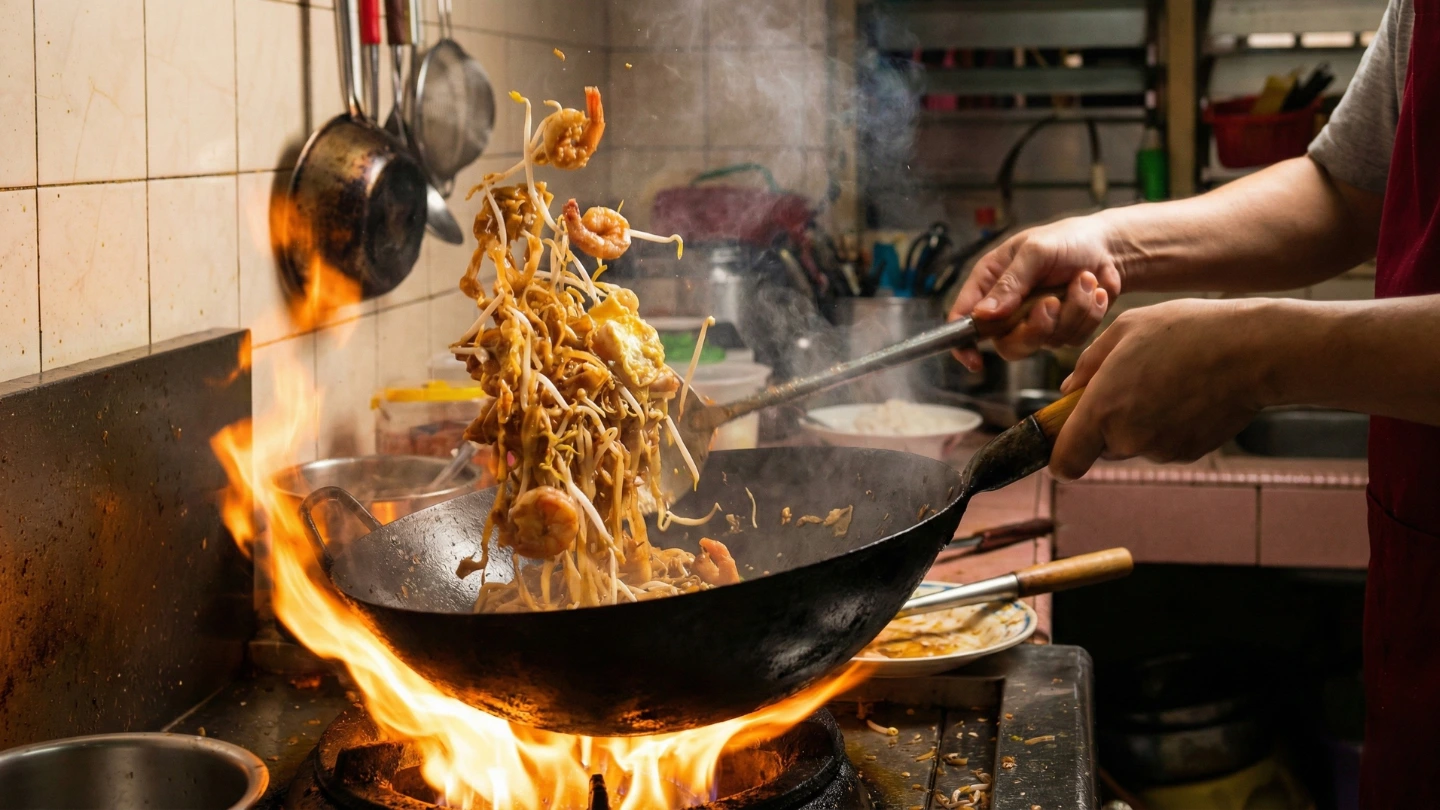
Traditional wok cooking is central to Malaysian cuisine. Whether you’re preparing char kuey teow, nasi goreng, or a simple stir-fry, the wok reaches extremely high temperatures—often 250-300°C for proper wok hei.
With sintered stone, you can lift that smoking wok and place it directly on your countertop without hesitation. No scrambling for trivets. No worrying about damage. This practical freedom matters when you’re cooking at speed.
Hot Pot and Steamboat
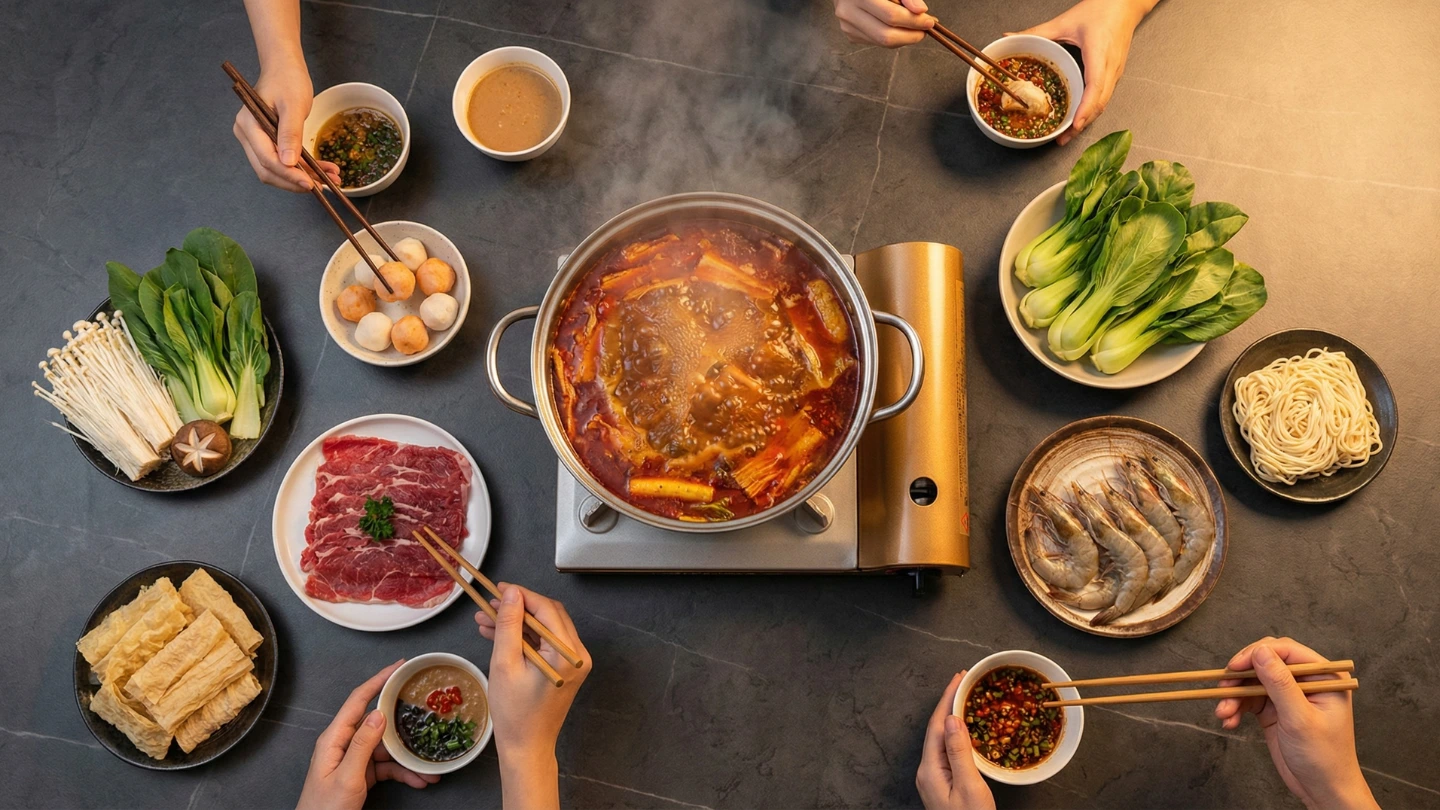
Hosting a steamboat dinner? The portable burner and hot pot can sit directly on sintered stone throughout your meal. The sustained heat from hours of cooking won’t affect the surface.
Baking and Roasting
Placing baking trays or roasting pans straight from a 200°C oven onto sintered stone is completely safe. For avid bakers who need counter space for cooling, this eliminates the need for dedicated cooling racks or heat-resistant mats.
Coffee and Tea Preparation
Hot kettles, coffee pots, and tea-making equipment can be placed directly on sintered stone without concern. This might seem minor, but it adds up to meaningful convenience in daily kitchen use.
Important Caveats and Considerations
Whilst sintered stone’s heat resistance is exceptional, a few considerations are worth noting:
Edge and Chip Vulnerability
If your sintered stone countertop has any existing micro-fractures, chips at the edges, or installation defects, repeated thermal cycling could potentially worsen those specific weak points over time. On an intact, properly installed surface, this isn’t a concern—but it’s worth inspecting edges periodically, especially around cutouts for sinks and hobs.
Prolonged Extreme Heat
Placing extremely hot items (like a pan directly from a gas burner at maximum) and leaving them in the same spot for extended periods is more stress than typical cooking scenarios. Whilst sintered stone can handle this, it’s still sensible practice to move very hot items occasionally rather than letting them sit indefinitely.
Common Sense Still Applies
Sintered stone’s heat resistance doesn’t mean you should use your countertop as a cooking surface. It’s designed to withstand heat from cookware, not to replace your hob or oven.
Dekton: The Leading Sintered Stone Brand
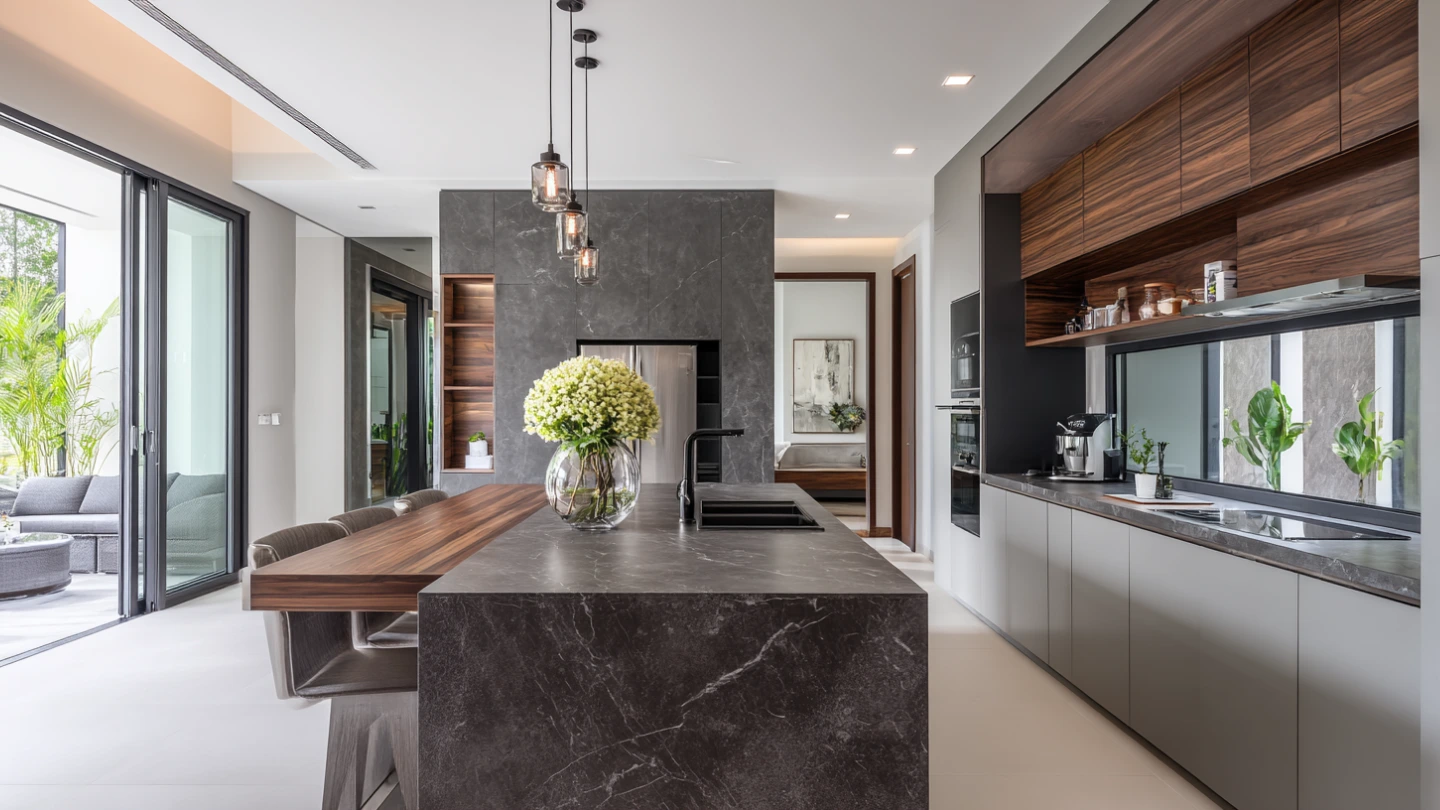
When discussing sintered stone in Malaysia, Dekton by Cosentino is the most recognised brand. Dekton is specifically engineered for countertop applications and undergoes rigorous testing for heat resistance, scratch resistance, UV stability, and impact strength.
Dekton’s technical specifications confirm it can withstand temperatures up to 300°C without damage—well above anything you’ll encounter in normal cooking. The material is also certified for outdoor use, meaning it can handle direct Malaysian sunlight without fading or degradation.
For homeowners comparing sintered stone options to quartz, Dekton represents the premium tier of heat-resistant surfaces.
Cost Considerations for Malaysian Homeowners
Sintered stone’s superior heat resistance comes at a higher price point than standard quartz. In Malaysia, Dekton typically costs between RM229-474 per square foot (supply and install), compared to RM110-160 per square foot for Zenstone quartz.
Whether this premium is justified depends on your cooking habits:
Sintered stone makes sense if you:
- Cook frequently with high heat (wok cooking, stir-frying)
- Prefer not using trivets or heat protection
- Want zero-maintenance heat resistance for decades
- Are building an outdoor or semi-outdoor kitchen
- Value the peace of mind that comes with indestructible heat resistance
Quartz may be sufficient if you:
- Cook at moderate temperatures
- Don’t mind using trivets for hot pans
- Prefer a lower upfront investment
- Prioritise design options over maximum heat resistance
Maintaining Your Sintered Stone Countertop
One of sintered stone’s advantages is its minimal maintenance requirements. For heat-related care:
Daily cleaning: Wipe with a damp cloth and mild soap. No special products required.
After hot pan use: Simply wipe down the area once it cools. There’s no residue, discolouration, or damage to address.
No sealing required: Unlike granite, sintered stone never needs sealing or special treatment to maintain its heat resistance.
Long-term care: The non-porous surface means heat exposure won’t create vulnerabilities that require ongoing attention.
Making the Right Choice for Your Kitchen
Sintered stone’s exceptional heat resistance is one of its standout features—but it’s not the only factor to consider when choosing countertop materials. Think about your complete requirements: aesthetics, budget, durability, maintenance preferences, and how you actually use your kitchen daily.
For Malaysian homeowners who prioritise cooking performance and want a surface that can handle anything their kitchen produces, sintered stone delivers unmatched heat resistance. The freedom to place hot cookware anywhere on your countertop, without protection and without worry, is genuinely liberating.
If you’re weighing different countertop materials for your Malaysian kitchen, heat resistance should be a key consideration—especially given our cooking culture’s emphasis on high-heat techniques.
Conclusion
Can you put a hot pan on a sintered stone countertop? Absolutely yes—and you can do it confidently, repeatedly, for decades without damage.
Sintered stone’s heat resistance isn’t a marketing claim or a conditional feature. It’s a fundamental property created during manufacturing, when natural minerals are fused together at temperatures exceeding 1,200°C. No household cooking scenario comes close to challenging a material born under such extreme conditions.
For Malaysian kitchens where wok cooking, high-heat stir-frying, and busy meal preparation are daily realities, this heat resistance translates to practical, everyday freedom. No trivets. No worry. No damage.
Whether sintered stone is the right choice for your kitchen depends on your complete requirements and budget—but when it comes to heat resistance specifically, nothing else comes close.
Looking to explore sintered stone options for your Malaysian kitchen? Learn more about how sintered stone compares to other materials or discover the science behind sintered stone manufacturing.