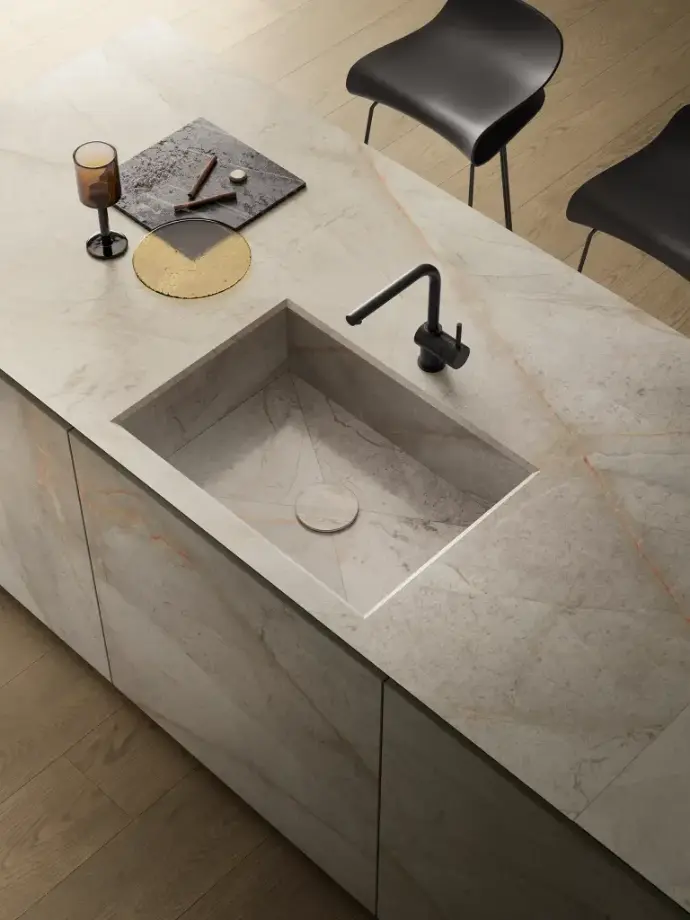
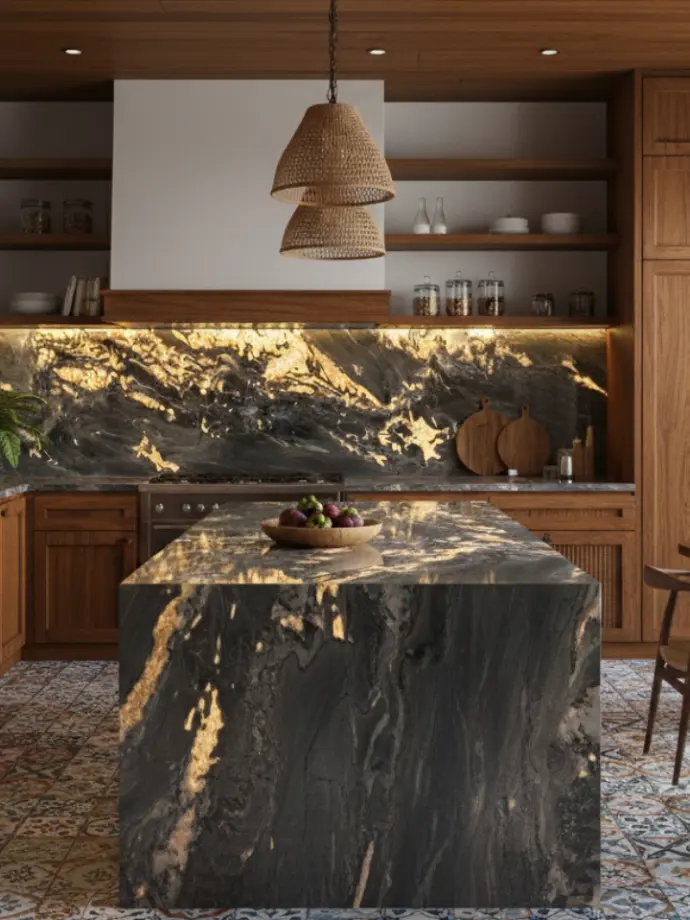
Planning a kitchen renovation? The tabletop is the heart of your design—it’s where you’ll prepare your daily meals, roll out roti canai dough, and gather with family during Hari Raya. If you want a surface that survives hot pans, turmeric stains, and everyday scratches whilst looking luxurious for decades, a quartz stone tabletop might be your best investment.
But choosing the right quartz isn’t as simple as picking a colour you like. From stone thickness to edge profiles, sink compatibility to finish options, every decision affects both the aesthetics and functionality of your kitchen. This comprehensive guide walks you through each factor Malaysian homeowners must consider when selecting the perfect quartz stone tabletop.
What Is Quartz Stone?
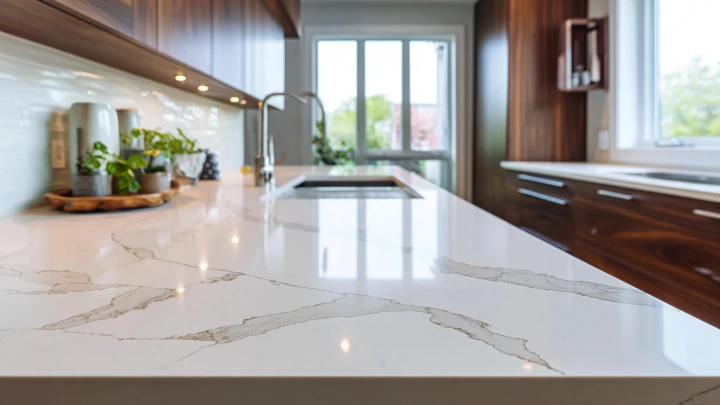
Before diving into selection criteria, let’s clarify what you’re actually buying. Engineered quartz, also known as quartz composite or quartz surface, is a man-made material combining natural quartz crystals (90-95%), polymer resins (5-7%), and pigments (1-3%). Unlike natural granite or marble that’s quarried directly from the earth, quartz is manufactured in factories under controlled conditions.
This engineered nature is actually one of quartz’s greatest advantages for Malaysian homeowners. The manufacturing process creates a non-porous surface that resists staining from turmeric, sambal, and kicap—ingredients that would permanently mark natural stone. For a deeper understanding of how quartz is manufactured and why quality varies between brands, read our complete guide on what quartz stone is and how it’s made.
Choosing the Right Colour and Style
When selecting a quartz stone tabletop, the colour, veining pattern, and overall style set the foundation for your entire kitchen design. Your countertop will be one of the largest visible surfaces in the room, so this decision deserves careful thought.
Matching Your Kitchen Theme
Start by considering your existing or planned cabinetry, flooring, and overall design direction. Quartz works beautifully across virtually every style, from traditional Malaysian homes to contemporary minimalist designs.
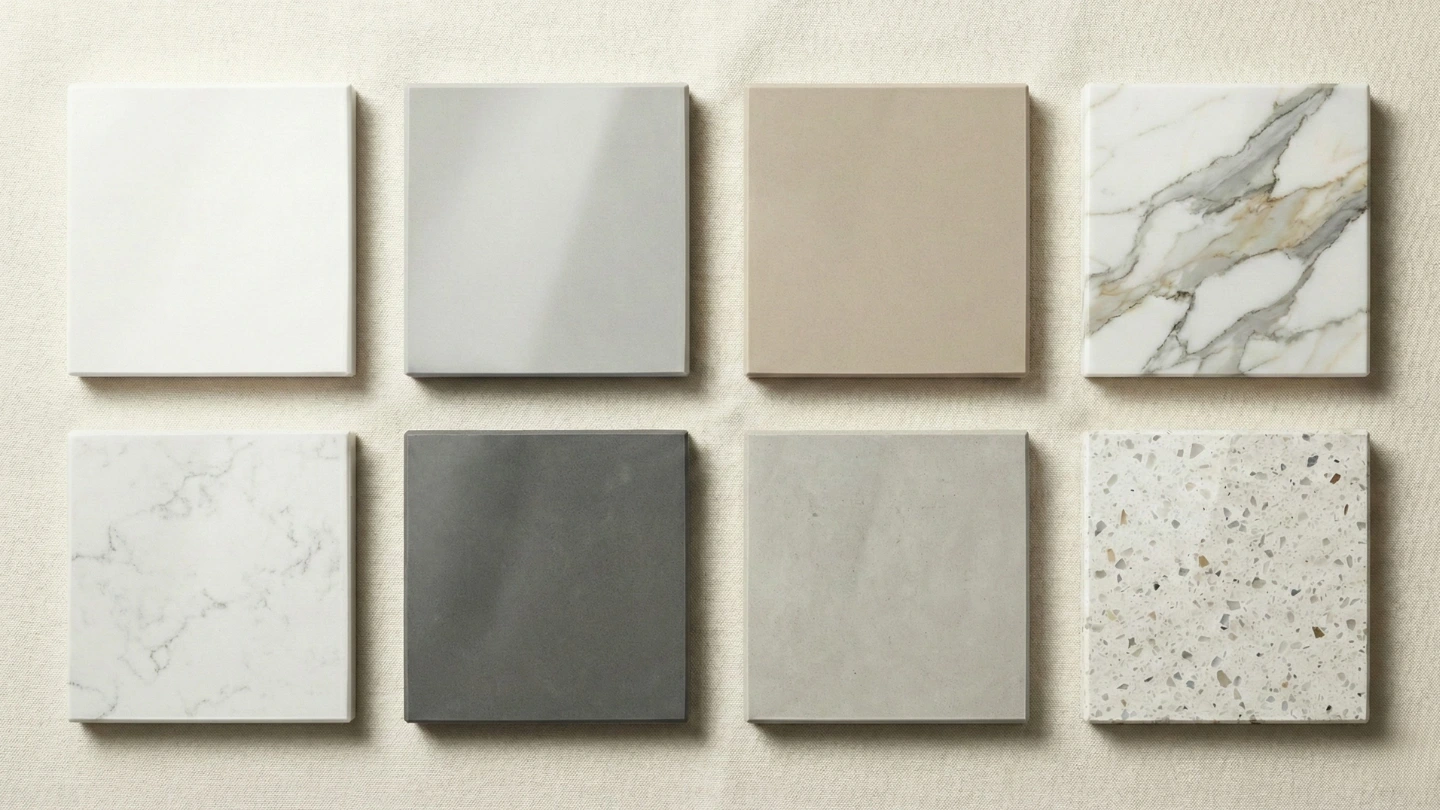
Neutral colours like white, grey, and beige offer timeless versatility. They complement any cabinet colour and won’t date your kitchen as trends evolve. White quartz with subtle grey veining has become particularly popular in Malaysian homes, offering that coveted marble aesthetic without marble’s maintenance headaches.
Bold colours like deep blues, greens, or rich blacks create dramatic statement pieces. These work best in kitchens where the countertop is intended as a focal point—perhaps a large island in an open-plan living space.
Warm tones like cream and taupe pair beautifully with wooden cabinetry, creating the inviting atmosphere many Malaysian families prefer for their kitchen gathering spaces.
Creating a Mood Board
Before committing to a colour, create a mood board that pairs your cabinet colour with different quartz options. Collect samples of your cabinet material, flooring, backsplash tiles, and potential quartz colours. View these samples together under different lighting conditions—natural daylight, evening artificial light, and the specific lighting you’ll install in your kitchen.
Premium quartz brands like Caesarstone and Silestone offer extensive colour ranges from classic whites to dramatic marble-look patterns. Visiting a showroom where you can see full slabs (rather than just small samples) helps you appreciate how veining patterns will flow across your actual countertop.
Pattern Considerations
Quartz patterns range from uniform solid colours to dramatic veining that mimics natural Calacatta or Carrara marble. Consider how pattern intensity affects your space:
Subtle patterns work well in smaller Malaysian kitchens where bold veining might feel overwhelming. They also hide minor scratches and daily wear more effectively.
Bold veining patterns make stunning statement pieces but require more planning during fabrication. The installer must carefully position veins to flow naturally across seams and around cutouts—a skill that varies significantly between fabricators.
Understanding Quartz Finishes
Most Malaysian homeowners assume all quartz comes with a glossy, polished surface. In reality, you have several finish options, each with distinct characteristics for daily use.
Polished Finish
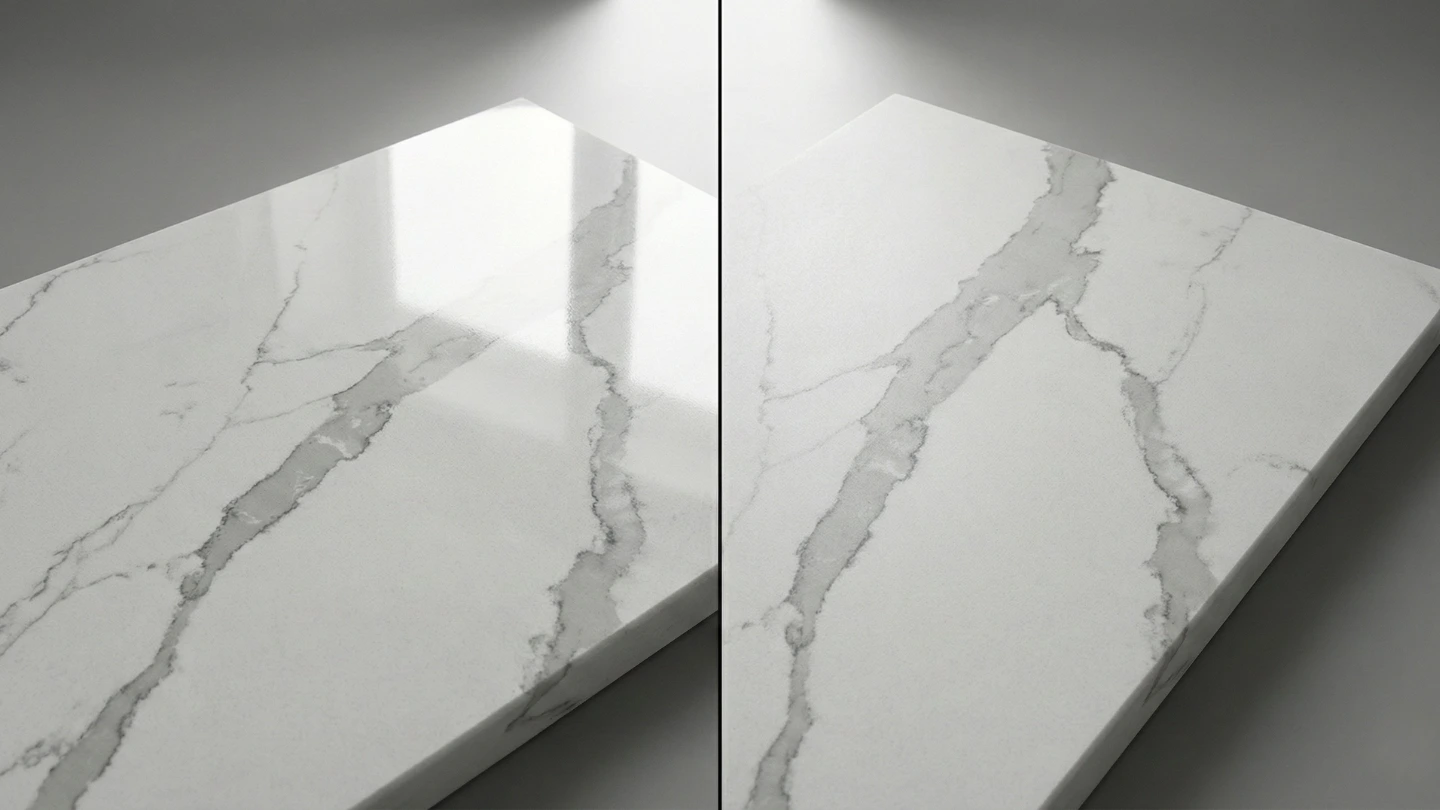
The polished finish is what most people envision when thinking of quartz—a high-gloss, reflective surface that showcases the stone’s colour and pattern beautifully. This finish is popular because it:
- Reflects light, making kitchens feel brighter and more spacious
- Shows the full depth of colour and veining
- Feels smooth and cool to the touch
- Cleans easily with just a damp cloth
However, polished finishes do show fingerprints, water spots, and smudges more readily than matte alternatives. In Malaysian kitchens with heavy cooking activity, you may find yourself wiping down the surface more frequently.
Honed (Matte) Finish
A honed finish has a smooth but non-reflective surface with a soft, velvety appearance. This finish has gained popularity in contemporary Malaysian kitchen designs because it:
- Hides fingerprints, water marks, and minor scratches better than polished surfaces
- Creates a more natural, understated aesthetic
- Reduces glare in kitchens with significant natural light
- Complements modern, minimalist design schemes
The trade-off is that honed quartz can feel slightly rougher and may show certain stains more readily if not wiped promptly. For a detailed comparison of how these finishes perform in Malaysian conditions, read our guide on honed vs polished quartz for Malaysian kitchen countertops.
Textured and Concrete Finishes
Some premium quartz ranges offer textured finishes that mimic natural stone surfaces or industrial concrete. These specialised finishes:
- Create unique tactile experiences
- Hide wear and daily use marks effectively
- Suit specific design aesthetics (industrial, rustic, artisanal)
To determine which finish best suits your lifestyle and design preferences, I strongly recommend visiting a supplier showroom. Seeing and touching different finishes under showroom lighting—and ideally, taking samples home to view in your actual kitchen—helps you make a confident decision.
Selecting the Right Stone Thickness
Stone thickness affects both aesthetics and coordination with your cabinetry. Getting this specification right ensures a seamless installation.
Standard Thickness Options
In Malaysia, quartz slabs typically come in two thickness options:
15mm thickness is common for certain applications and budget-conscious projects. It’s lighter and less expensive but may require additional support for spans over sinks.
20mm thickness is the standard for most Malaysian kitchen countertops. It provides excellent durability, works well with standard cabinet configurations, and offers a substantial feel without excessive weight. This is the thickness we recommend for the vast majority of Malaysian kitchens.
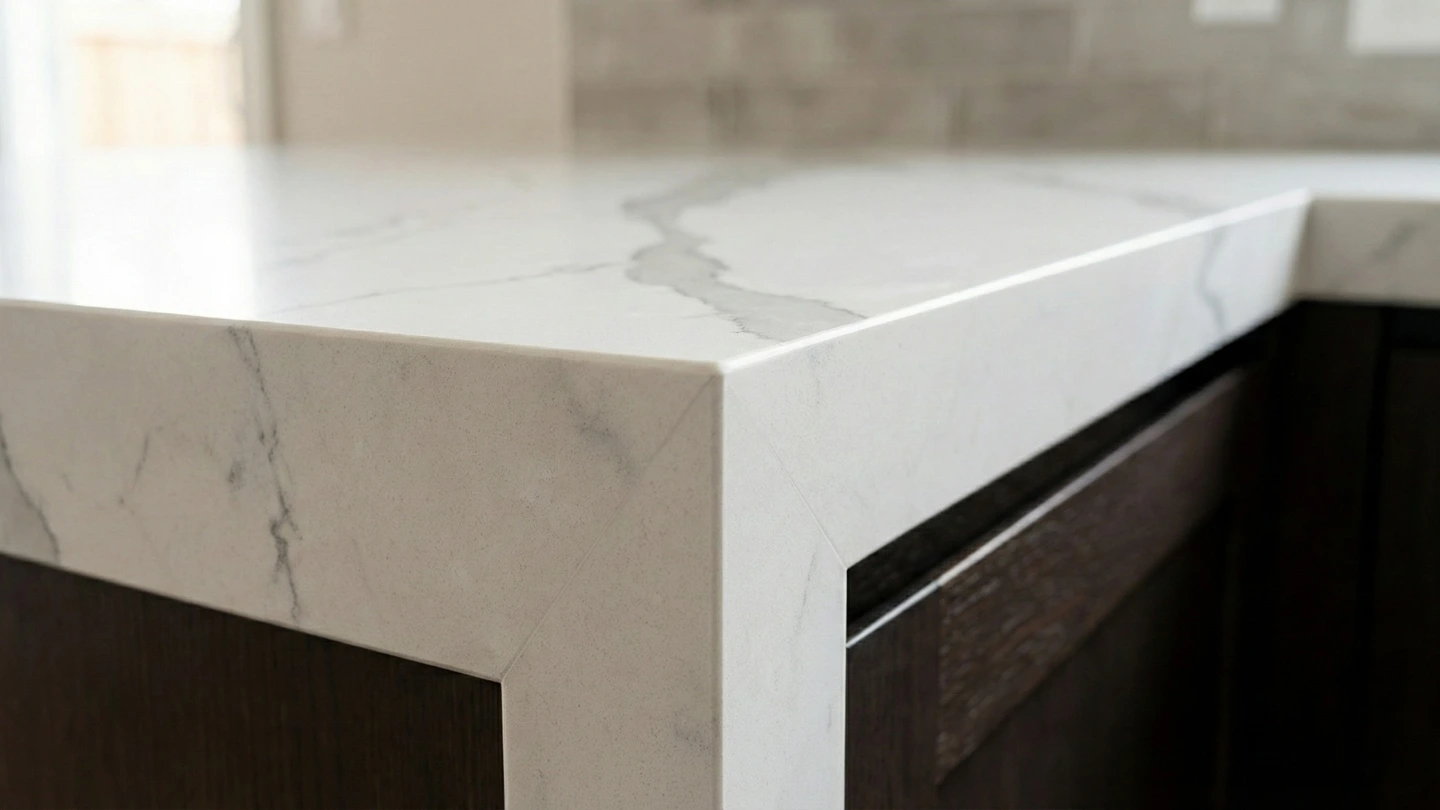
Most Malaysian homeowners pair 20mm quartz with a mitre edge—the most popular edge profile in our market. This technique joins two pieces at 45-degree angles, achieving the luxurious visual impact of 40-50mm thickness without additional material cost or weight.
Coordinating with Your Carpenter
This is crucial: communicate your chosen quartz thickness to your carpenter before cabinet fabrication begins. The thickness affects the gap they must leave for the stone to sit properly. If cabinets are built for 20mm quartz but you later choose 15mm (or vice versa), the installation becomes problematic.
For most Malaysian kitchens, standard 15-20mm thickness performs excellently. The thickness you choose is primarily an aesthetic decision rather than a durability concern—properly supported quartz performs well at either standard thickness.
Front Edge Profiles
The front edge of your countertop—the profile you see and touch most often—significantly impacts your kitchen’s overall aesthetic. This seemingly small detail deserves thoughtful consideration.
Understanding Edge Heights
The front edge height in Malaysian kitchens is determined by several factors:
For plywood cabinet bases: The standard front edge height is typically 35-50mm. This provides a clean, proportionate look that complements most cabinet door heights.
For cement/masonry base kitchens: A larger 100mm front edge is common. This substantial edge suits the heavier visual weight of masonry construction.
The presence or absence of cabinet door handles also affects edge height considerations. Handleless designs may look better with different proportions than kitchens with prominent hardware.
Popular Edge Profile Styles
Beyond height, the profile shape affects both aesthetics and safety:
Mitre edge is the most popular edge profile in Malaysian kitchens. This technique joins pieces at 45-degree angles to create the illusion of a thicker slab, achieving the substantial, luxurious look of 40-50mm thickness using standard 20mm slabs. Malaysian homeowners love this profile because it delivers a premium appearance without the cost of genuinely thicker material.
Chamfer edge features an angled cut that reduces chipping risk. At Sinno Stone, we use a 3mm chamfer as standard because our experience shows it eliminates the chipping complaints that occur with thinner 1mm chamfers.
Eased edge features a slightly rounded top edge with a flat front face. It’s simple, safe, and cost-effective—a good choice for budget-conscious projects.
Bevelled edge has a small angled cut at the top, creating subtle visual interest whilst maintaining simplicity.
Bullnose edge is fully rounded for a soft, contemporary look. It’s particularly popular for kitchen islands where people gather and lean against the edge.
For a comprehensive look at all edge options available for your quartz tabletop, explore our guide on the different types of stone edging profiles.
The Backsplash Decision
The backsplash isn’t just decorative—it protects your wall from moisture, oil splatters, and the inevitable mess of Malaysian cooking. Getting this element right affects both aesthetics and long-term maintenance.
Standard Backsplash Heights
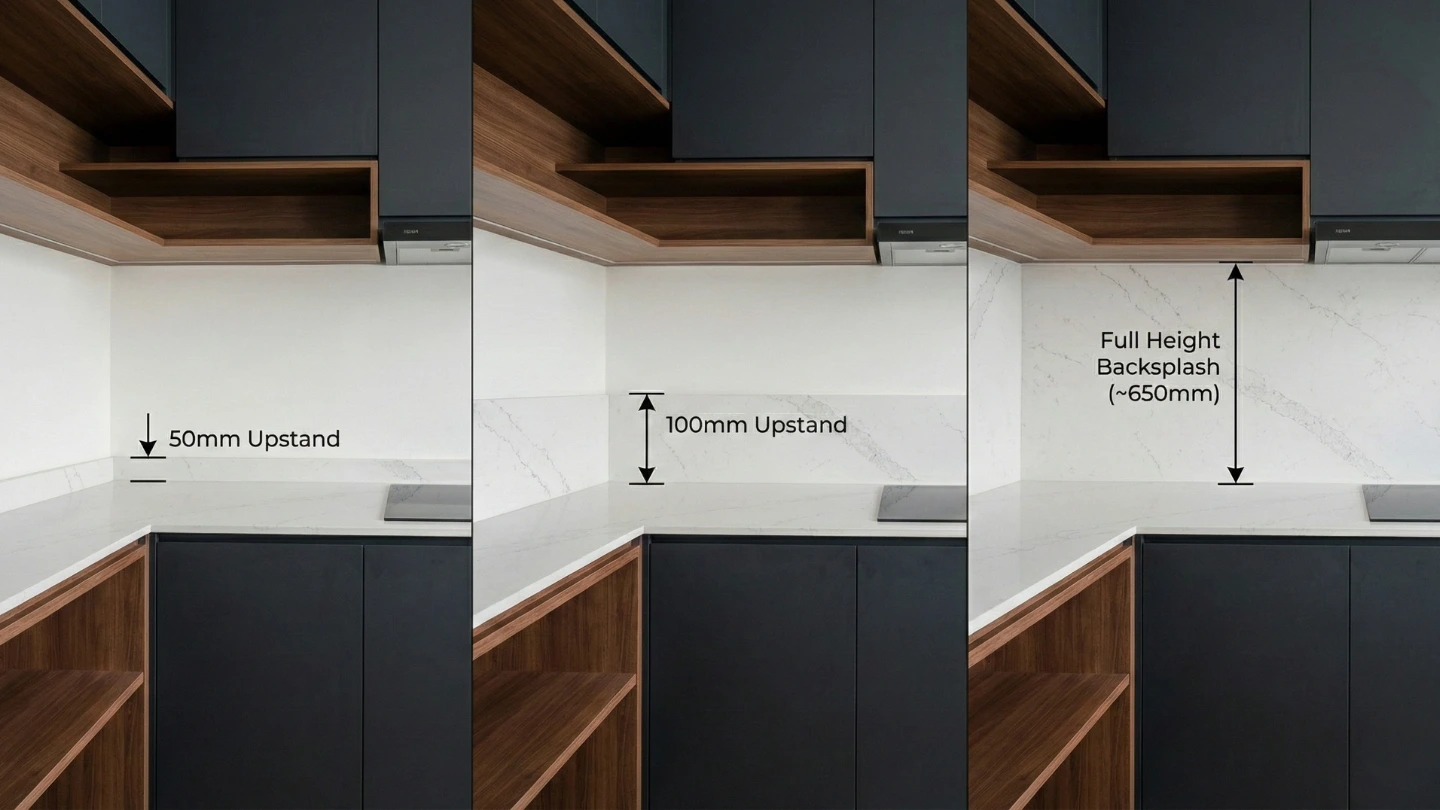
50mm upstand is the minimum standard. This small lip covers the silicone joint between countertop and wall, preventing water from seeping into your cabinets. It’s functional but not particularly protective against cooking splatters.
100mm upstand provides better protection against minor splashes whilst keeping costs reasonable. It suits areas with light cooking activity.
Full-height backsplash (650mm to upper cabinets) offers comprehensive protection for the area between your countertop and wall cabinets. This is the Malaysian standard for wet kitchens where serious cooking happens. It prevents grease and turmeric splatters from reaching painted walls, and the seamless surface is far easier to clean than tiles with grout lines.
Material Matching Decisions
You have two primary options for backsplash material:
Matching quartz backsplash creates a seamless, cohesive look. Using the same material for both countertop and backsplash produces a unified design statement and simplifies cleaning—no grout lines to scrub.
Contrasting backsplash materials (tiles, sintered stone, or different quartz colours) create visual interest and can reduce costs. Tiles offer endless pattern possibilities, whilst sintered stone provides superior heat resistance behind the cooker.
For a comprehensive analysis of whether you need a backsplash and what materials work best for Malaysian cooking, read our detailed guide on kitchen backsplash requirements for Malaysian renovations.
Choosing the Right Sink Type
Your sink choice affects both daily functionality and countertop fabrication. Select your sink before finalising your quartz order—the fabricator needs exact specifications to cut the appropriate opening.
Undermount vs Top-Mount Sinks
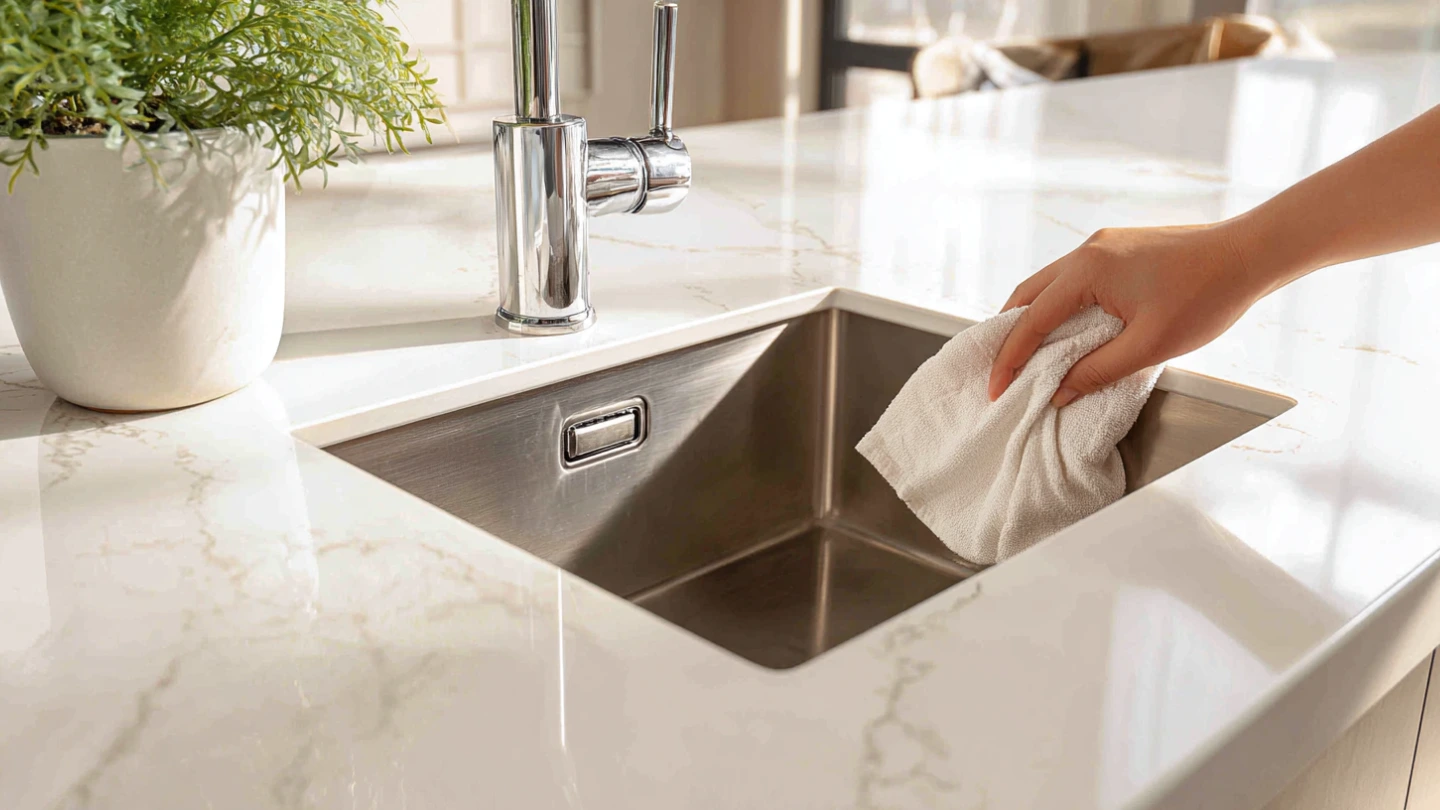
Undermount sinks are installed beneath the countertop, creating a seamless edge where you can wipe crumbs and water directly into the sink. This design:
- Offers superior hygiene (no rim to trap food particles)
- Showcases your beautiful quartz edge around the sink opening
- Creates a modern, sleek aesthetic
- Requires professional installation with strong countertop support
Top-mount (drop-in) sinks sit on top of the countertop with a visible rim. This design:
- Is easier and cheaper to install
- Works with DIY replacement if needed
- Hides any imperfections in the cutout edge
- Has a rim that can trap grime and requires regular cleaning
For Malaysian kitchens, we generally recommend undermount sinks. The superior hygiene is particularly valuable given our cooking style—after preparing sambal or curry, wiping everything directly into the sink without navigating around a raised rim makes cleanup significantly easier. For detailed guidance on sink selection, read our comprehensive comparison of undermount vs top-mount sinks for Malaysian homes.
Sink Material Options
Beyond installation style, consider sink material:
Stainless steel remains the most popular choice—durable, hygienic, affordable, and available in countless configurations. Choose 16 or 18 gauge for better quality and durability.
Granite composite sinks offer colour variety and excellent scratch resistance. They can complement or contrast your quartz countertop beautifully.
Ceramic/fireclay sinks including farmhouse styles create distinctive design statements. They’re elegant but require more careful handling to avoid chipping.
Sizing Considerations
Ensure your chosen sink fits within your cabinet dimensions with room for proper support. For undermount installations, the surrounding quartz needs adequate material to maintain structural integrity. Your fabricator will advise on minimum edge distances, but generally plan for at least 50-75mm of countertop material between the sink edge and any cabinet divisions.
Understanding Quartz Pricing in Malaysia
Budget planning requires understanding how quartz pricing works in the Malaysian market. Costs vary significantly based on brand, colour, and project complexity.
Price Ranges by Brand
Current Malaysian market pricing for supply and installation:
Premium International Brands:
- Caesarstone: RM318-819 per square foot
- Silestone: RM280-645 per square foot
Quality Local/Regional Brands:
- Zenstone: RM110-160 per square foot
These prices typically include material, fabrication (cutting, edging, polishing), and professional installation. The wide range within each brand reflects different collections—basic solid colours sit at the lower end, whilst complex marble-look patterns command premium prices.
Factors That Increase Costs
Several factors can push your total investment higher:
Colour complexity: Slabs with intricate veining require more sophisticated manufacturing and careful fabrication. Calacatta-inspired designs typically sit at the top of each brand’s price range.
Edge profiles: Simple eased edges are usually included in base pricing. More elaborate profiles like ogee, dupont, or mitre edges add fabrication costs.
Cutouts and complexity: Each sink cutout, cooktop opening, and unusual corner adds fabrication time. L-shaped layouts with multiple joins cost more than simple rectangular runs.
Installation challenges: Difficult access (high-rise apartments without lifts, narrow doorways) may incur additional charges.
For a comprehensive breakdown of all pricing factors, read our detailed quartz stone cost guide for Malaysia.
Coordinating Your Design Decisions
With so many choices to make, how do you ensure everything works together? Here’s a practical approach:
Step 1: Start with Your Fixed Elements
Identify elements you can’t or won’t change—existing flooring, structural elements, or appliances you’re keeping. These become constraints that guide other choices.
Step 2: Choose Your Anchor Colour
Decide whether your cabinets or countertop will be the dominant design element. If choosing bold cabinets, opt for neutral quartz. If wanting statement countertops, keep cabinetry understated.
Step 3: Select Quartz Before Cabinet Fabrication
Share your chosen quartz colour, thickness, and any special requirements with your carpenter before they begin. This ensures proper gaps, support structures, and proportions.
Step 4: Finalise Sink and Cooktop Selections
Provide exact model specifications to your quartz fabricator. They need precise measurements for cutouts—“approximately 800mm sink” isn’t sufficient.
Step 5: Confirm Edge Profiles and Backsplash Heights
These details affect quotation accuracy and fabrication planning. Deciding later often means delays or additional charges.
Common Mistakes to Avoid
Learn from others’ experiences to ensure your quartz tabletop selection goes smoothly:
Choosing Based on Small Samples Only
Small samples can be misleading—veining patterns look different across a full slab than in a 100mm square. Always view full slabs before committing, especially for dramatic patterned designs.
Ignoring Lighting Conditions
Quartz looks dramatically different under showroom lighting versus your actual kitchen. Take samples home and view them under your specific lighting conditions at different times of day.
Prioritising Price Over Quality
Budget quartz from unknown manufacturers may use inferior resins that yellow over time or insufficient vacuum compaction that creates micro-pores where bacteria can harbour. The difference between genuine quartz and inferior alternatives becomes apparent within a few years of daily use.
Failing to Communicate with Tradespeople
Your interior designer, carpenter, quartz supplier, and installer all need consistent information. Miscommunication about thickness, edge heights, or sink specifications leads to costly mistakes.
Underestimating Total Costs
Beyond the countertop itself, budget for installation, any additional support requirements, backsplash material, silicone sealing, and contingency for unexpected complications.
Caring for Your Quartz Tabletop
Once installed, quartz requires minimal maintenance to keep it looking beautiful for decades:
Daily Care
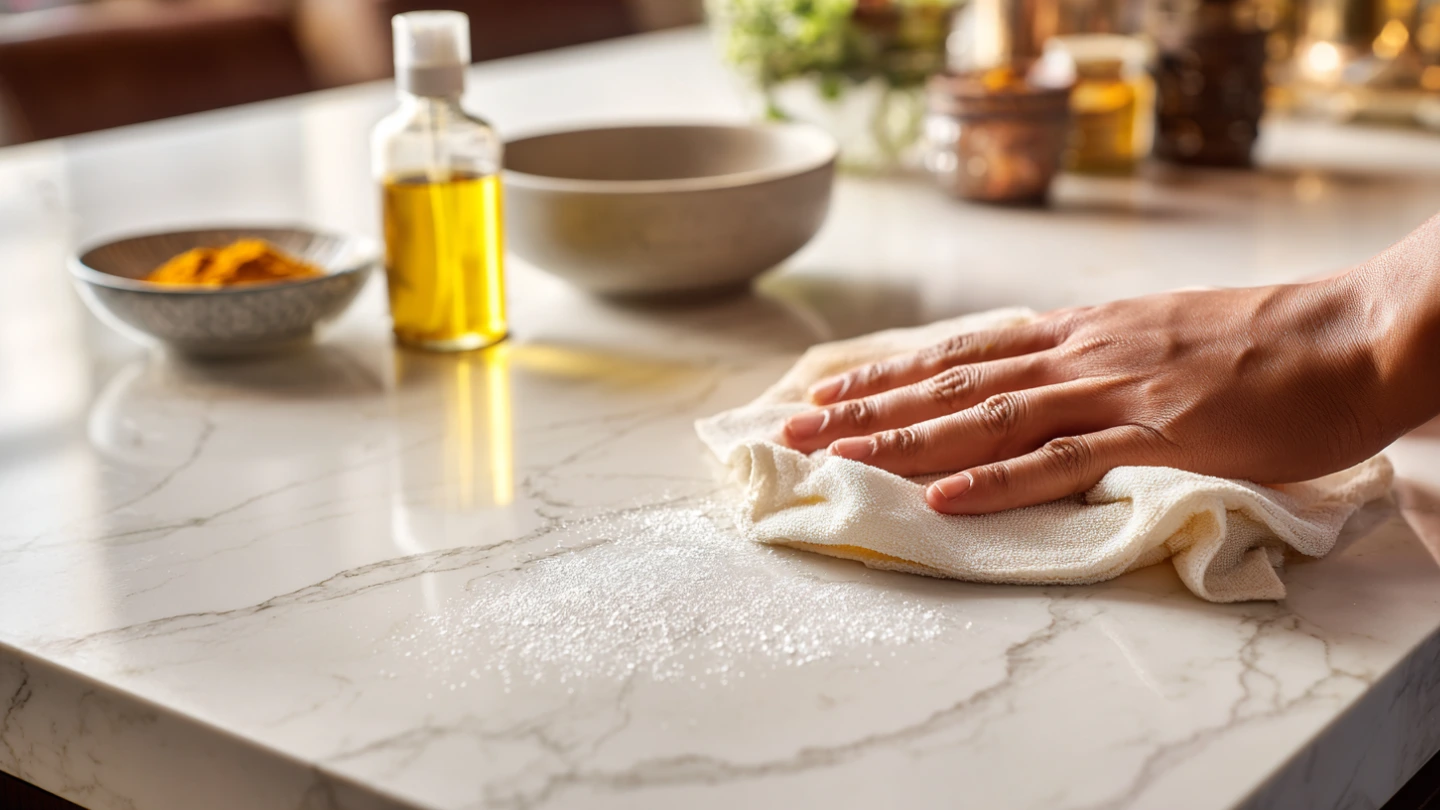
Wipe surfaces with a soft cloth and mild soap solution. Quartz’s non-porous surface means spills won’t penetrate if cleaned promptly—even stubborn Malaysian cooking ingredients like turmeric clean up easily when addressed quickly.
What to Avoid
Don’t place extremely hot items directly on quartz. The polymer resins can be damaged by temperatures above 150°C. Always use trivets or heat pads for pots and pans directly from the stove.
Avoid abrasive cleaners or scouring pads. These can dull the polished surface over time.
Don’t use harsh chemicals. Avoid bleach, oven cleaners, or drain cleaners on quartz surfaces.
For specific guidance on cleaning challenging stains, including the turmeric and curry residue common in Malaysian cooking, read our comprehensive cleaning guide for countertops.
Making Your Final Decision
Transforming your kitchen with the perfect quartz stone tabletop requires balancing aesthetics, functionality, and budget. There’s no single “best” choice—only the right choice for your specific situation.
Consider your cooking style. Heavy Malaysian cooking with frequent wok use and turmeric-based dishes benefits from stain-resistant colours and easy-clean polished finishes.
Think about your family. Households with young children might prefer bullnose edges for safety. Busy families often appreciate honed finishes that hide fingerprints.
Plan for longevity. A quality quartz tabletop lasts 25+ years. Choose colours and styles you’ll still love a decade from now rather than chasing current trends.
Invest in quality. Premium brands from reputable suppliers provide consistent quality, proper warranties, and peace of mind. The few hundred Ringgit difference between budget and quality quartz is negligible when spread across decades of daily use.
Ready to explore your options? Understanding the pros and cons of quartz stone kitchen tops can help you confirm whether quartz is indeed the right material for your Malaysian kitchen transformation.
Planning your kitchen renovation?
For expert guidance on selecting the perfect quartz stone tabletop for your Malaysian home, WhatsApp Sinno Stone
Our experienced team can help you navigate every decision—from colour selection to sink compatibility—ensuring your new quartz tabletop transforms your kitchen exactly as you’ve envisioned.