What Is the Best Countertop for a Wet Kitchen in Malaysia?
If you’ve ever stood in front of a searing wok while oil splatters and steam fills the air, you already know that a Malaysian wet kitchen is a different beast entirely. It demands more from every surface — especially the countertop. The wrong choice can mean staining, cracking, swelling, or a surface that looks ancient within a year.
So what is the best countertop for a wet kitchen in Malaysia? The short answer: it depends on how you cook. The longer answer involves heat, humidity, acids, impact, and budget — all of which we’ll break down honestly in this guide.
What Makes a Malaysian Wet Kitchen Different
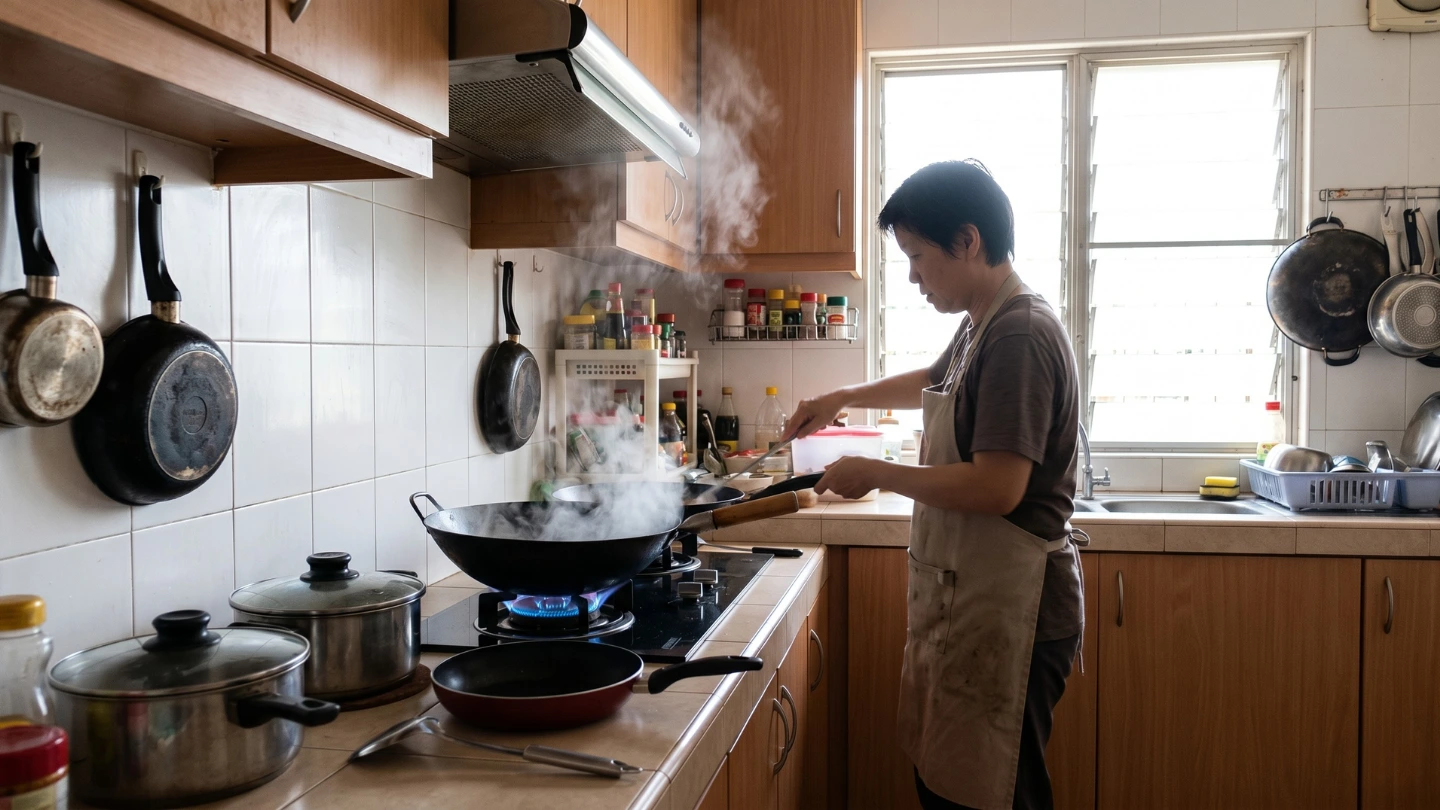
The term “wet kitchen” refers to the main cooking area in a Malaysian home — distinct from the dry kitchen, which is typically used for lighter meal prep and entertaining. The wet kitchen takes the full brunt of daily cooking:
- Extreme heat: Wok cooking routinely reaches 250–300°C on the burner surface, with radiant heat rising across the countertop
- Constant moisture: Steaming, boiling, and washing up create sustained humidity levels of 70–90%
- Staining agents: Turmeric, curry paste, chilli, soy sauce, and tamarind are all highly pigmented and acidic
- Physical impact: Pounding lemongrass, cracking crab shells, and heavy chopping are everyday activities in Malaysian kitchens
- Grease and oil splatter: Frequent deep-frying means oil mist settles on every surface regularly
In short, your wet kitchen countertop needs to handle everything a dry kitchen countertop does — and then some. Not all materials are up to the task.
If you’re still in the early stages of deciding, our complete guide to kitchen countertop materials in Malaysia covers 14 options with a broad comparison to help you narrow down your shortlist.
The 4 Non-Negotiables for a Wet Kitchen Countertop
Before comparing materials, it helps to know what you’re evaluating them against. A great wet kitchen countertop should be:
- Heat-resistant — handles hot pots, pans, and indirect wok heat without discolouring or cracking
- Stain-resistant — resists pigments from turmeric, curry, chilli, and acidic liquids
- Moisture-resistant — non-porous or sealed to prevent mould, bacterial growth, and warping
- Low-maintenance — easy to wipe clean without specialist products
With these benchmarks in mind, let’s look at the four most popular countertop materials for Malaysian wet kitchens.
Quartz Stone: The Safe, Practical Choice
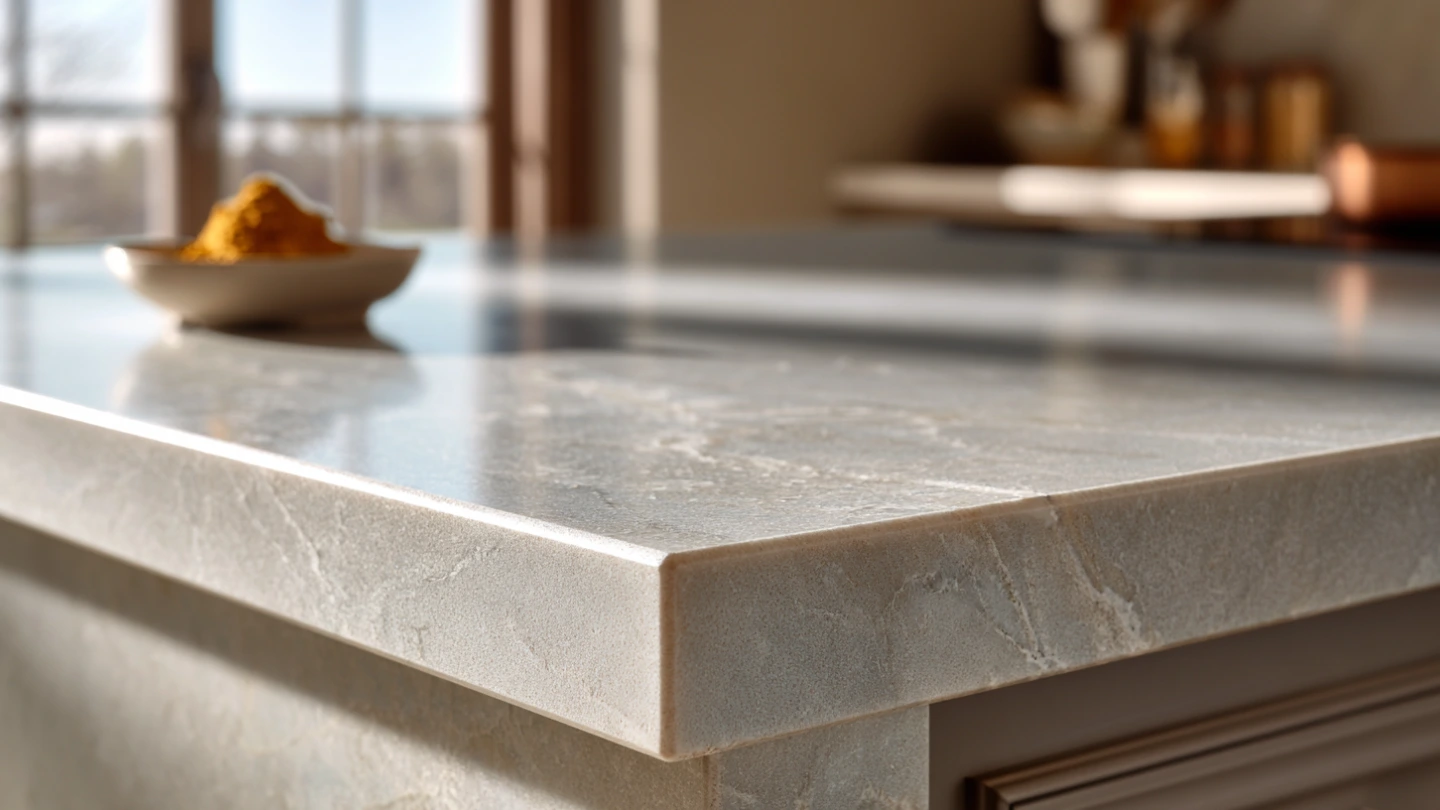
Quartz stone remains the most popular countertop choice for Malaysian wet kitchens — and with good reason. It’s engineered from natural quartz crystals (93%) bound with resin, making it non-porous, highly consistent, and available in a wide range of colours and finishes.
What Quartz Does Well
Stain resistance is where quartz truly excels in a Malaysian kitchen. Its non-porous surface means turmeric, curry paste, and soy sauce don’t penetrate the material — they sit on the surface and can be wiped away cleanly. This is a significant advantage over natural stone surfaces that require periodic sealing.
Moisture resistance is equally strong. Unlike natural stone, quartz won’t absorb water, which means mould and bacterial build-up are far less of a concern. For a detailed look at how mould affects countertops, read our article on mould on your kitchen countertop.
Daily cleaning is straightforward — a damp cloth and mild detergent is all that’s needed for most spills.
Where Quartz Falls Short
The one genuine weakness of quartz in a wet kitchen is heat. The resin binders used in quartz manufacturing can discolour or even crack under sustained heat above 150°C. Placing a hot wok or cast iron pan directly on a quartz surface — even briefly — risks permanent thermal shock damage.
This doesn’t disqualify quartz from a wet kitchen, but it does mean you’ll need to develop the habit of using trivets and heat mats consistently. If that sounds manageable, quartz is an excellent choice. If you routinely leave hot pans on the counter without thinking, you may want to consider a more heat-tolerant material.
For a full breakdown of this issue, read can you put hot pans directly on a quartz stone kitchen top.
Quartz Pricing in Malaysia (2025)
Quartz is available across a wide price range depending on the brand and series:
- Zenstone: RM110–160 per square foot (supply & install)
- Silestone: RM280–645 per square foot (supply & install)
- Caesarstone: RM318–819 per square foot (supply & install)
For a comprehensive review of the pros and cons of quartz stone kitchen tops, we cover everything you need to know before committing.
Sintered Stone: The Best Performer for Heavy Cooks
If you cook daily, cook hard, and want a countertop that handles every challenge a Malaysian wet kitchen throws at it, sintered stone — particularly Dekton — is worth serious consideration.
Sintered stone is made by compressing and heating raw minerals at extremely high temperatures (1,200°C), producing a material that is fully vitrified, non-porous, and highly dense. It has no resin binders, which makes it genuinely heat-proof rather than merely heat-resistant.
What Sintered Stone Does Well
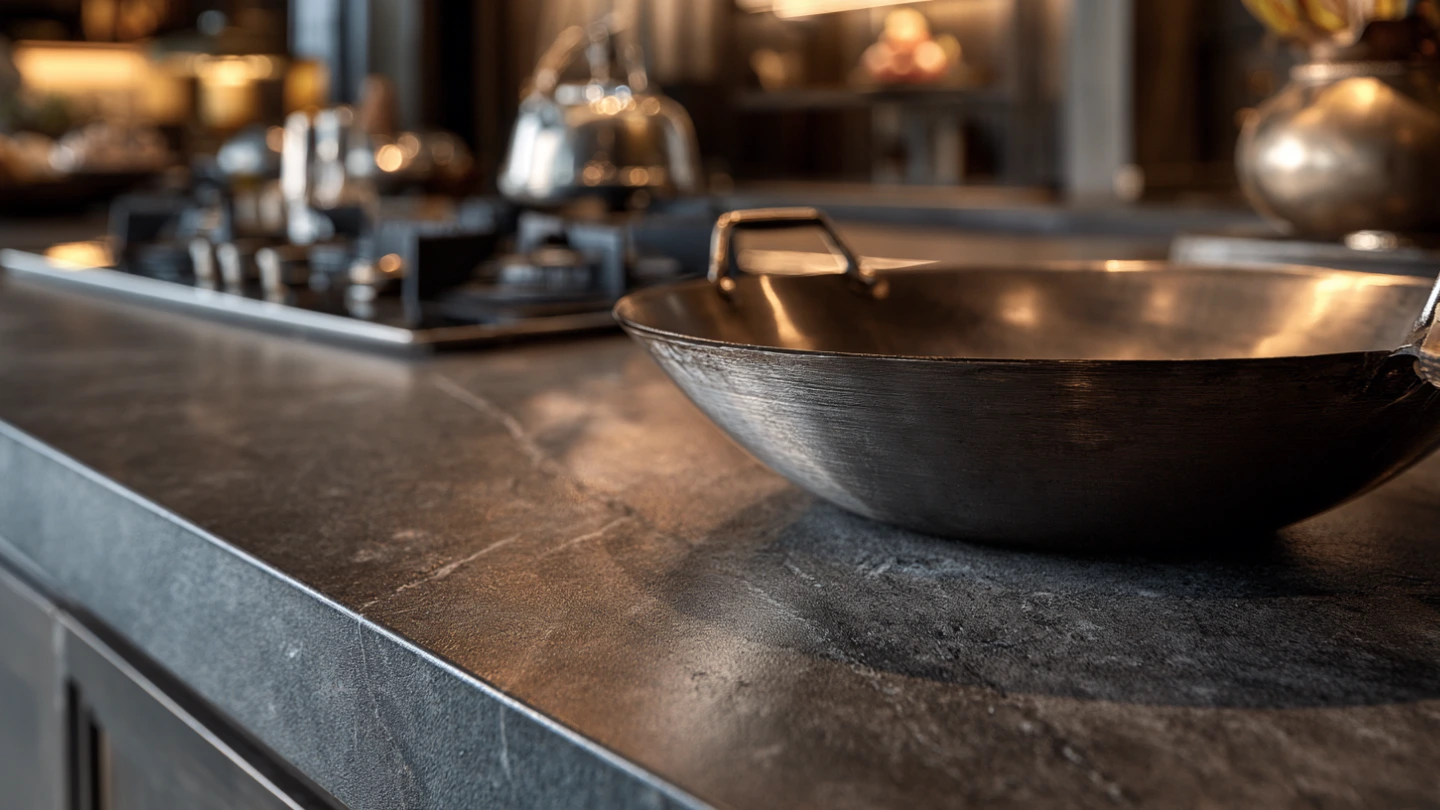
Heat resistance is sintered stone’s standout advantage. It won’t discolour, crack, or deform under direct contact with hot pans, woks, or boiling pots. For households that do intensive wok cooking daily, this is a game-changer.
Stain resistance is equally strong — the fully vitrified surface repels turmeric, curry, chilli oil, and other stubborn Malaysian kitchen stains effectively.
UV resistance means it won’t fade in natural light, which is relevant if your kitchen receives direct sunlight from large windows or a skylight.
Scratch resistance is excellent, though cutting directly on sintered stone is still not recommended as it can dull knife edges.
Where Sintered Stone Falls Short
Sintered stone is harder and more brittle than quartz. Intense point impacts — a heavy cleaver striking the edge, or dropping a cast iron pan at an angle — can chip the surface. The edges are particularly vulnerable during installation and use.
It is also among the more expensive countertop materials available in Malaysia, and requires skilled fabrication. Repairs, should a chip occur, are difficult.
For a thorough look at the trade-offs, read what are the disadvantages of sintered stone.
Sintered Stone Pricing in Malaysia (2026)
- Dekton: RM229–474 per square foot (supply & install)
Granite: Time-Tested and Naturally Hard
Granite has been used in Malaysian kitchens for decades, and it remains a solid choice for wet kitchens — particularly for homeowners who cook heavily and value a natural stone aesthetic.
Granite is an igneous rock, making it extremely hard and naturally heat-resistant. Unlike quartz, it has no resin content, so brief contact with hot pots and pans is generally not a problem.
What Granite Does Well
Heat resistance is genuine — granite can handle hot pans without the thermal shock risk that affects quartz. It’s a natural stone that was formed under extreme heat and pressure, and this shows in its durability.
Hardness and impact resistance are excellent. Granite is one of the hardest natural countertop materials available, making it highly resistant to scratching and chipping under normal kitchen use.
Longevity is another strong point. A well-maintained granite countertop can last 20–30 years without significant degradation.
Where Granite Falls Short
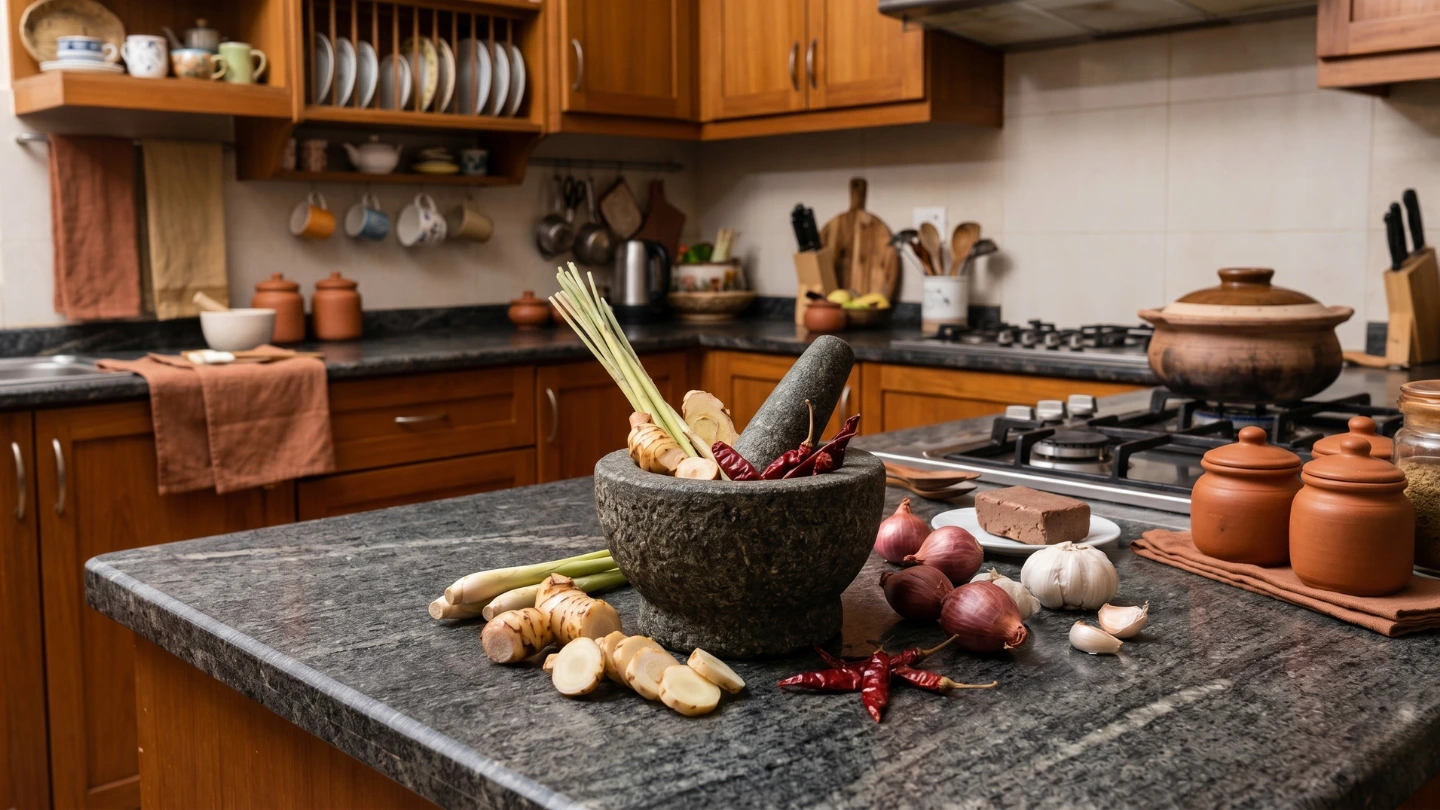
The critical weakness of granite in a Malaysian wet kitchen is its porosity. Granite is a natural stone with a porous surface that must be sealed periodically — typically once every 1–2 years. Without proper sealing, turmeric, curry, and acidic liquids can penetrate the surface and cause permanent staining.
Mould and bacteria can also accumulate in the pores if the surface is not sealed and maintained consistently. In Malaysia’s high-humidity environment, this is a genuine concern.
Granite also varies significantly in quality — not all granite is equal. Premium granite with tighter grain structures performs better and requires less frequent sealing than cheaper alternatives.
For a detailed assessment of how granite holds up today, read is granite still the best countertop choice for Malaysian kitchens.
Granite Pricing in Malaysia (2026)
- Standard Granite: RM120–400 per square foot (supply & install)
- Sensa Granite (pre-sealed natural stone): RM250–400 per square foot (supply & install)
Porcelain Slab: Beautiful But Buyer-Beware
Porcelain slab countertops have grown in popularity in Malaysia as designers and homeowners seek the look of marble or natural stone without the maintenance requirements. When sourced correctly, countertop-grade porcelain performs well in wet kitchens.
However, there is an important caveat that many buyers overlook.
What Porcelain Does Well
Countertop-grade porcelain (typically 12–20mm thick) is non-porous, stain-resistant, and heat-tolerant. It cleans easily, won’t absorb moisture, and holds up well in humid environments.
For households that want a high-end aesthetic — particularly marble-look or large-format designs — porcelain can deliver impressive visual results at a lower price point than natural stone.
The Critical Warning: Not All Porcelain Is Suitable
The most important thing to understand about porcelain countertops is that tile-grade porcelain is not countertop-grade porcelain. Many countertops marketed as porcelain are actually thin-body tiles that chip, scratch, and crack under the stresses of daily kitchen use.
Countertop-grade porcelain must be at least 12mm thick and specifically rated for countertop application. Thinner tiles will not hold up.
There is also the issue of body colour. Porcelain tiles have a printed surface pattern over a different-coloured body. When the edges are cut or shaped, this body colour becomes visible and can clash visibly with the surface design. This is a common complaint from homeowners who purchase porcelain countertops without understanding this limitation.
For the full breakdown, read not all porcelain slabs are suitable for kitchen countertops before making your decision.
Porcelain Slab Pricing in Malaysia (2026)
- Countertop-grade Porcelain: RM110–448 per square foot (supply & install)
Side-by-Side Comparison
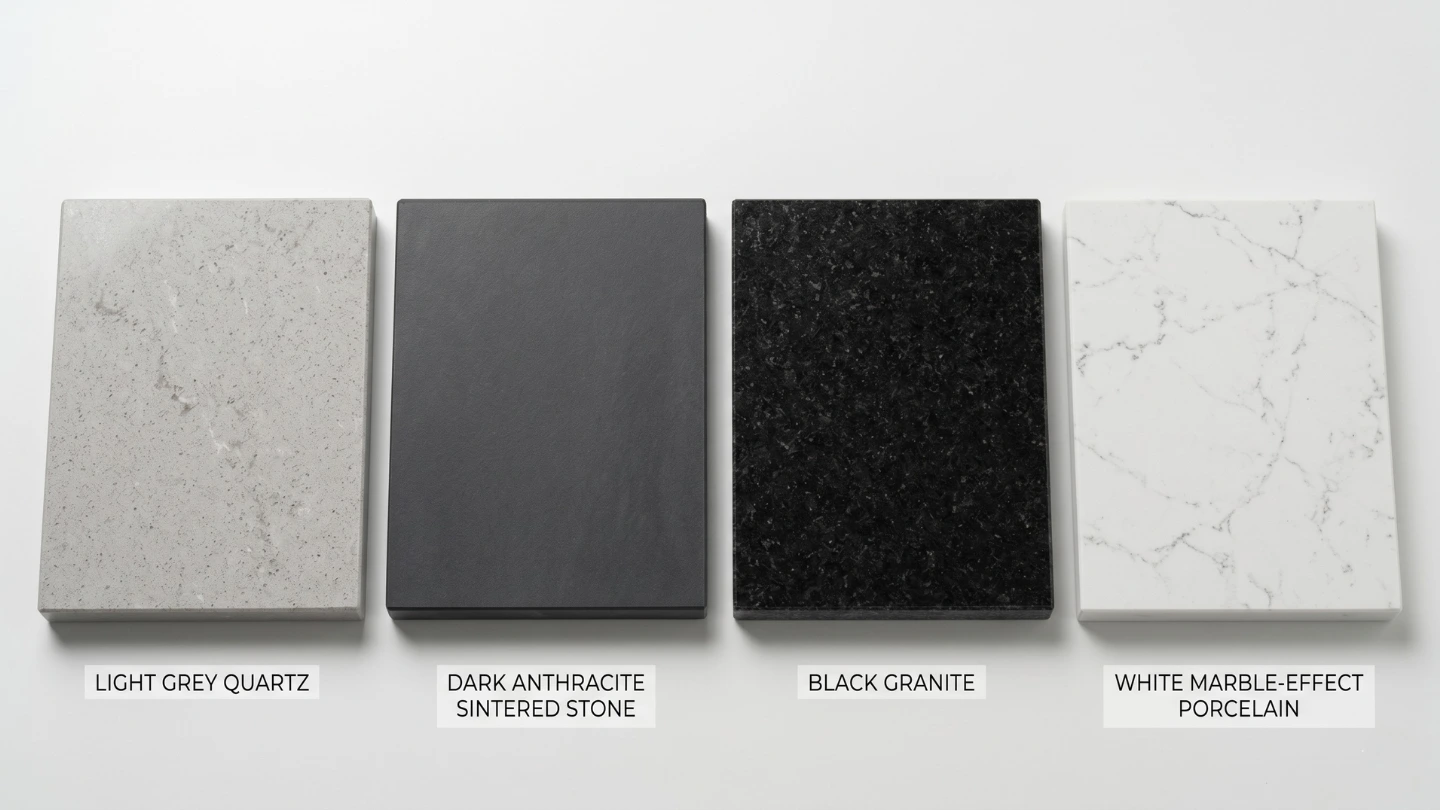
| Feature | Quartz | Sintered Stone | Granite | Porcelain Slab |
|---|---|---|---|---|
| Heat resistance | ⚠️ Moderate (use trivets) | ✅ Excellent | ✅ Good | ✅ Good |
| Stain resistance | ✅ Excellent | ✅ Excellent | ⚠️ Requires sealing | ✅ Excellent |
| Moisture resistance | ✅ Excellent | ✅ Excellent | ⚠️ Requires sealing | ✅ Excellent |
| Impact resistance | ✅ Good | ⚠️ Can chip | ✅ Excellent | ⚠️ Variable |
| Maintenance level | Low | Low | Moderate | Low |
| Price range (supply & install) | RM110–819/sqft | RM229–474/sqft | RM120–400/sqft | RM110–448/sqft |
| Best for | Most homeowners | Heavy daily cooks | Budget-conscious buyers | Design-focused buyers |
Our Verdict: Best Pick by Cooking Style
For most Malaysian homeowners: Quartz stone is the most practical and well-rounded choice. It handles stains, moisture, and daily cleaning with ease. As long as you use trivets for hot pans — a habit that’s worth developing regardless of countertop material — quartz will serve you well for many years. Budget-friendly options start from RM110/sqft with Zenstone, while premium brands like Caesarstone and Silestone offer superior aesthetics for higher budgets.
For households that cook intensively every day: Sintered stone (Dekton) is the superior performer. If wok cooking, deep-frying, and heavy meal preparation are daily activities in your home, the heat-proof performance of sintered stone justifies the higher price point. It eliminates the trivet requirement and offers the best long-term resilience for demanding kitchens.
For budget-conscious homeowners: Granite remains a viable option, particularly at the lower end of the price range. Be prepared to seal it regularly and avoid leaving acidic liquids on the surface for extended periods. Pre-sealed options like Sensa Granite reduce the maintenance burden.
For design-focused renovations: Porcelain slab can work beautifully in a wet kitchen, but only if you source countertop-grade material from a reputable supplier. Do not accept tile-grade porcelain as a substitute — it will not hold up.
What to Avoid in a Malaysian Wet Kitchen
Regardless of which material you choose, avoid these common mistakes:
- Compact laminate and timber surfaces — both absorb moisture over time and are not suitable for high-humidity Malaysian wet kitchens
- Marble — beautiful but porous, easily stained by turmeric and curry, and requires intensive sealing in a Malaysian cooking environment
- Thin porcelain tiles — not designed for countertop use and will chip under normal kitchen activity
- Unsealed granite — granite without proper sealing will stain and harbour mould in Malaysia’s humid climate
Conclusion
The best countertop for a wet kitchen in Malaysia is the one that matches both your cooking habits and your maintenance commitment. Quartz is the right choice for most homeowners — low-maintenance, stain-resistant, and available across a wide price range. Sintered stone is the premium choice for households that cook hard and want zero compromises on heat performance. Granite offers long-term durability at a lower entry price, while porcelain slab delivers high-end aesthetics when sourced correctly.
Whatever you decide, invest in quality fabrication and installation. Even the best countertop material can underperform if it’s poorly cut, installed, or finished.
If you’re still comparing options, our complete guide to kitchen countertop materials in Malaysia covers 14 different materials with detailed pros, cons, and pricing to help you make the most informed decision for your home renovation.